Andrew E. G. Jonas - Böcker
Visar alla böcker från författaren Andrew E. G. Jonas. Handla med fri frakt och snabb leverans.
6 produkter
6 produkter
676 kr
Skickas inom 10-15 vardagar
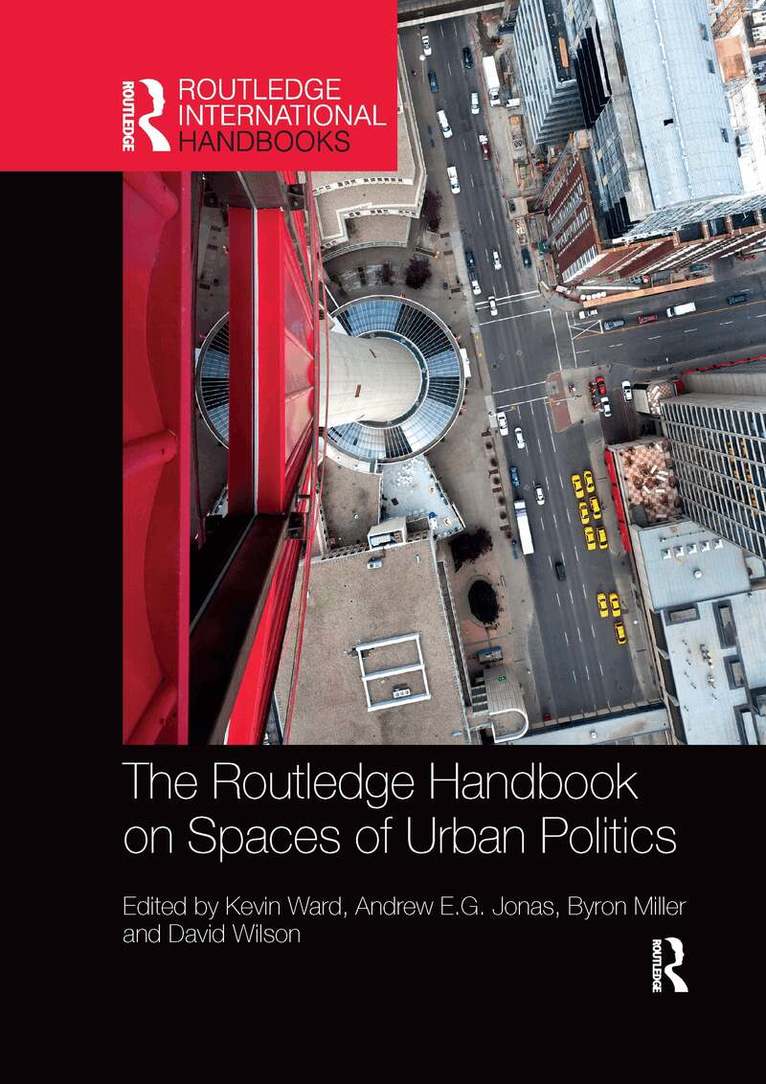
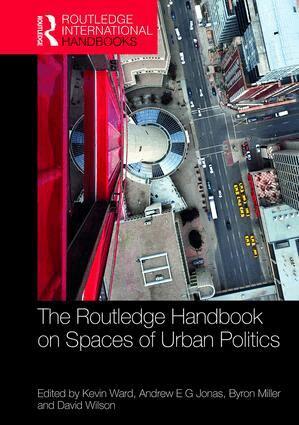
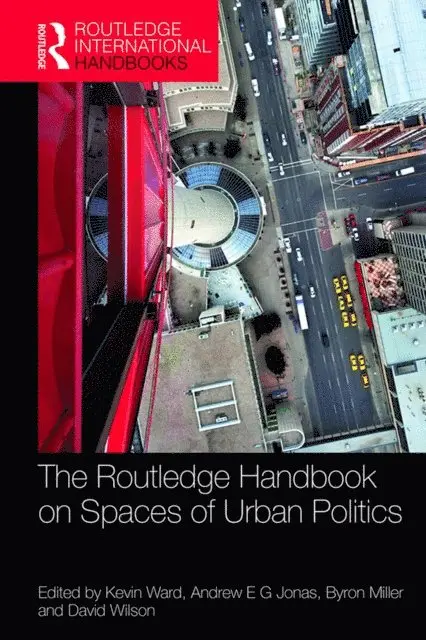
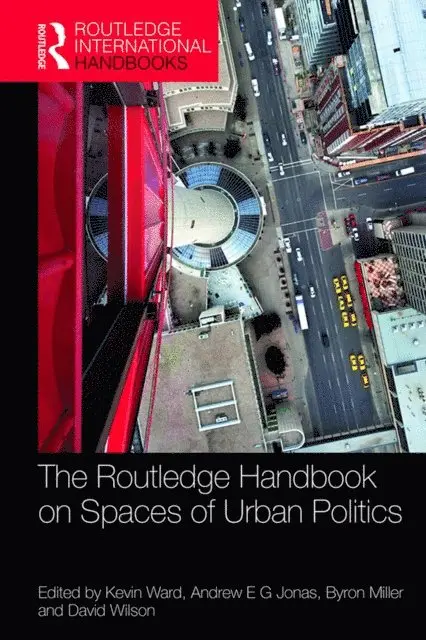
The Routledge Handbook on Spaces of Urban Politics provides a comprehensive statement and reference point for urban politics. The scope of this handbook’s coverage and contributions engages with and reflects upon the most important, innovative and recent critical developments to the interdisciplinary field of urban politics, drawing upon a range of examples from within and across the Global North and Global South.This handbook is organized into nine interrelated sections, with an introductory chapter setting out the rationale, aims and structure of the Handbook, and short introductory commentaries at the beginning of each part. It questions the eliding of ‘urban politics’ into the ‘politics of the city’, reconsidering the usefulness of the distinction between ‘old’ and ‘new’ urban politics, considering issues of ‘class’, ‘gender’, ‘race’ and the ways in which they intersect, appear and reappear in matters of urban politics, how best to theorize the roles of capital, the state and other actors, such as social movements, in the production of the city and, finally, issues of doing urban political research. The various chapters explore the issues of urban politics of economic development, environment and nature in the city, governance and planning, the politics of labour as well as living spaces. The concluding sections of the Handbook examine the politics over alternative visions of cities of the future and provide concluding discussions and reflections, particularly on the futures for urban politics in an increasingly ‘global’ and multidisciplinary context.With over forty-five contributions from leading international scholars in the field, this handbook provides critical reviews and appraisals of current conceptual and theoretical approaches and future developments in urban politics. It is a key reference to all researchers and policy-makers with an interest in urban politics.
1 057 kr
Tillfälligt slut
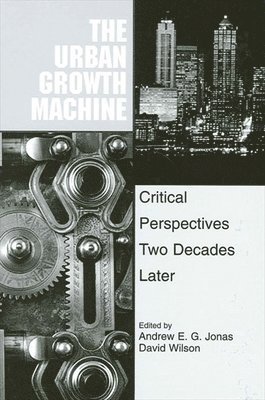
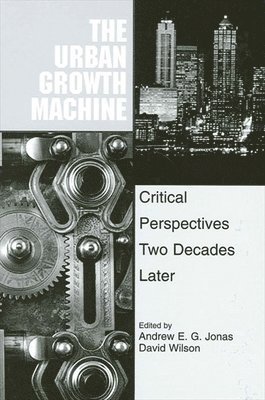
Two decades after Harvey Molotch's "city as a growth machine," this book offers a unique, critical assessment of his thesis.Harvey Molotch's "city as a growth machine" thesis is one of the most influential approaches to the analysis of urban politics and local economic development in the United States. However, the nature and context of urban politics have changed considerably since the growth machine thesis was first proposed more than twenty years ago, and recent attempts to apply it to settings outside the U.S. have revealed conceptual and empirical limitations.This book offers a unique critical assessment of the contribution of the growth machine thesis to research in urban political economy. Written from an interdisciplinary and international perspective, it brings together leading urban studies scholars. These contributors explore three organizing themes: urban growth, discourse and ideology; new dimensions of urban politics; and the growth machine in comparative perspective. These themes not only provide the focus for the critical examinations of the growth machine thesis, but also offer exciting new ways of thinking about and researching urban politics and local economic development.As Harvey Molotch himself notes in this book's concluding chapter, "The growth machine idea makes a substantive argument about the empirical substance of U.S. urban regimes. It asserts that virtually every city (and state) government is a growth machine and long has been. It asserts that this puts localities in chronic competition with one another in ways that harm the vast majority of their citizens as well as their environments. It anticipates an ideological structure that naturalizes growth goals as a background assumption of civic life. In a social science realm where successful empirical generalizations have been few, the growth machine idea robustly and usefully describes reality."Contributors include Thabit Abu-Rass, Keith Bassett, Mark Boyle, Allan Cochrane, Kevin R. Cox, Kyle Crowder, Melissa R. Gilbert, Bob Jessop, Andrew Kirby, Mickey Lauria, Helga Leitner, John R. Logan, Harvey Molotch, Jamie Peck, Stephanie Pincetl, Eric Sheppard, John Rennie Short, Adam Tickell, Rachel Bridges Whaley, and Andrew Wood.
594 kr
Skickas inom 3-6 vardagar
Two decades after Harvey Molotch's "city as a growth machine," this book offers a unique, critical assessment of his thesis.Harvey Molotch's "city as a growth machine" thesis is one of the most influential approaches to the analysis of urban politics and local economic development in the United States. However, the nature and context of urban politics have changed considerably since the growth machine thesis was first proposed more than twenty years ago, and recent attempts to apply it to settings outside the U.S. have revealed conceptual and empirical limitations.This book offers a unique critical assessment of the contribution of the growth machine thesis to research in urban political economy. Written from an interdisciplinary and international perspective, it brings together leading urban studies scholars. These contributors explore three organizing themes: urban growth, discourse and ideology; new dimensions of urban politics; and the growth machine in comparative perspective. These themes not only provide the focus for the critical examinations of the growth machine thesis, but also offer exciting new ways of thinking about and researching urban politics and local economic development.As Harvey Molotch himself notes in this book's concluding chapter, "The growth machine idea makes a substantive argument about the empirical substance of U.S. urban regimes. It asserts that virtually every city (and state) government is a growth machine and long has been. It asserts that this puts localities in chronic competition with one another in ways that harm the vast majority of their citizens as well as their environments. It anticipates an ideological structure that naturalizes growth goals as a background assumption of civic life. In a social science realm where successful empirical generalizations have been few, the growth machine idea robustly and usefully describes reality."Contributors include Thabit Abu-Rass, Keith Bassett, Mark Boyle, Allan Cochrane, Kevin R. Cox, Kyle Crowder, Melissa R. Gilbert, Bob Jessop, Andrew Kirby, Mickey Lauria, Helga Leitner, John R. Logan, Harvey Molotch, Jamie Peck, Stephanie Pincetl, Eric Sheppard, John Rennie Short, Adam Tickell, Rachel Bridges Whaley, and Andrew Wood.
3 185 kr
Skickas inom 10-15 vardagar
The Routledge Handbook on Spaces of Urban Politics provides a comprehensive statement and reference point for urban politics. The scope of this handbook’s coverage and contributions engages with and reflects upon the most important, innovative and recent critical developments to the interdisciplinary field of urban politics, drawing upon a range of examples from within and across the Global North and Global South.This handbook is organized into nine interrelated sections, with an introductory chapter setting out the rationale, aims and structure of the Handbook, and short introductory commentaries at the beginning of each part. It questions the eliding of ‘urban politics’ into the ‘politics of the city’, reconsidering the usefulness of the distinction between ‘old’ and ‘new’ urban politics, considering issues of ‘class’, ‘gender’, ‘race’ and the ways in which they intersect, appear and reappear in matters of urban politics, how best to theorize the roles of capital, the state and other actors, such as social movements, in the production of the city and, finally, issues of doing urban political research. The various chapters explore the issues of urban politics of economic development, environment and nature in the city, governance and planning, the politics of labour as well as living spaces. The concluding sections of the Handbook examine the politics over alternative visions of cities of the future and provide concluding discussions and reflections, particularly on the futures for urban politics in an increasingly ‘global’ and multidisciplinary context.With over forty-five contributions from leading international scholars in the field, this handbook provides critical reviews and appraisals of current conceptual and theoretical approaches and future developments in urban politics. It is a key reference to all researchers and policy-makers with an interest in urban politics.
363 kr
Skickas inom 7-10 vardagar
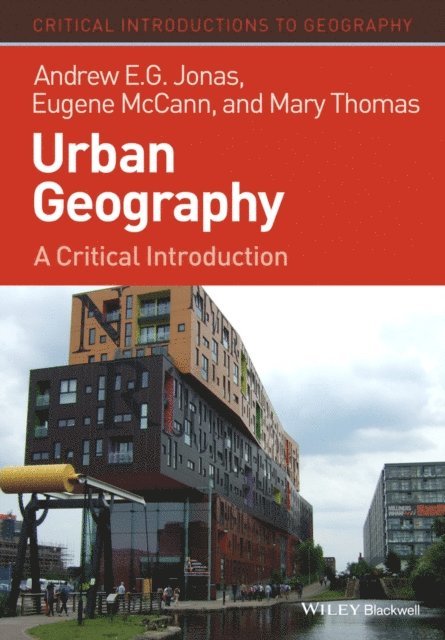
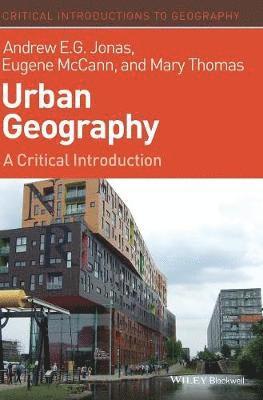
Urban Geography a comprehensive introduction to a variety of issues relating to contemporary urban geography, including patterns and processes of urbanization, urban development, urban planning, and life experiences in modern cities. Reveals both the diversity of ordinary urban geographies and the networks, flows and relations which increasingly connect cities and urban spaces at the global scaleUses the city as a lens for proposing and developing critical concepts which show how wider social processes, relations, and power structures are changingConsiders the experiences, lives, practices, struggles, and words of ordinary urban residents and marginalized social groups rather than exclusively those of urban elitesShows readers how to develop critical perspectives on dominant neoliberal representations of the city and explore the great diversity of urban worlds
1 056 kr
Skickas inom 7-10 vardagar
Urban Geography a comprehensive introduction to a variety of issues relating to contemporary urban geography, including patterns and processes of urbanization, urban development, urban planning, and life experiences in modern cities. Reveals both the diversity of ordinary urban geographies and the networks, flows and relations which increasingly connect cities and urban spaces at the global scaleUses the city as a lens for proposing and developing critical concepts which show how wider social processes, relations, and power structures are changingConsiders the experiences, lives, practices, struggles, and words of ordinary urban residents and marginalized social groups rather than exclusively those of urban elitesShows readers how to develop critical perspectives on dominant neoliberal representations of the city and explore the great diversity of urban worlds