Andrew Fenton – författare
Visar alla böcker från författaren Andrew Fenton. Handla med fri frakt och snabb leverans.
11 produkter
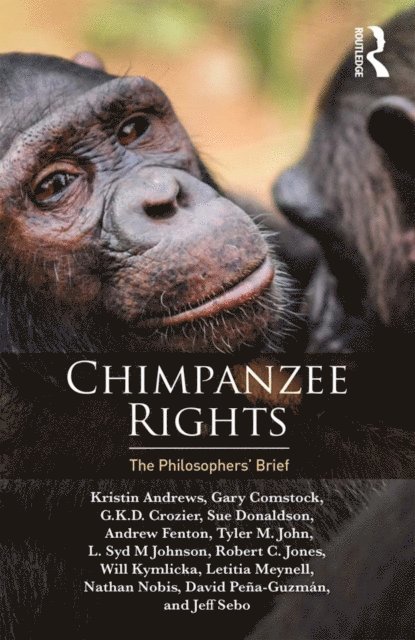
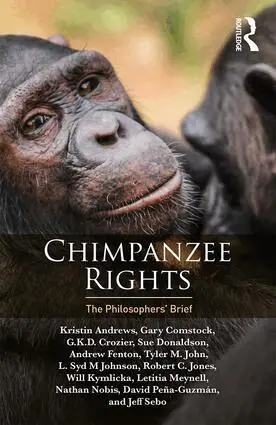
Chimpanzee Rights
The Philosophers' Brief
Av Jeff Sebo, David Pena-Guzman m. fl.
E-bok, 2018
450 kr
Lägg i varukorg
Since 2013, an organization called the Nonhuman Rights Project has brought before the New York State courts an unusual request—asking for habeas corpus hearings to determine whether Kiko and Tommy, two captive chimpanzees, should be considered legal persons with the fundamental right to bodily …
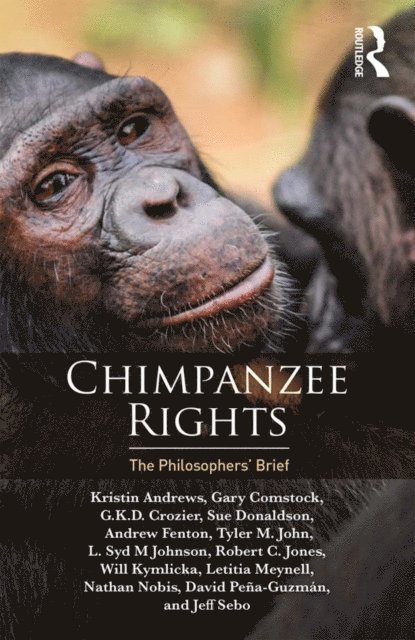
Chimpanzee Rights
The Philosophers' Brief
Av Jeff Sebo, David Pena-Guzman m. fl.
E-bok, 2018
441 kr
Lägg i varukorg
Since 2013, an organization called the Nonhuman Rights Project has brought before the New York State courts an unusual request—asking for habeas corpus hearings to determine whether Kiko and Tommy, two captive chimpanzees, should be considered legal persons with the fundamental right to bodily …
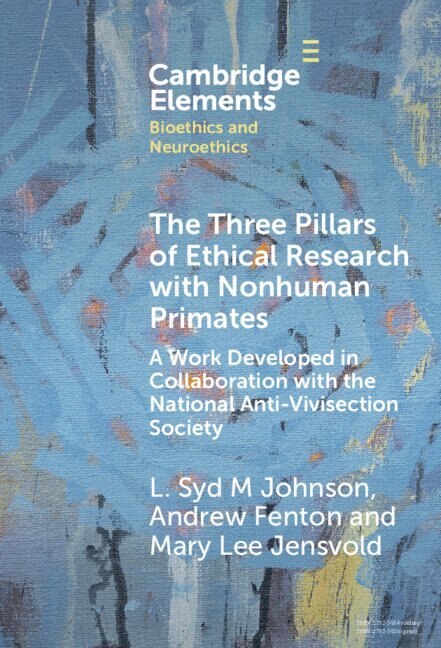
Three Pillars of Ethical Research with Nonhuman Primates
A Work Developed in Collaboration with the National Anti-Vivisection Society
Av Mary Lee Jensvold, Andrew Fenton m. fl.
E-bok, 2025
287 kr
Lägg i varukorg
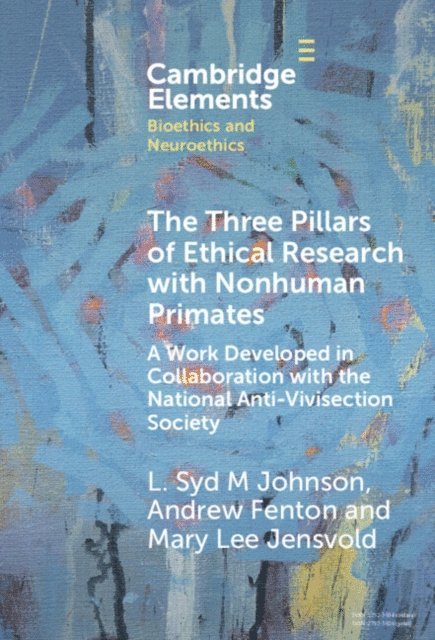
The Three Pillars of Ethical Research with Nonhuman Primates
A Work Developed in Collaboration with the National Anti-Vivisection Society
Av L. Syd M Johnson, Andrew Fenton m. fl.
Häftad, 2025
308 kr
Lägg i varukorg
The Three Pillars (Harmonization, Replacement, and Justice) describe an ethical path forward and away from the use of nonhuman primates in harmful research and scientific use. Conducting nonhuman primate research in an ethical way that acknowledges their moral importance requires satisfying more …
Three Pillars of Ethical Research with Nonhuman Primates
A Work Developed in Collaboration with the National Anti-Vivisection Society
Av Mary Lee Jensvold, Andrew Fenton m. fl.
E-bok, 2025
294 kr
Lägg i varukorg
The Three Pillars of Ethical Research with Nonhuman Primates
A Work Developed in Collaboration with the National Anti-Vivisection Society
Av L. Syd M Johnson, Andrew Fenton m. fl.
Inbunden, 2025
911 kr
Lägg i varukorg
The Three Pillars (Harmonization, Replacement, and Justice) describe an ethical path forward and away from the use of nonhuman primates in harmful research and scientific use. Conducting nonhuman primate research in an ethical way that acknowledges their moral importance requires satisfying more …
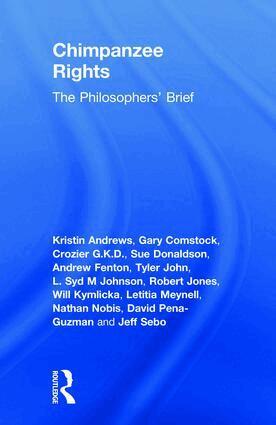
Chimpanzee Rights
The Philosophers’ Brief
Av Kristin Andrews, Gary Comstock m. fl.
Inbunden, 2018
1521 kr
Lägg i varukorg
Since 2013, an organization called the Nonhuman Rights Project has brought before the New York State courts an unusual request—asking for habeas corpus hearings to determine whether Kiko and Tommy, two captive chimpanzees, should be considered legal persons with the fundamental right to bodily …
Chimpanzee Rights
The Philosophers’ Brief
Av Kristin Andrews, Gary Comstock m. fl.
Häftad, 2018
386 kr
Lägg i varukorg
Since 2013, an organization called the Nonhuman Rights Project has brought before the New York State courts an unusual request—asking for habeas corpus hearings to determine whether Kiko and Tommy, two captive chimpanzees, should be considered legal persons with the fundamental right to bodily …
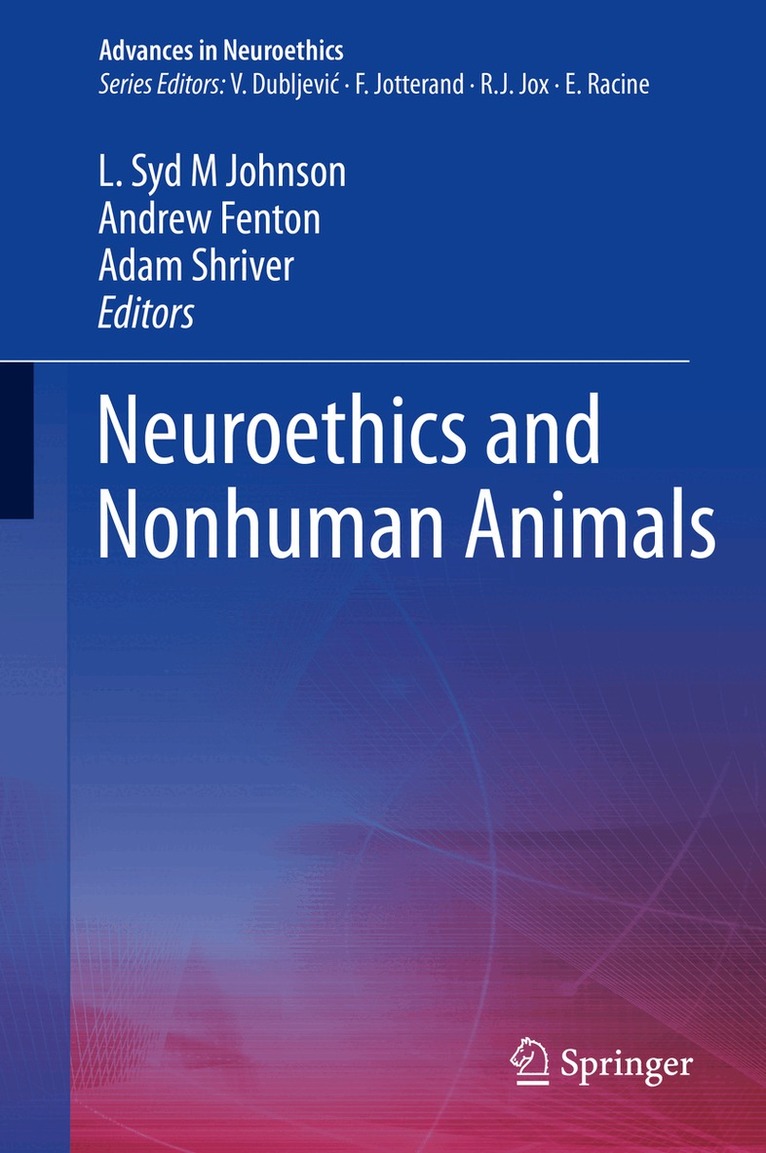
Neuroethics and Nonhuman Animals
Av L. Syd M Johnson, Andrew Fenton m. fl.
Inbunden, 2020
1643 kr
Lägg i varukorg
This edited volume represents a unique addition to the available literature on animal ethics, animal studies, and neuroethics. Its goal is to expand discussions on animal ethics and neuroethics by weaving together different threads: philosophy of mind and animal minds, neuroscientific study of …
Neuroethics and Nonhuman Animals
Av Adam Shriver, Andrew Fenton m. fl.
E-bok, 2020
2105 kr
Lägg i varukorg
This edited volume represents a unique addition to the available literature on animal ethics, animal studies, and neuroethics. Its goal is to expand discussions on animal ethics and neuroethics by weaving together different threads: philosophy of mind and animal minds, neuroscientific study of …
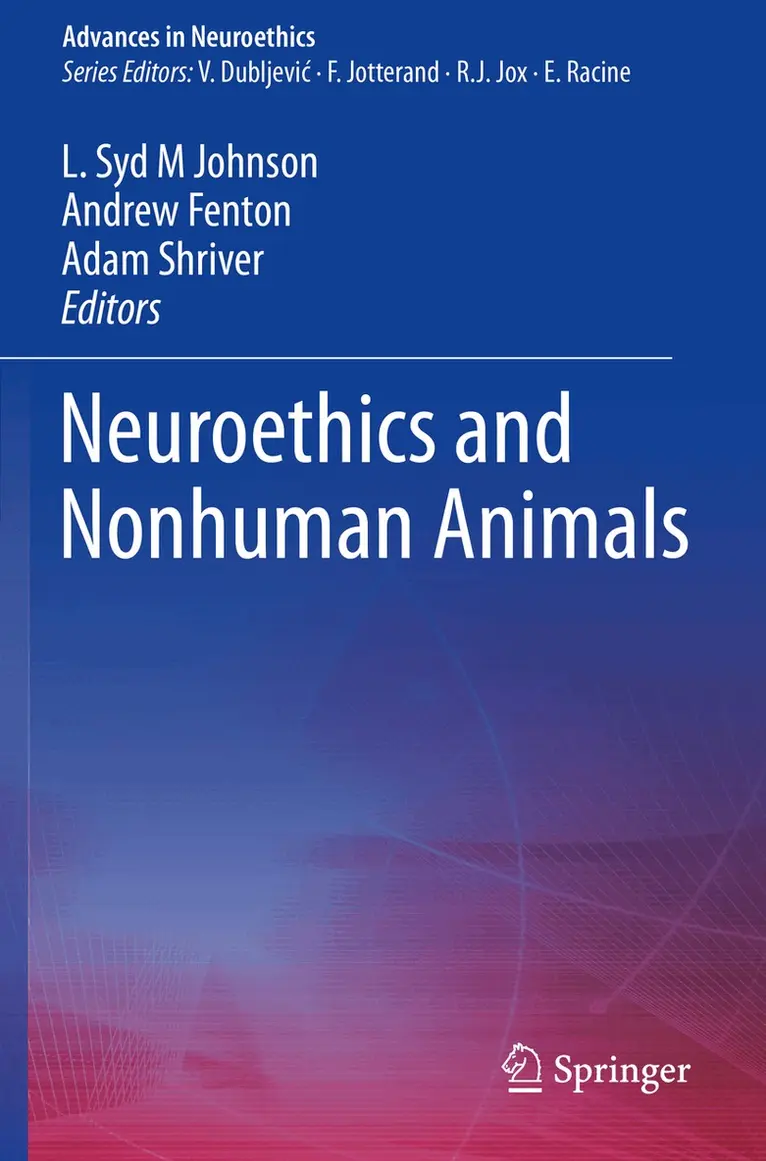
Neuroethics and Nonhuman Animals
Av L. Syd M Johnson, Andrew Fenton m. fl.
Häftad, 2021
1643 kr
Lägg i varukorg
This edited volume represents a unique addition to the available literature on animal ethics, animal studies, and neuroethics. Its goal is to expand discussions on animal ethics and neuroethics by weaving together different threads: philosophy of mind and animal minds, neuroscientific study of …