Andrew Hartman – författare
Visar alla böcker från författaren Andrew Hartman. Handla med fri frakt och snabb leverans.
6 produkter
6 produkter
434 kr
Skickas inom 10-15 vardagar
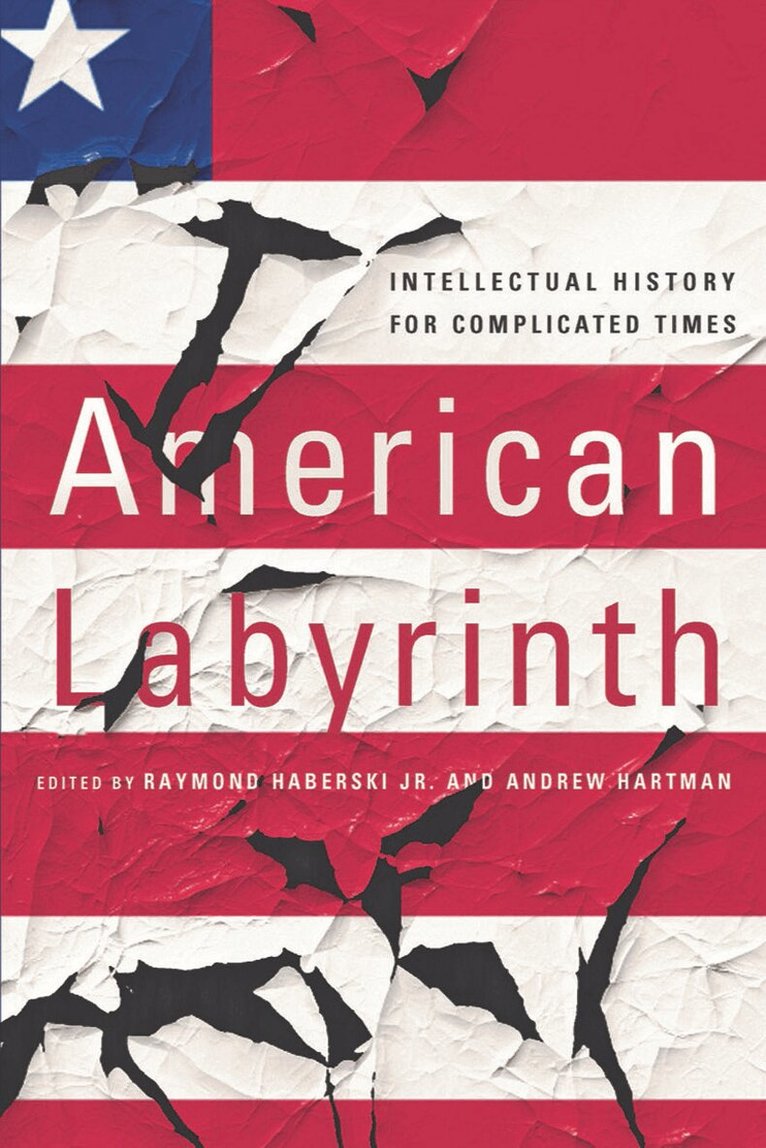
American Labyrinth contains a stimulating and useful collection of essays by historians reflecting on American intellectual history.... As a whole, the book convinces the reader that the field of intellectual history is enjoying a renaissance. The book will be especially prized by intellectual historians, but historians of many different persuasions will find these essays rewarding too.â•ChoiceIntellectual history has never been more relevant and more important to public life in the United States. In complicated and confounding times, people look for the principles that drive action and the foundations that support national ideals. American Labyrinth demonstrates the power of intellectual history to illuminate our public life and examine our ideological assumptions.This volume of essays brings together 19 influential intellectual historians to contribute original thoughts on topics of widespread interest. Raymond Haberski Jr. and Andrew Hartman asked a group of nimble, sharp scholars to respond to a simple question: How might the resources of intellectual history help shed light on contemporary issues with historical resonance? The answers-all rigorous, original, and challenging-are as eclectic in approach and temperament as the authors are different in their interests and methods. Taken together, the essays of American Labyrinth illustrate how intellectual historians, operating in many different registers at once and ranging from the theoretical to the political, can provide telling insights for understanding a public sphere fraught with conflict.In order to understand why people are ready to fight over cultural symbols and political positions we must have insight into how ideas organize, enliven, and define our lives. Ultimately, as Haberski and Hartman show in this volume, the best route through our contemporary American labyrinth is the path that traces our practical and lived ideas.
219 kr
Skickas inom 7-10 vardagar
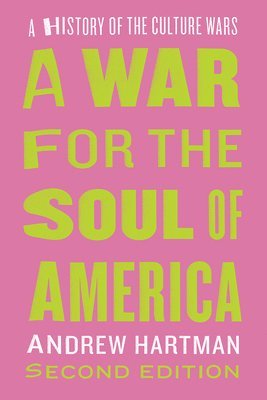
When Patrick Buchanan took the stage at the Republican National Convention in 1992 and proclaimed, "There is a religious war going on for the soul of our country," his audience knew what he was talking about: the culture wars, which had raged throughout the previous decade and would continue until the century's end, pitting conservative and religious Americans against their liberal, secular fellow citizens. It was an era marked by polarization and posturing fueled by deep-rooted anger and insecurity. Buchanan's fiery speech marked a high point in the culture wars, but as Andrew Hartman shows in this richly analytical history, their roots lay farther back, in the tumult of the 1960s--and their significance is much greater than generally assumed. Far more than a mere sideshow or shouting match, the culture wars, Hartman argues, were the very public face of America's struggle over the unprecedented social changes of the period, as the cluster of social norms that had long governed American life began to give way to a new openness to different ideas, identities, and articulations of what it meant to be an American. The hot-button issues like abortion, affirmative action, art, censorship, feminism, and homosexuality that dominated politics in the period were symptoms of the larger struggle, as conservative Americans slowly began to acknowledge--if initially through rejection--many fundamental transformations of American life. As an ever-more partisan but also an ever-more diverse and accepting America continues to find its way in a changing world, A War for the Soul of America reminds us of how we got here, and what all the shouting has really been about.
316 kr
Skickas inom 7-10 vardagar
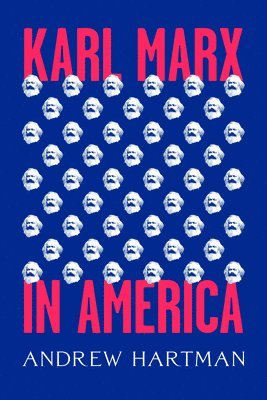
The vital and untold story of Karl Marx’s stamp on American life. To read Karl Marx is to contemplate a world created by capitalism. People have long viewed the United States as the quintessential anti-Marxist nation, but Marx’s ideas have inspired a wide range of people to formulate a more precise sense of the stakes of the American project. Historians have highlighted the imprint made on the United States by Enlightenment thinkers such as Adam Smith, John Locke, and Thomas Paine, but Marx is rarely considered alongside these figures. Yet his ideas are the most relevant today because of capitalism’s centrality to American life. In Karl Marx in America, historian Andrew Hartman argues that even though Karl Marx never visited America, the country has been infused, shaped, and transformed by him. Since the beginning of the Civil War, Marx has been a specter in the American machine. During the Gilded Age, socialists read Marx as an antidote to the unchecked power of corporations. In the Great Depression, communists turned to Marx in hopes of transcending the destructive capitalist economy. The young activists of the 1960s were inspired by Marx as they gathered to protest an overseas war. Marx’s influence today is evident, too, as Americans have become increasingly attuned to issues of inequality, labor, and power. After decades of being pushed to the far-left corner of intellectual thought, Marx’s ideologies have crossed over into the mainstream and are more alive than ever. Working-class consciousness is on the rise, and, as Marx argued, the future of a capitalist society rests in the hands of the people who work at the point of production. A valuable resource for anyone interested in Marx’s influence on American political discourse, Karl Marx in America is a thought-provoking account of the past, present, and future of his philosophies in American society.
1 604 kr
Skickas inom 10-15 vardagar
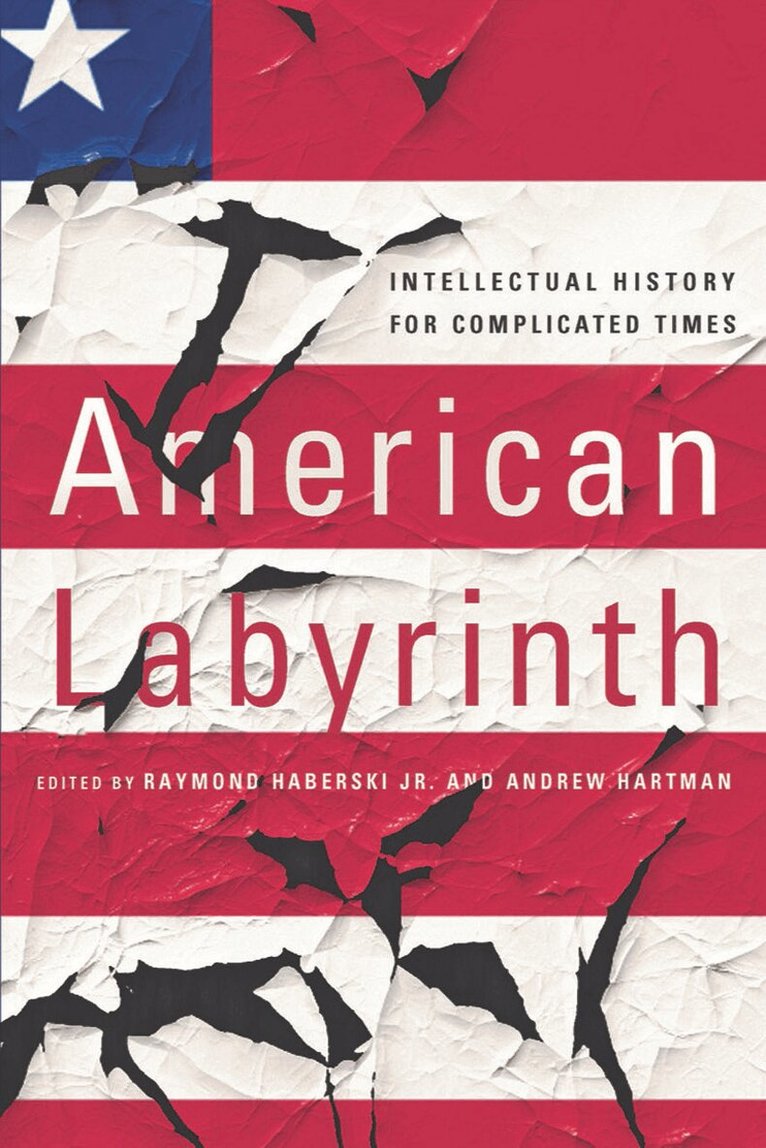
American Labyrinth contains a stimulating and useful collection of essays by historians reflecting on American intellectual history.... As a whole, the book convinces the reader that the field of intellectual history is enjoying a renaissance. The book will be especially prized by intellectual historians, but historians of many different persuasions will find these essays rewarding too.â•ChoiceIntellectual history has never been more relevant and more important to public life in the United States. In complicated and confounding times, people look for the principles that drive action and the foundations that support national ideals. American Labyrinth demonstrates the power of intellectual history to illuminate our public life and examine our ideological assumptions.This volume of essays brings together 19 influential intellectual historians to contribute original thoughts on topics of widespread interest. Raymond Haberski Jr. and Andrew Hartman asked a group of nimble, sharp scholars to respond to a simple question: How might the resources of intellectual history help shed light on contemporary issues with historical resonance? The answers-all rigorous, original, and challenging-are as eclectic in approach and temperament as the authors are different in their interests and methods. Taken together, the essays of American Labyrinth illustrate how intellectual historians, operating in many different registers at once and ranging from the theoretical to the political, can provide telling insights for understanding a public sphere fraught with conflict.In order to understand why people are ready to fight over cultural symbols and political positions we must have insight into how ideas organize, enliven, and define our lives. Ultimately, as Haberski and Hartman show in this volume, the best route through our contemporary American labyrinth is the path that traces our practical and lived ideas.
167 kr
Skickas inom 5-8 vardagar
165 kr
Skickas inom 5-8 vardagar