Andrew McCann – författare
Visar alla böcker från författaren Andrew McCann. Handla med fri frakt och snabb leverans.
7 produkter
7 produkter
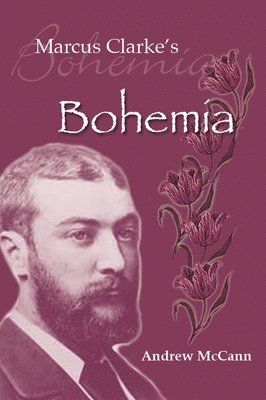
Marcus Clarke's Bohemia
Literature, Popular Culture and Urban Experience in Colonial Melbourne
Häftad, Engelska, 2004
373 kr
Skickas inom 5-8 vardagar
Marcus Clarke's ""Bohemia"" is the first major critical study of Marcus Clarke - arguably Australia's best known and most important nineteenth-century writer. It situates Clarke both within the bohemian culture of Melbourne and a burgeoning cosmopolitan print-culture extending beyond national borders. Marcus Clarke's ""Bohemia"" offers detailed readings of Clarke's major works, many of which have not previously been discussed, and traces the influence of other European writers on Clarke's writing. Importantly, it focuses on his engagement with the modernity of the place and time in which he worked and lived. McCann's in-depth study unearths the richness of Clarke's writing and brings nineteenth-century Melbourne to life. Impeccably researched and gracefully written, Marcus Clarke's ""Bohemia"" is challenging and compelling reading.
Del 94 - Cambridge Studies in Nineteenth-Century Literature and Culture
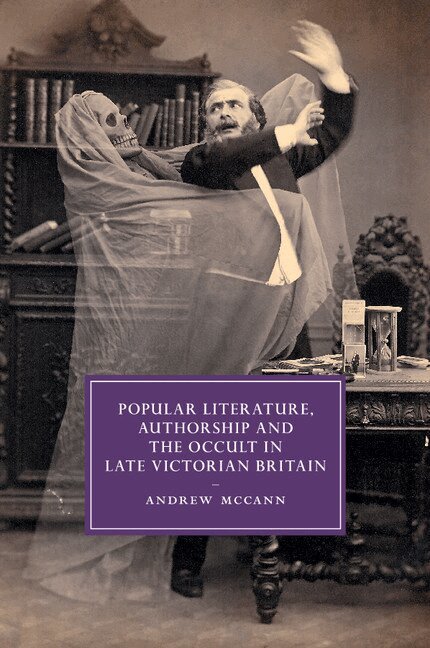
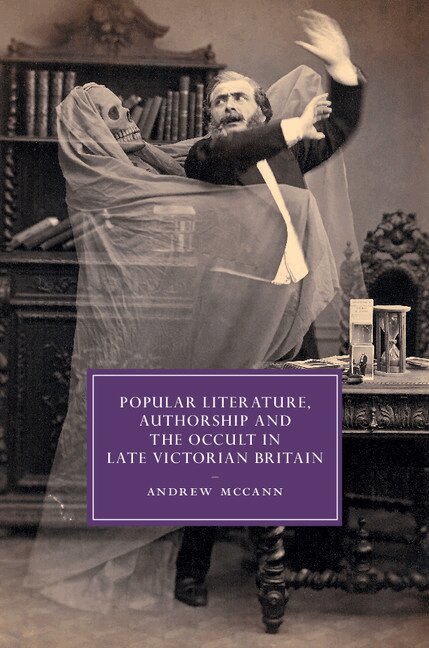
Popular Literature, Authorship and the Occult in Late Victorian Britain
Inbunden, Engelska, 2014
1 438 kr
Skickas inom 7-10 vardagar
With the increasing commercialization of publishing at the end of the nineteenth century, the polarization of serious literature and popular fiction became a commonplace of literary criticism. Andrew McCann cautions against this opposition by arguing that popular fiction's engagement with heterodox conceptions of authorship and creativity complicates its status as mere distraction or entertainment. Popular writers such as George Du Maurier, Marie Corelli, Rosa Praed and Arthur Machen drew upon a contemporary fascination with occult practices to construct texts that had an intensely ambiguous relationship to the proprietary notions of authorship that were so central to commercial publishing. Through trance-induced or automatic writing, dream states, dual personality and the retrieval of past lives channeled through mediums, they imagined forms of authorship that reinvested popular texts with claims to aesthetic and political value that cut against the homogenizing pressures of an emerging culture industry.
Del 94 - Cambridge Studies in Nineteenth-Century Literature and Culture
Popular Literature, Authorship and the Occult in Late Victorian Britain
Häftad, Engelska, 2017
322 kr
Skickas inom 7-10 vardagar
With the increasing commercialization of publishing at the end of the nineteenth century, the polarization of serious literature and popular fiction became a commonplace of literary criticism. Andrew McCann cautions against this opposition by arguing that popular fiction's engagement with heterodox conceptions of authorship and creativity complicates its status as mere distraction or entertainment. Popular writers such as George Du Maurier, Marie Corelli, Rosa Praed and Arthur Machen drew upon a contemporary fascination with occult practices to construct texts that had an intensely ambiguous relationship to the proprietary notions of authorship that were so central to commercial publishing. Through trance-induced or automatic writing, dream states, dual personality and the retrieval of past lives channeled through mediums, they imagined forms of authorship that reinvested popular texts with claims to aesthetic and political value that cut against the homogenizing pressures of an emerging culture industry.
1 246 kr
Skickas inom 5-8 vardagar
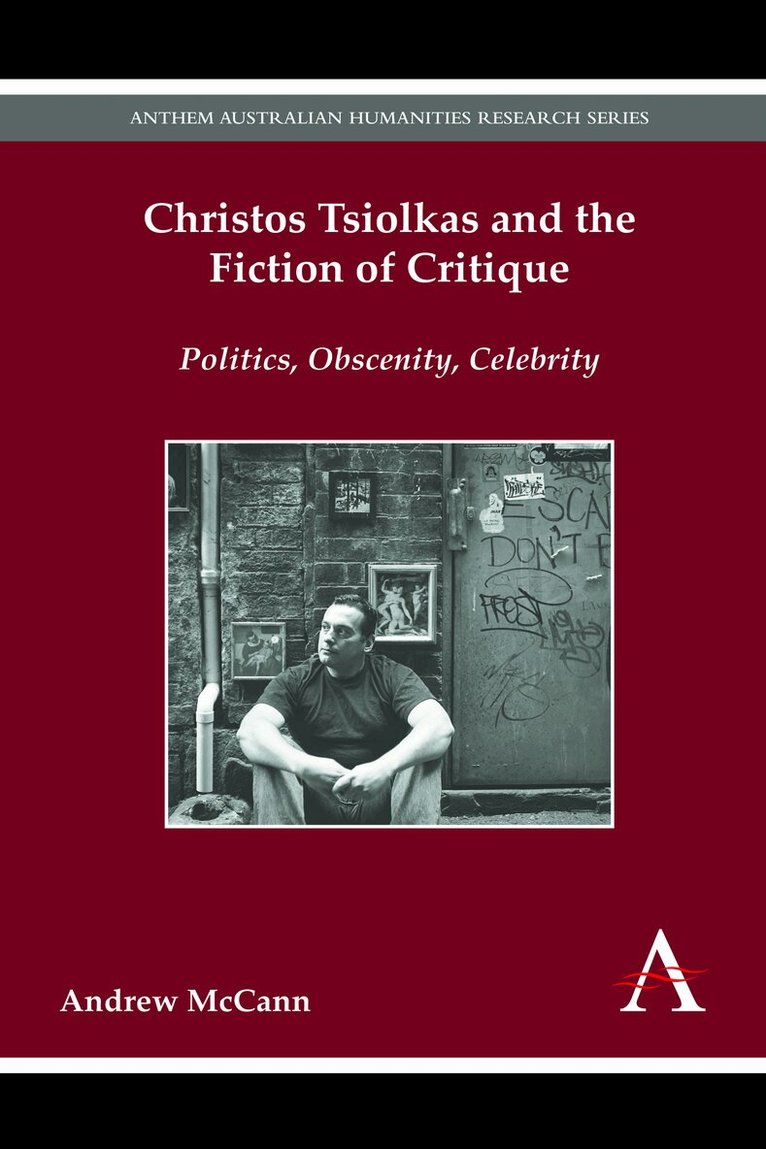
Christos Tsiolkas is one of the most recognizable and internationally successful literary novelists working in Australia today. He is also one of the country’s most politically engaged writers. These terms – recognition, commercial success, political engagement – suggest a relationship to forms of public discourse that belies the extremely confronting nature of much of Tsiolkas’s fiction and his deliberate attempt to cultivate a literary persona oriented to notions of blasphemy, obscenity and what could broadly be called a pornographic sensibility. ‘Christos Tsiolkas and the Fiction of Critique’ traces these contradictions against Tsiolkas’s acute sense of the waning of working-class identity, and reads his work as a sustained examination of the ways in which literature might express an opposition to capitalist modernity.
460 kr
Skickas inom 5-8 vardagar
Christos Tsiolkas is one of the most recognizable and internationally successful literary novelists working in Australia today. He is also one of the country’s most politically engaged writers. These terms – recognition, commercial success, political engagement – suggest a relationship to forms of public discourse that belies the extremely confronting nature of much of Tsiolkas’s fiction and his deliberate attempt to cultivate a literary persona oriented to notions of blasphemy, obscenity and what could broadly be called a pornographic sensibility. ‘Christos Tsiolkas and the Fiction of Critique’ traces these contradictions against Tsiolkas’s acute sense of the waning of working-class identity, and reads his work as a sustained examination of the ways in which literature might express an opposition to capitalist modernity.
Elemental Powers
Ernst Jünger, Critical Theory, and the Idea of Natural History
Häftad, Engelska, 2027
622 kr
Kommande
Examining the conflicted legacy of Ernst Jünger's thought and its relationship to critical theoryIn the 1920s, Ernst Jünger's journalistic advocacy of a militaristic, antidemocratic nationalism played a central role in the rise of German fascism. At the same time, Jünger developed an increasingly acute account of how the mobilizing force of industrial technology embodied a will to power that, on the one hand, anticipated an authoritarian state but, on the other, assumed a planetary perspective that made national identifications redundant. What he called the Gestalt of the worker expresses the "elemental powers" that, he believed, mark the limits of Enlightenment conceptions of historical progress.Today, Jünger appears in intellectual history primarily as a representative of protofascist decisionism, reactionary modernism, or the so-called conservative revolution. Andrew McCann puts these aspects of Jünger's early work into dialogue with the posthistorical orientation that he developed after the Second World War, in order to offer a fresh reading that demonstrates how Jünger's obsession with the transience of cultural and historical forms displays deep structural affinities with the idea of natural history developed by Walter Benjamin and Theodor Adorno. By tracing this thread in intellectual history, McCann charts the currents of influence and confluence between what are usually understood as sharply polarized political positions and the conceptual postures that accompany them: immanence and transcendence, reason and myth, class and nation, relations of production and the forces of nature.
Elemental Powers
Ernst Jünger, Critical Theory, and the Idea of Natural History
Inbunden, Engelska, 2027
1 791 kr
Kommande
Examining the conflicted legacy of Ernst Jünger's thought and its relationship to critical theoryIn the 1920s, Ernst Jünger's journalistic advocacy of a militaristic, antidemocratic nationalism played a central role in the rise of German fascism. At the same time, Jünger developed an increasingly acute account of how the mobilizing force of industrial technology embodied a will to power that, on the one hand, anticipated an authoritarian state but, on the other, assumed a planetary perspective that made national identifications redundant. What he called the Gestalt of the worker expresses the "elemental powers" that, he believed, mark the limits of Enlightenment conceptions of historical progress.Today, Jünger appears in intellectual history primarily as a representative of protofascist decisionism, reactionary modernism, or the so-called conservative revolution. Andrew McCann puts these aspects of Jünger's early work into dialogue with the posthistorical orientation that he developed after the Second World War, in order to offer a fresh reading that demonstrates how Jünger's obsession with the transience of cultural and historical forms displays deep structural affinities with the idea of natural history developed by Walter Benjamin and Theodor Adorno. By tracing this thread in intellectual history, McCann charts the currents of influence and confluence between what are usually understood as sharply polarized political positions and the conceptual postures that accompany them: immanence and transcendence, reason and myth, class and nation, relations of production and the forces of nature.