Andrew N. Wegmann - Böcker
Visar alla böcker från författaren Andrew N. Wegmann. Handla med fri frakt och snabb leverans.
6 produkter
6 produkter
1 131 kr
Kommande
Initially founded as a colony of the American Colonization Society in 1822 and declared an independent republic in 1847, the Republic of Liberia has challenged scholars across disciplines for almost as long as it has existed. Despite its territory being the home of Indigenous peoples for centuries, Liberia was imagined as a plan to relocate people of color primarily from the United States to West Africa as settler colonists. It then became a nation dominated by its original African-American founders and their descendants, who became known as Americo-Liberians. This group has shaped the political identity, social structure, and cultural standards of Liberia well into the 20th century, creating a remarkably complex legacy that both sparked and, in some ways, survived nearly two decades of civil conflict from which the nation is still rebuilding.Met by the Love of Liberty is an exploration of this complicated history, from Liberia's transatlantic origins to its complex and conflicted present. This collection of innovative essays emphasizes an interdisciplinary approach, combining African studies, anthropology, archaeology, history, linguistics, and cultural studies to produce a unique dialogue between the history of Liberia's national founding and its diverse contemporary historical memory and create a new, multifaceted understanding of Liberia's development and contemporary moment. Bringing together essays from leading scholars on Liberia's history and culture, Met by the Love of Liberty breaks new ground for discourse on how Liberia and other similar nations and communities can be studied today, telling a story of movement, displacement, national creation, and cultural and political memory and identity.
552 kr
Kommande
Initially founded as a colony of the American Colonization Society in 1822 and declared an independent republic in 1847, the Republic of Liberia has challenged scholars across disciplines for almost as long as it has existed. Despite its territory being the home of Indigenous peoples for centuries, Liberia was imagined as a plan to relocate people of color primarily from the United States to West Africa as settler colonists. It then became a nation dominated by its original African-American founders and their descendants, who became known as Americo-Liberians. This group has shaped the political identity, social structure, and cultural standards of Liberia well into the 20th century, creating a remarkably complex legacy that both sparked and, in some ways, survived nearly two decades of civil conflict from which the nation is still rebuilding.Met by the Love of Liberty is an exploration of this complicated history, from Liberia's transatlantic origins to its complex and conflicted present. This collection of innovative essays emphasizes an interdisciplinary approach, combining African studies, anthropology, archaeology, history, linguistics, and cultural studies to produce a unique dialogue between the history of Liberia's national founding and its diverse contemporary historical memory and create a new, multifaceted understanding of Liberia's development and contemporary moment. Bringing together essays from leading scholars on Liberia's history and culture, Met by the Love of Liberty breaks new ground for discourse on how Liberia and other similar nations and communities can be studied today, telling a story of movement, displacement, national creation, and cultural and political memory and identity.
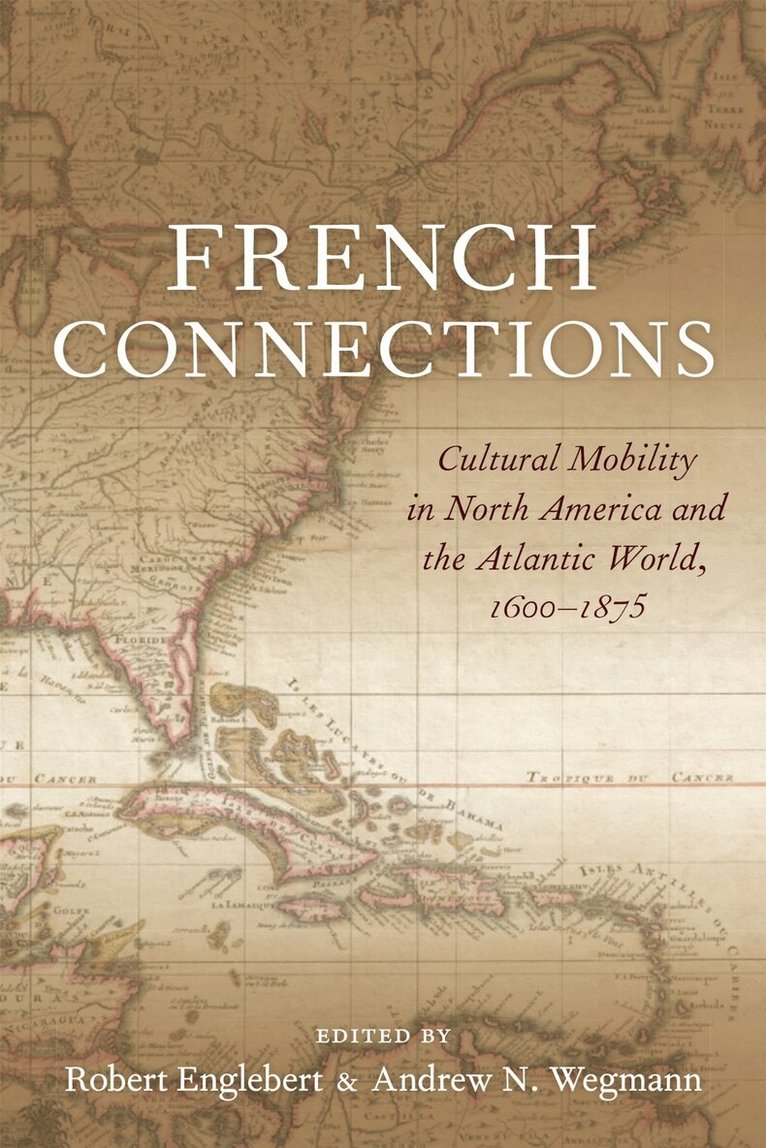
French Connections
Cultural Mobility in North America and the Atlantic World, 1600-1875
Inbunden, Engelska, 2020
561 kr
Skickas inom 10-15 vardagar
French Connections examines how the movement of people, ideas, and social practices contributed to the complex processes and negotiations involved in being and becoming French in North America and the Atlantic World between the years 1600 and 1875. Engaging a wide range of topics, from religious and diplomatic performance to labor migration, racialization, and both imagined and real conceptualizations of "Frenchness" and "Frenchification", this volume argues that cultural mobility was fundamental to the development of French colonial societies and the collective identities they housed. Cases of cultural formation and dislocation in places as diverse as Quebec, the Illinois Country, Detroit, Haiti, Acadia, New England, and France itself demonstrate the broad variability of French cultural mobility that took place throughout this massive geographical space. Nevertheless, these communities shared the same cultural root in the midst of socially and politically fluid landscapes, where cultural mobility came to define, and indeed sustain, communal and individual identities in French North America and the Atlantic World.Drawing on innovative new scholarship on Louisiana and New Orleans, the editors and contributors to French Connections look to refocus the conversation surrounding French colonial interconnectivity by thinking about mobility as a constitutive condition of culture; from this perspective, separate "spheres" of French colonial culture merge to reveal a broader, more cohesive cultural world. The comprehensive scope of this collection will attract scholars of French North America, early American history, Atlantic World history, Caribbean studies, Canadian studies, and frontier studies. With essays from established, award-winning scholars such as Brett Rushforth, Leslie Choquette, Jay Gitlin, and Christopher Hodson as well as from new, progressive thinkers such as Mairi Cowan, William Brown, Karen L. Marrero, and Robert D. Taber, French Connections promises to generate interest and value across an extensive and diverse range of concentrations.
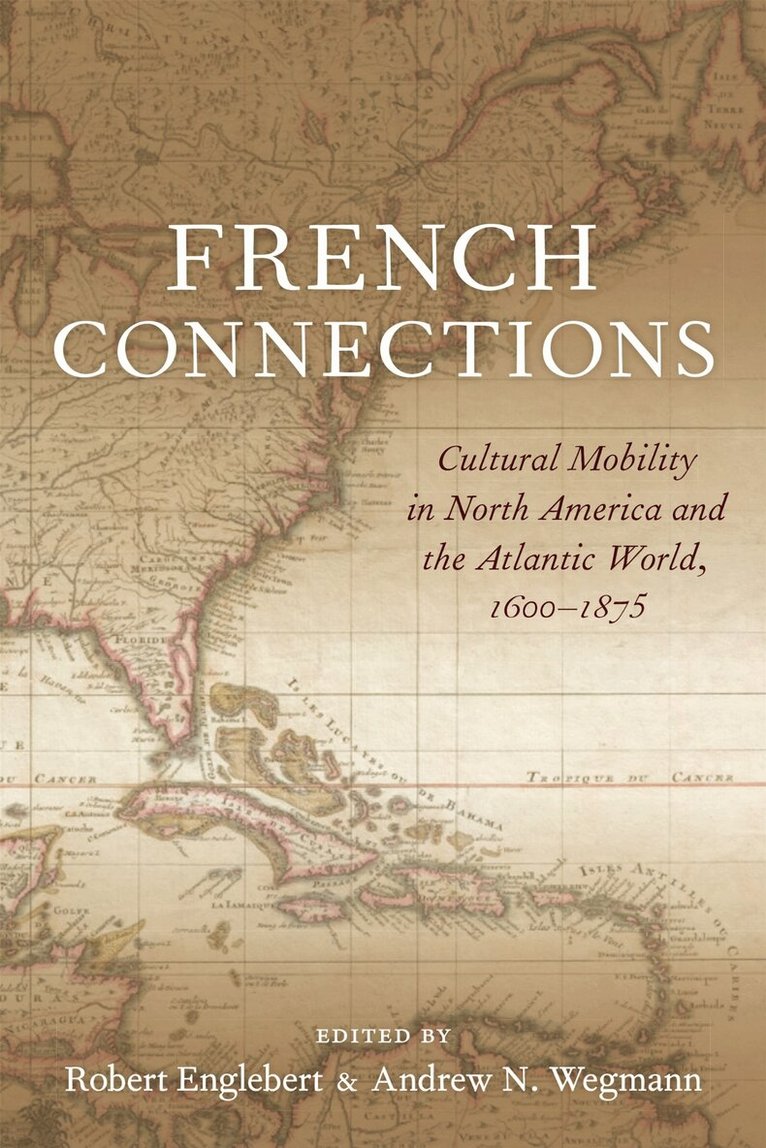
French Connections
Cultural Mobility in North America and the Atlantic World, 1600–1875
Häftad, Engelska, 2022
381 kr
Skickas inom 10-15 vardagar
French Connections examines how the movement of people, ideas, and social practices contributed to the complex processes and negotiations involved in being and becoming French in North America and the Atlantic World between the years 1600 and 1875. Engaging a wide range of topics, from religious and diplomatic performance to labor migration, racialization, and both imagined and real conceptualizations of "Frenchness" and "Frenchification," this volume argues that cultural mobility was fundamental to the development of French colonial societies and the collective identities they housed. Cases of cultural formation and dislocation in places as diverse as Quebec, the Illinois Country, Detroit, Haiti, Acadia, New England, and France itself demonstrate the broad variability of French cultural mobility that took place throughout this massive geographical space. Nevertheless, these communities shared the same cultural root in the midst of socially and politically fluid landscapes, where cultural mobility came to define, and indeed sustain, communal and individual identities in French North America and the Atlantic World.Drawing on innovative new scholarship on Louisiana and New Orleans, the editors and contributors to French Connections look to refocus the conversation surrounding French colonial interconnectivity by thinking about mobility as a constitutive condition of culture; from this perspective, separate "spheres" of French colonial culture merge to reveal a broader, more cohesive cultural world. The comprehensive scope of this collection will attract scholars of French North America, early American history, Atlantic World history, Caribbean studies, Canadian studies, and frontier studies. With essays from established, award-winning scholars such as Brett Rushforth, Leslie Choquette, Jay Gitlin, and Christopher Hodson as well as from new, progressive thinkers such as Mairi Cowan, William Brown, Karen L. Marrero, and Robert D. Taber, French Connections promises to generate interest and value across an extensive and diverse range of concentrations.
2 040 kr
Skickas inom 3-6 vardagar
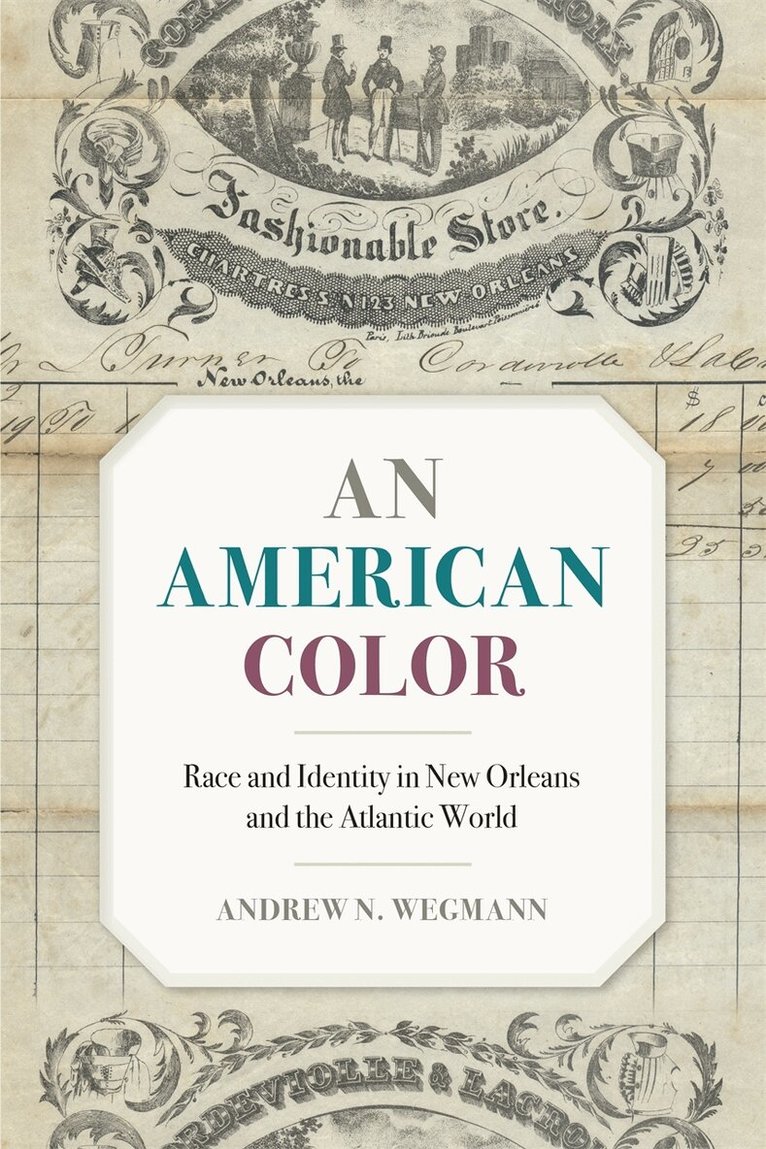
For decades, scholars have conceived of the coastal city of New Orleans as a remarkable outlier, an exception to nearly every “rule” of accepted U.S. historiography. A frontier town of the circum-Caribbean, the popular image of New Orleans has remained a vestige of North America’s European colonial era rather than an Atlantic city on the southern coast of the United States. Beginning with the French founding of New Orleans in 1718 and concluding with the outbreak of the American Civil War in 1861, An American Color seeks to correct this vision. By tracing the impact of racial science, law, and personal reputation and identity through multiple colonial and territorial regimes, it shows how locally born mulâtres in French New Orleans became part of a self-conscious, identifiable community of Creoles of color in the United States. An American Color places this local history in the wider context of the North American continent and the Atlantic world. This book shows that New Orleans and its free population of color did not develop in a cultural, legal, or intellectual vacuum. More than just a study of race and law, this work tells a story of humanity in the Atlantic world, a story of how a people on the French colonial frontier in the mid-eighteenth century became unlikely, accepted parts of a vast political, social, and racial United States without ever leaving home.
529 kr
Skickas inom 3-6 vardagar
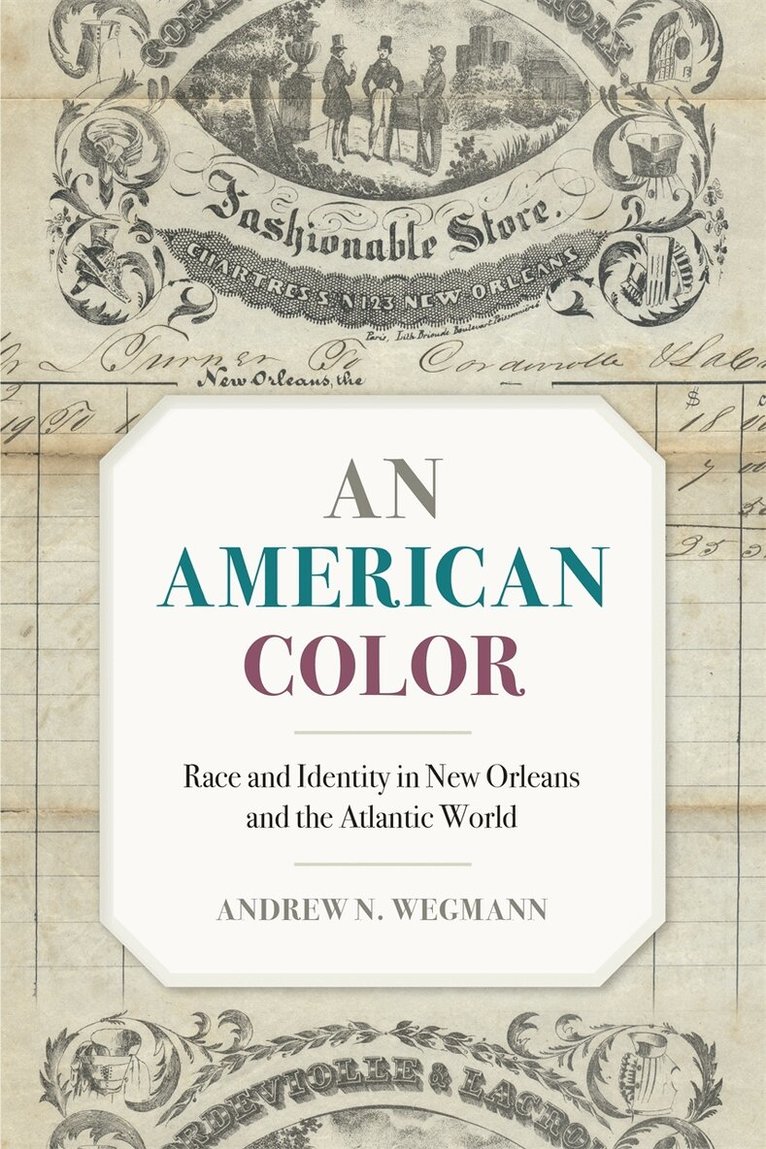
For decades, scholars have conceived of the coastal city of New Orleans as a remarkable outlier, an exception to nearly every “rule” of accepted U.S. historiography. A frontier town of the circum-Caribbean, the popular image of New Orleans has remained a vestige of North America’s European colonial era rather than an Atlantic city on the southern coast of the United States. Beginning with the French founding of New Orleans in 1718 and concluding with the outbreak of the American Civil War in 1861, An American Color seeks to correct this vision. By tracing the impact of racial science, law, and personal reputation and identity through multiple colonial and territorial regimes, it shows how locally born mulâtres in French New Orleans became part of a self-conscious, identifiable community of Creoles of color in the United States. An American Color places this local history in the wider context of the North American continent and the Atlantic world. This book shows that New Orleans and its free population of color did not develop in a cultural, legal, or intellectual vacuum. More than just a study of race and law, this work tells a story of humanity in the Atlantic world, a story of how a people on the French colonial frontier in the mid-eighteenth century became unlikely, accepted parts of a vast political, social, and racial United States without ever leaving home.