Andrew Zisserman – författare
Visar alla böcker från författaren Andrew Zisserman. Handla med fri frakt och snabb leverans.
17 produkter
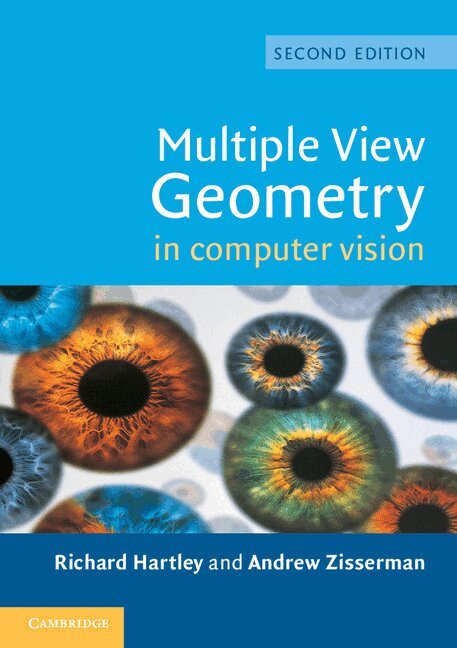
Multiple View Geometry in Computer Vision
Av Richard Hartley, Andrew Zisserman
Häftad, 2004
1610 kr
Lägg i varukorg
A basic problem in computer vision is to understand the structure of a real world scene given several images of it. Techniques for solving this problem are taken from projective geometry and photogrammetry. Here, the authors cover the geometric principles and their algebraic representation in terms …
3D Structure from Images - SMILE 2000
Second European Workshop on 3D Structure from Multiple Images of Large-Scale Environments Dublin, Ireland, July 12, 2000, Revised Papers
Av M. Pollefeys, Marc Pollefeys m. fl.
Häftad, 2001
552 kr
Lägg i varukorg
This volume contains the ?nal version of the papers originally presented at the second SMILE workshop 3D Structure from Multiple Images of Large-scale Environments, which was held on 1-2 July 2000 in conjunction with the Sixth European Conference in Computer Vision at Trinity College Dublin. The …
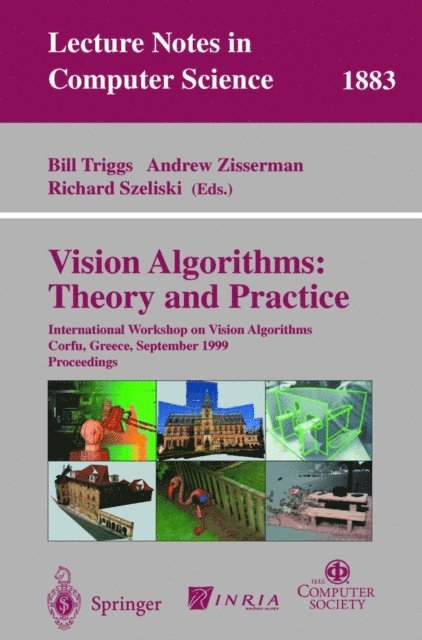
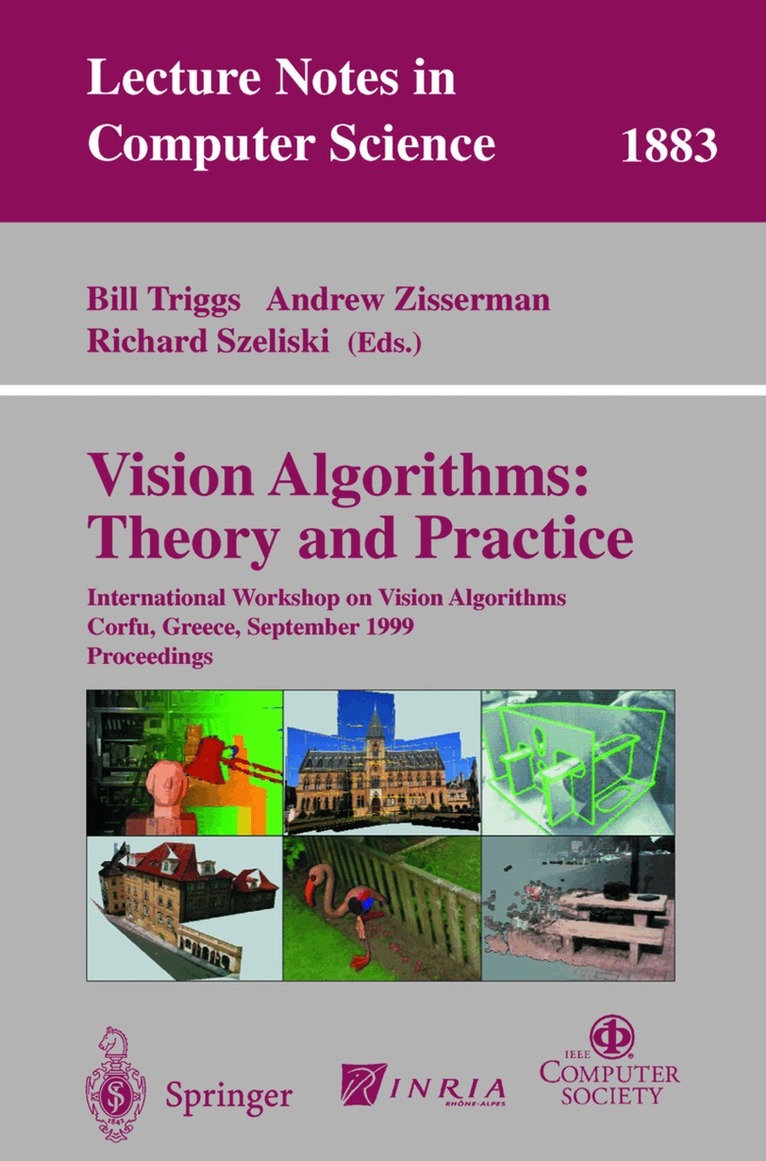
Vision Algorithms: Theory and Practice
International Workshop on Vision Algorithms Corfu, Greece, September 21-22, 1999 Proceedings
Av Richard Szeliski, Andrew Zisserman m. fl.
E-bok, 2003
755 kr
Lägg i varukorg
This book constitutes the thoroughly refereed post-workshop proceedings of the International Workshop on Vision Algorithms held in Corfu, Greece in September 1999 in conjunction with ICCV''99. The 15 revised full papers presented were carefully reviewed and selected from 65 submissions; each paper …
3D Structure from Images - SMILE 2000
Second European Workshop on 3D Structure from Multiple Images of Large-Scale Environments Dublin, Ireland, July 12, 2000, Revised Papers
Av Andrew Fitzgibbon, Andrew Zisserman m. fl.
E-bok, 2003
734 kr
Lägg i varukorg
This volume contains the ?nal version of the papers originally presented at the second SMILE workshop 3D Structure from Multiple Images of Large-scale Environments, which was held on 1-2 July 2000 in conjunction with the Sixth European Conference in Computer Vision at Trinity College Dublin. The …
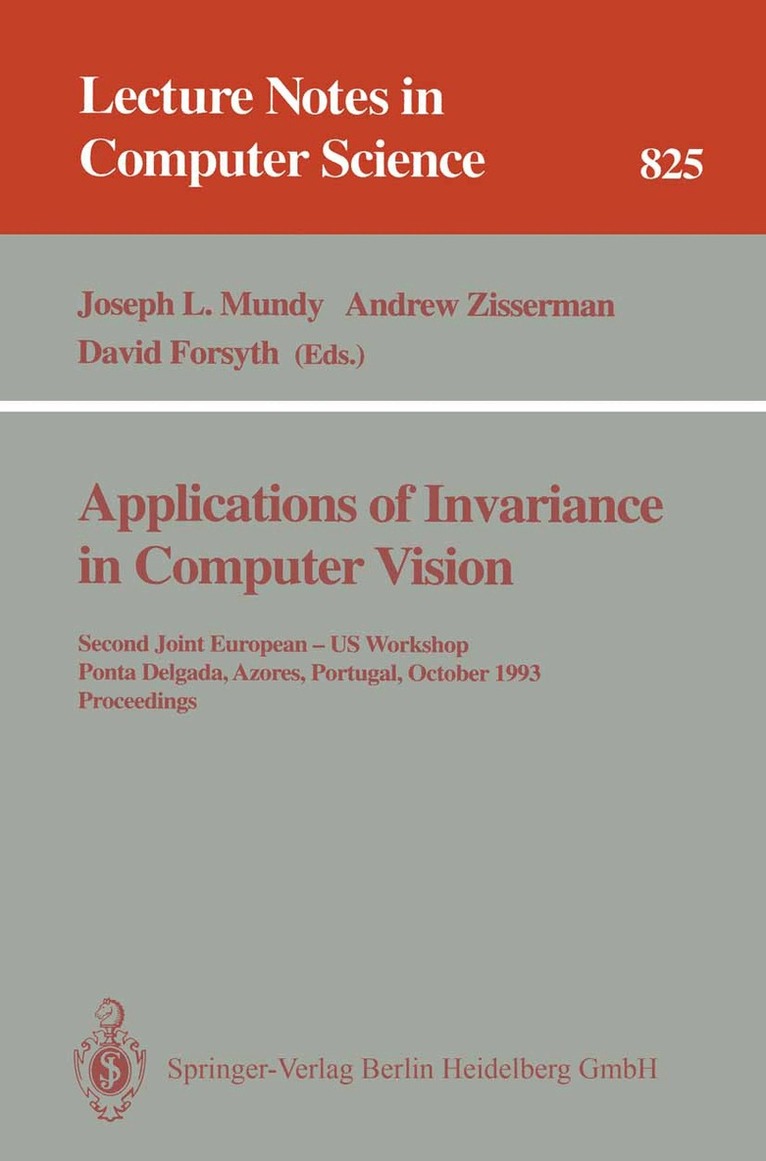
Applications of Invariance in Computer Vision
Second Joint European - US Workshop, Ponta Delgada, Azores, Portugal, October 9 - 14, 1993. Proceedings
Av Joseph L. Mundy, Andrew Zisserman m. fl.
Häftad, 1994
568 kr
Lägg i varukorg
This book is the proceedings of the Second Joint European-US Workshop on Applications of Invariance to Computer Vision, held at Ponta Delgada, Azores, Portugal in October 1993.The book contains 25 carefully refereed papers by distinguished researchers. The papers cover all relevant foundational …
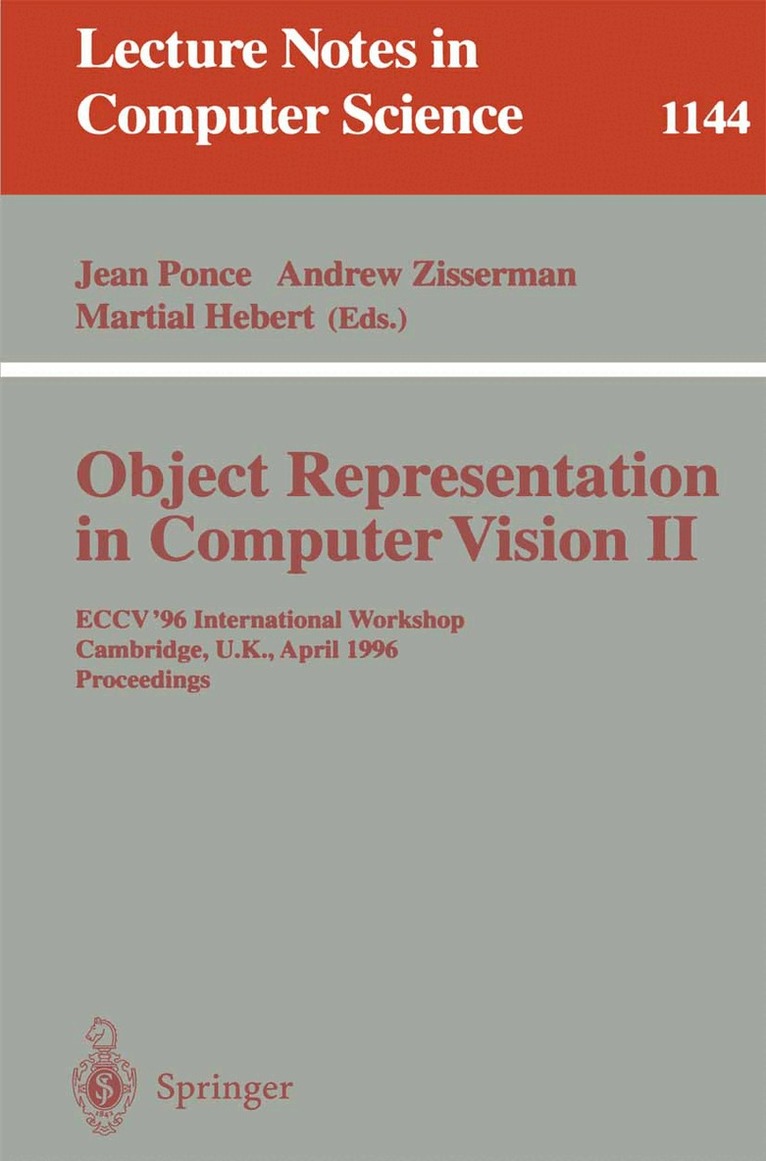
Object Representation in Computer Vision II
ECCV '96 International Workshop, Cambridge, UK, April 13 - 14, 1996. Proceedings
Av Jean Ponce, Andrew Zisserman m. fl.
Häftad, 1996
568 kr
Lägg i varukorg
This book constitutes the strictly refereed post-workshop proceedings of the second International Workshop on Object Representation in Computer Vision, held in conjunction with ECCV '96 in Cambridge, UK, in April 1996.The 15 revised full papers contained in the book were selected from 45 …
Vision Algorithms: Theory and Practice
International Workshop on Vision Algorithms Corfu, Greece, September 21-22, 1999 Proceedings
Av A. Zisserman, Bill Triggs m. fl.
Häftad, 2000
568 kr
Lägg i varukorg
This book constitutes the thoroughly refereed post-workshop proceedings of the International Workshop on Vision Algorithms held in Corfu, Greece in September 1999 in conjunction with ICCV'99.The 15 revised full papers presented were carefully reviewed and selected from 65 submissions; each paper is …
Toward Category-Level Object Recognition
Av Jean Ponce, Martial Hebert m. fl.
Häftad, 2006
1129 kr
Lägg i varukorg
Although research in computer vision for recognizing 3D objects in photographs dates back to the 1960s, progress was relatively slow until the turn of the millennium, and only now do we see the emergence of effective techniques for recognizing object categories with different appearances under …
Toward Category-Level Object Recognition
Av Andrew Zisserman, Cordelia Schmid m. fl.
E-bok, 2007
1502 kr
Lägg i varukorg
Although research in computer vision for recognizing 3D objects in photographs dates back to the 1960s, progress was relatively slow until the turn of the millennium, and only now do we see the emergence of effective techniques for recognizing object categories with different appearances under …
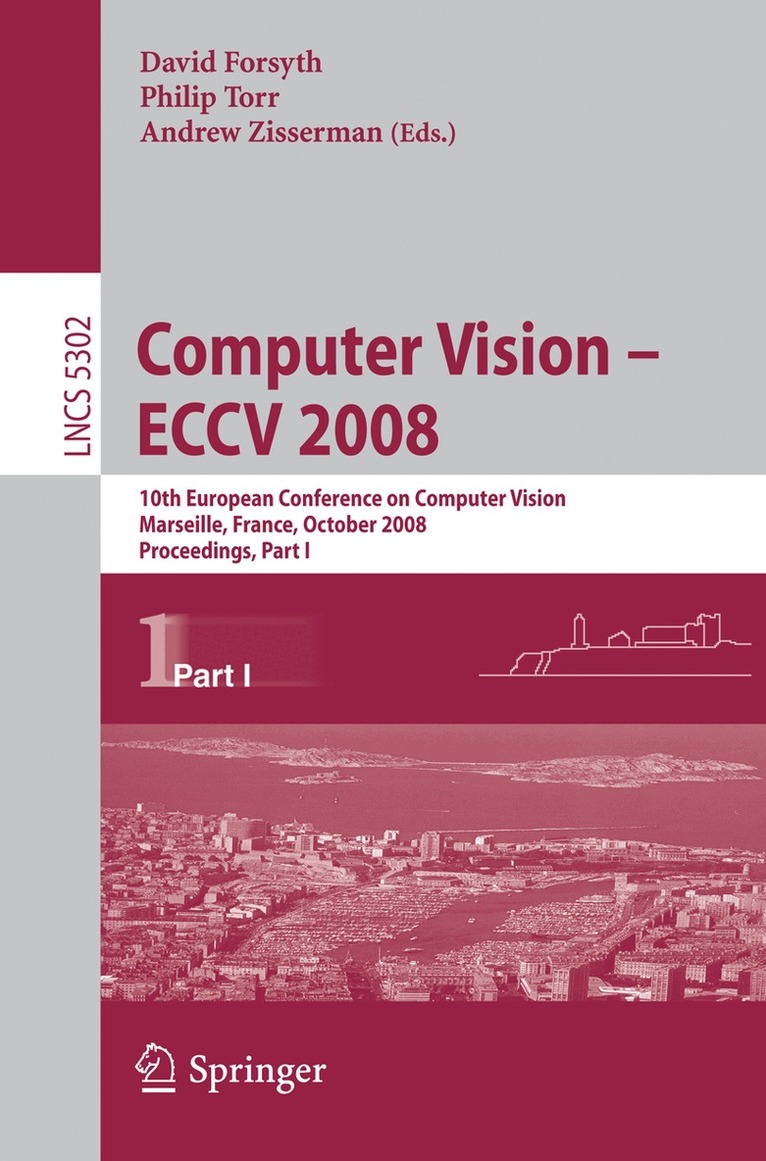
Computer Vision - ECCV 2008
10th European Conference on Computer Vision, Marseille, France, October 12-18, 2008, Proceedings, Part I
Av David Forsyth, Philip Torr m. fl.
Häftad, 2008
1129 kr
Lägg i varukorg
Welcome to the 2008EuropeanConference onComputer Vision. These proce- ings are the result of a great deal of hard work by many people. To produce them, a total of 871 papers were reviewed. Forty were selected for oral pres- tation and 203 were selected for poster presentation, yielding acceptance …
Computer Vision - ECCV 2008
10th European Conference on Computer Vision, Marseille, France, October 12-18, 2008, Proceedings, Part I
Av Andrew Zisserman, Philip Torr m. fl.
E-bok, 2008
1427 kr
Lägg i varukorg
Welcome to the 2008EuropeanConference onComputer Vision. These proce- ings are the result of a great deal of hard work by many people. To produce them, a total of 871 papers were reviewed. Forty were selected for oral pres- tation and 203 were selected for poster presentation, yielding acceptance …
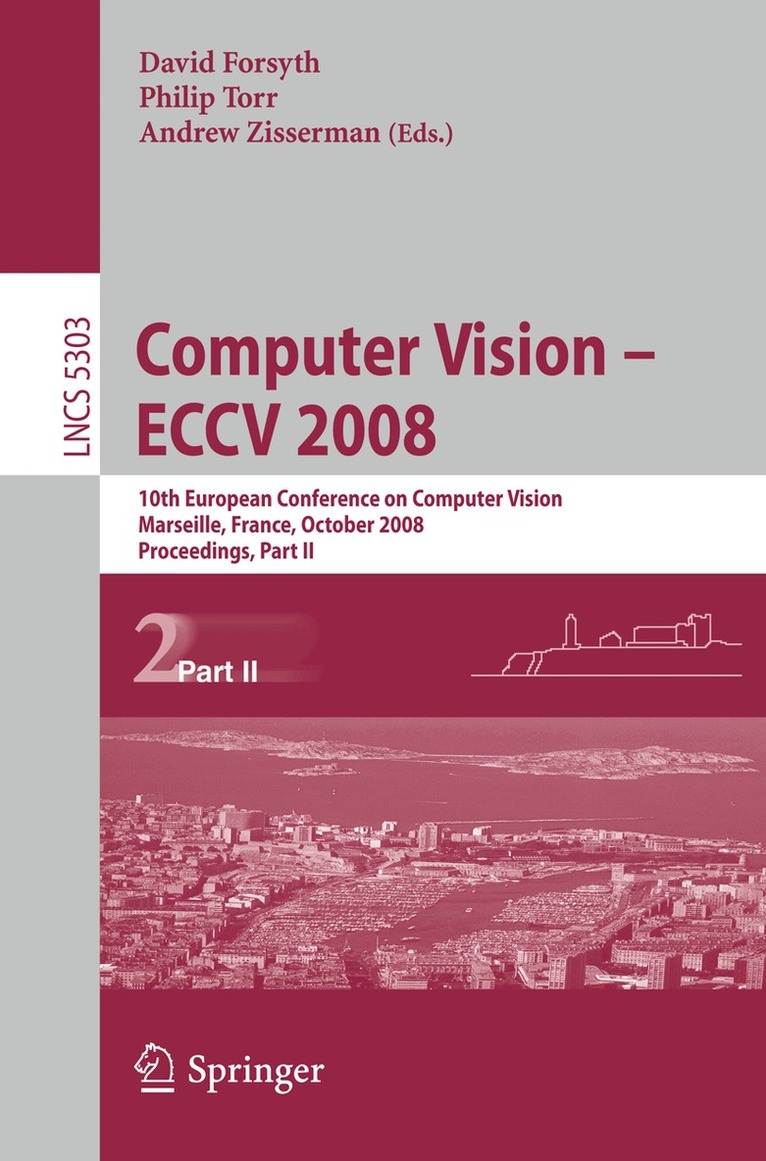
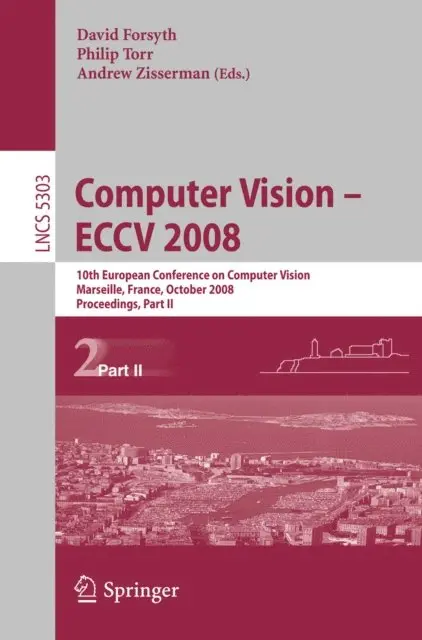
Computer Vision - ECCV 2008
10th European Conference on Computer Vision, Marseille, France, October 12-18, 2008. Proceedings, Part II
Av David Forsyth, Philip Torr m. fl.
Häftad, 2008
1129 kr
Lägg i varukorg
The four-volume set comprising LNCS volumes 5302/5303/5304/5305 constitutes the refereed proceedings of the 10th European Conference on Computer Vision, ECCV 2008, held in Marseille, France, in October 2008. The 243 revised papers presented were carefully reviewed and selected from a total of 871 …
Computer Vision - ECCV 2008
10th European Conference on Computer Vision, Marseille, France, October 12-18, 2008. Proceedings, Part II
Av Andrew Zisserman, Philip Torr m. fl.
E-bok, 2008
1459 kr
Lägg i varukorg
The four-volume set comprising LNCS volumes 5302/5303/5304/5305 constitutes the refereed proceedings of the 10th European Conference on Computer Vision, ECCV 2008, held in Marseille, France, in October 2008. The 243 revised papers presented were carefully reviewed and selected from a total of 871 …
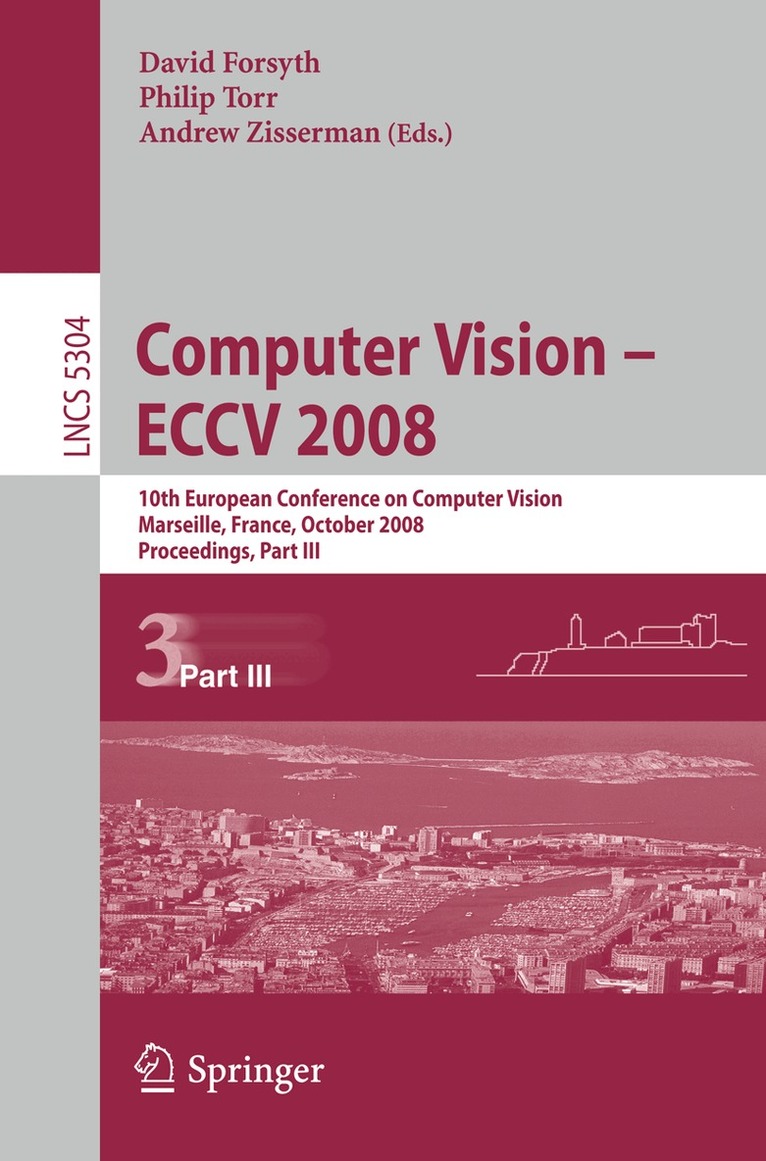
Computer Vision - ECCV 2008
10th European Conference on Computer Vision, Marseille, France, October 12-18, 2008, Proceedings, Part III
Av David Forsyth, Philip Torr m. fl.
Häftad, 2008
1129 kr
Lägg i varukorg
Welcome to the 2008EuropeanConference onComputer Vision. These proce- ings are the result of a great deal of hard work by many people. To produce them, a total of 871 papers were reviewed. Forty were selected for oral pres- tation and 203 were selected for poster presentation, yielding acceptance …
Computer Vision - ECCV 2008
10th European Conference on Computer Vision, Marseille, France, October 12-18, 2008, Proceedings, Part III
Av Andrew Zisserman, Philip Torr m. fl.
E-bok, 2008
1427 kr
Lägg i varukorg
Welcome to the 2008EuropeanConference onComputer Vision. These proce- ings are the result of a great deal of hard work by many people. To produce them, a total of 871 papers were reviewed. Forty were selected for oral pres- tation and 203 were selected for poster presentation, yielding acceptance …
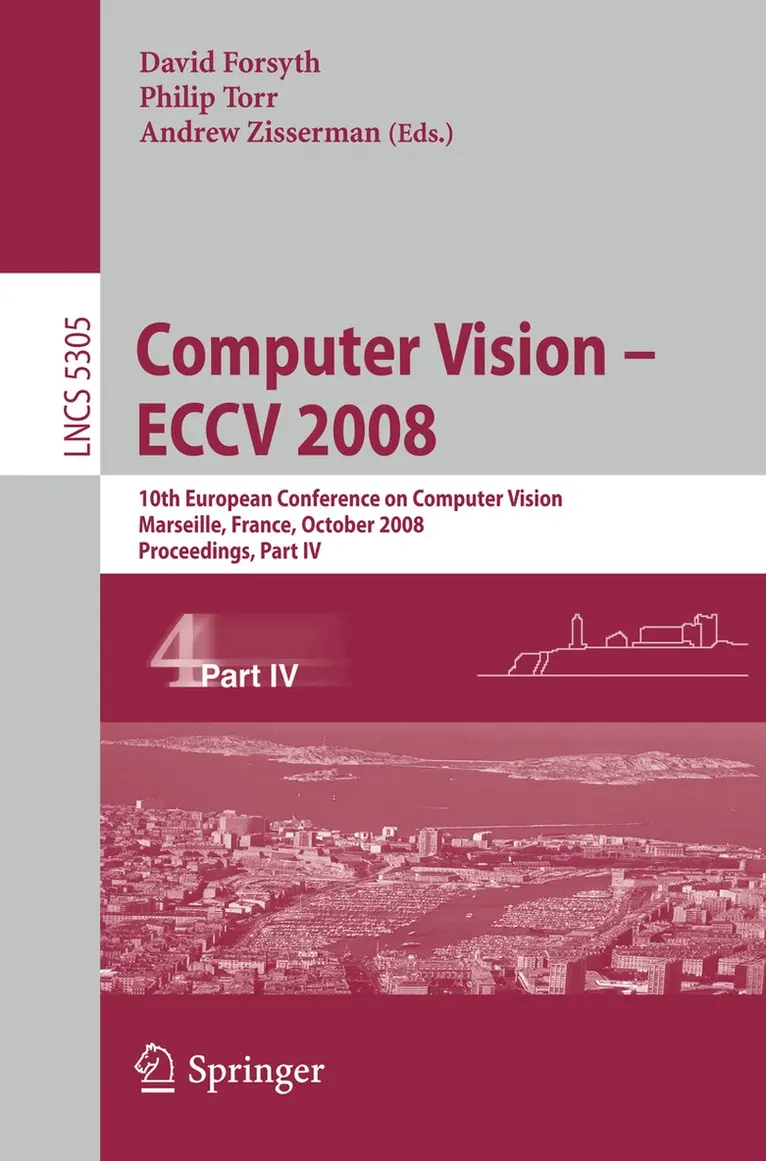
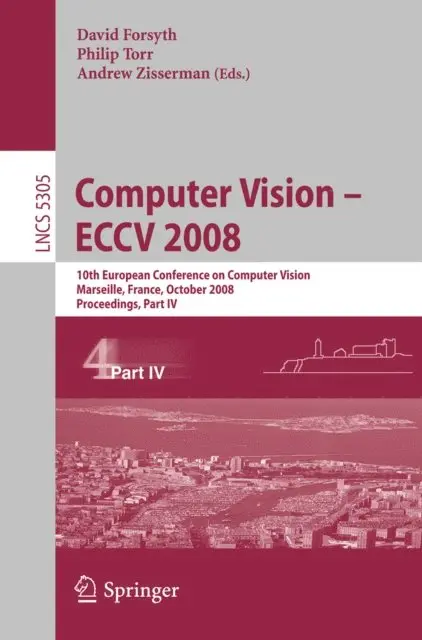
Computer Vision - ECCV 2008
10th European Conference on Computer Vision, Marseille, France, October 12-18, 2008, Proceedings, Part IV
Av David Forsyth, Philip Torr m. fl.
Häftad, 2008
1129 kr
Lägg i varukorg
Welcome to the 2008EuropeanConference onComputer Vision. These proce- ings are the result of a great deal of hard work by many people. To produce them, a total of 871 papers were reviewed. Forty were selected for oral pres- tation and 203 were selected for poster presentation, yielding acceptance …
Computer Vision - ECCV 2008
10th European Conference on Computer Vision, Marseille, France, October 12-18, 2008, Proceedings, Part IV
Av Andrew Zisserman, Philip Torr m. fl.
E-bok, 2008
1459 kr
Lägg i varukorg
Welcome to the 2008EuropeanConference onComputer Vision. These proce- ings are the result of a great deal of hard work by many people. To produce them, a total of 871 papers were reviewed. Forty were selected for oral pres- tation and 203 were selected for poster presentation, yielding acceptance …