Andy Doolen – författare
Visar alla böcker från författaren Andy Doolen. Handla med fri frakt och snabb leverans.
4 produkter
4 produkter
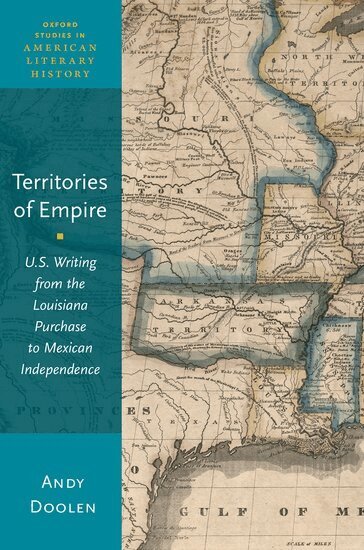
Territories of Empire
U.S. Writing from the Louisiana Purchase to Mexican Independence
Häftad, Engelska, 2019
468 kr
Skickas inom 5-8 vardagar
In contrast to later imperial pursuits in Mexico, Cuba, and the Philippines, the early United States extended its boundaries through less sensational modes of territorialization: land deals, slavery expansion, treaty diplomacy, immigration and settlement, and the addition of new states on the border. Never the exclusive top-down product of any single strategic plan, empire building relied rather on a hazy, ever-shifting boundary between state and non-state action.Territories of Empire examines the border writings of U.S. explorers, politicians, travelers, novelists, merchants, newspapermen, and other eye-witnesses to the rapid expansion of the United States in the aftermath of the Louisiana Purchase. It traces how different authors and texts imagined the relations between nation-state and border and reveals how continental ambitions were achieved through the uneven and unpredictable process of territorialization. Andy Doolen looks to writings as dissimilar as Kentucky newspaper accounts of the Aaron Burr conspiracy, the explorer Zebulon Pike's 1810 account of making peace with the Santee Sioux before becoming terribly lost near the upper Rio Grande, and Timothy Flint's 1826 novel about a young New Englander who fights in the Mexican independence struggle in showing how national sentiments were galvanized in support of greater territorial and commercial growth. To this end, Doolen makes clear how both private citizens and government officials collectively authored the spatial logic of a continental republic.Combining textual analysis with theories of transnationalism and empire, Territories of Empire reconstructs the development of a continental imaginary highly attuned to the objectives of U.S. imperialism, while often betraying an unsettling awareness of resistance and diversity beyond the border.
Del 7 - Oxford Studies in American Literary History
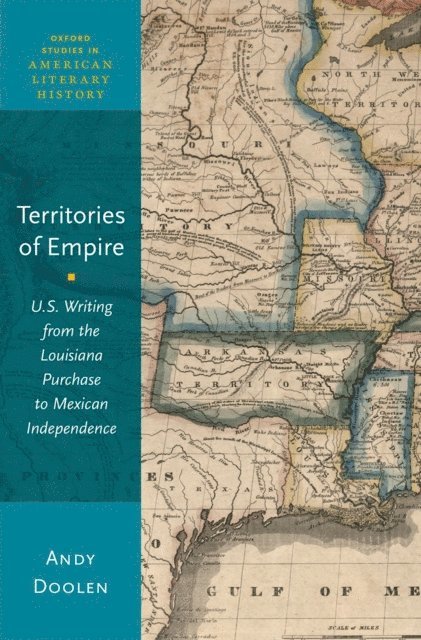
Territories of Empire
U.S. Writing from the Louisiana Purchase to Mexican Independence
Inbunden, Engelska, 2014
909 kr
Skickas inom 5-8 vardagar
Practically speaking, nineteenth-century American literary history really refers to writings from the East seaboard of the United States. In fact, no author from the West prior to Mark Twain has been admitted into the canon of American literature, a longstanding bias that continues to define the narrative arc of U.S. literary nationalism. Western authors are absent from the canon and classroom largely because their "regional writings" are assumed to be second-rate in comparison with the ostensibly more complex literary cultures of the eastern states. Andy Doolen's monograph reorients literary history, turning to the neglected Western writings that shaped the distinctive process of U.S. expansionism in the years following the Louisiana Purchase. As Doolen shows, these "cartographic texts" legitimated U.S. occupancy of contested border zones and justified the nation's move westward. In five chapters, Territories of Empire surveys an under-studied archive of these texts, ranging from exploration narratives, novels, oratory, and natural histories, to autobiographies, travel narratives, poetry, and periodical literature. In writings as dissimilar as protest petitions from white Louisianans, Kentucky newspaper accounts of the Burr conspiracy, the explorer Zebulon Pike's 1810 account of the upper Rio Grande, and Timothy Flint's 1826 novel about a young New Englander who fights in the Mexican independence struggle, Americans were expanding the national imagination into new continental dimensions. Ultimately, these texts show how literature reflected and fed the expansionist ideology of the U.S. by linking national greatness to the urgent necessity of territorial and commercial growth.
326 kr
Skickas inom 7-10 vardagar
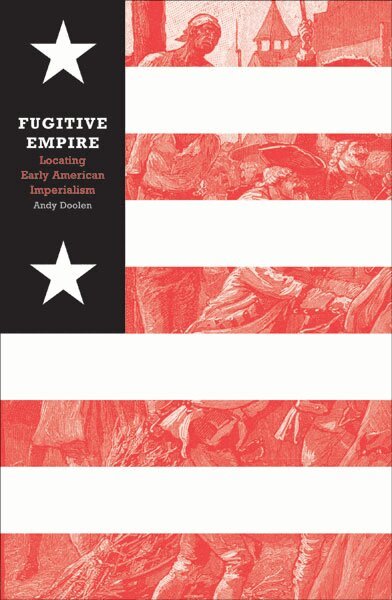
In Fugitive Empire, Andy Doolen investigates the relationships among race, nation, and empire in colonial and early national America, revealing how whiteness and American identity were conflated to stabilize racial hierarchy and to repulse challenges to national policies of slavery, war, and continental expansion. Fugitive Empire begins not in 1776 but in 1741 with the New York Conspiracy trials. Linking them to the British conflict with the Spanish in the West Indies, Doolen describes how white colonists were led to suspect all foreigners, particularly slaves, as insurgents. He shows how this protonational story resonated later in the suppression of resistance to the Fugitive Slave Law of 1793. In addition to examining the only extant record of the New York Conspiracy trials, Doolen catalogs the rampant fear of aliens in Charles Brockden Brown's novels; places James Fenimore Cooper's The Pioneers in the context of early efforts to relocate African-Americans to Liberia; and considers Pequot writer William Apess, whose writing on Native rights landed him in jail. Bridging the gap between the British Empire and the new United States, Doolen concludes that imperial authority lies at the heart of American republicanism, an unstable mixture of idealism, force, and pragmatism, wielded in the name of freedom even today. Andy Doolen is assistant professor of American literature and American studies at the University of Kentucky.
371 kr
Skickas inom 7-10 vardagar
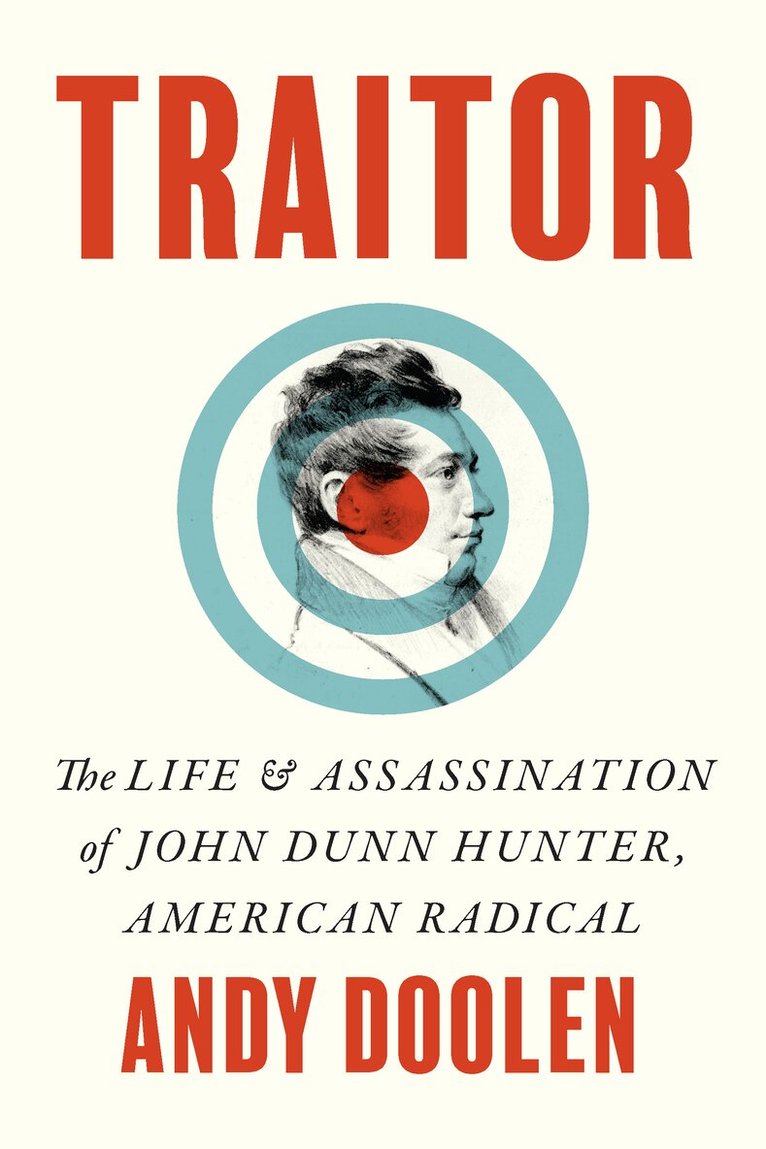
The story of John Dunn Hunter's remarkable life, tragic betrayal, and disgraceful murder.John Dunn Hunter was many things: a frontier hero, a writer, a celebrity at home and abroad, and, ultimately, the victim of a deadly conspiracy. Born to white parents in 1800, he was captured as a young child by the Kickapoo and later raised by the Kansa and then the Osage. As a young man, he left his Osage family and crossed the Mississippi into the United States, where he became an ardent and persuasive voice in favor of Indigenous sovereignty in the face of western expansion and the removal of native populations. In this gripping biography, Andy Doolen chronicles Hunter's compelling life and disgraceful murder. Often referred to as the "white Indian," Hunter published a gripping account of his life story and held court with esteemed figures of his day, from Presidents Jefferson and Madison to the Duke of Sussex and visionary reformer Robert Owen. But advocating for the rights of Indigenous people and nations painted a target on his back. Officials in the War Department accused him of being an imposter and the author of a hoax, but Hunter never had the chance to defend himself. He was in Texas at the time, one of the leaders in a pan-Indian movement for sovereignty, when he was assassinated in the infamous Fredonian Rebellion. Although Hunter could not have known it at the time, he was at the vanguard of a movement for an inclusive vision of democracy that embraced Indigenous rights and humanity rather than excluding and denying them. Hunter's story is a stark reminder of the work that still must be done to fulfill the promises of the American experiment.