Angela Failler – författare
Visar alla böcker från författaren Angela Failler. Handla med fri frakt och snabb leverans.
2 produkter
2 produkter
342 kr
Skickas inom 11-20 vardagar
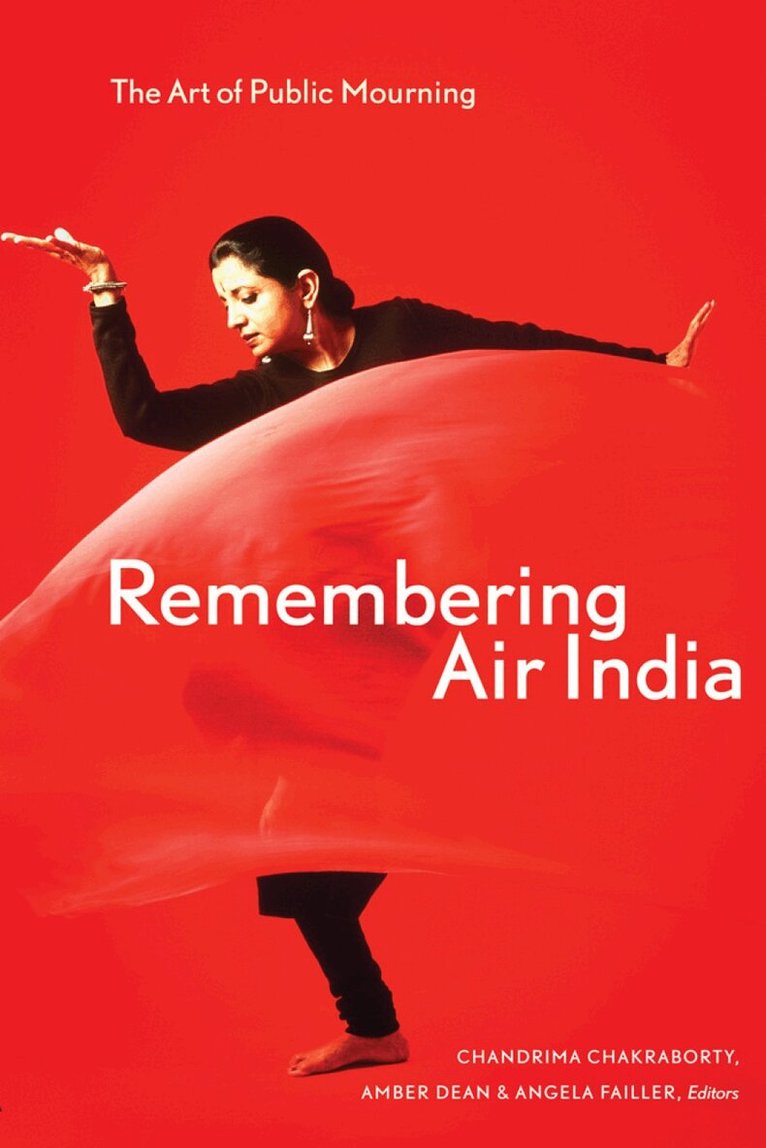
On June 23, 1985, the bombing of Air India Flight 182 killed 329 people, most of them Canadians. Today this pivotal event in Canada’s history is hazily remembered, yet certain interests have shaped how the tragedy is woven into public memory, and even exploited to advance a strategic national narrative. Remembering Air India insists that we “remember Air India otherwise.” This collection investigates the Air India bombing and its implications for current debates about racism, terrorism, and citizenship. Drawing together academic analysis, testimony, visual arts, and creative writing, this innovative volume tenders a new public record of the bombing, one that shows how important creative responses are for deepening our understanding of the event and its aftermath.Contributions by: Cassel Busse, Chandrima Chakraborty, Amber Dean, Rita Kaur Dhamoon, Angela Failler, Teresa Hubel, Suvir Kaul, Elan Marchinko, Eisha Marjara, Bharati Mukherjee, Lata Pada, Uma Parameswaran, Sherene H. Razack, Renée Sarojini Saklikar, Maya Seshia, Karen Sharma, Deon Venter, Padma Viswanathan
Del 1 - Exhibiting Theory
Museum Queeries: Two-Spirit, Indigiqueer, and LGBTTQ* Interventions into Museums, Archives, and Curating
Häftad, Engelska, 2026
579 kr
Kommande
This book explores Two-Spirit and LGBTTQ* contributions to and interventions in museums and museum studies, both as a means of addressing structural exclusions and of opening new modes of productive inquiry and activism. Building on the inroads that have been made into existing museological practice and scholarship, the collection brings new voices and concerns to the field. For the contributors to this volume, “queering the museum” is not only about addressing representations of gender and sexuality, but also challenging white privilege, racism, and settler colonialism among other structures of oppression as they operate alongside and with heteronormativity, homophobia, and transphobia in and beyond museums, archives, and galleries. To challenge these norms in the context of museums and other knowledge producing institutions means that “queering” must also, simultaneously and inextricably, be decolonial. That is, queering and decolonizing are inseparable strategies if we understand that heteronormativity and gender binaries are constructions that stem from colonial logics and are upheld by colonial institutions. The book features essays by artists, curators, and scholars—emerging and established—from a range of disciplines including Art History, Cultural Studies, Curatorial Studies, English, Indigenous Studies, Museum Studies, and Women’s and Gender Studies.