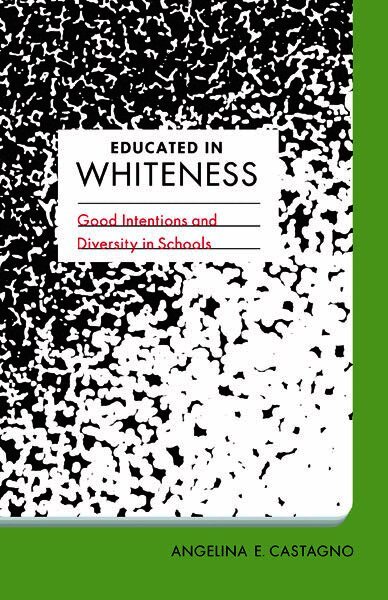
Angelina E. Castagno - Böcker
Visar alla böcker från författaren Angelina E. Castagno. Handla med fri frakt och snabb leverans.
6 produkter
6 produkter
275 kr
Skickas inom 7-10 vardagar
Educators across the nation are engaged in well-meaning efforts to address diversity in schools given the current context of NCLB, Race to the Top, and the associated pressures of standardization and accountability. Through rich ethnographic accounts of teachers in two demographically different secondary schools in the same urban district, Angelina E. Castagno investigates how whiteness operates in ways that thwart (and sometimes co-opt) even the best intentions and common sense-thus resulting in educational policies and practices that reinforce the status quo and protect whiteness rather than working toward greater equity.Whereas most discussions of the education of diverse students focus on the students and families themselves, Educated in Whiteness highlights the structural and ideological mechanisms of whiteness. In schools, whiteness remains dominant by strengthening and justifying the status quo while simultaneously preserving a veneer of neutrality, equality, and compassion. Framed by critical race theory and whiteness studies, this book employs concepts like interest convergence, a critique of liberalism, and the possessive investment in whiteness to better understand diversity-related educational policy and practice.Although in theory most diversity-related educational policies and practices are intended to bring about greater equity, too often in practice they actually maintain, legitimate, and so perpetuate whiteness. Castagno not only sheds light on this disconnect between the promises and practices of diversity-related initiatives but also provides insight into why the disconnect persists.
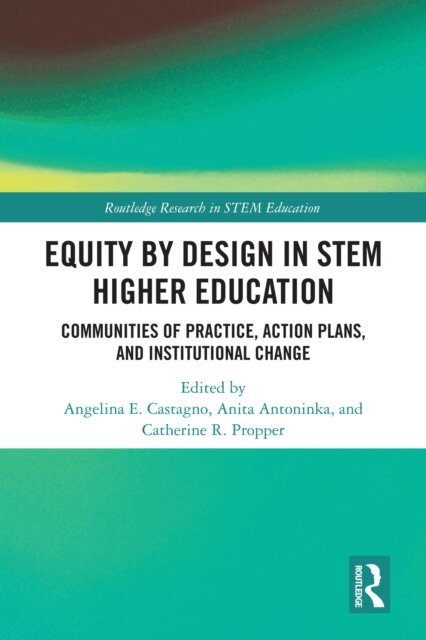
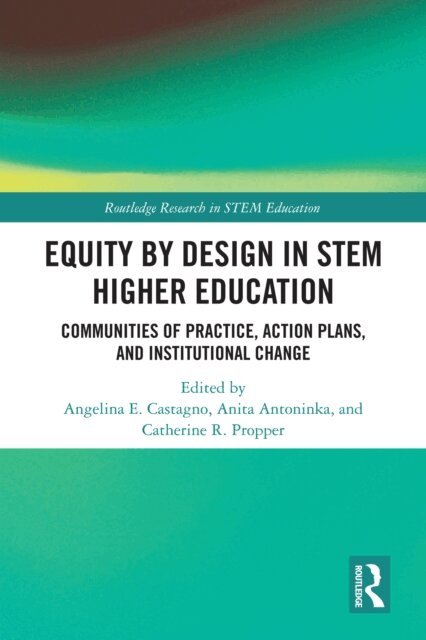
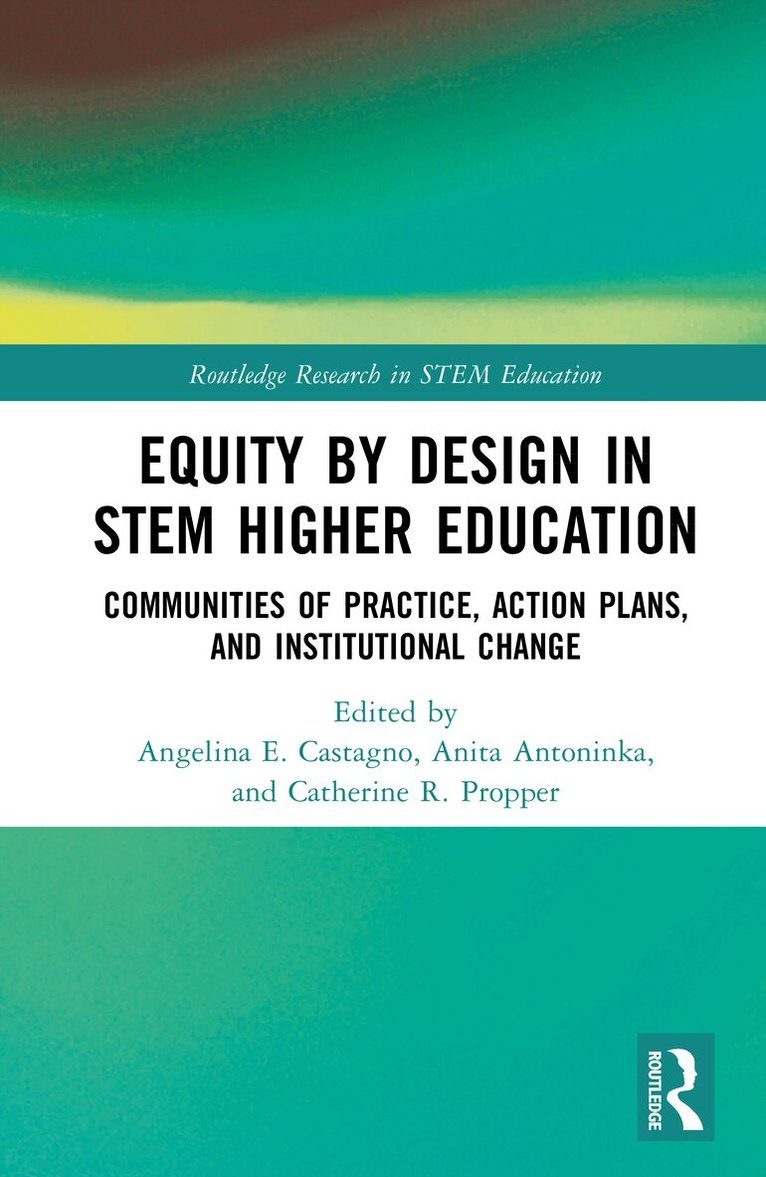
Equity by Design in STEM Higher Education
Communities of Practice, Action Plans, and Institutional Change
Inbunden, Engelska, 2026
2 194 kr
Kommande
This edited collection presents stories of how university STEM faculty can engage in systemic change towards greater equity. Sharing both successes and struggles, the collection highlights the impact of collective learning that a well-designed community of practice can have on both individual faculty members and the wider research community.All chapter contributors participated in carefully structured communities of practice designed to deepen their understanding of systemic racism and structural inequities in higher education, and use this understanding to develop concrete action plans to address an inequity within their sphere of influence. In each chapter, faculty reflect on their goals, implementation processes, measurable impacts, and the barriers and strategies they encountered along the way. Exploring breakthrough moments, ongoing struggles, and institutional contexts and relationships, these narratives reveal the breadth of equity-oriented initiatives across higher education and demonstrate how individual faculty can serve as catalysts for institutional change.A unique, and forward-thinking collection, this book will serve as both model and practical guide for educators seeking to advance similar equity work at their own institutions.
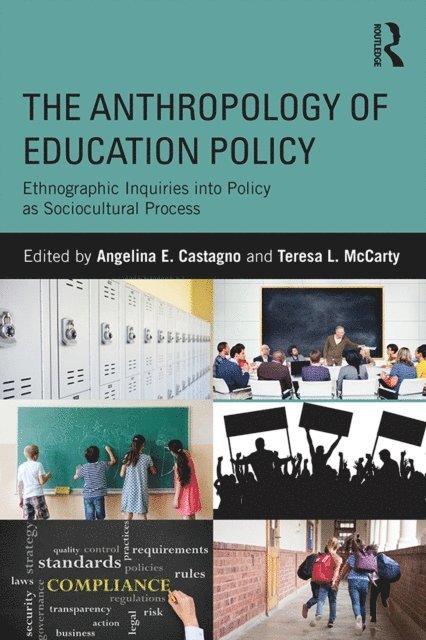
Anthropology of Education Policy
Ethnographic Inquiries into Policy as Sociocultural Process
Inbunden, Engelska, 2017
1 716 kr
Skickas inom 10-15 vardagar
Advancing a rapidly growing field of social science inquiry—the anthropology of policy—this volume extends and solidifies this body of work, focusing on education policy. Its goal is to examine timely issues in education policy from a critical anthropological, ethnographic, and comparative perspective, and through this to theorize new ways of understanding how policy "does its work." At the center is a commitment to an engaged anthropology of education policy that uses anthropological knowledge to imagine and foster more equitable and just forms of schooling. The authors examine the ways in which education policy processes create, reflect, and contest regimes of knowledge and power, sorting and stratifying people, ideas, and resources in particular ways. In contrast to conventional analyses of policy as text-based, dictated, linear, and rational, an anthropological perspective positions policy at the interface of top-down, bottom-up, and meso-level processes, and as de facto and de jure. Demonstrating how education policy operates as a social, cultural, and deeply ideological process "on the ground," each chapter clearly delineates the implications of these understandings for educational access, opportunity, and equity.Providing a single "go to" source on the disciplinary history, theoretical framework, methodology, and empirical applications of the anthropology of education policy across a range of education topics, policy debates, and settings, the book updates and expands on seminal works in the field, carving out an important niche in anthropological studies of public policy.
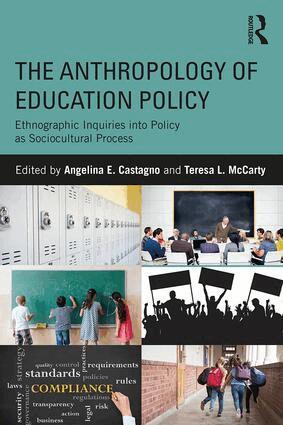
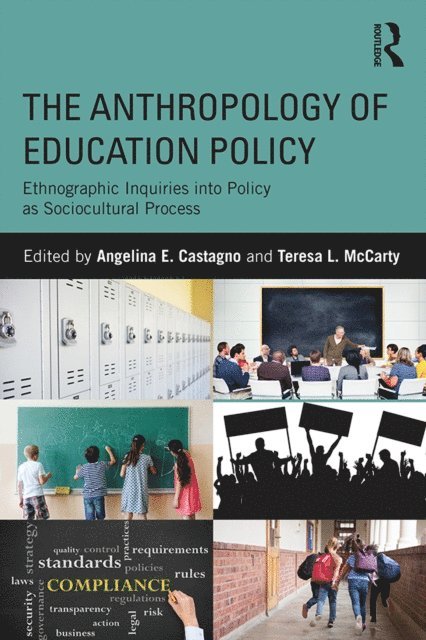
Anthropology of Education Policy
Ethnographic Inquiries into Policy as Sociocultural Process
Häftad, Engelska, 2017
599 kr
Skickas inom 10-15 vardagar
Advancing a rapidly growing field of social science inquiry—the anthropology of policy—this volume extends and solidifies this body of work, focusing on education policy. Its goal is to examine timely issues in education policy from a critical anthropological, ethnographic, and comparative perspective, and through this to theorize new ways of understanding how policy "does its work." At the center is a commitment to an engaged anthropology of education policy that uses anthropological knowledge to imagine and foster more equitable and just forms of schooling. The authors examine the ways in which education policy processes create, reflect, and contest regimes of knowledge and power, sorting and stratifying people, ideas, and resources in particular ways. In contrast to conventional analyses of policy as text-based, dictated, linear, and rational, an anthropological perspective positions policy at the interface of top-down, bottom-up, and meso-level processes, and as de facto and de jure. Demonstrating how education policy operates as a social, cultural, and deeply ideological process "on the ground," each chapter clearly delineates the implications of these understandings for educational access, opportunity, and equity.Providing a single "go to" source on the disciplinary history, theoretical framework, methodology, and empirical applications of the anthropology of education policy across a range of education topics, policy debates, and settings, the book updates and expands on seminal works in the field, carving out an important niche in anthropological studies of public policy.
1 155 kr
Skickas inom 7-10 vardagar
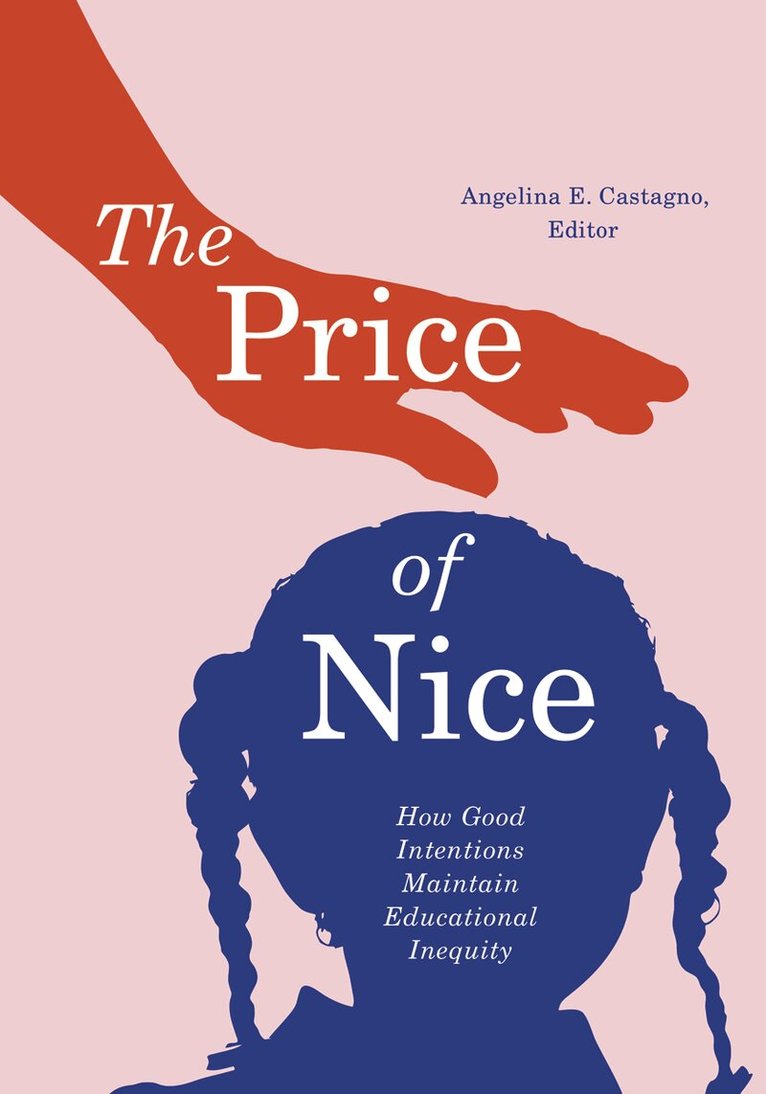
How being “nice” in school and university settings works to reinforce racialized, gendered, and (dis)ability-related inequities in education and societyBeing nice is difficult to critique. Niceness is almost always portrayed and felt as a positive quality. In schools, nice teachers are popular among students, parents, and administrators. And yet Niceness, as a distinct set of practices and discourses, is not actually good for individuals, institutions, or communities because of the way it maintains and reinforces educational inequity. In The Price of Nice, an interdisciplinary group of scholars explores Niceness in educational spaces from elementary schools through higher education to highlight how this seemingly benign quality reinforces structural inequalities. Grounded in data, personal narrative, and theory, the chapters show that Niceness, as a raced, gendered, and classed set of behaviors, functions both as a shield to save educators from having to do the hard work of dismantling inequity and as a disciplining agent for those who attempt or even consider disrupting structures and ideologies of dominance. Contributors: Sarah Abuwandi, Arizona State U; Colin Ben, U of Utah; Nicholas Bustamante, Arizona State U; Aidan/Amanda J. Charles, Northern Arizona U; Jeremiah Chin, Arizona State U; Sally Campbell Galman, U of Massachusetts; Frederick Gooding Jr., Texas Christian U; Deirdre Judge, Tufts U; Katie A. Lazdowski; RomÁn Liera, U of Southern California; Sylvia Mac, U of La Verne; Lindsey Malcolm-Piqueux, California Institute of Technology; Giselle Martinez Negrette, U of Wisconsin–Madison; Amber Poleviyuma, Arizona State U; Alexus Richmond, Arizona State U; Frances J. Riemer, Northern Arizona U; Jessica Sierk, St. Lawrence U; Bailey B. Smolarek, U of Wisconsin–Madison; Jessica Solyom, Arizona State U; Megan Tom, Arizona State U; Sabina Vaught, U of Oklahoma; Cynthia Diana Villarreal, U of Southern California; Kristine T. Weatherston, Temple U; Joseph C. Wegwert, Northern Arizona U; Marguerite Anne Fillion Wilson, Binghamton U; Jia-Hui Stefanie Wong, Trinity College; Denise Gray Yull, Binghamton U.
275 kr
Skickas inom 7-10 vardagar
How being “nice” in school and university settings works to reinforce racialized, gendered, and (dis)ability-related inequities in education and societyBeing nice is difficult to critique. Niceness is almost always portrayed and felt as a positive quality. In schools, nice teachers are popular among students, parents, and administrators. And yet Niceness, as a distinct set of practices and discourses, is not actually good for individuals, institutions, or communities because of the way it maintains and reinforces educational inequity. In The Price of Nice, an interdisciplinary group of scholars explores Niceness in educational spaces from elementary schools through higher education to highlight how this seemingly benign quality reinforces structural inequalities. Grounded in data, personal narrative, and theory, the chapters show that Niceness, as a raced, gendered, and classed set of behaviors, functions both as a shield to save educators from having to do the hard work of dismantling inequity and as a disciplining agent for those who attempt or even consider disrupting structures and ideologies of dominance. Contributors: Sarah Abuwandi, Arizona State U; Colin Ben, U of Utah; Nicholas Bustamante, Arizona State U; Aidan/Amanda J. Charles, Northern Arizona U; Jeremiah Chin, Arizona State U; Sally Campbell Galman, U of Massachusetts; Frederick Gooding Jr., Texas Christian U; Deirdre Judge, Tufts U; Katie A. Lazdowski; RomÁn Liera, U of Southern California; Sylvia Mac, U of La Verne; Lindsey Malcolm-Piqueux, California Institute of Technology; Giselle Martinez Negrette, U of Wisconsin–Madison; Amber Poleviyuma, Arizona State U; Alexus Richmond, Arizona State U; Frances J. Riemer, Northern Arizona U; Jessica Sierk, St. Lawrence U; Bailey B. Smolarek, U of Wisconsin–Madison; Jessica Solyom, Arizona State U; Megan Tom, Arizona State U; Sabina Vaught, U of Oklahoma; Cynthia Diana Villarreal, U of Southern California; Kristine T. Weatherston, Temple U; Joseph C. Wegwert, Northern Arizona U; Marguerite Anne Fillion Wilson, Binghamton U; Jia-Hui Stefanie Wong, Trinity College; Denise Gray Yull, Binghamton U.