Angie Varakis – författare
Visar alla böcker från författaren Angie Varakis. Handla med fri frakt och snabb leverans.
4 produkter
4 produkter
Häftad, Engelska, 2006
197 kr
Skickas inom 5-8 vardagar
Antigone, defying her uncle Creon's decree that her brother should remain unburied, challenges the morality of man's law overruling the laws of the gods. The clash between her and Creon with its tragic consequences have inspired continual reinterpretation. This translation by Don Taylor, accurate yet poetic, was made for a BBC TV production of the Theban Plays in 1986, which he directed.
Häftad, Engelska, 2008
166 kr
Skickas inom 5-8 vardagar
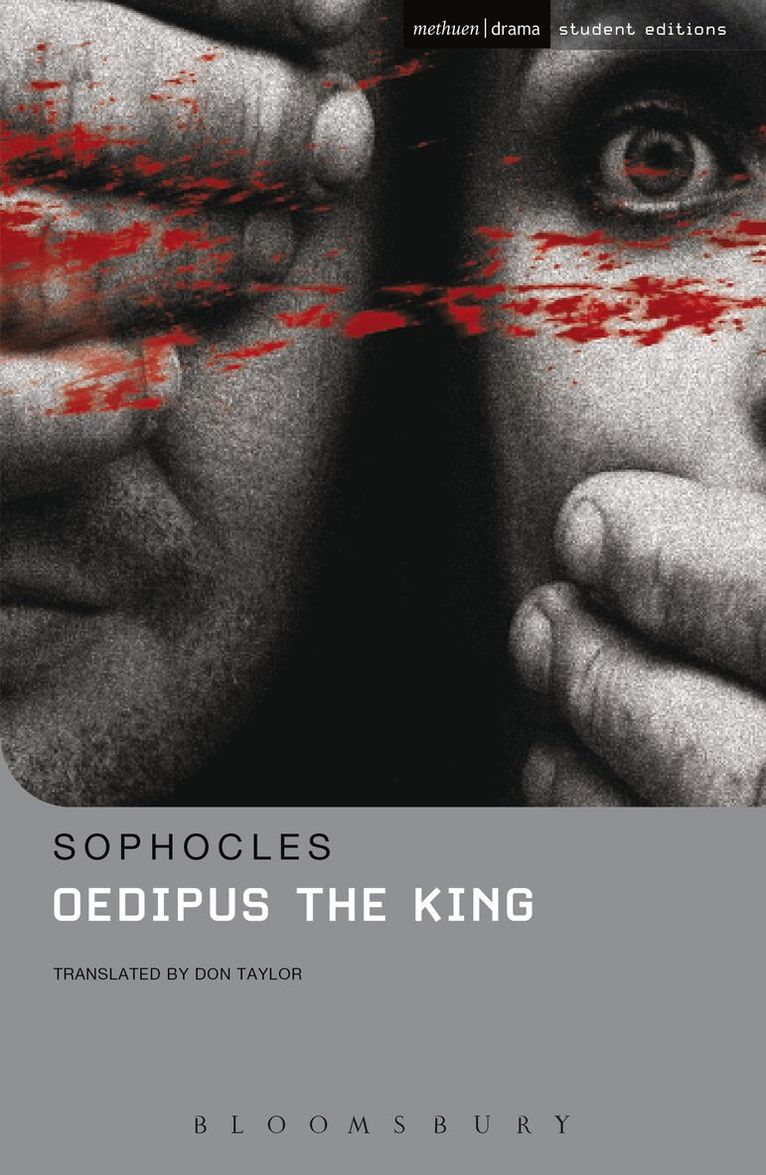
Since it was first performed in Athens in the 420s BC, Oedipus the King has been widely regarded as Sophocles' greatest tragedy and one of the foundation stones of western drama. Taken as a model by Aristotle in his Poetics, it became a yardstick for future generations. Since the play's rediscovery in the Renaissance, audiences - including Sigmund Freud - have found new interpretations and meanings in Sophocles' portrayal of the Theban king, inexorably pursuing the truth, only to discover that he has killed his father and married his mother. This translation by Don Taylor, accurate yet poetic, was made for a BBC TV production of the Theban Plays in 1986, which he also directed. Commentary and notes by Angie Varakis.
E-bok
PDF, Engelska, 2017209 kr
Läs direkt efter köp
The gods never move faster than when punishing men with the consequences of their own actions. Desperate to gain control over a city ravaged by civil war, Creon refuses to bury the body of Antigone''s rebellious brother. Outraged, she defies his edict. Creon condemns the young woman, his niece, to be buried alive. The people daren''t object but the prophet Teiresias warns that this tyranny will anger the gods: the rotting corpse is polluting the city. Creon hesitates and his fate is sealed. Sophocles'' great tragic play dramatises the clash between the family and the city and, with high poetry and deep tragedy, presents an irreconcilable but equally balanced conflict. Sophoclean heroine Antigone has become a cultural archetype, the symbol of personal integrity and an icon of political freedom, whilst her coprotagonist Creon can be interpreted as either a civic saviour or a ruthless tyrant. This translation by Don Taylor, accurate yet poetic, was made for a BBC TV production of the Theban Plays in 1986, which he directed.
E-bok
Engelska, 2017209 kr
Läs direkt efter köp
The gods never move faster than when punishing men with the consequences of their own actions. Desperate to gain control over a city ravaged by civil war, Creon refuses to bury the body of Antigone''s rebellious brother. Outraged, she defies his edict. Creon condemns the young woman, his niece, to be buried alive. The people daren''t object but the prophet Teiresias warns that this tyranny will anger the gods: the rotting corpse is polluting the city. Creon hesitates and his fate is sealed. Sophocles'' great tragic play dramatises the clash between the family and the city and, with high poetry and deep tragedy, presents an irreconcilable but equally balanced conflict. Sophoclean heroine Antigone has become a cultural archetype, the symbol of personal integrity and an icon of political freedom, whilst her coprotagonist Creon can be interpreted as either a civic saviour or a ruthless tyrant. This translation by Don Taylor, accurate yet poetic, was made for a BBC TV production of the Theban Plays in 1986, which he directed.