Anirudh Rao - Böcker
Visar alla böcker från författaren Anirudh Rao. Handla med fri frakt och snabb leverans.
8 produkter
8 produkter
178 kr
Tillfälligt slut
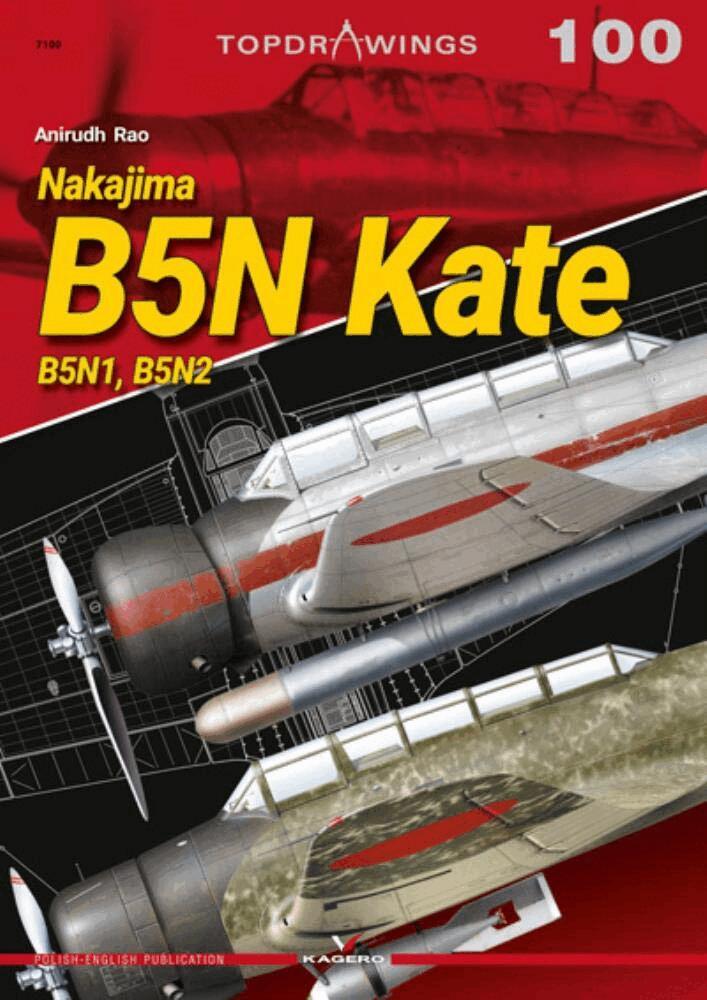
The Nakajima B5N prototype, designated B5N1 (in Allied reported name: Kate), was flown in January 1937. The first serial aircraft carried the designation Model 98 Model 11. The machines were tested in combat in China. In December 1939, another serial version entered the production marked as B5N2 Model 12. The aircraft was equipped with a Nakajima Sakae engine with a smaller frontal diameter and increased power. This improved plane’s performance. Initially, a hydraulic wing tip folding mechanism was used, but after a short time it was replaced with a manual one, which was more reliable.
178 kr
Skickas
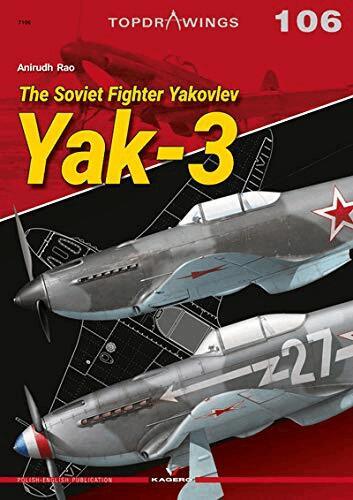
Yakovlev Yak-3 is considered one of the best World War 2 fighters, invariably praised by those who flew it in combat for its remarkable performance. The Germans also treated it with respect, which is perhaps best illustrated by Generalleutnant Walter Schwabedissen’s remark: The Yak-3 was a tough nut to crack for our pilots. It outperformed our machines in speed, maneuverability and rate of climb. The emergence of the Yak-3 was a compromise between the need to improve the Yak-1’s characteristics, and the limitations of Soviet aircraft industry with its outdated technologies. The basic design concept took those shortcomings into account, which allowed a rapid launch of mass production of this inexpensive fighter. This in turn provided frontline units with timely deliveries of new equipment to recoup combat losses. The key to Yak-3’s success was not due to the use of a new powerplant (in those days hard to come by in the USSR), but rather the superior performance of the M-105PF engine, which resulted in a five percent increase in power output. In combination with some serious weight shedding, the Yak-3 had a significantly better performance than the Yak-1. At altitudes up to 5,000m (which is where most of the air combat over Eastern Front took place), Yak-3 outperformed both the Bf-109 and Fw-190 in rate of climb and maneuverability. Unlike the Yak-1, the new fighter could also stay with the enemy in a dive.
188 kr
Tillfälligt slut
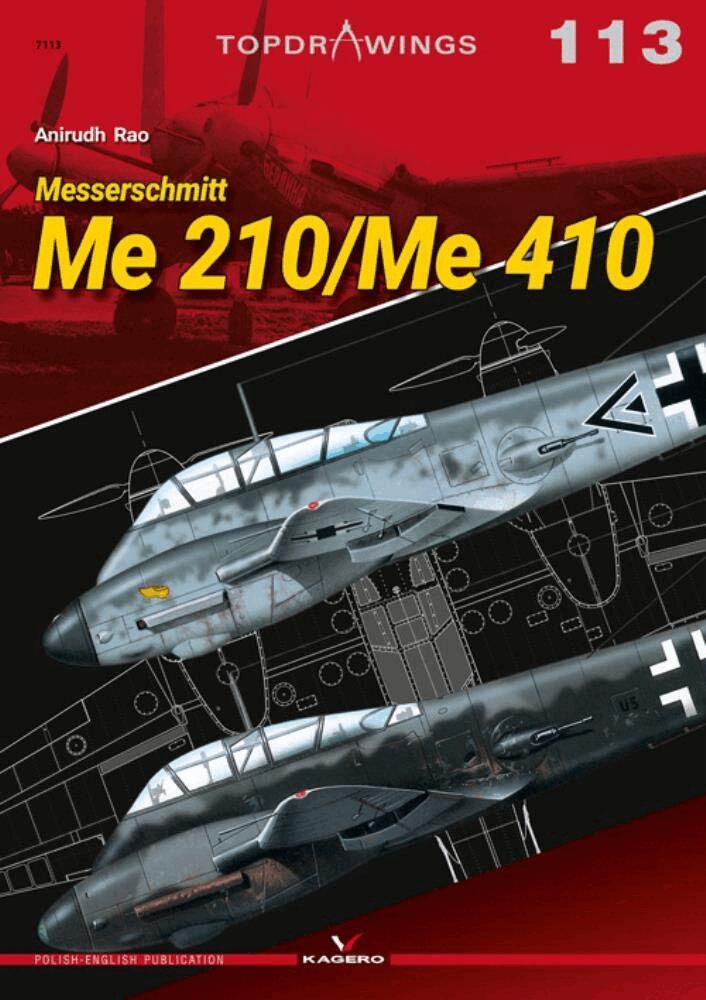
Messerschmitt Me 210 - German heavy fighter. Work on the design began in late 1930s with a goal of creating a versatile aircraft, equally capable as a fighter, dive bomber or a reconnaissance platform. The machine was an all-metal, low-wing monoplane, featuring twin vertical stabilizers. Full-scale production of the Me 210 was launched in 1941. The aircraft was powered by a pair of Daimler-Benz DB 601F engines, each producing 959 kW of power. Messerschmitt Me 410 - German heavy twin-engine fighter and fast bomber, meant to be an improvement of the unsuccessful Me 210 design. The aircraft was equipped with new Daimler-Benz DB603A inverted V engines, rated at 1,750 and 1,850 hp. Powered by those engines the Me 410 was capable of speeds up to 628 km/h. The aircraft's armament consisted of two 7.92 mm MG 17 machine guns, a pair of 13 mm MG 131 machine guns and four remotely-controlled 20 mm MG 151 cannons. The Me 410 could also carry up to 1,000 kg of bombs. Thanks to its fairly long range and excellent performance characteristics, the aircraft was often employed in the bomber destroyer role.
181 kr
Tillfälligt slut
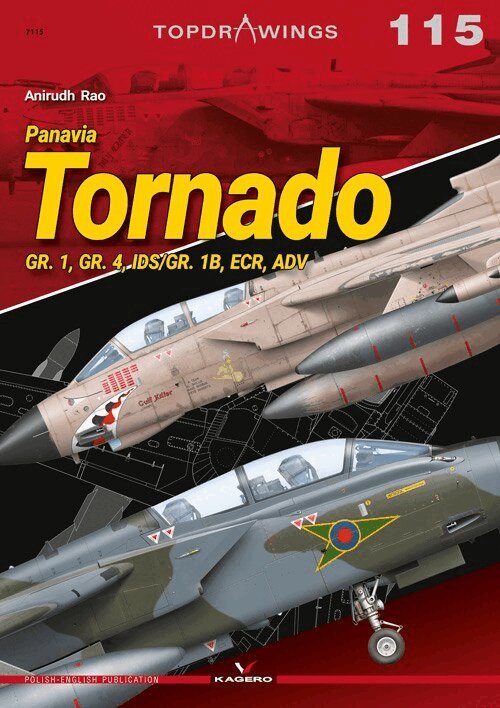
The Panavia Tornado is a twin-engine fighter jet with variable wing geometry. Three main versions of the Tornado were created: the attack version - Tornado IDS (Interdictor/Strike), the interceptor version - Tornado ADV (Air Defense Variant) and the electronic combat version - Tornado ECR (Electronic Combat/Reconaissance). The machine was produced in cooperation with Italy, Germany and Great Britain.
192 kr
Skickas
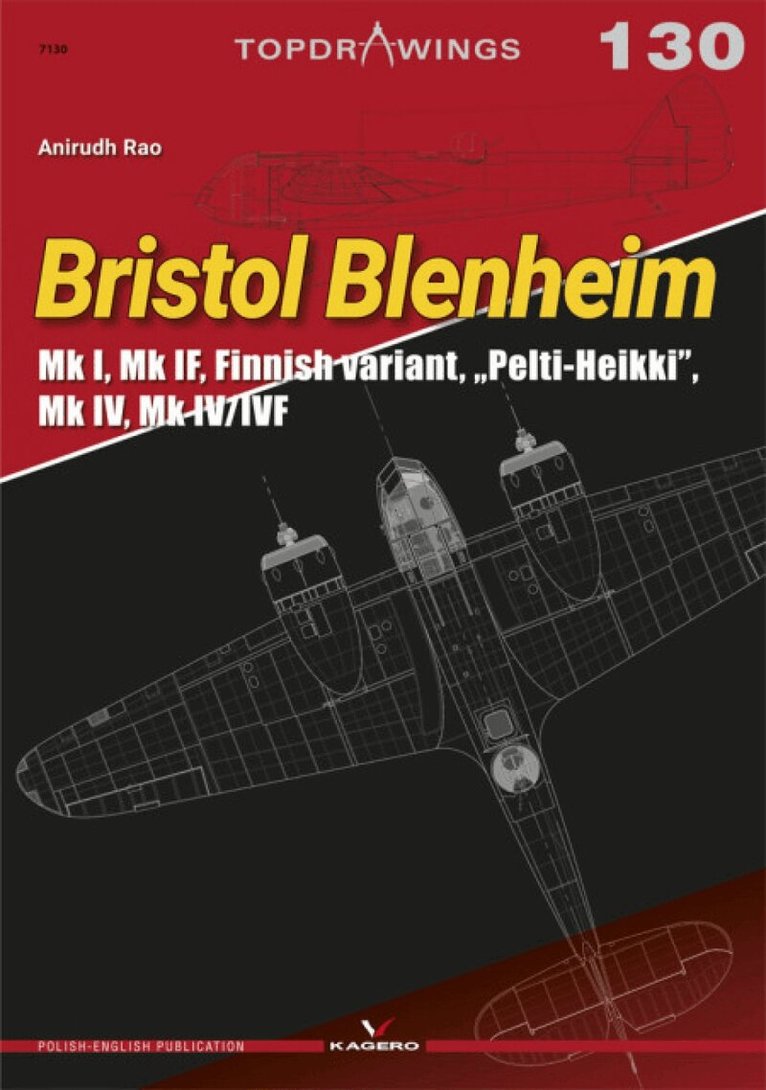
The Bristol Blenheim was one of the most popular British aircraft at the beginning of World War II. It was a very versatile and modifiable machine, and therefore typical bomber, reconnaissance, and fighter (including night) versions were created. The first mass-produced version was the Mk I, which featured a richly glazed nose part of the fuselage. The most common version in the air force of several countries was the Mk IV, in which the glass nose of the aircraft was extended so that the bombardier could lie freely in a special cradle during targeting. The nose of the fuselage had an asymmetrical “dent” on the left side of the fuselage (in its upper part), providing better visibility for the pilot sitting in a separate cockpit. This version also had more powerful engines and a longer range, but slightly lower speed and ceiling.
192 kr
Skickas
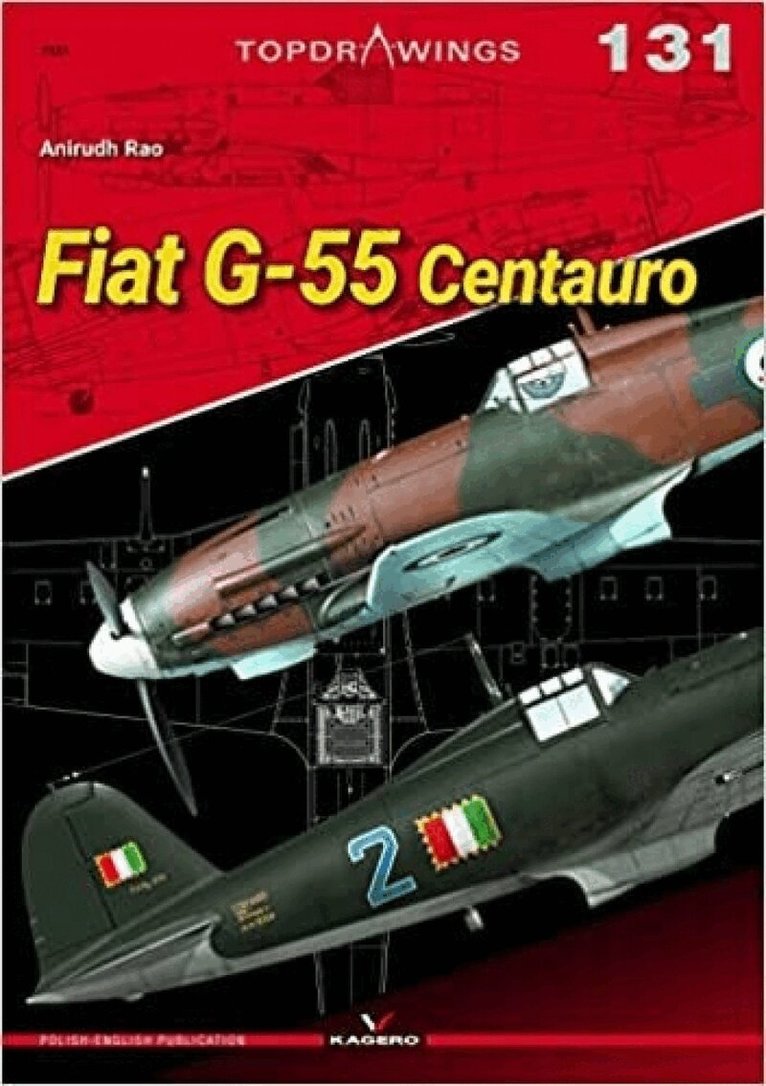
The Fiat G.55 Centauro fighter was designed by Giuseppe Gabrielli at the Fiat factory in 1942 and flown in the spring of the same year (April 30). The plane was to be a response to the demand for an interceptor capable of operating at high altitudes, which was dictated by the increasing intensity of Allied air raids on Italian cities and military infrastructure. A total of 130 copies of this machine were produced. Most Fiats G.55 were stationed in bases in northern Italy, from which they defended industrial plants located in these regions. The G.55 fighters were very highly rated by the pilots who considered them superior to the German Bf 109s G and K versions, and the Focke-Wulf Fw 190A. Unfortunately, due to the bombing of Fiat factories and problems with the supply of a sufficient number of Daimler Benz 603 engines, the production of the aircraft was stopped. Published in Kagero’s renowned Top Drawings series for modellers and military historians, this volume details the history of the Fiat G.55 Centauro fighter and includes 10 quality colour profiles and drawings in scale.
178 kr
Kommande
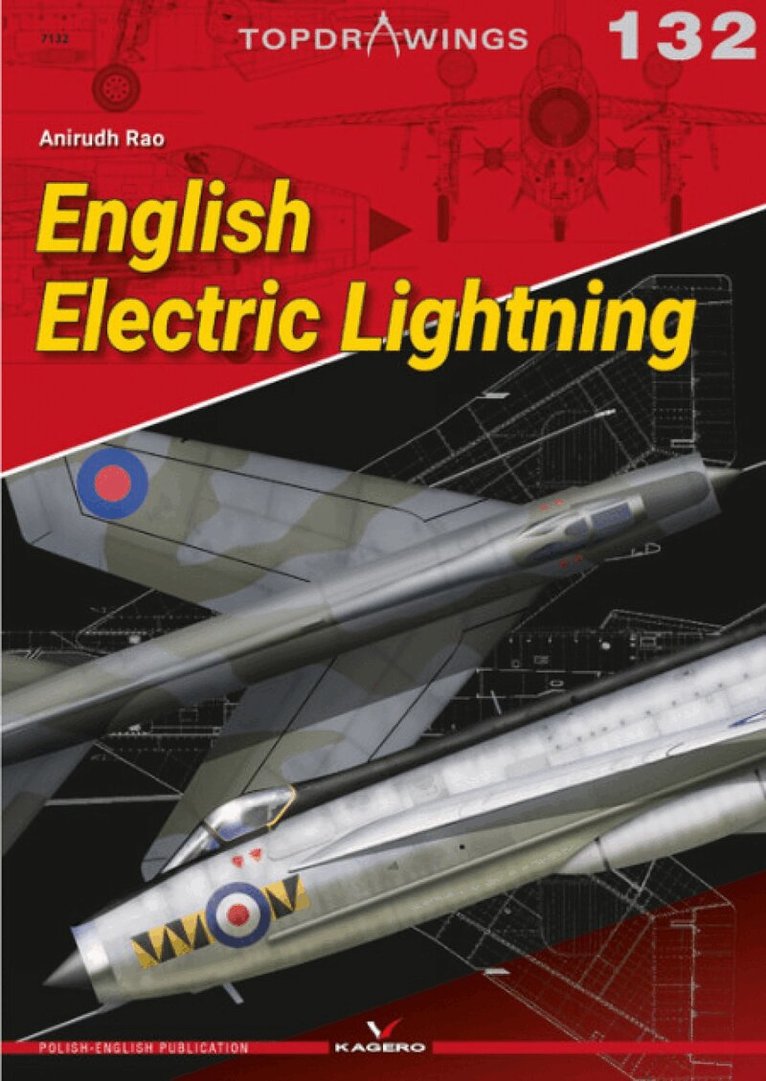
The English Electric Lightning (later known as BAC Lightning) is the first British fighter to achieve twice the speed of sound. The plane was constructed in the 1960s (339 copies were built). On October 29, 1959, the first serial version of the fighter was tested—Lightning F.1. The aircraft was powered by Avon 200R engines. The main armament consisted of two self-guided Firestreak air-to-air missiles, which were unusually mounted on the pylons on the sides of the fuselage. In addition, two 30 mm ADEN fixed cannons were mounted on the nose of the plane. In the F.2 version, minor improvements were made to the avionics. Engines were replaced with slightly improved Avon 210R units. The external difference was the small air intake on the spine of the fuselage for the electric generator.
178 kr
Kommande
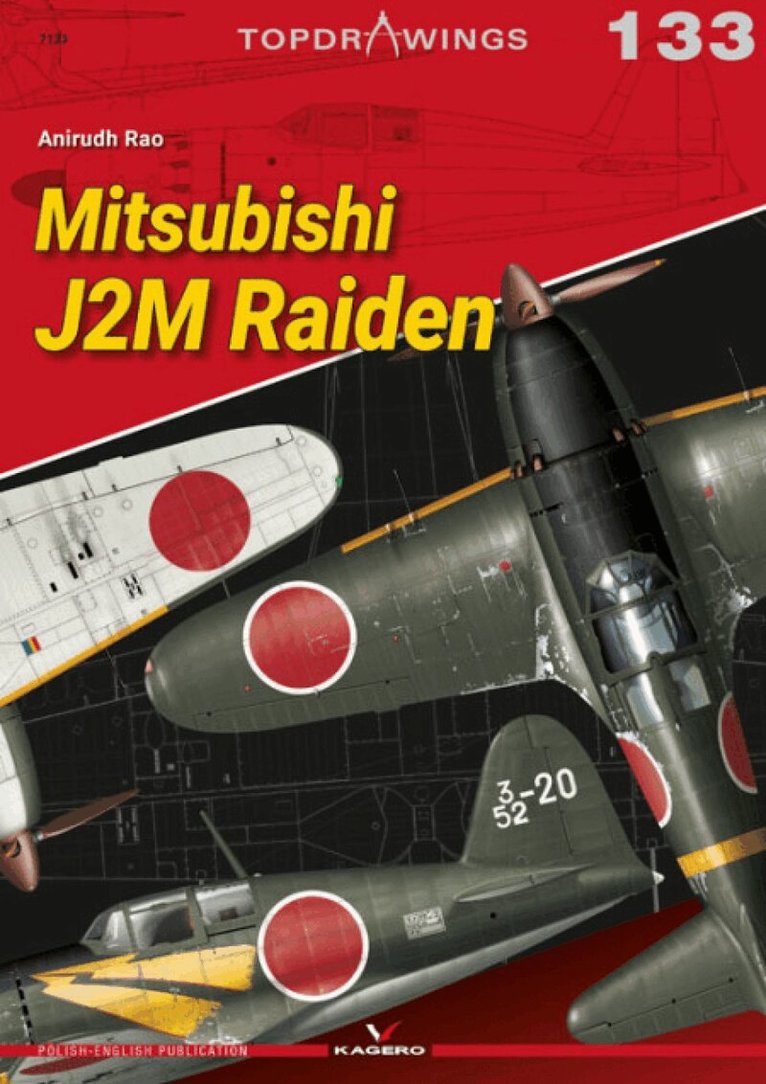
The Mitsubishi J2M Raiden was constructed as an interceptor with high horizontal speed and climb rate. Achieving good performance in the aforementioned parameters resulted in worse maneuverability, but it was still a very successful design. The Raidens entered service too late to change the face of the war with the United States, but they were nevertheless the most effective fighters against the USAAF's B-29s. The specification defined in September 1939 contained exact requirements for the newly constructed machine. The new fighters were to be able to reach a speed of 600 km/h at an altitude of 6,500 m, and the engine was to withstand full power for 45 minutes. The time of ascent to the ceiling of 6,500 m was to be no more than 5.5 minutes. The armament was to consist of two 20 mm cannons and two 7.7 mm machine guns.