Anna K. Hodgkinson – Författare
Visar alla böcker från författaren Anna K. Hodgkinson. Handla med fri frakt och snabb leverans.
3 produkter
3 produkter
1 892 kr
Skickas inom 7-10 vardagar
This book provides the first systematic and comprehensive discussion of the intra-urban distribution of high-status goods, and their production or role as a marker of the nature of the settlements known as royal cities of New Kingdom Egypt (c.1550-1069 BC).Using spatial analysis to detect patterns of artefact distribution, the study focuses on Amarna, Gurob, and Malqata, incorporating Qantir/Pi-Ramesse for comparison. Being royal cities, these three settlements had a great need for luxury goods. Such items were made of either highly valuable materials, or materials that were not easily produced and therefore required a certain set of skills. Specifically, the industries discussed are those of glass, faience, metal, sculpture, and textiles.Analysis of the evidence of high-status industrial processes throughout the urban settlements, has demonstrated that industrial activities took place in institutionalized buildings, in houses of the elite, and also in small domestic complexes. This leads to the conclusion that materials were processed at different levels throughout the settlements and were subject to a strict pattern of control. The methodological approach to each settlement necessarily varies, depending on the nature and quality of the available data. By examining the distribution of high-status or luxury materials, in addition to archaeological and artefactual evidence of their production, a deeper understanding has been achieved of how industries were organized and how they influenced urban life in New Kingdom Egypt.
Del 121 - EES Research Reports
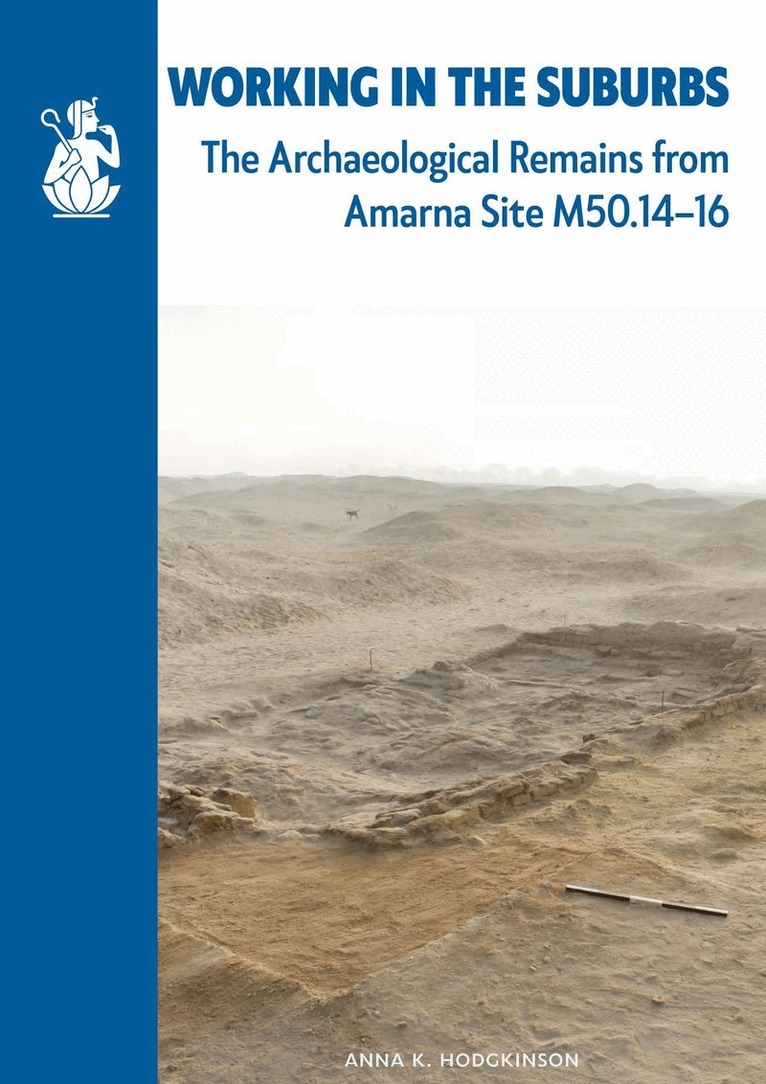
Working in the Suburbs
The archaeological remains from Amarna Site M50.14-16
Häftad, Engelska, 2025
2 056 kr
Skickas inom 5-8 vardagar
A century ago, Charles Leonard Woolley directed the first excavations at Amarna site M50.14–16, identifying it as a workshop for glass and faience. However, the archaeological record and its publication in The City of Akhenaten I were somewhat superficial. New excavations conducted by the Amarna Project in 2014 and 2017 yielded extensive evidence of glass-, faience-, stone-, and metalworking, reaffirming the site’s role as a workshop. These investigations also illuminated its domestic character, uncovering valuable data on houses and other structural remains.This volume presents a near-complete record of the site, offering a comprehensive archaeological and architectural evaluation alongside in-depth analyses of material culture, including archaeobotany, charcoal, animal bones, ceramics, and other artefacts. The individual chapters reconstruct the chaînes opératoires of various craft production activities. Additionally, the organisation of production and the concept of cross-craft interaction are explored, as the site is situated within the broader industrial network of Amarna. This volume furthermore provides an in-depth examination of the inhabitants' roles and daily lives, enriching our understanding of this significant site.EES Research Reports 121
531 kr
Skickas
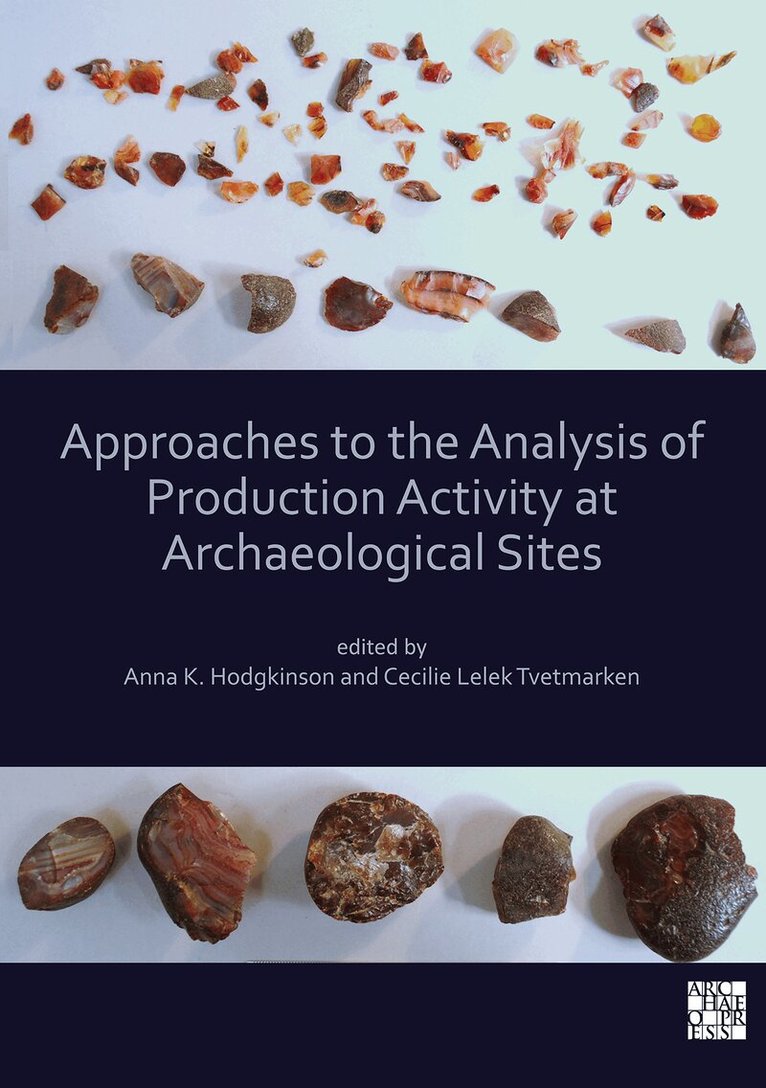
Approaches to the Analysis of Production Activity at Archaeological Sites presents the proceedings of an international and interdisciplinary workshop held in Berlin in 2018, which brought together scholars whose work focusses on manufacturing activities identified at archaeological sites. The various approaches presented here include new excavation techniques, ethnographic research, archaeometric approaches, GIS and experimental archaeology as well as theoretical issues associated with how researchers understand production in the past. These approaches are applied to research questions related to various technological and socio-economic aspects of production, including the organisation and setting of manufacturing activities, the access to and use of raw materials, firing structures and other production-related installations. The chapters discuss production activities in various domestic and institutional contexts throughout the ancient world, together with the production and use of tools and other items made of stone, bone, ceramics, glass and faience. Since manufacturing activities are encountered at archaeological sites on a regular basis, the wide range of materials and approaches presented in this volume provides a useful reference for scholars and students studying technologies and production activities in the past.