Anna Maria Moisello – författare
Visar alla böcker från författaren Anna Maria Moisello. Handla med fri frakt och snabb leverans.
4 produkter
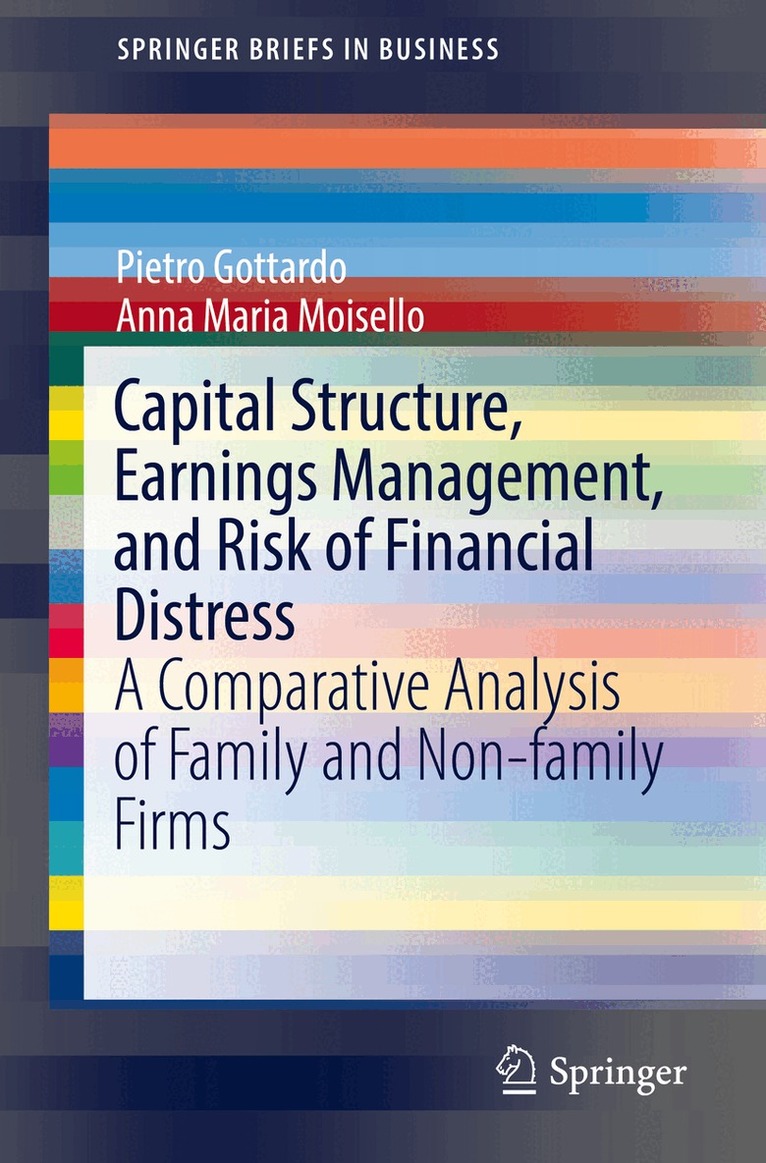
Capital Structure, Earnings Management, and Risk of Financial Distress
A Comparative Analysis of Family and Non-family Firms
Av Pietro Gottardo, Anna Maria Moisello
Häftad, 2018
568 kr
Lägg i varukorg
This book analyzes the impacts that family control of firms has on capital structure choices, leverage and the risk of financial distress, earnings management practices, and the relation between accounting choices and firm market value. For these purposes, longitudinal data on Italian family and …
Capital Structure, Earnings Management, and Risk of Financial Distress
A Comparative Analysis of Family and Non-family Firms
Av Anna Maria Moisello, Pietro Gottardo
E-bok, 2018
732 kr
Lägg i varukorg
This book analyzes the impacts that family control of firms has on capital structure choices, leverage and the risk of financial distress, earnings management practices, and the relation between accounting choices and firm market value. For these purposes, longitudinal data on Italian family and …
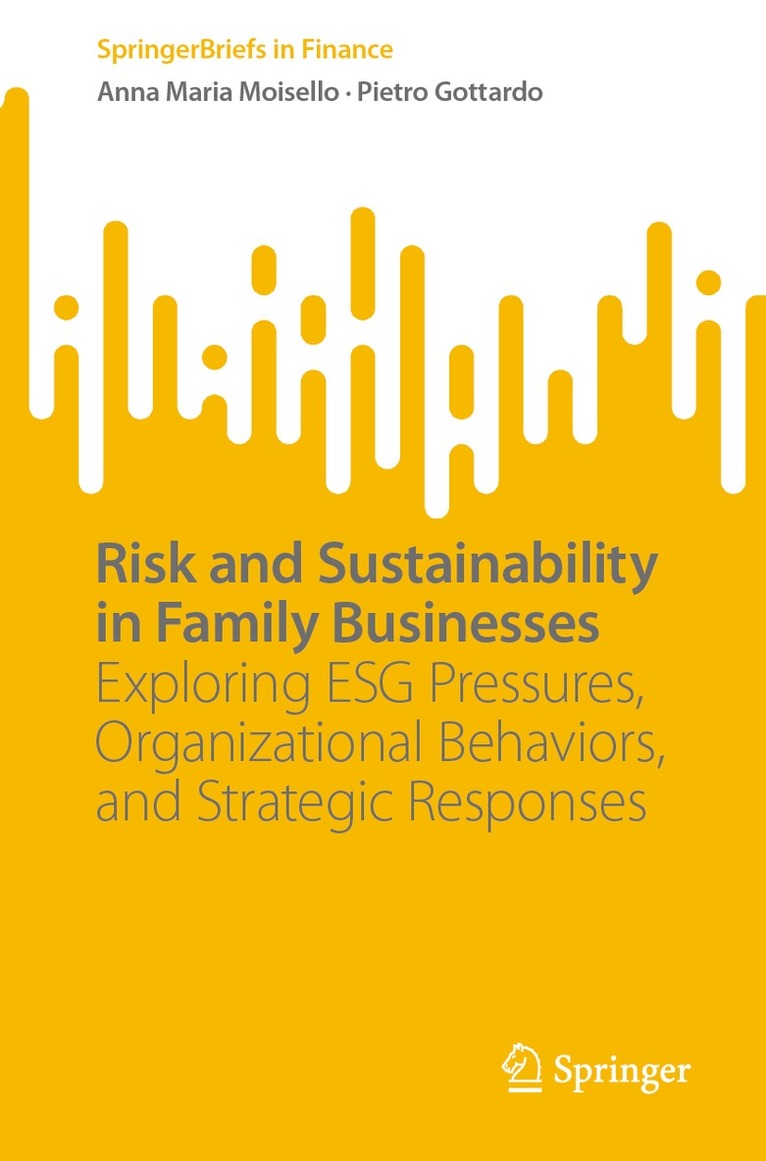
Risk and Sustainability in Family Businesses
Exploring ESG Pressures, Organizational Behaviors, and Strategic Responses
Av Anna Maria Moisello, Pietro Gottardo
Häftad, 2026
568 kr
Lägg i varukorg
This book explores ESG-related controversies in European family firms using bibliometric analysis to reveal seven thematic clusters that shape the current knowledge of risk in family enterprises. From ownership and board structure to innovation, internationalization, emotional dynamics, and crisis …
Risk and Sustainability in Family Businesses
Exploring ESG Pressures, Organizational Behaviors, and Strategic Responses
Av Pietro Gottardo, Anna Maria Moisello
E-bok, 2026
755 kr
Lägg i varukorg
This book explores ESG-related controversies in European family firms using bibliometric analysis to reveal seven thematic clusters that shape the current knowledge of risk in family enterprises. From ownership and board structure to innovation, internationalization, emotional dynamics, and crisis …