Anne E. Gorsuch - Böcker
Visar alla böcker från författaren Anne E. Gorsuch. Handla med fri frakt och snabb leverans.
7 produkter
7 produkter
1 630 kr
Skickas inom 5-8 vardagar
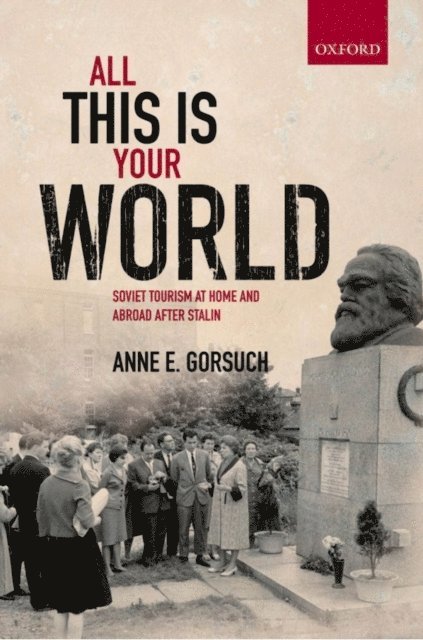
In the Khrushchev era, Soviet citizens were newly encouraged to imagine themselves exploring the medieval towers of Tallinn's Old Town, relaxing on the Romanian Black Sea coast, even climbing the Eiffel Tower. By the mid 1960s, hundreds of thousands of Soviet citizens each year crossed previously closed Soviet borders to travel abroad. All this is your World explores the revolutionary integration of the Soviet Union into global processes of cultural exchange in which a de-Stalinizing Soviet Union increasingly, if anxiously, participated in the transnational circulation of people, ideas, and items. Anne E. Gorsuch examines what it meant to be "Soviet" in a country no longer defined as Stalinist. All this is your World is situated at the intersection of a number of topics of scholarly and popular interest: the history of tourism and mobility; the cultural history of international relations, specifically the Cold War; the history of the Soviet Union after Stalin. It also offers a new perspective on our view of the European continent as a whole by probing the Soviet Union's relationship with both eastern and western Europe using archival materials from Russia, Estonia, Hungary, Great Britain, and the United States. Beginning with a domestic tour of the Soviet Union in late Stalinism, the book moves outwards in concentric circles to consider travel to the inner abroad of Estonia, to the near abroad of eastern Europe, and to the capitalist West, finally returning home again with a discussion of Soviet films about tourism.
734 kr
Skickas inom 7-10 vardagar
In the Khrushchev era, Soviet citizens were newly encouraged to imagine themselves exploring the medieval towers of Tallinn's Old Town, relaxing on the Romanian Black Sea coast, even climbing the Eiffel Tower. By the mid 1960s, hundreds of thousands of Soviet citizens each year crossed previously closed Soviet borders to travel abroad. All this is your World explores the revolutionary integration of the Soviet Union into global processes of cultural exchange in which a de-Stalinizing Soviet Union increasingly, if anxiously, participated in the transnational circulation of people, ideas, and items. Anne E. Gorsuch examines what it meant to be "Soviet" in a country no longer defined as Stalinist. All this is your World offers a new perspective on our view of the European continent as a whole by probing the Soviet Union's relationship with both eastern and western Europe using archival materials from Russia, Estonia, Hungary, Great Britain, and the United States. Beginning with a domestic tour of the Soviet Union in late Stalinism, the book moves outwards in concentric circles to consider travel to the inner abroad of Estonia, to the near abroad of eastern Europe, and to the capitalist West, finally returning home again with a discussion of Soviet films about tourism.
968 kr
Skickas inom 10-15 vardagar
The 1960s have reemerged in scholarly and popular culture as a protean moment of cultural revolution and social transformation. In this volume socialist societies in the Second World (the Soviet Union, East European countries, and Cuba) are the springboard for exploring global interconnections and cultural cross-pollination between communist and capitalist countries and within the communist world. Themes explored include flows of people and media; the emergence of a flourishing youth culture; sharing of songs, films, and personal experiences through tourism and international festivals; and the rise of a socialist consumer culture and an esthetics of modernity. Challenging traditional categories of analysis and periodization, this book brings the sixties problematic to Soviet studies while introducing the socialist experience into scholarly conversations traditionally dominated by First World perspectives.
362 kr
Skickas inom 7-10 vardagar
The 1960s have reemerged in scholarly and popular culture as a protean moment of cultural revolution and social transformation. In this volume socialist societies in the Second World (the Soviet Union, East European countries, and Cuba) are the springboard for exploring global interconnections and cultural cross-pollination between communist and capitalist countries and within the communist world. Themes explored include flows of people and media; the emergence of a flourishing youth culture; sharing of songs, films, and personal experiences through tourism and international festivals; and the rise of a socialist consumer culture and an esthetics of modernity. Challenging traditional categories of analysis and periodization, this book brings the sixties problematic to Soviet studies while introducing the socialist experience into scholarly conversations traditionally dominated by First World perspectives.
380 kr
Skickas inom 10-15 vardagar
Youth in Revolutionary Russia: Enthusiasts, Bohemians, DelinquentsAnne E. GorsuchA vivid account of Bolshevik efforts to "Sovietize" young people in the 1920s."A very impressive work—broad, learned, and very readable." —Lynn Mally"A welcome and fascinating addition to the social and cultural history of the 1920s in Russia and to the comparative study of youth politics and culture in contemporary Europe and elsewhere." —Mark von HagenIn Bolshevik Russia, the successful transformation of young people into communists was crucial for the future of the Soviet state. Soviet youth needed to be shaped into communists in every aspect of their daily lives—work, leisure, gender relations, and family life. But how could the Bolsheviks accomplish this enormous project? What did it mean to be "made communist"? What were the consequences if prerevolutionary and "bourgeois" culture and social relations could not be transformed into new socialist forms of behavior and belief? Drawing from a wide range of sources—diaries, party speeches, propagandistic writings, scientific studies, and literature—Anne E. Gorsuch reveals the rich diversity of youth cultures in Soviet Russia during the 1920s. She explores the relationship between representation and reality and between official ideology and popular culture, along with the meaning of these relationships for the making of a Soviet state and society. From the clash between ultracommunist visions of what Russian young people should be and the flamboyant style of flappers and foxtrotters so prominently imported from the capitalist West, emerges a vivid picture of the construction of Soviet youth. Thoughtful and appealing, Youth in Revoluntionary Russia is essential reading for those interested in popular culture and Soviet history.Anne E. Gorsuch is Assistant Professor of History at the University of British Columbia.Indiana-Michigan Series in Russian and East European Studies—Alexander Rabinowitch and William G. Rosenberg, editorsContentsIntroduction: Youth and CultureThe Politics of GenerationThe Urban EnvironmentMaking Youth CommunistExcesses of EnthusiasmGender and GenerationFlappers and FoxtrottersLife and Leisure on the StreetDiscourses of DelinquencyEpilogue
1 563 kr
Skickas inom 10-15 vardagar
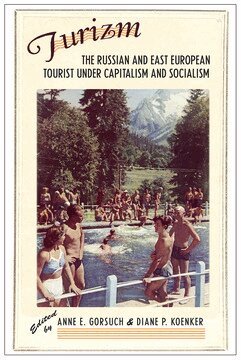
In the Soviet Union and the eastern bloc, the idea of "vacation" was never as uncomplicated as throwing some suitcases in the car and heading for the beach. The emphasis was on individual self-improvement within the framework of the collective, an approach manifest in everything from the scheduling of physical exercise to the group tours organized for factory workers, Party cadres, and other segments of society. Like other Soviet-style utopian projects, socialist tourism, which was often heavily laden with rules and prescriptions, was a consciousness-raising project, part of the vast effort to forge new socialist men and women.Turizm is the first book to examine the history of tourism in Russia and eastern Europe from the tsarist period to the age of Soviet and east European mass tourism in the 1960s and 1970s. The contributors to this volume address topics including the roots of socialist tourism, the role of tourism in the making of nations and maintenance of empire, and ways in which the men and women of the "margins of Europe" understood themselves in relation to "Europe." Especially interesting are chapters that show how individuals pursued their own consumerist goals within the framework of collective tourism, obliging the regimes to adapt. Illustrated with period photographs and promotional materials, Turizm will appeal not only to historians of the region but also to anyone with an interest in consumer culture, travel, leisure, and nation-building.
331 kr
Skickas inom 11-20 vardagar
In the Soviet Union and the eastern bloc, the idea of "vacation" was never as uncomplicated as throwing some suitcases in the car and heading for the beach. The emphasis was on individual self-improvement within the framework of the collective, an approach manifest in everything from the scheduling of physical exercise to the group tours organized for factory workers, Party cadres, and other segments of society. Like other Soviet-style utopian projects, socialist tourism, which was often heavily laden with rules and prescriptions, was a consciousness-raising project, part of the vast effort to forge new socialist men and women.Turizm is the first book to examine the history of tourism in Russia and eastern Europe from the tsarist period to the age of Soviet and east European mass tourism in the 1960s and 1970s. The contributors to this volume address topics including the roots of socialist tourism, the role of tourism in the making of nations and maintenance of empire, and ways in which the men and women of the "margins of Europe" understood themselves in relation to "Europe." Especially interesting are chapters that show how individuals pursued their own consumerist goals within the framework of collective tourism, obliging the regimes to adapt. Illustrated with period photographs and promotional materials, Turizm will appeal not only to historians of the region but also to anyone with an interest in consumer culture, travel, leisure, and nation-building.