Anne Irfan – författare
Visar alla böcker från författaren Anne Irfan. Handla med fri frakt och snabb leverans.
7 produkter
7 produkter
1 147 kr
Skickas inom 7-10 vardagar
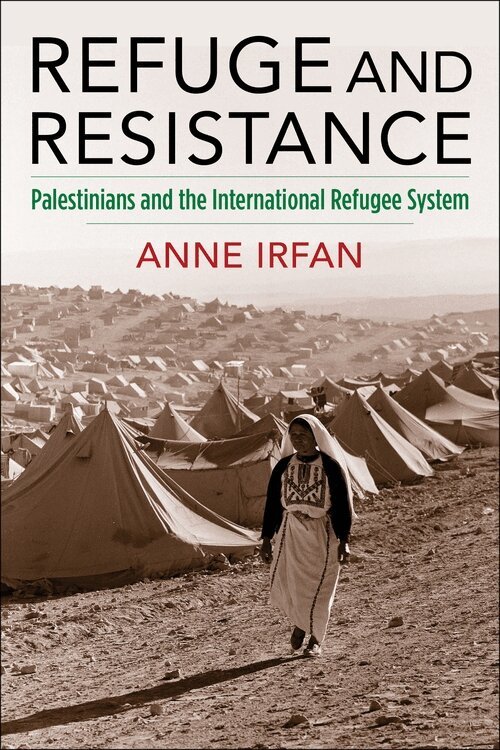
Shortlisted, 2024 Academic Book Award, Palestine Book AwardsIn the decades after World War II, the United Nations established a global refugee regime that became central to the lives of displaced people around the world. This regime has exerted particular authority over Palestinian refugees, who are served by a specialized UN body, the Relief and Works Agency (UNRWA). Formed shortly after the 1948 war, UNRWA continues to provide quasi-state services such as education and health care to Palestinian refugee communities in the Middle East today.This book is a groundbreaking international history of Palestinian refugee politics. Anne Irfan traces the history and politics of UNRWA’s interactions with Palestinian communities, particularly in the refugee camps where it functioned as a surrogate state. She shows how Palestinian refugees invoked internationalist norms to demand their political rights while resisting the UN’s categorization of their plight as an apolitical humanitarian issue. Refuge and Resistance foregrounds how nonelite activism shaped the Palestinian campaign for international recognition, showing that engagement with world politics was driven as much by the refugee grass roots as by the upper echelons of the Palestine Liberation Organization. It demonstrates that refugee groups are important actors in global politics, not simply aid recipients.Recasting modern Palestinian history through the lens of refugee camps and communities, Refuge and Resistance offers vital new perspectives for understanding politics beyond the nation-state.
292 kr
Skickas inom 7-10 vardagar
Shortlisted, 2024 Academic Book Award, Palestine Book AwardsIn the decades after World War II, the United Nations established a global refugee regime that became central to the lives of displaced people around the world. This regime has exerted particular authority over Palestinian refugees, who are served by a specialized UN body, the Relief and Works Agency (UNRWA). Formed shortly after the 1948 war, UNRWA continues to provide quasi-state services such as education and health care to Palestinian refugee communities in the Middle East today.This book is a groundbreaking international history of Palestinian refugee politics. Anne Irfan traces the history and politics of UNRWA’s interactions with Palestinian communities, particularly in the refugee camps where it functioned as a surrogate state. She shows how Palestinian refugees invoked internationalist norms to demand their political rights while resisting the UN’s categorization of their plight as an apolitical humanitarian issue. Refuge and Resistance foregrounds how nonelite activism shaped the Palestinian campaign for international recognition, showing that engagement with world politics was driven as much by the refugee grass roots as by the upper echelons of the Palestine Liberation Organization. It demonstrates that refugee groups are important actors in global politics, not simply aid recipients.Recasting modern Palestinian history through the lens of refugee camps and communities, Refuge and Resistance offers vital new perspectives for understanding politics beyond the nation-state.
331 kr
Skickas inom 3-6 vardagar
240 kr
Kommande
204 kr
Skickas
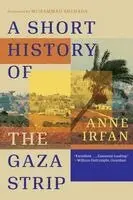
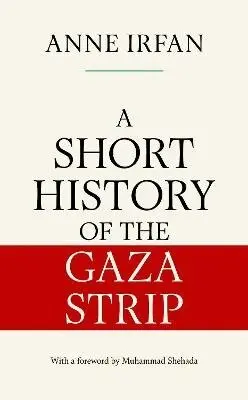
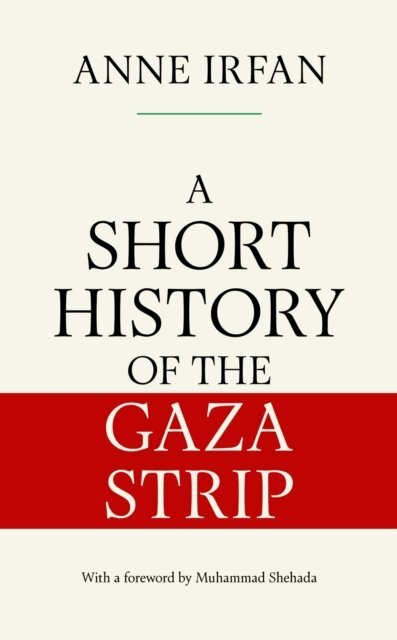
‘An excellent primer . . . essential reading’ GUARDIAN*The world’s eyes are on the Gaza Strip. After more than a year of Israeli military bombardment, it is the scene of unimaginable destruction. It is also one of the most politically significant territories on the planet. Yet how many of us know anything of its history?In this vital book, Anne Irfan, a leading historian of Palestine-Israel, examines six key moments that bring us to the present day. She begins with Israel’s expulsion of the Palestinian people in 1948, when Israel was established and the Gaza region was truncated to a tiny territory of just 141 square miles. Going on to detail Israel’s occupations of Gaza, the Palestinian national struggle and formation of the PLO, the first intifada, the creation of the Palestinian Authority and the rise of Hamas, Irfan argues that, collectively, these events help explain how we have arrived at the catastrophe of the 2020s and the genocidal violence unleashed by Israel in Gaza after the Hamas-led attacks of October 7.Written with remarkable clarity, A Short History of the Gaza Strip draws on a decade of meticulous research, weaving in the voices and stories of Palestinians from farmers and teachers to poets and activists. It is an indispensable read for anyone seeking to deepen their knowledge of Palestine and the wider region. In Irfan’s words, ‘History matters, especially in Palestine’ – and never more so than today.*‘Wonderfully informative, nuanced, humane’ BBC HISTORY MAGAZINE Book of the Year‘Explains with wonderful lucidity the context for Gaza’s catastrophe’ NEW STATESMAN
163 kr
Skickas
‘An excellent primer . . . essential reading’ GUARDIAN*The world’s eyes are on the Gaza Strip. After more than a year of Israeli military bombardment, it is the scene of unimaginable destruction. It is also one of the most politically significant territories on the planet. Yet how many of us know anything of its history?In this vital book, Anne Irfan, a leading historian of Palestine-Israel, examines six key moments that bring us to the present day. She begins with Israel’s expulsion of the Palestinian people in 1948, when Israel was established and the Gaza region was truncated to a tiny territory of just 141 square miles. Going on to detail Israel’s occupations of Gaza, the Palestinian national struggle and formation of the PLO, the first intifada, the creation of the Palestinian Authority and the rise of Hamas, Irfan argues that, collectively, these events help explain how we have arrived at the catastrophe of the 2020s and the genocidal violence unleashed by Israel in Gaza after the Hamas-led attacks of October 7.Written with remarkable clarity, A Short History of the Gaza Strip draws on a decade of meticulous research, weaving in the voices and stories of Palestinians from farmers and teachers to poets and activists. It is an indispensable read for anyone seeking to deepen their knowledge of Palestine and the wider region. In Irfan’s words, ‘History matters, especially in Palestine’ – and never more so than today.*‘Wonderfully informative, nuanced, humane’ BBC HISTORY MAGAZINE Book of the Year‘Explains with wonderful lucidity the context for Gaza’s catastrophe’ NEW STATESMAN
121 kr
Kommande
‘An excellent primer . . . essential reading’ GUARDIAN*The world’s eyes are on the Gaza Strip. After more than a year of Israeli military bombardment, it is the scene of unimaginable destruction. It is also one of the most politically significant territories on the planet. Yet how many of us know anything of its history?In this vital book, Anne Irfan, a leading historian of Palestine-Israel, examines six key moments that bring us to the present day. She begins with Israel’s expulsion of the Palestinian people in 1948, when Israel was established and the Gaza region was truncated to a tiny territory of just 141 square miles. Going on to detail Israel’s occupations of Gaza, the Palestinian national struggle and formation of the PLO, the first intifada, the creation of the Palestinian Authority and the rise of Hamas, Irfan argues that, collectively, these events help explain how we have arrived at the catastrophe of the 2020s and the genocidal violence unleashed by Israel in Gaza after the Hamas-led attacks of October 7.Written with remarkable clarity, A Short History of the Gaza Strip draws on a decade of meticulous research, weaving in the voices and stories of Palestinians from farmers and teachers to poets and activists. It is an indispensable read for anyone seeking to deepen their knowledge of Palestine and the wider region. In Irfan’s words, ‘History matters, especially in Palestine’ – and never more so than today.*‘Wonderfully informative, nuanced, humane’ BBC HISTORY MAGAZINE Book of the Year‘Explains with wonderful lucidity the context for Gaza’s catastrophe’ NEW STATESMAN