Annette Trefzer - Böcker
Visar alla böcker från författaren Annette Trefzer. Handla med fri frakt och snabb leverans.
14 produkter
14 produkter
295 kr
Skickas inom 7-10 vardagar
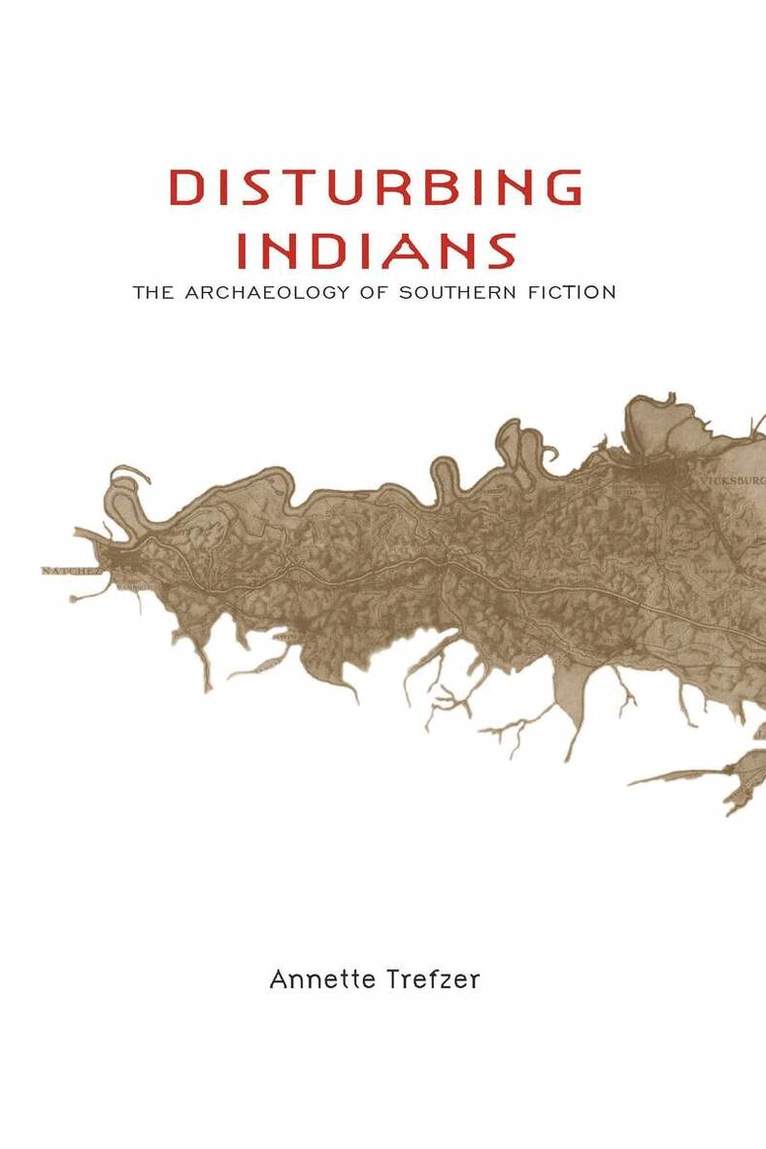
How Faulkner, Welty, Lytle, and Gordon reimagined and reconstructed the Native American past in their work.In this book, Annette Trefzer argues that not only have Native Americans played an active role in the construction of the South’s cultural landscape—despite a history of colonization, dispossession, and removal aimed at rendering them invisible—but that their under-examined presence in southern literature provides a crucial avenue for a post-regional understanding of the American south. William Faulkner, Eudora Welty, Andrew Lytle, and Caroline Gordon created works about the Spanish conquest of the New World, the Cherokee frontier during the Revolution, the expansion into the Mississippi Territory, and the slaveholding societies of the American southeast. They wrote 100 years after the forceful removal of Native Americans from the southeast but consistently returned to the idea of an —Indian frontier— each articulating a different vision and discourse about Native Americans—wholesome and pure in the vision of some, symptomatic of hybridity and universality for others.Trefzer contends that these writers engage in a double discourse about the region and nation: fabricating regional identity by invoking the South’s "native" heritage and pointing to issues of national guilt, colonization, westward expansion, and imperialism in a period that saw the US sphere of influence widen dramatically. In both cases, the —Indian— signifies regional and national self-definitions and contributes to the shaping of cultural, racial, and national "others." Trefzer employs the idea of archeology in two senses: quite literally the excavation of artifacts in the South during the New Deal administration of the 1930s (a surfacing of material culture to which each writer responded) and archeology as a method for exploring texts she addresses (literary digs into the textual strata of America’s literature and its cultural history).
1 358 kr
Skickas inom 10-15 vardagar
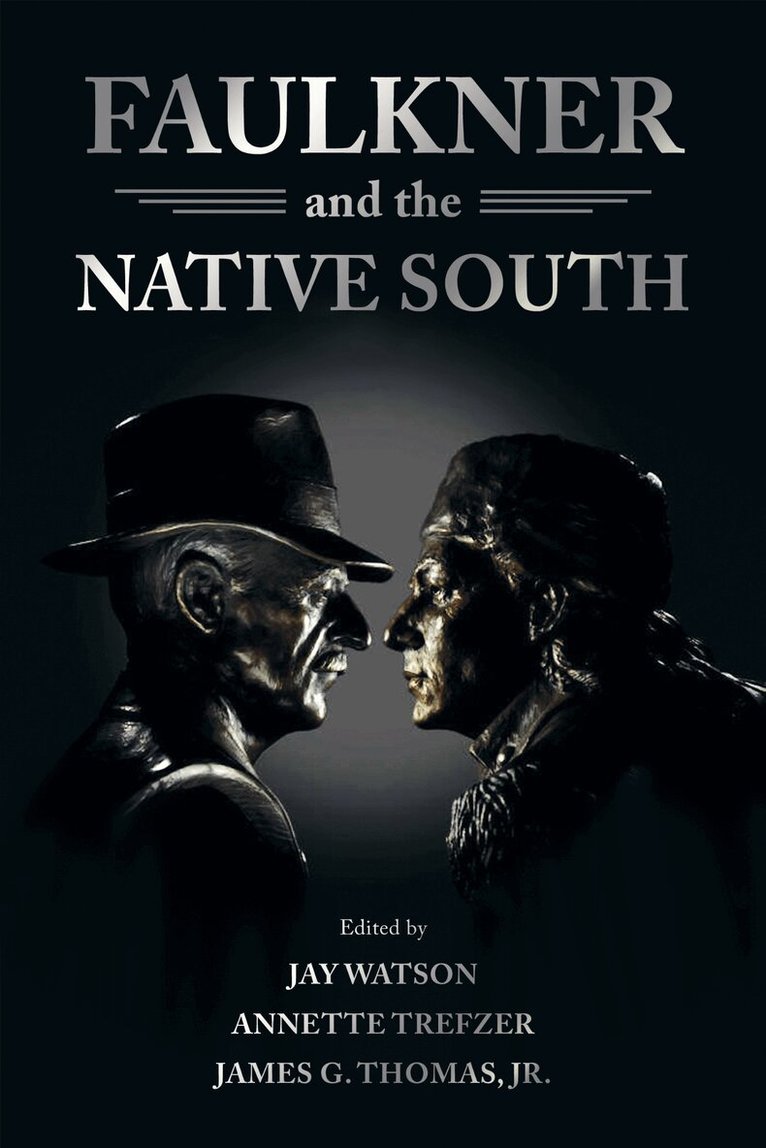
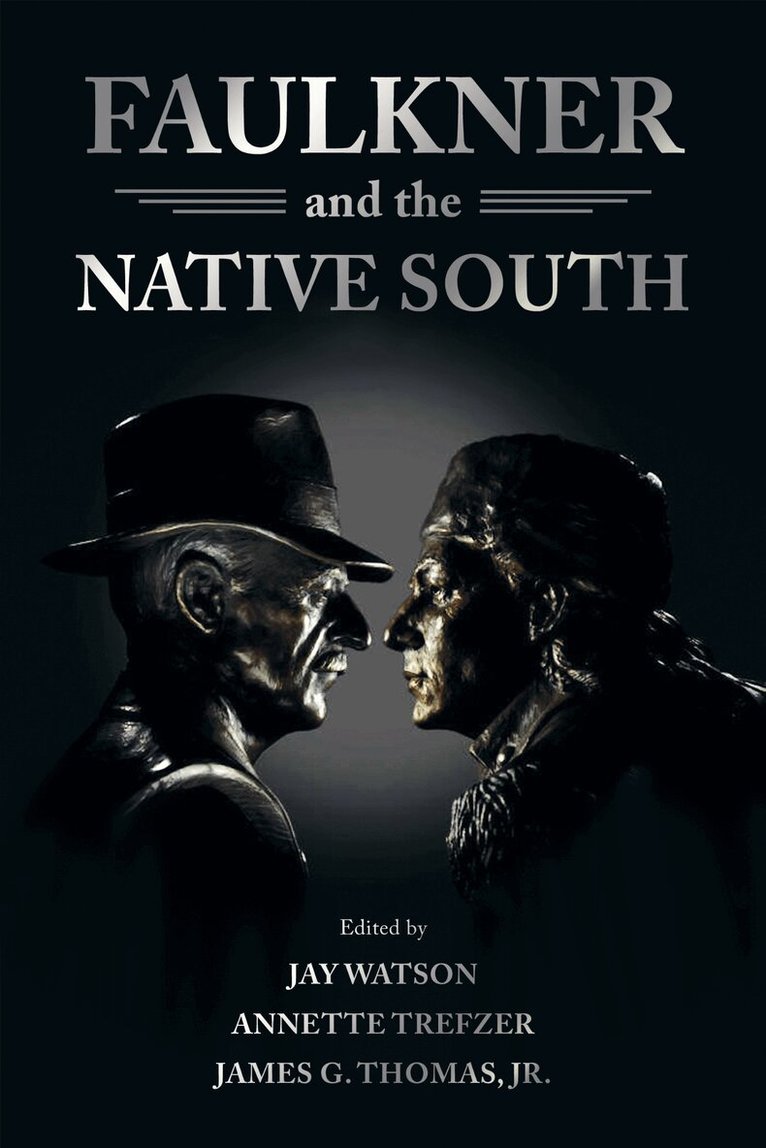
Contributions by Eric Gary Anderson, Melanie R. Anderson, Jodi A. Byrd, Gina Caison, Robbie Ethridge, Patricia Galloway, LeAnne Howe, John Wharton Lowe, Katherine M. B. Osburn, Melanie Benson Taylor, Annette Trefzer, and Jay Watson From new insights into the Chickasaw sources and far-reaching implications of Faulkner's fictional place-name ""Yoknapatawpha,"" to discussions that reveal the potential for indigenous land-, family-, and story-based methodologies to deepen understanding of Faulkner's fiction (including but not limited to the novels and stories he devoted explicitly to Native American topics), the eleven essays of this volume advance the critical analysis of Faulkner's Native South and the Native South's Faulkner. Critics push beyond assessments of the historical accuracy of his Native representations and the colonial hybridity of his Indian characters. Essayists turn instead to indigenous intellectual culture for new models, problems, and questions to bring to Faulkner studies. Along the way, readers are treated to illuminating comparisons between Faulkner's writings and the work of a number of Native American authors, filmmakers, tribal leaders, and historical figures. Faulkner and the Native South brings together Native and non-Native scholars in a stimulating and often surprising critical dialogue about the indigenous wellsprings of Faulkner's creative energies and about Faulkner's own complicated presence in Native American literary history.
1 216 kr
Skickas inom 10-15 vardagar
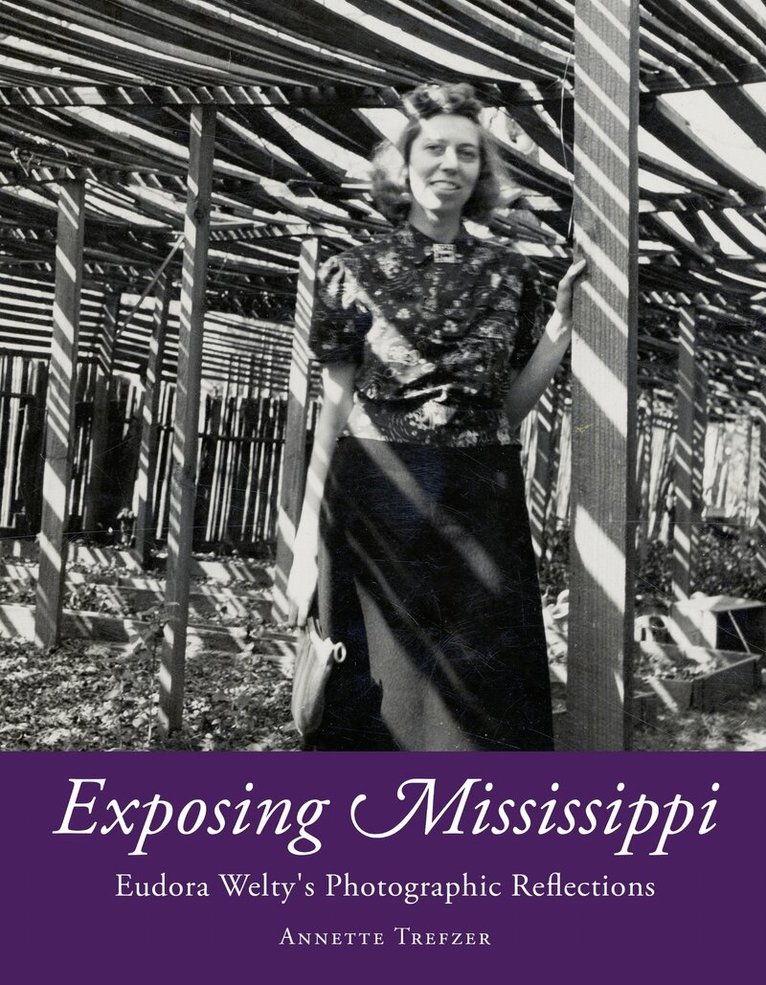
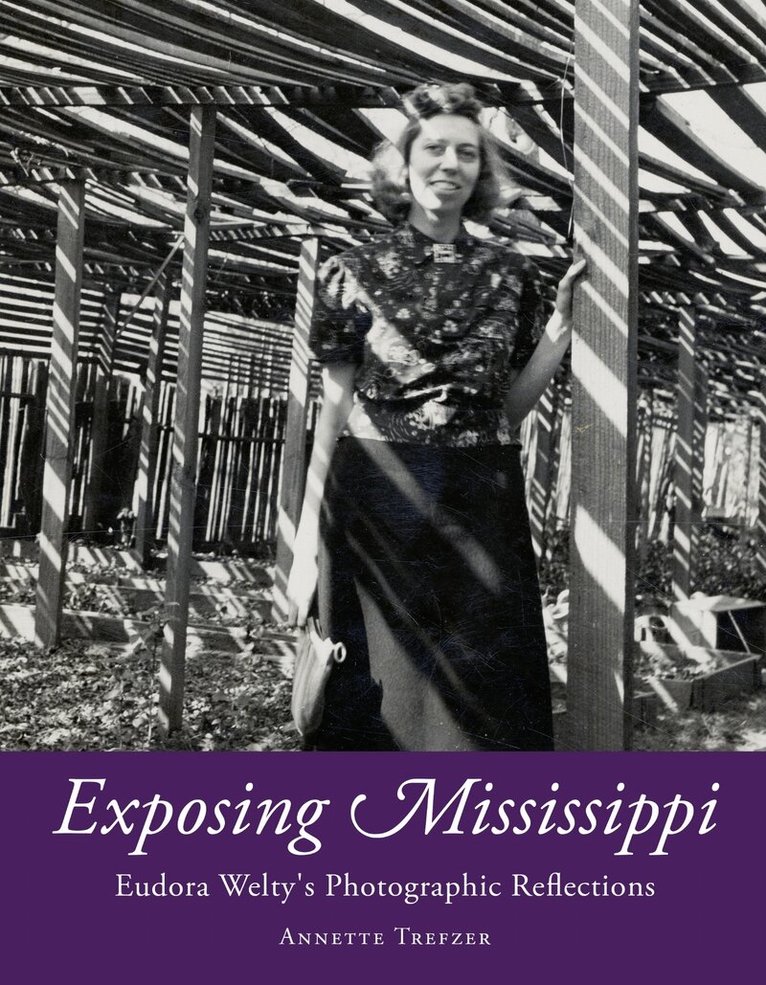
Internationally known as a writer, Eudora Welty has as well been spotlighted as a talented photographer. The prevalent idea remains that Welty simply took snapshots before she found her true calling as a renowned fiction writer. But who was Welty as a photographer? What did she see? How and why did she photograph? And what did Welty know about modern photography? In Exposing Mississippi: Eudora Welty's Photographic Reflections, Annette Trefzer elucidates Welty’s photographic vision and answers these questions by exploring her photographic archive and writings on photography.The photographs Welty took in the 1930s and ’40s frame her visual response to the cultural landscapes of the segregated South during the Depression. The photobook One Time, One Place, which was selected, curated, and shaped into a visual narrative by Welty herself, serves as a starting point and guide for the following chapters on her spatial hermeneutic. The book is divided into sections by locations and offers how the framing of these areas reveals Welty’s radical commentary of the spaces her camera captured. There are over eighty images in Exposing Mississippi, including some never-before-seen archival photographs, and sections of the book draw on over three hundred more. The chapters on institutional, leisure, and memorial landscapes address how Welty’s photographs contribute to, reflect on, and intervene in customary visual constructions of the Depression-era South.
422 kr
Skickas inom 10-15 vardagar
From new insights into the Chickasaw sources and far-reaching implications of Faulkner’s fictional place-name "Yoknapatawpha," to discussions that reveal the potential for indigenous land-, family-, and story-based methodologies to deepen understanding of Faulkner’s fiction (including but not limited to the novels and stories he devoted explicitly to Native American topics), the eleven essays of this volume advance the critical analysis of Faulkner’s Native South and the Native South’s Faulkner. Critics push beyond assessments of the historical accuracy of his Native representations and the colonial hybridity of his Indian characters. Essayists turn instead to indigenous intellectual culture for new models, problems, and questions to bring to Faulkner studies. Along the way, readers are treated to illuminating comparisons between Faulkner’s writings and the work of a number of Native American authors, filmmakers, tribal leaders, and historical figures.Faulkner and the Native South brings together Native and non-Native scholars in a stimulating and often surprising critical dialogue about the indigenous wellsprings of Faulkner’s creative energies and about Faulkner’s own complicated presence in Native American literary history.Contributions by Eric Gary Anderson, Melanie R. Anderson, Jodi A. Byrd, Gina Caison, Robbie Ethridge, Patricia Galloway, LeAnne Howe, John Wharton Lowe, Katherine M. B. Osburn, Melanie Benson Taylor, Annette Trefzer, and Jay Watson.
433 kr
Skickas inom 10-15 vardagar
Internationally known as a writer, Eudora Welty has as well been spotlighted as a talented photographer. The prevalent idea remains that Welty simply took snapshots before she found her true calling as a renowned fiction writer. But who was Welty as a photographer? What did she see? How and why did she photograph? And what did Welty know about modern photography? In Exposing Mississippi: Eudora Welty's Photographic Reflections, Annette Trefzer elucidates Welty’s photographic vision and answers these questions by exploring her photographic archive and writings on photography.The photographs Welty took in the 1930s and ’40s frame her visual response to the cultural landscapes of the segregated South during the Depression. The photobook One Time, One Place, which was selected, curated, and shaped into a visual narrative by Welty herself, serves as a starting point and guide for the following chapters on her spatial hermeneutic. The book is divided into sections by locations and offers how the framing of these areas reveals Welty’s radical commentary of the spaces her camera captured. There are over eighty images in Exposing Mississippi, including some never-before-seen archival photographs, and sections of the book draw on over three hundred more. The chapters on institutional, leisure, and memorial landscapes address how Welty’s photographs contribute to, reflect on, and intervene in customary visual constructions of the Depression-era South.
422 kr
Skickas inom 10-15 vardagar
Contributions by Hosam Aboul-Ela, Susan V. Donaldson, Richard Godden, Michael Gorra, Lisa Hinrichsen, Donald M. Kartiganer, Sarah Mahurin, Sean McCann, Noel Polk, Esther Sánchez-Pardo, Annette Trefzer, Rachel Watson, and Philip Weinstein Faulkner and Mystery presents a wide spectrum of compelling arguments about the role and function of mystery in William Faulkner's fiction. Twelve new essays approach the question of what can be known and what remains a secret in the narratives of the Nobel laureate. Scholars debate whether or not Faulkner's work attempts to solve mysteries or celebrate the enigmas of life and the elusiveness of truth.Scholars scrutinize Faulkner's use of the contemporary crime and detection genre as well as novels that deepen a plot rather than solve it. Several essays are dedicated to exploring the narrative strategies and ideological functions of Faulkner's take on the detective story, the classic "whodunit." Among Faulkner's novels most interested in the format of detection is Intruder in the Dust, which assumes a central role in this essay collection.Other contributors explore the thickening mysteries of racial and sexual identity, particularly the enigmatic nature of his female and African American characters. Questions of insight, cognition, and judgment in Faulkner's work are also at the center of essays that explore his storytelling techniques, plot development, and the inscrutability of language itself.
1 339 kr
Skickas inom 7-10 vardagar
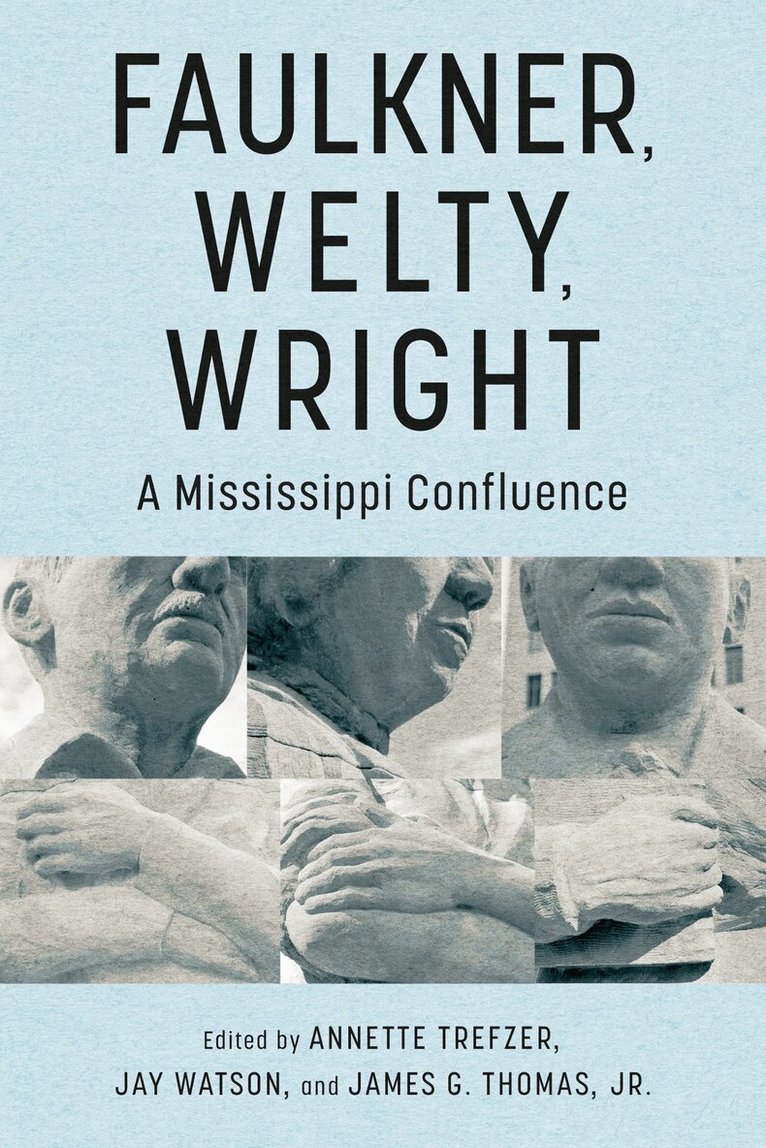
Contributions by Anita DeRouen, Susan V. Donaldson, Julia Eichelberger, W. Ralph Eubanks, Sarah Ford, Bernard Joy, John Wharton Lowe, Anne MacMaster, Rebecca Mark, Suzanne Marrs, Donnie McMahand, Kevin Murphy, Harriet Pollack, Annette Trefzer, Jay Watson, and Ryoichi YamaneWorking closely in each other’s orbit in Mississippi, William Faulkner, Eudora Welty, and Richard Wright created lasting portraits of southern culture, each from a distinctly different vantage point. Taking into consideration their personal, political, and artistic ways of responding to the histories and realities of their time and place, Faulkner, Welty, Wright: A Mississippi Confluence offers comparative scholarship that forges new connections—or, as Welty might say, traces new confluences—across texts, authors, identities, and traditions.In the collection, contributors discuss Faulkner’s Light in August; Sanctuary; Go Down, Moses; As I Lay Dying; ""A Rose for Emily""; and ""That Evening Sun""; Welty’s One Writer’s Beginnings; One Time, One Place; The Optimist’s Daughter; Losing Battles; ""Why I Live at the P.O.""; ""Livvie""; ""Moon Lake""; ""The Burning""; ""Where Is the Voice Coming From?""; and ""The Demonstrators""; and Wright’s Native Son; The Long Dream; 12 Million Black Voices; Black Boy; Lawd Today!; ""The Man Who Lived Underground""; ""The Ethics of Living Jim Crow""; and ""Long Black Song.""Acknowledging that Mississippi ground was never level for any of the three writers, the fourteen essays in this volume turn from the familiar strategies of single-author criticism toward a mode of analysis more receptive to the fluid mergings of creative currents, placing Wright, Welty, and Faulkner in comparative relationship to each other as well as to other Mississippi writers such as Margaret Walker, Lewis Nordan, Natasha Trethewey, Jesmyn Ward, Steve Yarbrough, and Kiese Laymon. Doing so deepens and enriches our understanding of these literary giants and the Mississippi modernism they made together.
356 kr
Skickas inom 7-10 vardagar
Contributions by Anita DeRouen, Susan V. Donaldson, Julia Eichelberger, W. Ralph Eubanks, Sarah Ford, Bernard Joy, John Wharton Lowe, Anne MacMaster, Rebecca Mark, Suzanne Marrs, Donnie McMahand, Kevin Murphy, Harriet Pollack, Annette Trefzer, Jay Watson, and Ryoichi YamaneWorking closely in each other’s orbit in Mississippi, William Faulkner, Eudora Welty, and Richard Wright created lasting portraits of southern culture, each from a distinctly different vantage point. Taking into consideration their personal, political, and artistic ways of responding to the histories and realities of their time and place, Faulkner, Welty, Wright: A Mississippi Confluence offers comparative scholarship that forges new connections—or, as Welty might say, traces new confluences—across texts, authors, identities, and traditions.In the collection, contributors discuss Faulkner’s Light in August; Sanctuary; Go Down, Moses; As I Lay Dying; ""A Rose for Emily""; and ""That Evening Sun""; Welty’s One Writer’s Beginnings; One Time, One Place; The Optimist’s Daughter; Losing Battles; ""Why I Live at the P.O.""; ""Livvie""; ""Moon Lake""; ""The Burning""; ""Where Is the Voice Coming From?""; and ""The Demonstrators""; and Wright’s Native Son; The Long Dream; 12 Million Black Voices; Black Boy; Lawd Today!; ""The Man Who Lived Underground""; ""The Ethics of Living Jim Crow""; and ""Long Black Song.""Acknowledging that Mississippi ground was never level for any of the three writers, the fourteen essays in this volume turn from the familiar strategies of single-author criticism toward a mode of analysis more receptive to the fluid mergings of creative currents, placing Wright, Welty, and Faulkner in comparative relationship to each other as well as to other Mississippi writers such as Margaret Walker, Lewis Nordan, Natasha Trethewey, Jesmyn Ward, Steve Yarbrough, and Kiese Laymon. Doing so deepens and enriches our understanding of these literary giants and the Mississippi modernism they made together.
1 358 kr
Skickas inom 10-15 vardagar
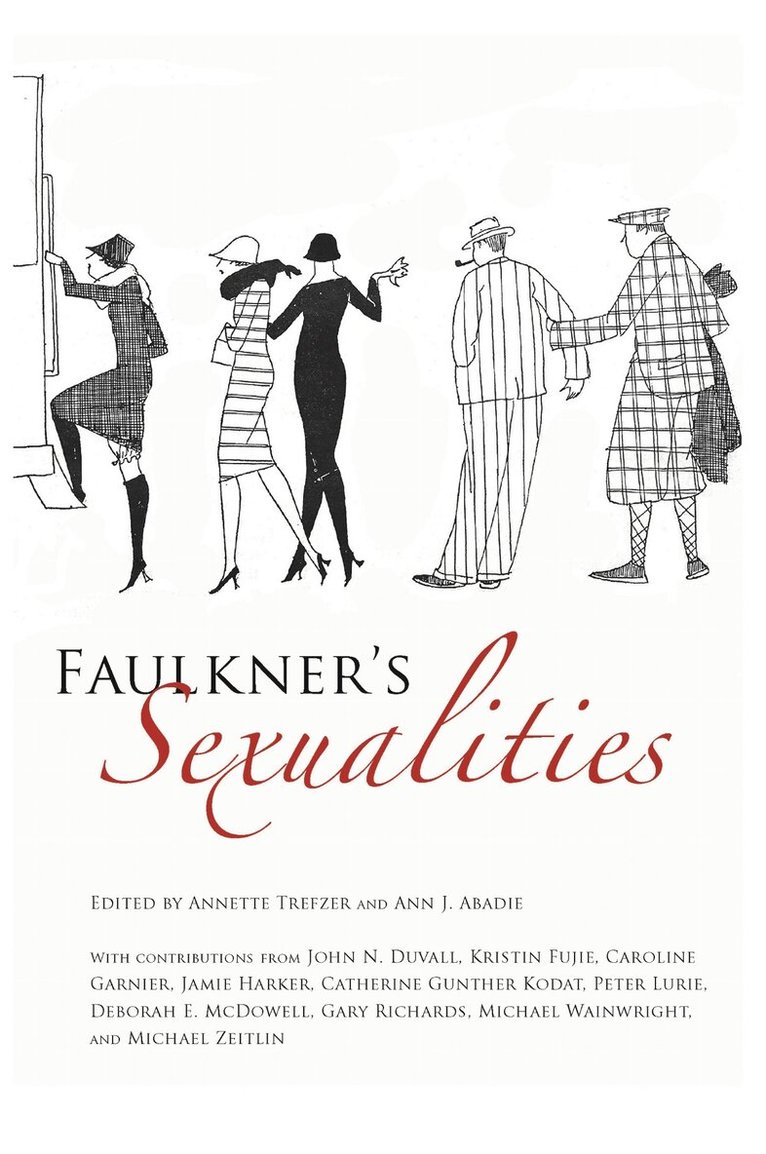
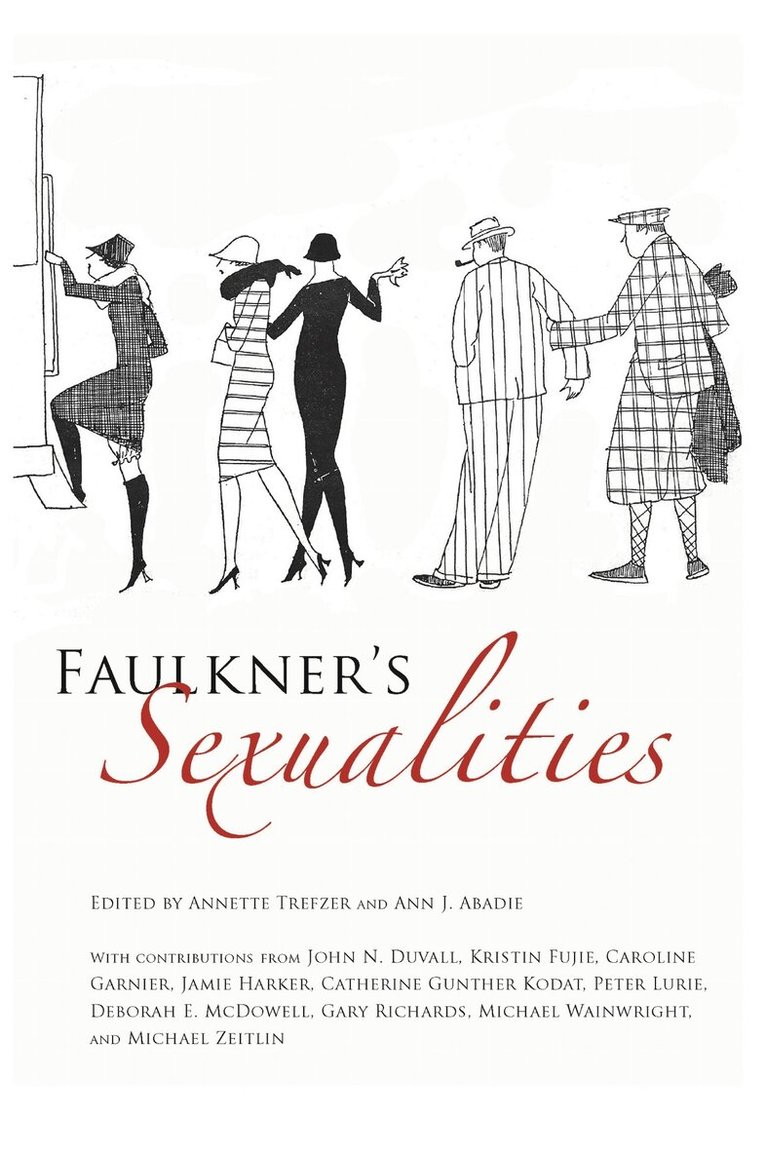
William Faulkner grew up and began his writing career during a time of great cultural upheaval, especially in the realm of sexuality, where every normative notion of identity and relationship was being re-examined. Not only does Faulkner explore multiple versions of sexuality throughout his work, but he also studies the sexual dimension of various social, economic, and aesthetic concerns.In Faulkner's Sexualities, contributors query Faulkner's life and fiction in terms of sexual identity, sexual politics, and the ways in which such concerns affect his aesthetics. Given the frequent play with sexual norms and practices, how does Faulkner's fiction constitute the sexual subject in relation to the dynamics of the body, language, and culture? In what ways does Faulkner participate in discourses of masculinity and femininity, desire and reproduction, heterosexuality and homosexuality? In what ways are these discourses bound up with representations of race and ethnicity, modernity and ideology, region and nation? In what ways do his texts touch on questions concerning the racialization of categories of gender within colonial and dominant metropolitan discourses and power relations? Is there a Southern sexuality? This volume wrestles with these questions and relates them to theories of race, gender, and sexuality.
1 358 kr
Skickas inom 10-15 vardagar
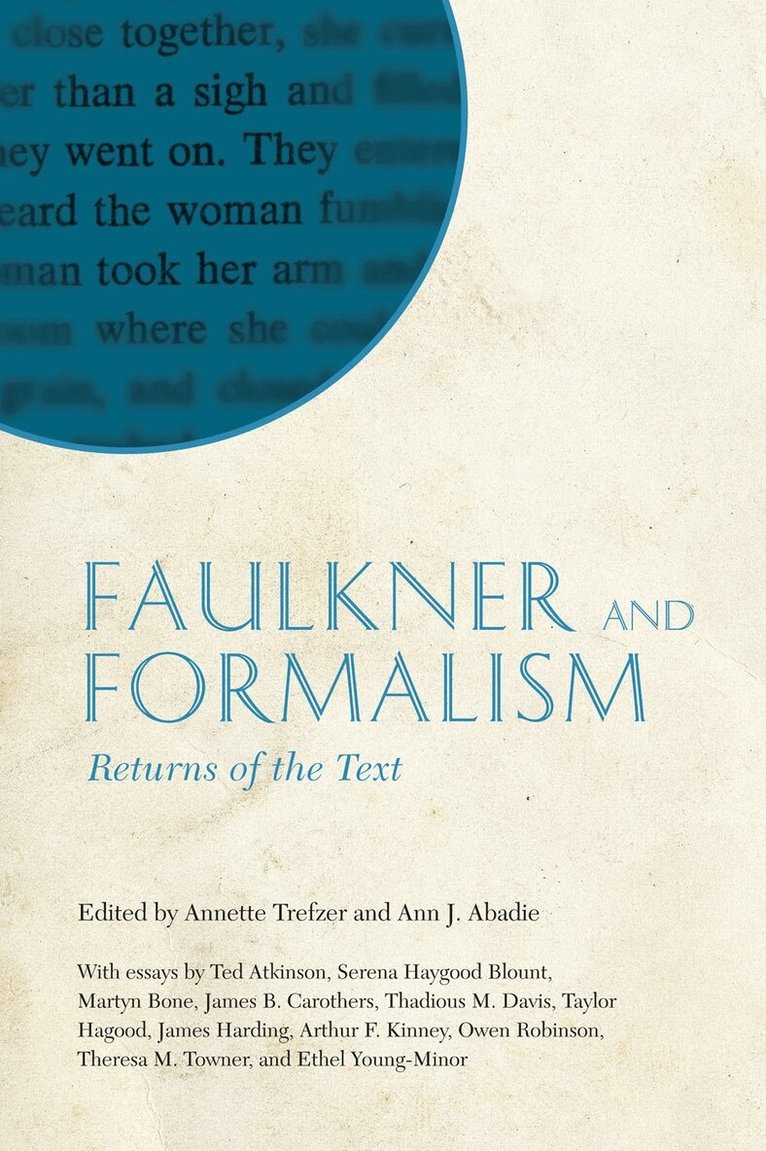
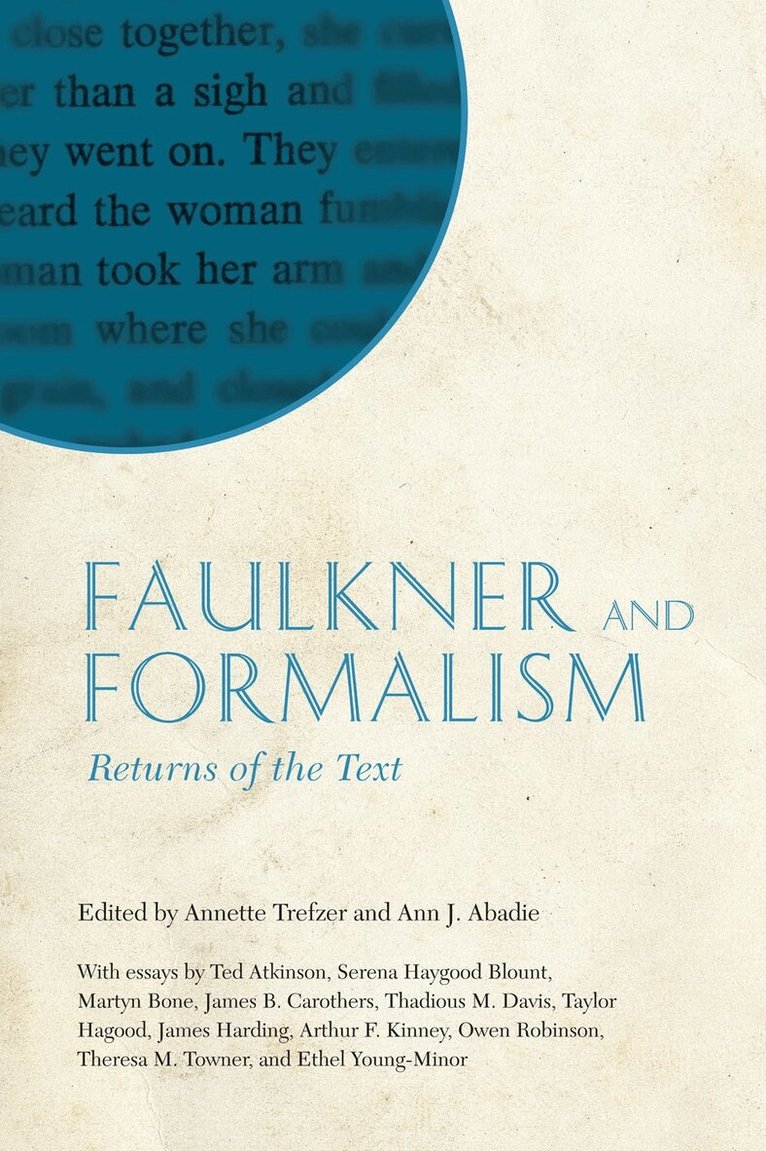
Faulkner and Formalism: Returns of the Text collects eleven essays presented at the Thirty-fifth Annual Faulkner and Yoknapatawpha Conference sponsored by the University of Mississippi in Oxford on July 20-24, 2008. Contributors query the status of Faulkner's literary text in contemporary criticism and scholarship. How do scholars today approach Faulkner's texts? For some, including Arthur F. Kinney and James B. Carothers, ""returns of the text"" is a phrase that raises questions of aesthetics, poetics, and authority. For others, the phrase serves as an invitation to return to Faulkner's language, to writing and the letter itself. Serena Blount, Owen Robinson, James Harding, and Taylor Hagood interpret ""returns of the text"" in the sense in which Roland Barthes characterizes this shift his seminal essay ""From Work to Text."" For Barthes, the text ""is not to be thought of as an object . . . but as a methodological field,"" a notion quite different from the New Critical understanding of the work as a unified construct with intrinsic aesthetic value. Faulkner's language itself is under close scrutiny in some of the readings that emphasize a deconstructive or a semiological approach to his writing. Historical and cultural contexts continue to play significant roles, however, in many of the essays. The contributions by Thadious Davis, Ted Atkinson, Martyn Bone, and Ethel Young-Minor by no means ignore the cultural contexts, but instead of approaching the literary text as a reflection, a representation of that context, whether historical, economic, political, or social, these readings stress the role of the text as a challenge to the power of external ideological systems. By retaining a bond with new historicist analysis and cultural studies, these essays are illustrative of a kind of analysis that carefully preserves attention to Faulkner's sociopolitical environment. The concluding essay by Theresa Towner issues an invitation to return to Faulkner's less well-known short stories for critical exposure and the pleasure of reading.
422 kr
Skickas inom 10-15 vardagar
William Faulkner grew up and began his writing career during a time of great cultural upheaval, especially in the realm of sexuality, where every normative notion of identity and relationship was being re-examined. Not only does Faulkner explore multiple versions of sexuality throughout his work, but he also studies the sexual dimension of various social, economic, and aesthetic concerns.In Faulkner's Sexualities, contributors query Faulkner's life and fiction in terms of sexual identity, sexual politics, and the ways in which such concerns affect his aesthetics. Given the frequent play with sexual norms and practices, how does Faulkner's fiction constitute the sexual subject in relation to the dynamics of the body, language, and culture? In what ways does Faulkner participate in discourses of masculinity and femininity, desire and reproduction, heterosexuality and homosexuality? In what ways are these discourses bound up with representations of race and ethnicity, modernity and ideology, region and nation? In what ways do his texts touch on questions concerning the racialization of categories of gender within colonial and dominant metropolitan discourses and power relations? Is there a southern sexuality? This volume wrestles with these questions and relates them to theories of race, gender, and sexuality.
422 kr
Skickas inom 10-15 vardagar
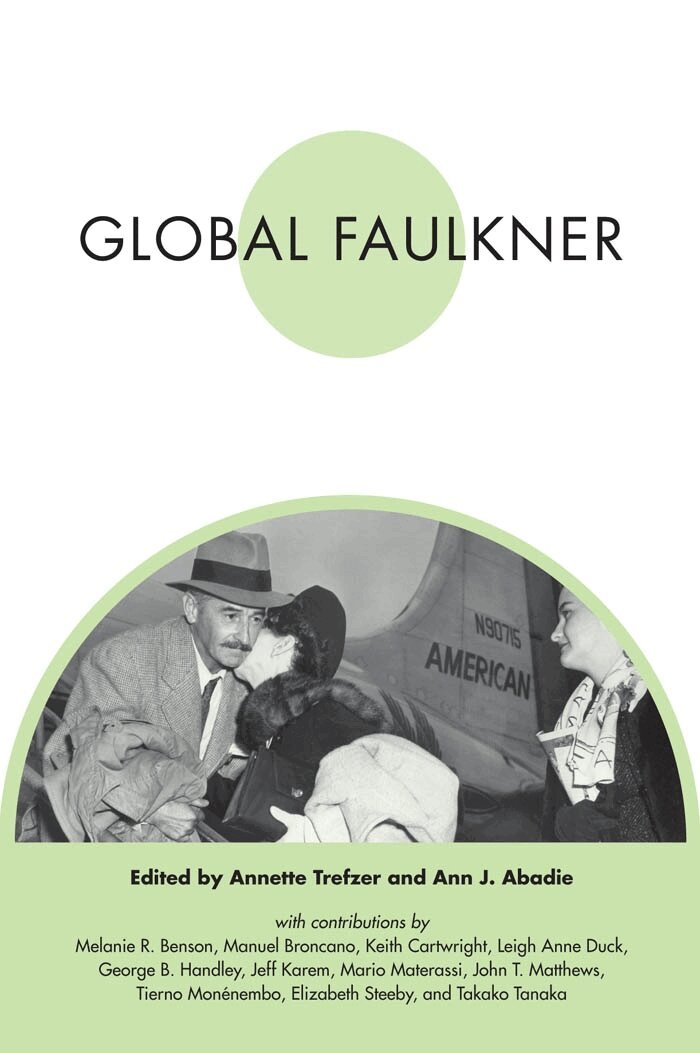
Today, debates about globalization raise both hopes and fears. But what about during William Faulkner's time? Was he aware of worldwide cultural, historical, and economic developments? Just how interested was Faulkner in the global scheme of things?The contributors to Global Faulkner suggest that a global context is helpful for recognizing the broader international meanings of Faulkner's celebrated regional landscape. Several scholars address how the flow of capital from the time of slavery through the Cold War period in his fiction links Faulkner's South with the larger world. Other authors explore the literary similarities that connect Faulkner's South to Latin America, Africa, Spain, Japan, and the Caribbean. In essays by scholars from around the world, Faulkner emerges in trans-Atlantic and trans-Pacific contexts, in a pan-Caribbean world, and in the space of the Middle Passage and the African Atlantic. The Nobel laureate's fiction is linked to that of such writers as Gabriel García Márquez, Wole Soyinka, Miguel de Cervantes, and Kenji Nakagami.
1 358 kr
Skickas inom 10-15 vardagar
Faulkner and Mystery presents a wide spectrum of compelling arguments about the role and function of mystery in William Faulkner's fiction. Twelve new essays approach the question of what can be known and what remains a secret in the narratives of the Nobel laureate. Scholars debate whether or not Faulkner's work attempts to solve mysteries or celebrate the enigmas of life and the elusiveness of truth. Scholars scrutinize Faulkner's use of the contemporary crime and detection genre as well as novels that deepen a plot rather than solve it. Several essays are dedicated to exploring the narrative strategies and ideological functions of Faulkner's take on the detective story, the classic ""whodunit."" Among Faulkner's novels most interested in the format of detection is Intruder in the Dust, which assumes a central role in this essay collection. Other contributors explore the thickening mysteries of racial and sexual identity, particularly the enigmatic nature of his female and African American characters. Questions of insight, cognition, and judgment in Faulkner's work are also at the center of essays that explore his storytelling techniques, plot development, and the inscrutability of language itself.
416 kr
Skickas inom 7-10 vardagar
Faulkner and Formalism: Returns of the Text collects eleven essays in which contributors query the status of Faulkner's literary text in contemporary criticism and scholarship. How do scholars today approach Faulkner's texts? For some, including Arthur F. Kinney and James B. Carothers, ""returns of the text"" is a phrase that raises questions of aesthetics, poetics, and authority. For others, the phrase serves as an invitation to return to Faulkner's language, to writing and the letter itself. Serena Blount, Owen Robinson, James Harding, and Taylor Hagood interpret ""returns of the text"" in the sense in which Roland Barthes characterizes this shift in his seminal essay ""From Work to Text."" Faulkner's language itself is under close scrutiny in some of the readings that emphasize a deconstructive or a semiological approach to his writing. Historical and cultural contexts continue to play significant roles, however, in many of the essays such as those by Thadious Davis, Ted Atkinson, Martyn Bone, and Ethel Young-Minor. Instead of approaching the literary text as a reflection, a representation of that context, these readings stress the role of the text as a challenge to the power of external ideological systems. By retaining a bond with new historicist analysis and cultural studies, these essays are illustrative of a kind of analysis that carefully preserves attention to Faulkner's sociopolitical environment. The concluding essay by Theresa M. Towner issues an invitation to return to Faulkner's less well-known short stories for critical exposure and the pleasure of reading.