Anselm Kamperman Sanders – författare
2 107 kr
Skickas inom 5-8 vardagar
552 kr
Skickas inom 10-15 vardagar
1 149 kr
Skickas inom 10-15 vardagar
2 094 kr
Skickas inom 5-8 vardagar
1 902 kr
Skickas inom 5-8 vardagar
395 kr
Läs direkt efter köp
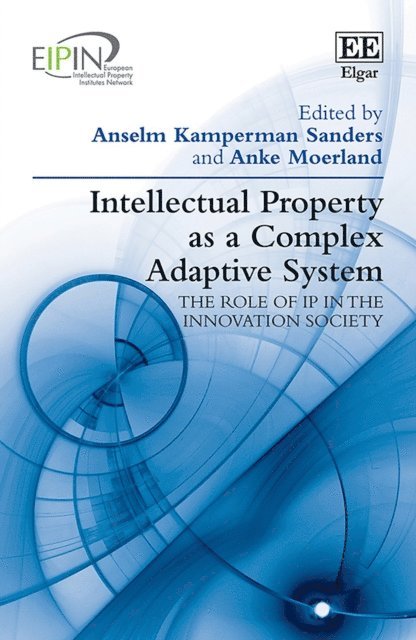
Taking a multi-angled view of the topic, this book questions whether IP rights by definition encourage innovation and explores the role of exceptions and limitations to IP rights as well as the application of competition law to promote innovation. Chapters analyse diverse topics within the field of IP such as plant varieties protection, geographical indications and 3D printing. Taken as a whole this book advocates that a pro-innovation rationale must be applied when new IP legislation is designed.
This book will be an engaging source of information for researchers and policy-makers with an interest in the direction of IP legislation and the promotion of innovation. It will also be relevant for scholars of competition law who are seeking information on the relationship between competition and IP.
1 640 kr
Skickas inom 5-8 vardagar
395 kr
Läs direkt efter köp
Utilising a range of sector-specific, interdisciplinary and actor-focused approaches, each contribution offers suggestions on how Europe’s capacity to foster innovation-based sustainable economic growth can be enhanced on a global scale. This comprehensive book addresses the role of IP in public–private partnerships and business transactions and further explores how IP law can uphold distributive justice in the innovation society. Chapters span a range of topics of great societal interest, including standard essential patent licensing in the Internet of Things, patent quality concerns under competition law and the role of market-driven and legislative solutions to online music licensing.
Intellectual Property as a Complex Adaptive System will be a key resource for students and scholars of IP law, innovation and economics. It will also be vital reading for practitioners, knowledge-intensive industry representatives and innovation and technology transfer specialists.
1 791 kr
Skickas inom 10-15 vardagar
1 408 kr
Skickas inom 10-15 vardagar
1 881 kr
Läs direkt efter köp
1 478 kr
Läs direkt efter köp
2 298 kr
Läs direkt efter köp
2 082 kr
Läs direkt efter köp
This is a book dedicated to the significance and legacy of landmark cases in the field of intellectual property. Eleven well-known scholars offer in-depth commentary and analysis of cases that have made an impact on legal theory or critical thinking about the scope and purpose of the protection of intellectual and industrial creativity. All the cases covered have proven useful in developing doctrine, even though subsequent developments have made some appear ‘misleading’ rather than ‘leading’, and for some recent cases it is too early to say whether their approach will become mainstream. Among the fundamental questions – all profoundly interesting, and to which no definite answers have yet been found – arising in the course of the analysis are the following:
• Who should be master over the reputation, esteem and legacy of authors and their works – authors and their heirs, or subsequent copyright owners?
• What, if any, protection should be granted to achievements in the absence of confusion?
• Should prevention of unfair competition allow one to ‘reap what one has not sown’?
• Should we protect commercial investment beyond the scope of defined intellectual property rights?
• Should it be considered a tort to use a well-known mark in a way that may dilute its repute and distinctive character?
• What kinds of monopolies should be protected, if any?
• Does the patent system in its current form allow us to question the assumption that technological progress is good per se, and that novel and inventive solutions should thus be protected?
• Should extraneous considerations such as public good and social usefulness be considered at the stages of grant and enforcement of patent rights?
• Should we grant patents over living organisms whose workings and reproduction are a long way from being completely understood?
• Should the rules developed for the enforcement of property rights limit a patentee’s remedies to appropriate damages, thereby effectively granting a compulsory licence?
The book concludes with an analysis of two case clusters remarkable for the worldwide dimension of the dispute. The authors show how litigation over Lego in about 30 jurisdictions and Budweiser in over 40 jurisdictions has enriched doctrine on such issues as contract, trade marks, trade names, geographical indications, property rights in general, human rights, and various international and bilateral treaties, all as they impinge on the protection of intellectual property rights. For scholars in the field, as well as for lawyers seeking a rich vein of doctrine to buttress a case, this unusual book will be of incomparable value. As a masterful clarification of salient doctrine, it represents a major contribution to the legal theory underpinning intellectual property law.
2 339 kr
Läs direkt efter köp
Although supplying spare and replacement parts and providing repair services form the basis of many legitimate businesses, many manufacturing enterprises seek to augment the competitive advantage realized at the market stage of selling their main products by attempting to monopolize the market for spares, repairs and refills. Increasingly, companies are using intellectual property laws to devise up-front business strategies to gain exclusive rights in the components of their products.
This is the first in-depth analysis of the law in this relatively new and rapidly developing area of practice. It sheds clear light on the conflicting interests of manufacturers, consumers, spare parts makers and the general public; explores the extent to which this kind of business strategy can be more or less successful with respect to the different rights involved, and in different jurisdictions; and highlights the competition issues that inevitably arise. The essays included are revised and updated versions of papers presented at the seventh (2006) of the innovative IP conference organized annually by the Macau Institute of European Studies (IEEM) on intellectual property law and the economic challenges for Asia.
Among the topics and issues covered are the following:
;notions of ‘repair’ and ‘recycle’ and their legal effects;the limits of IP rights in relation to repair and recycle;legal limits of end user licence agreements (EULAs) and technological protection measures (TPMs);patent exhaustion on repair and recycling;alteration of product ‘identity’;the concept of ‘indirect’ or ‘contributory’ infringement;design law strategies; and secondary market definitions.
The authors give detailed attention to cases in various jurisdictions that have guided and continue to guide business strategies in the field. Jurisdictions treated include the EU, the US, the UK, Germany, the Netherlands, China, Hong Kong, Japan, and Korea.
In its clarification of the limits and possibilities of business strategies in this area of competition that is just beginning to attract attention, this book will be of great value not only to intellectual property law practitioners but to business people in nearly any field of production, especially where cross-border marketing is involved.
2 298 kr
Läs direkt efter köp
2 542 kr
Läs direkt efter köp
The book provides the reader with a complete picture of international and regional developments in the area of biotechnology, plant variety protection and patent protection (these topics feature very prominently in the current discussion on the future direction of the TRIPs Agreement), as well as the scope of the patent right in respect of claims of invention and research and development and places these developments in the context of international trade and enforcement mechanism that members of the WTO are required to incorporate.
Part IV gives an outlook on possible future development and mechanisms for the protection of incremential innovation that are feasible for developing countries and small industries. The book therefore covers the edges of the current IP system (with plant varieties and utility models) as well as the more ''mainstream'' discussion in the developed nations. All topics are of international relevancy, while they are also of relevance and interest to Asia. The book is part of the Max Planck Series on Asian Intellectual Property Law.
2 082 kr
Läs direkt efter köp
What exactly do policymakers and journalists mean when they refer to the ''information age''? What bearing do the ''problems'' they describe and the ''solutions'' they offer have on current global realities? Specifically, what does the Euro-American concept of intellectual property mean in a global context?
These questions which clearly identify issues of crucial importance for the coming decades of human history are given full weight, stripped of ideology, in this provocative book, based on the papers presented at a seminar sponsored by the Macau Institute of European Studies (IEEM) in June 2000.
Although there are no clear answers, the accounts and analyses presented here provide a wealth of detail that comes as close as we can expect at this date to the facts of the case. The focus is on East Asia, Greater China in particular, an area which (most social theorists will agree) offers the most revealing social context for the examination of emerging global trends in this field.
Among the vital issues covered are:
• the collision of indigenous knowledge with the Euro-American patent concept; the idea of ''digital commons'';• software piracy and trade ''blacklists'';• the quality of information on offer, or (as the philosopher Baudrillard puts it) ''more and more information, less and less meaning'';• the hidden value judgments of information technologies;• the postponement of more fundamental reforms caused by the belief in the possibilities of the ''new age''; and• commercialization of the Internet as protection against its use by pornographers and racists.2 042 kr
Läs direkt efter köp
Trade secrets and post-contractual non-compete clauses (restrictive covenants) are intrinsically linked issues when analysed in the context of past and present employment. While trade secrets have been the object of legislation in a number of major jurisdictions during the last couple of years, post-employment restrictive covenants have been left out of such legislative activity. Still, they have come under increasing scrutiny of economists and may well come into legislative focus in the near future.
As the chapters of this book highlight in detail, the approach to the protection of trade secrets, the conditions under which an employer can protect trade secrets and other business interests by way of a restrictive covenant, and the scope within which former employees by using the skills and knowledge can compete with a former employer, hugely differ from jurisdiction to jurisdiction. This is not only so for the effective scope, but also for the underlying doctrinal reasons, making a country-by-country comparison difficult, and a common structure of the chapters a challenge. After all, the topic involves international law (Paris Convention, TRIPS), domestic labour law, domestic sui generis protection, and, most importantly, domestic competition and unfair competition law, a field that up to now has defied all attempts of harmonisation beyond those categories as identified by Friedrich Zoll and implemented as Art. 10bis in the Paris Convention.
This book features both comparative and country-specific chapters. The latter cover the major jurisdictions of Europe and Asia, while the former provide a subject-matter analysis by taking into account legislation and case law in a global context.
2 042 kr
Läs direkt efter köp
Trade secrets and post-contractual non-compete clauses (restrictive covenants) are intrinsically linked issues when analysed in the context of past and present employment. While trade secrets have been the object of legislation in a number of major jurisdictions during the last couple of years, post-employment restrictive covenants have been left out of such legislative activity. Still, they have come under increasing scrutiny of economists and may well come into legislative focus in the near future.
As the chapters of this book highlight in detail, the approach to the protection of trade secrets, the conditions under which an employer can protect trade secrets and other business interests by way of a restrictive covenant, and the scope within which former employees by using the skills and knowledge can compete with a former employer, hugely differ from jurisdiction to jurisdiction. This is not only so for the effective scope, but also for the underlying doctrinal reasons, making a country-by-country comparison difficult, and a common structure of the chapters a challenge. After all, the topic involves international law (Paris Convention, TRIPS), domestic labour law, domestic sui generis protection, and, most importantly, domestic competition and unfair competition law, a field that up to now has defied all attempts of harmonisation beyond those categories as identified by Friedrich Zoll and implemented as Art. 10bis in the Paris Convention.
This book features both comparative and country-specific chapters. The latter cover the major jurisdictions of Europe and Asia, while the former provide a subject-matter analysis by taking into account legislation and case law in a global context.
1 879 kr
Skickas inom 5-8 vardagar
1 366 kr
Läs direkt efter köp
Christopher Heath is a judge at the Boards of Appeal of the European Patent Office and former researcher of the Max Planck Institute in Munich.
Anselm Kamperman Sanders is Professor of Intellectual Property Law and Director of the IPKM Master’s Programme at Maastricht University, the Netherlands.
About this book:
Intellectual Property and International Dispute Resolution, the first in-depth treatment of the interface between intellectual property rights and international dispute resolution. The book highlights the different mechanisms of international dispute settlement, having particular regard to cases involving intellectual property law. Investor dispute tribunals, as provided for in many bilateral and multilateral trade agreements, are suspected of intransparency, because proceedings are not public, of unequal treatment, because they give foreign investors a right of action where domestic investors would have none, and of undermining democracy, because they allow democratically enacted laws to be challenged with no possibility of appeal.
What’s in this book:
In this important book, a number of prominent legal scholars and practitioners examine the extent to which challenges against domestic legislation based on an alleged direct or indirect expropriation of intellectual property rights may be justified. The contributions cover such aspects as:
history and current practice of international dispute resolution; direct application of international agreements by national courts; comparison of investor dispute settlement tribunals with other fora such as the WTO or domestic courts for determining compliance with international intellectual property standards; what can be considered ‘investment’ and ‘expropriation’ in the field of intellectual property; legislative freedom to operate when limiting intellectual property rights, particularly in the field of health and safety; and how societal interests could influence future legislation in the field of intellectual property law. One major focus of the book are the challenges against tobacco plain packaging legislation before domestic and international courts and tribunals and their outcome.How this book will help you:
The book’s detailed analysis of the nature of investor dispute tribunals and how they may conflict with public interests – and its exploration of possible alternatives – is sure to be of great interest to internationally operating companies, policymakers, practitioners and scholars in both international trade law and intellectual property law.
1 555 kr
Läs direkt efter köp
Intellectual Property Rights as Obstacles to Legitimate Trade helps to understand one of the underlying rationales of the TRIPS Agreement in light of some of the most pertinent IP issues. The WTO/TRIPS Agreement for the first time put IP rights in the context of trade rules, such as when does the exercise of IP rights become an unjustified burden to legitimate trade? Cases have arisen where IP rights are conferred, used, or enforced in a manner that arguably impedes trade, both in domestic and international contexts. This groundbreaking book is the first comprehensive assessment of this controversial area of trade law, shedding important new light on the underlying rationales of the TRIPS Agreement.
With contributions by both practitioners and academics working in a range of countries, this book considers thorny issues in such areas as the following:
– interpretation of ‘obstacles to legitimate trade’ in the context of GATT/ WTO jurisprudence;– separating markets by preventing parallel importation in the context of patents;– geoblocking – territorial separation of digital markets;– using trademarks to prevent competition;– geographical indications – protection of terms that are considered generic in certain domestic markets;– seizure of goods in transit;– ‘evergreening’ patents – attempts to extend the duration of patents;– rights to second-hand digital goods or content;– unjustified threats – towards appropriate standards of liability.Focusing on topical and under-researched areas of IP law, the contributors stimulate a discussion on an overarching concern that is not often addressed – how to assess whether the protection and enforcement of certain IP rights in particular situations should be classified as trade barriers. As an incisive analysis of the desirable balance between the exercise of IP rights and the demands of legitimate trade, this book will be welcomed by practitioners, lawmakers, policy advisers, and academics in both trade law and IP law.
1 555 kr
Läs direkt efter köp
Intellectual Property Rights as Obstacles to Legitimate Trade helps to understand one of the underlying rationales of the TRIPS Agreement in light of some of the most pertinent IP issues. The WTO/TRIPS Agreement for the first time put IP rights in the context of trade rules, such as when does the exercise of IP rights become an unjustified burden to legitimate trade? Cases have arisen where IP rights are conferred, used, or enforced in a manner that arguably impedes trade, both in domestic and international contexts. This groundbreaking book is the first comprehensive assessment of this controversial area of trade law, shedding important new light on the underlying rationales of the TRIPS Agreement.
With contributions by both practitioners and academics working in a range of countries, this book considers thorny issues in such areas as the following:
– interpretation of ‘obstacles to legitimate trade’ in the context of GATT/ WTO jurisprudence;– separating markets by preventing parallel importation in the context of patents;– geoblocking – territorial separation of digital markets;– using trademarks to prevent competition;– geographical indications – protection of terms that are considered generic in certain domestic markets;– seizure of goods in transit;– ‘evergreening’ patents – attempts to extend the duration of patents;– rights to second-hand digital goods or content;– unjustified threats – towards appropriate standards of liability.Focusing on topical and under-researched areas of IP law, the contributors stimulate a discussion on an overarching concern that is not often addressed – how to assess whether the protection and enforcement of certain IP rights in particular situations should be classified as trade barriers. As an incisive analysis of the desirable balance between the exercise of IP rights and the demands of legitimate trade, this book will be welcomed by practitioners, lawmakers, policy advisers, and academics in both trade law and IP law.
1 654 kr
Läs direkt efter köp
The convergence of various fields of technology is changing the fabric of society. Big data and data mining, Internet of Things, artificial intelligence and blockchains are already affecting business models and leading to a social and economic transformations that have been dubbed by the fourth industrial revolution. Focusing on the framework of intellectual property rights, the contributions to this book analyse how the technical background of this massive transformation affects intellectual property law and policy and how intellectual property is likely to change in order to serve the society.
Well-known authorities in intellectual property law offer in-depth chapters on the roles in this revolution of such concepts and actualities as the following:
power and role of data as the raw material of the revolution; artificial inventors and creators; trade marks in the dimension of avatars and fictional game characters; concept of inventive step change where the person skilled in the art is virtual; data rights versus intellectual property rights; transparency in the context of big data; interrelations of data, technology transfer and antitrust; self-executable and ‘smart’ contracts; redefining the balance among exclusive rights, development, technology transfer and contracts; and proprietary information versus the public domain.The chapters also provide complete analyses of how big data changes decision-making processes, how sustainable development requires redefinition, how technology transfer is re-emerging as technology diffusion and how the role of contracts and blockchain as instruments of monitoring and enforcement are being defined.
Offering the first in-depth legal commentary and analysis of this highly topical issue, the book approaches the fourth industrial revolution from the perspectives of technical background, society and law. Its authoritative analysis of how the data-driven economy influences innovation and technology transfer is without peer. It will be welcomed by practicing lawyers in intellectual property rights and competition law, as well as by academics, think tanks and policymakers.
1 596 kr
Läs direkt efter köp
The convergence of various fields of technology is changing the fabric of society. Big data and data mining, Internet of Things, artificial intelligence and blockchains are already affecting business models and leading to a social and economic transformations that have been dubbed by the fourth industrial revolution. Focusing on the framework of intellectual property rights, the contributions to this book analyse how the technical background of this massive transformation affects intellectual property law and policy and how intellectual property is likely to change in order to serve the society.
Well-known authorities in intellectual property law offer in-depth chapters on the roles in this revolution of such concepts and actualities as the following:
power and role of data as the raw material of the revolution; artificial inventors and creators; trade marks in the dimension of avatars and fictional game characters; concept of inventive step change where the person skilled in the art is virtual; data rights versus intellectual property rights; transparency in the context of big data; interrelations of data, technology transfer and antitrust; self-executable and ‘smart’ contracts; redefining the balance among exclusive rights, development, technology transfer and contracts; and proprietary information versus the public domain.The chapters also provide complete analyses of how big data changes decision-making processes, how sustainable development requires redefinition, how technology transfer is re-emerging as technology diffusion and how the role of contracts and blockchain as instruments of monitoring and enforcement are being defined.
Offering the first in-depth legal commentary and analysis of this highly topical issue, the book approaches the fourth industrial revolution from the perspectives of technical background, society and law. Its authoritative analysis of how the data-driven economy influences innovation and technology transfer is without peer. It will be welcomed by practicing lawyers in intellectual property rights and competition law, as well as by academics, think tanks and policymakers.
1 910 kr
Skickas inom 5-8 vardagar
1 623 kr
Läs direkt efter köp
When the TRIPS Agreement was concluded in 1994, many saw it as embodying a new gold standard of intellectual property protection that not only reformed the Paris and Berne Conventions but also made further IP agreements unnecessary. Although this optimistic vision has eroded – obligations to protect IP rights can now be found in trade agreements and can be enforced before domestic courts and investor–state tribunals – the Agreement continues to pervade trends and developments in international law, not only in IP but in trade law also. This comprehensive commentary on the past, present, and future of the Agreement focuses on its influence on key topics in IP as well as on enforcement and dispute resolution.
The editors have assembled a group of renowned IP law practitioners and academics who, taking each area of IP law, in turn, show the extent to which TRIPS provisions have survived, expanded, or been supplanted by other bodies. Their analysis covers the different IP rights addressed in the TRIPS Agreement (copyrights; trade marks; geographical indications; patents; data protection and enforcement) both in historical perspective and in their development in the last 25 years. An additional three chapters cover:
most-favoured-nation obligations in regard of subsequent free trade agreements; how societal interests alter the interpretation of TRIPS obligations; the judicial role in the WTO panels and Appellate Body; minimum standards and reduction of flexibilities in IP policy; relationship of WTO/TRIPS with other international agreements.As intellectual property becomes more pervasive in society than ever before – and as both technology related to the use of IP and the way protected works are consumed have changed beyond recognition over the past 25 years – jurists, academics, and practitioners in IP and trade law will welcome this unique opportunity to test the true scope of national sovereignty in the interpretation of intellectual property rights.
1 623 kr
Läs direkt efter köp
When the TRIPS Agreement was concluded in 1994, many saw it as embodying a new gold standard of intellectual property protection that not only reformed the Paris and Berne Conventions but also made further IP agreements unnecessary. Although this optimistic vision has eroded – obligations to protect IP rights can now be found in trade agreements and can be enforced before domestic courts and investor–state tribunals – the Agreement continues to pervade trends and developments in international law, not only in IP but in trade law also. This comprehensive commentary on the past, present, and future of the Agreement focuses on its influence on key topics in IP as well as on enforcement and dispute resolution.
The editors have assembled a group of renowned IP law practitioners and academics who, taking each area of IP law, in turn, show the extent to which TRIPS provisions have survived, expanded, or been supplanted by other bodies. Their analysis covers the different IP rights addressed in the TRIPS Agreement (copyrights; trade marks; geographical indications; patents; data protection and enforcement) both in historical perspective and in their development in the last 25 years. An additional three chapters cover:
most-favoured-nation obligations in regard of subsequent free trade agreements; how societal interests alter the interpretation of TRIPS obligations; the judicial role in the WTO panels and Appellate Body; minimum standards and reduction of flexibilities in IP policy; relationship of WTO/TRIPS with other international agreements.As intellectual property becomes more pervasive in society than ever before – and as both technology related to the use of IP and the way protected works are consumed have changed beyond recognition over the past 25 years – jurists, academics, and practitioners in IP and trade law will welcome this unique opportunity to test the true scope of national sovereignty in the interpretation of intellectual property rights.
2 584 kr
Tillfälligt slut