Anthony Arnull - Böcker
Visar alla böcker från författaren Anthony Arnull. Handla med fri frakt och snabb leverans.
10 produkter
10 produkter
99 kr
Skickas inom 5-8 vardagar
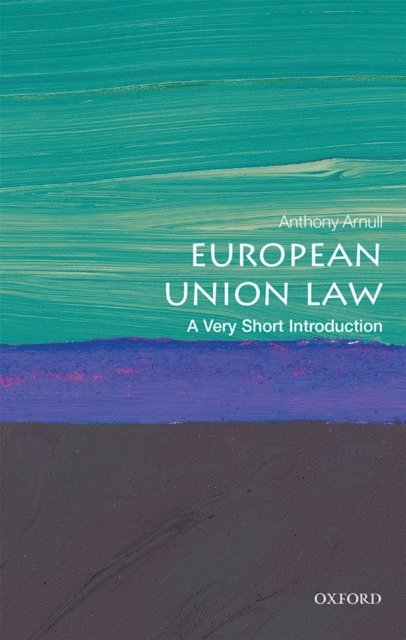
The European Union is rarely out of the news and, as it deals with the consequences of the Brexit vote and struggles to emerge from the eurozone crisis, it faces difficult questions about its future. In this debate, the law has a central role to play, whether the issue be the governance of the eurozone, the internal market, 'clawing back powers from Europe' or reducing so-called 'Brussels red tape'.In this Very Short Introduction Anthony Arnull looks at the laws and legal system of the European Union, including EU courts, and discusses the range of issues that the European Union has been given the power to regulate, such as the free movement of goods and people. He considers why an organisation based on international treaties has proved capable of having far-reaching effects on both its Member States and on countries that lie beyond its borders, and discusses how its law and legal system have proved remarkably effective in ensuring that Member States respect the commitments they made when they signed the Treaties. Answering some of the key questions surrounding EU law, such as what exactly it is about, and how it has become part of the legal DNA of its Member States so much more effectively than other treaty-based regimes, Arnull considers the future for the European Union.ABOUT THE SERIES: The Very Short Introductions series from Oxford University Press contains hundreds of titles in almost every subject area. These pocket-sized books are the perfect way to get ahead in a new subject quickly. Our expert authors combine facts, analysis, perspective, new ideas, and enthusiasm to make interesting and challenging topics highly readable.
2 138 kr
Skickas inom 5-8 vardagar
This volume commemorates the career of Sir Francis Jacobs KCMG QC, who served as British Advocate General at the European Court of Justice in Luxembourg from October 1988 until January 2006. The essays in the volume examine the key developments in EU law over the period that Sir Francis served as Advocate General, one that saw momentous changes in the character of the Union and its legal order. It encompassed the Treaty of Maastricht, which superimposed the Union on the pre-existing European Community, as well as the Treaties of Amsterdam and Nice; the proclamation of the Union's Charter of Fundamental Rights; the drafting of the Treaty establishing a Constitution for Europe; the creation of the Court of First Instance and the EU Civil Service Tribunal; the completion of the single market; and the enlargement of the Union to 15 Member States in 1995 and 25 Member States in 2004. The period also witnessed a profound change in the nature of much academic scholarship on the law of the Union. At the same time, the ECJ continues to grapple with issues which preoccupied it in the 1980s and earlier, such as the relationship between Union law and national law, the circumstances in which individuals should be permitted to seek the annulment of measures adopted by the Union's institutions and the scope of the Treaty rules on freedom of movement. The essays in the volume look at the persistent difficulties that have faced the unique legal system during the period of change. The volume is divided into five sections dealing respectively with: general issues and institutional questions; fundamental rights; substantive law; external relations; and national perspectives. The contributors are distinguished figures drawn from a variety of constituencies, including the national and European judiciaries, legal practice, and the academic world.
1 544 kr
Skickas inom 3-6 vardagar
The European Union's growing accountability deficit threatens to undermine its legitimacy. This was acknowledged by the Member States in Nice in February 2001. Recognising the need to improve 'the democratic legitimacy and transparency of the Union and its institutions', they agreed to launch a debate on the Union's future. At Laeken in December 2001, the Member States decided that the debate should be carried forward in a Convention comprising the main parties involved. The debate will start to crystallise in 2004, when negotiations on a new set of Treaty changes will begin. The outcome of those negotiations will profoundly affect the constitutional and political health of the Union as it confronts enlargement to the east and south and the challenges of the 21st century. However, the Union's accountability and legitimacy deficit is so deep-seated that it is unlikely to be eradicated completely by the changes agreed. The issue will therefore remain high on the political agenda for the foreseeable future. The contributors to this interdisciplinary collection of essays consider various aspects of accountability and legitimacy in the European Union. How open should the Union's decision-making be? What is the right balance between accountability and efficiency? Does the Union now need a formal constitution? How can respect for democracy, fundamental rights and the rule of law in the Union best be ensured? These are just some of the questions explored in this book. It will be of interest to anyone concerned with the future of Europe, from students and academics to policy-makers, and journalists
895 kr
Skickas inom 5-8 vardagar
The European Union's growing accountability deficit threatens to undermine its legitimacy. This was acknowledged by the Member States in Nice in February 2001. Recognising the need to improve 'the democratic legitimacy and transparency of the Union and its institutions', they agreed to launch a debate on the Union's future. At Laeken in December 2001, the Member States decided that the debate should be carried forward in a Convention comprising the main parties involved. The debate will start to crystallise in 2004, when negotiations on a new set of Treaty changes will begin. The outcome of those negotiations will profoundly affect the constitutional and political health of the Union as it confronts enlargement to the east and south and the challenges of the 21st century. However, the Union's accountability and legitimacy deficit is so deep-seated that it is unlikely to be eradicated completely by the changes agreed. The issue will therefore remain high on the political agenda for the foreseeable future. The contributors to this interdisciplinary collection of essays consider various aspects of accountability and legitimacy in the European Union. How open should the Union's decision-making be? What is the right balance between accountability and efficiency? Does the Union now need a formal constitution? How can respect for democracy, fundamental rights and the rule of law in the Union best be ensured? These are just some of the questions explored in this book. It will be of interest to anyone concerned with the future of Europe, from students and academics to policy-makers, and journalists
1 863 kr
Skickas inom 3-6 vardagar
The European Court of Justice is a controversial institution. Its supporters see it as having played a central and positive role in shaping a polity which has given its Member States an unprecedented degree of peace, stability and prosperity. To its detractors, it has ignored the Treaties from which it derives its powers in order to pursue an agenda of its own about the political shape of Europe. This book analyses the Court's place in the institutional architecture of the European Union and its contribution to the constitutionalization of the Union and the development of the Union's substantive law. Questions examined include the jurisdiction of the Court; the relationship between Union law and national law; the impact of Union law on national laws concerning remedies; and the protection of fundamental rights. The book also looks at certain key areas of substantive law which have to a large extent been judicially constructed. In the final section, some overarching themes relating to the Court's overall approach are addressed. To what extent has it evolved with the development of the Union? What has been the Court's relationship with the other institutions of the Union and the national courts of the Member States? Should we regard the central role the Court has undoubtedly played in the development of the Union as legitimate? What is the nature of the role reserved for the Court under the Union's Constitutional Treaty, signed by the Member States in Rome on 29 October 2004? The book will be of interest to anyone concerned with the development of the European Union and the role of the Court in that process.
1 056 kr
Skickas inom 5-8 vardagar
2 178 kr
Skickas inom 5-8 vardagar
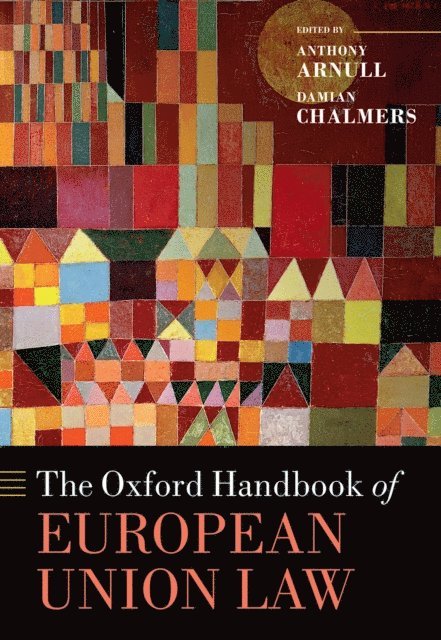
Since its formation the European Union has expanded beyond all expectations, and this expansion seems set to continue as more countries seek accession and the scope of EU law expands, touching more and more aspects of its citizens' lives. The EU has never been stronger and yet it now appears to be reaching a crisis point, beset on all sides by conflict and challenges to its legitimacy. Nationalist sentiment is on the rise and the Eurozone crisis has had a deep and lasting impact. EU law, always controversial, continues to perplex, not least because it remains difficult to analyse. What is the EU? An international organization, or a federation? Should its legal concepts be measured against national standards, or another norm? The Oxford Handbook of European Union Law illuminates the richness and complexity of the debates surrounding the law and policies of the EU. Comprising eight sections, it examines how we are to conceptualize EU law; the architecture of EU law; making and administering EU law; the economic constitution and the citizen; regulation of the market place; economic, monetary, and fiscal union; the Area of Freedom, Security, and Justice; and what lies beyond the regulatory state. Each chapter summarizes, analyses, and reflects on the state of play in a given area, and suggests how it is likely to develop in the foreseeable future. Written by an international team of leading commentators, this Oxford Handbook creates a vivid and provocative tapestry of the key issues shaping the laws of the European Union.
654 kr
Skickas inom 5-8 vardagar
Since its formation, the European Union has expanded beyond all expectations; this seems set to continue as more countries seek accession and the scope of EU law expands, touching more and more aspects of its citizens' lives. The EU has never been stronger and yet it now appears to be reaching a crisis point, beset on all sides by conflict and challenges to its legitimacy. Nationalist sentiment is on the rise and the Eurozone crisis has had a deep and lasting impact. The European Union has the complexity and depth of a mature legal system, albeit one which is constantly in flux and whose content and foundations are constantly contested. Its law has developed beyond the single market and institutional matters into many other fields including environmental, fiscal, labour, immigration and criminal law. It is studied at undergraduate and postgraduate level throughout the Member States and beyond; an understanding of it is essential to those who study the EU from other disciplinary perspectives as well as to legal practitioners and policy-makers. The Oxford Handbook of European Union Law comprises eight sections examining how we are to conceptualise EU law; the architecture of EU law; making and administering EU law; the economic constitution and the citizen; regulation of the market place; economic, monetary and fiscal union; the Area of Freedom, Security and Justice; and what lies beyond the regulatory state. Each chapter summarises, analyses and reflects on the state of play in a given area, and suggests how it is likely to develop in the foreseeable future. The resulting collection provides a vivid and provocative tapestry which will be widely used both inside and outside academia by those who are interested in the law underpinning the EU and its policies.
1 369 kr
Kommande
This book provides an insightful, thought-provoking study of one of the world’s most important courts. The European Court of Justice has had a transformative effect on EU Law but this has not been without controversy.This book explores criticisms levelled against the Court, examining whether concerns over judicial activism, unconventional interpretative methods, conflicts with national courts, and over-reach are justified. Drawing on the expertise of leading commentators, it offers various perspectives from across the spectrum of EU Law. The contributions included in the volume go beyond a legal analysis seeking to provide an understanding of the political and social context in which the Court operates and the wider impact of its judgments.
1 927 kr
Skickas inom 10-15 vardagar
This collection celebrates the career of Professor Alan Dashwood, a leading member of the generation of British academics who organised, explained and analysed what we now call European Union law for the benefit of lawyers trained in the common law tradition. It takes as its starting point Professor Dashwood's vivid description of the European Union as a 'constitutional order of states'. He intended that phrase to capture the unique character of the Union. On the one hand, it is a supranational order characterised by its own distinctive institutional dynamics and an unprecedented level of cohesion among, and penetration into, the national legal systems. On the other hand, it remains an organisation of derived powers, the Member States retaining their character as sovereign entities under international law. This theme permeates both the constitutional and the substantive law of the Union. Contributors to the collection include members of the judiciary and distinguished practitioners, officials and academics. They consider the foundations, strengths, implications and shortcomings of this conceptual framework in various fields of EU law and policy. The collection is an essential purchase for anyone interested in the constitutional framework of the contemporary European Union.