In this groundbreaking book, a range of internationally renowned and emerging academics, writers, artists, curators, activists and filmmakers critically reflect on the ways in which visual culture has appropriated and developed new media across North Africa and the Middle East. Examining the opportunities presented by the real-time generation of new, relatively unregulated content online, Uncommon Grounds evaluates the prominent role that new media has come to play in artistic practices - and social movements - in the Arab world today. Analysing alternative forms of creating, broadcasting, publishing, distributing and consuming digital images, this book also enquires into a broader global concern: does new media offer a 'democratisation' of - and a productive engagement with - visual culture, or merely capitalise upon the effect of immediacy at the expense of depth?Featuring full-colour artists' inserts, this is the first book to extensively explore the degree to which the grassroots popularity of Twitter and Facebook has been co-opted into mainstream media, institutional and curatorial characterisations of 'revolution' - and whether artists should be wary of perpetuating the rhetoric and spectacle surrounding political events.In the process, Uncommon Grounds reveals how contemporary art practices actively negotiate present-day notions of community-based activism, artistic agency and political engagement.
The 'archive' is often viewed as a collection of historical documents that records and orders information about people, places and events. This view nevertheless obscures a crucial point: the archive, whilst subject to the vagaries of time and history, can also determine the future. This point has gained urgency in modern-day North Africa and the Middle East where the archive has come to the fore as a site of social, historical, theoretical, and political contestation. Dissonant Archives is the first book to consider the ways in which contemporary artists from the Middle East and North Africa - including Emily Jacir, Walid Raad, Jananne Al Ani, Basel Abbas and Ruanne Abou-Rahme, Mariam Ghani, Zineb Sedira, and Akram Zaatari - are utilizing and disrupting the function of the archive and, in so doing, highlighting a systemic, perhaps irrevocable, crisis in institutional and state-ordained archiving across the region. In exploring and producing archives, be they alternative, interrogative or fictional, these artists are not simply questioning the authenticity, authority or authorship of the archive; rather, they are unlocking its regenerative, radical potential.The result provides essential insights into the nexus between art and politics in the contemporary Middle East.
This book explores the impact of digital algorithms on visual culture, examining how these technologies influence the creation, circulation, interpretation, and archiving of images. It presents a focused analysis of how algorithms reshape key sociological themes such as power, social relations, labour, racialisation, gender, and representation. Through a combination of case studies and theoretical essays, the book highlights the algorithmic shift within visual sociology, addressing crucial questions: Can algorithms interpret images like humans? How do they affect our understanding of subjectivity, agency, truth, and creativity? With perspectives from multiple geographies and cultural contexts and the analysis of visual phenomena across various digital platforms, this volume is essential for students and scholars in visual sociology, digital sociology, and visual studies. It serves as an accessible, thought-provoking resource for understanding the rapidly evolving relationship between visual culture and technological intervention.
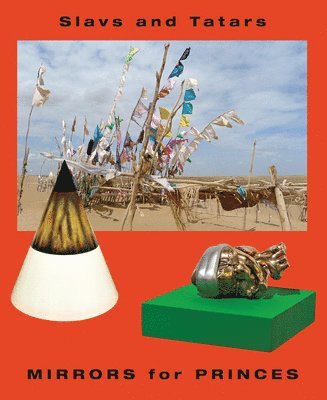
Founded in 2006, the art collective Slavs and Tatars is devoted to cultural intersection in the area known as Eurasia--everywhere east of the former Berlin Wall and west of the Great Wall of China. The group's multimedia works focus on the often-ignored influences between Slavic, Caucasian and Central Asian identities and societies. Debuting at Kunsthalle Zurich, and traveling to NYU's new campus in Abu Dhabi, Institute of Modern Art Brisbane and the Blaffer Art Museum, Slavs and Tatars' exhibition Mirrors for Princes comments on the culture of "advice literature." The show consists of sound installations, steel sculptures and mixed-media fixtures that highlight contemporary society's obsession with self-help books and self-preservation. Using the 11th-century Kutadgu Bilig as a starting point, this publication brings together the writings of preeminent scholars and commentators to discuss such diverse topics as the role of fate in governance, advice for female nobility and an Indian television drama.