Anthony Julius - Böcker
Visar alla böcker från författaren Anthony Julius. Handla med fri frakt och snabb leverans.
4 produkter
4 produkter
538 kr
Skickas inom 5-8 vardagar
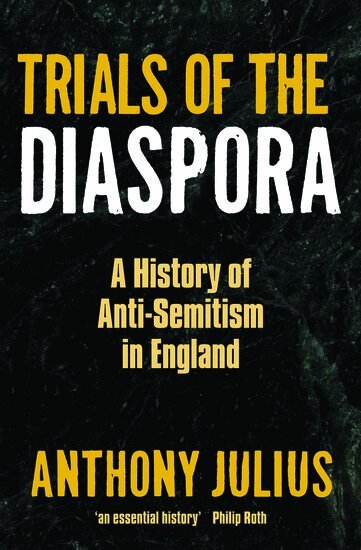
Trials of the Diaspora presents the long and troubling history of anti-Semitism in England, from the middle ages to the twenty-first century. Anthony Julius identifies four distinct versions of English anti-Semitism, which he then investigates in detail. The first is the anti-Semitism of medieval England, a radical prejudice of defamation, expropriation, and murder, which culminated in 1290, the year of Edward I's expulsion of the Jews from England, after which there were no Jews left to torment. The second major strand is literary anti-Semitism: an anti-Semitic account of Jews continuously reappearing in English literature, from the anonymous medieval ballad "Sir Hugh, or the Jew's Daughter" through Shakespeare to Charles Dickens, T. S. Eliot, and beyond. Thirdly, Julius addresses modern anti-Semitism, a quotidian anti-Semitism of insult and partial exclusion, pervasive but contained, experienced by Jews from their 'readmission' to England in the mid-17th century through to the late 20th century. The final chapters then deal with contemporary anti-Semitism, a new configuration of anti-Zionisms, emerging in the late 1960s and the 1970s, which treats Zionism and the State of Israel as illegitimate Jewish enterprises. It is this final perspective which, in Julius's opinion, now constitutes the greatest threat to Anglo-Jewish security and morale. This book, the first history of its kind, has already provoked much comment and debate in its hardback edition, coming as a timely reminder that English culture has been in no way immune to anti-Semitism - and in certain ways is still not to this day. The paperback edition now includes a new preface by the author and a conclusion delineating the main categories of anti-Semitic prejudice.
207 kr
Skickas inom 7-10 vardagar
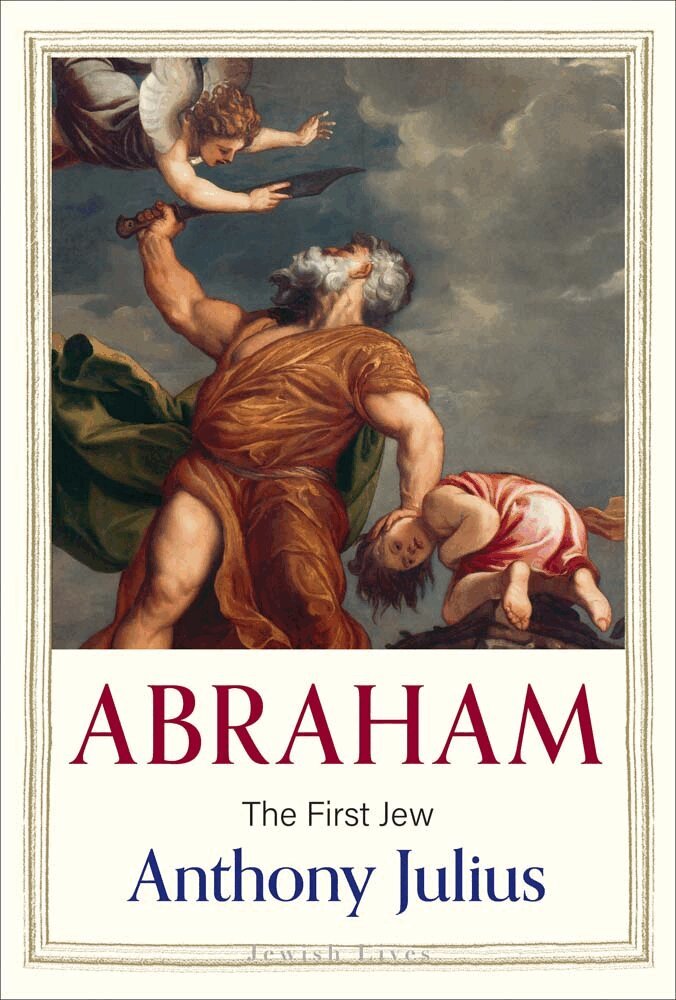
The story of Abraham, the first Jew, portrayed as two lives lived by one person, paralleling the contradictions in Judaism throughout its history In this new biography of Abraham, Judaism’s foundational figure, Anthony Julius offers an account of the origins of a fundamental struggle within Judaism between skepticism and faith, critique and affirmation, thinking for oneself and thinking under the direction of another. Julius describes Abraham’s life as two separate lives, and as a version of the collective life of the Jewish people. Abraham’s first life is an early adulthood of questioning the polytheism of his home city of Ur Kasdim until its ruler, Nimrod, condemns him to death and he is rescued, he believes, by a miracle. In his second life, Abraham’s focus is no longer on critique but rather on conversion and on his leadership over his growing household, until God’s command that he sacrifice his son Isaac. This test, the Akedah (or “Binding”), ends with another miracle, as he believes, but as Julius argues, it is also a catastrophe for Abraham. The Akedah represents for him an unsurpassed horizon—and in Jewish life thereafter. This book focuses on Abraham as leader of the first Jewish project, Judaism, and the unresolvable, insurmountable crisis that the Akedah represents—both in his leadership and in Judaism itself.
208 kr
Kommande
The story of Abraham, the first Jew, portrayed as two lives lived by one person, paralleling the contradictions in Judaism throughout its history In this new biography of Abraham, Judaism’s foundational figure, Anthony Julius offers an account of the origins of a fundamental struggle within Judaism between skepticism and faith, critique and affirmation, thinking for oneself and thinking under the direction of another. Julius describes Abraham’s life as two separate lives, and as a version of the collective life of the Jewish people. Abraham’s first life is an early adulthood of questioning the polytheism of his home city of Ur Kasdim until its ruler, Nimrod, condemns him to death and he is rescued, he believes, by a miracle. In his second life, Abraham’s focus is no longer on critique but rather on conversion and on his leadership over his growing household, until God’s command that he sacrifice his son Isaac. This test, the Akedah (or “Binding”), ends with another miracle, as he believes, but as Julius argues, it is also a catastrophe for Abraham. The Akedah represents for him an unsurpassed horizon—and in Jewish life thereafter. This book focuses on Abraham as leader of the first Jewish project, Judaism, and the unresolvable, insurmountable crisis that the Akedah represents—both in his leadership and in Judaism itself.
188 kr
Skickas inom 5-8 vardagar
Liberties – A Journal of Culture and Politics features original essays and poetry from some of today’s best writers and artists to inspire and impact the intellectual and creative lifeblood of culture and politics.This issue of Liberties includes: Anthony Julius on censorship of the artsNicholas Lemann on rescuing capitalismAlfred Brendel on playing BeethovenPaul Berman on the George Floyd uprisingFouad Ajami’s story of an honor killingJack Goldsmith on conservatives and the courtsEdward Luttwak on understanding ChinaRoberto Calasso on when journals matteredWalter Scheidel on life after covidHelen Vendler on the poet Robert HaydenRobert Alter on Lolita todayDaryl Michael Scott on the 13th Amendment Alastair Macaulay on BalanchineDavid Greenberg on renaming our heritageNew poetry from Jorie Graham, Ishion Hutchinson, and Rosanna Warren; And Leon Wieseltier (editor) and Celeste Marcus (managing editor)