Antoine Compagnon - Böcker
Visar alla böcker från författaren Antoine Compagnon. Handla med fri frakt och snabb leverans.
10 produkter
10 produkter
474 kr
Skickas inom 7-10 vardagar
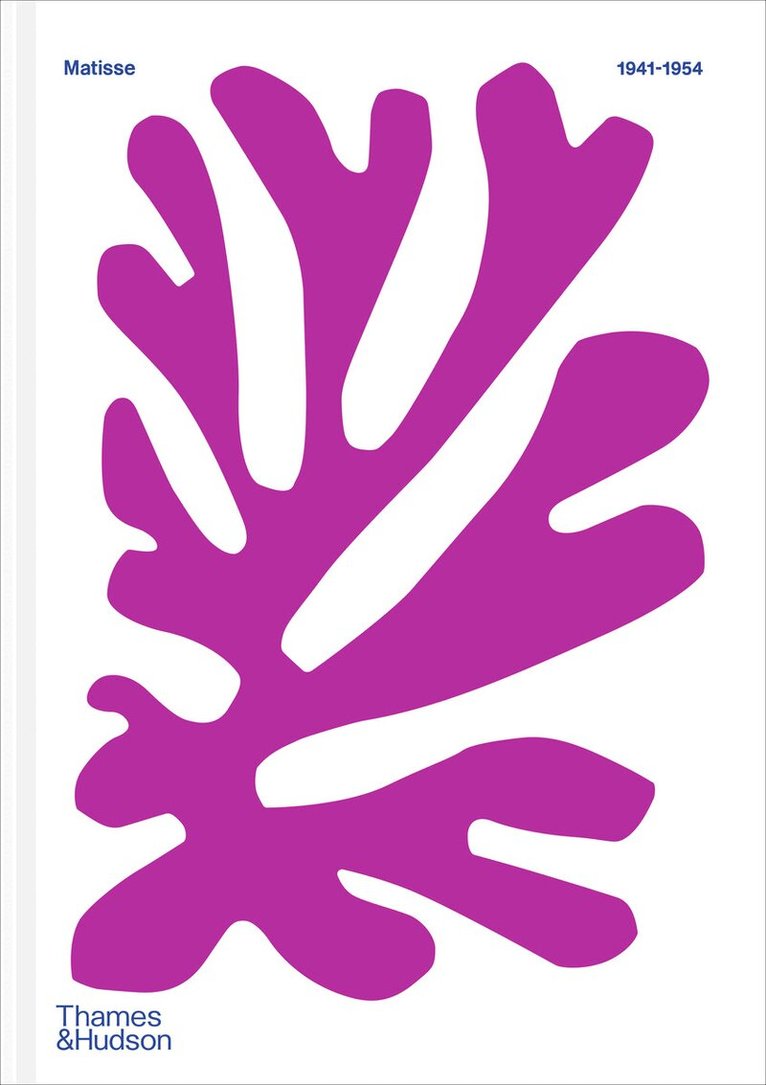
Published to accompany the major exhibition at the Grand Palais, Paris, Colour Unbound reveals the dazzlingly original work of Matisse’s final years. 1941 marked a turning point in the life and work of Henri Matisse. At the age of seventy-two, he underwent major surgery that left him physically fragile. Yet Matisse viewed this moment not as a setback but as an opportunity ‘to make the greatest progress of my life’. From that point until his death in 1954, he entered one of the most inspired and productive periods of his career. During those years, he created some of his greatest masterpieces – from the Chapel of the Rosary in Vence to his luminous cut-out gouaches, including Jazz. Vibrant and full of life, his late work stands in striking contrast to his declining physical state: dynamic, immediate and universally accessible. Published to accompany the major exhibition at the Grand Palais, this catalogue brilliantly captures this late burst of creative vitality. Elegantly designed and beautifully printed, it brings together superb full-page reproductions of Matisse’s artworks alongside rarely seen photographs of his studio, taken by renowned photographers such as Adant, Capa, Carone, Cartier-Bresson, Sima and Maywald. This visual dialogue – enriched by expert commentary – offers a deeper understanding of Matisse’s final years and vividly conveys the synergy between art and life.
252 kr
Skickas inom 7-10 vardagar
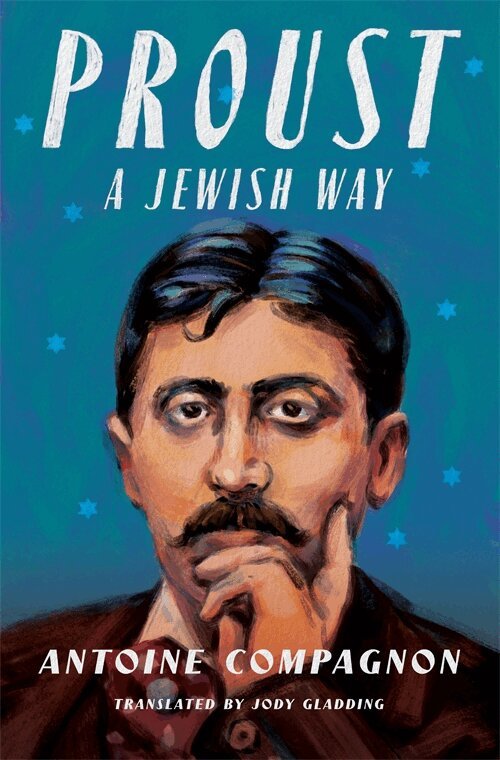
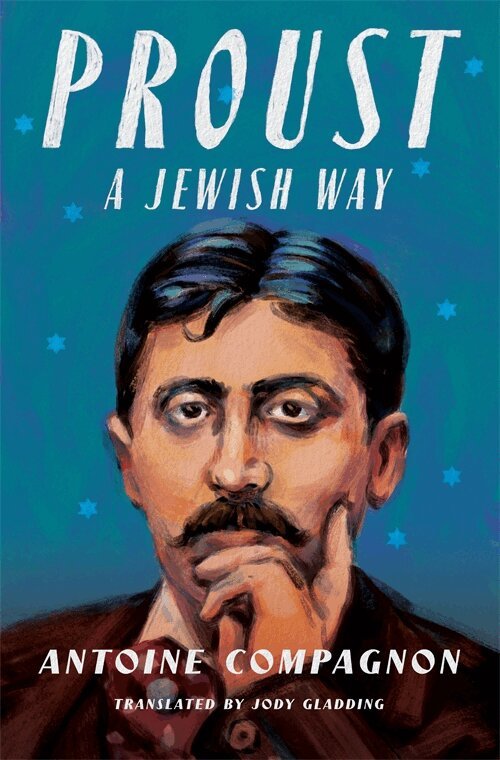
Marcel Proust once wrote, “There is no longer anybody, not even myself, since I cannot leave my bed, who will go along the Rue du Repos to visit the little Jewish cemetery where my grandfather, following a custom that he never understood, went for so many years to lay a stone on his parents’ grave.” Investigating the origin and significance of this statement, Antoine Compagnon offers new insight into the great author’s underappreciated Jewish side.Compagnon traces Proust’s ties to the French Jewish community, examining his relations with his mother’s successful and assimilated family, the Weils. He explores how French Jews read and responded to Proust’s masterpiece In Search of Lost Time in the 1920s and 1930s. Challenging contemporary critics who perceive self-hatred or even antisemitism in Proust’s work, Compagnon shows that many Jewish intellectuals and young Zionists admired and vigorously debated the novel, some seeing it as a source for pride in their Jewish identity. He also considers Proust’s portrayal of homosexuality and how it relates to notions of Jewishness. A work of remarkable erudition and deep research, Proust, a Jewish Way brings to light the vanished world of Proust’s first Jewish readers and shows how it can illuminate our reading of the great novelist today.
1 438 kr
Skickas inom 3-6 vardagar
-- Scottish Historical Review
447 kr
Skickas inom 11-20 vardagar
From the preeminent writer of Taiwanese nativist fiction and the leading translator of Chinese literature come these poignant accounts of everyday life in rural and small-town Taiwan. Huang is frequently cited as one of the most original and gifted storytellers in the Chinese language, and these selections reveal his genius. In "The Two Sign Painters," TV reporters ambush two young workers from the country taking a break atop a twenty-four-story building. "His Son's Big Doll" introduces the tortured soul inside a walking advertisement, and in "Xiaoqi's Cap" a dissatisfied pressure-cooker salesman is fascinated by a young schoolgirl.Huang's characters -- generally the uneducated and disadvantaged who must cope with assaults on their traditionalism, hostility from their urban brethren and, of course, the debilitating effects of poverty -- come to life in all their human uniqueness, free from idealization.
1 047 kr
Skickas inom 7-10 vardagar
Marcel Proust once wrote, “There is no longer anybody, not even myself, since I cannot leave my bed, who will go along the Rue du Repos to visit the little Jewish cemetery where my grandfather, following a custom that he never understood, went for so many years to lay a stone on his parents’ grave.” Investigating the origin and significance of this statement, Antoine Compagnon offers new insight into the great author’s underappreciated Jewish side.Compagnon traces Proust’s ties to the French Jewish community, examining his relations with his mother’s successful and assimilated family, the Weils. He explores how French Jews read and responded to Proust’s masterpiece In Search of Lost Time in the 1920s and 1930s. Challenging contemporary critics who perceive self-hatred or even antisemitism in Proust’s work, Compagnon shows that many Jewish intellectuals and young Zionists admired and vigorously debated the novel, some seeing it as a source for pride in their Jewish identity. He also considers Proust’s portrayal of homosexuality and how it relates to notions of Jewishness. A work of remarkable erudition and deep research, Proust, a Jewish Way brings to light the vanished world of Proust’s first Jewish readers and shows how it can illuminate our reading of the great novelist today.
187 kr
Skickas inom 7-10 vardagar
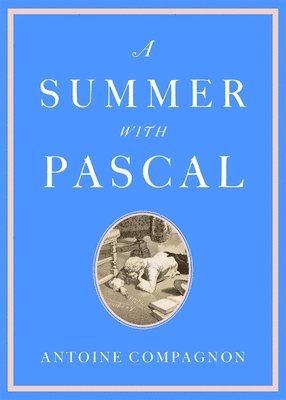
From an eminent scholar, a spirited introduction to one of the great polymaths in the history of Europe.Blaise Pascal (1623–1662) is best known in the English-speaking world for his contributions to mathematics and physics, with both a triangle and a law in fluid mechanics named after him. Meanwhile, the classic film My Night at Maud’s popularized Pascal’s wager, an invitation to faith that has inspired generations of theologians. Despite the immensity of his reputation, few read him outside French schools. In A Summer with Pascal, celebrated literary critic Antoine Compagnon opens our minds to a figure somehow both towering and ignored.Compagnon provides a bird’s-eye view of Pascal’s life and significance, making this volume an ideal introduction. Still, scholars and neophytes alike will profit greatly from his masterful readings of the Pensées—a cornerstone of Western philosophy—and the Provincial Letters, in which Pascal advanced wry theological critiques of his contemporaries. The concise, taut chapters build upon one another, easing into writings often thought to be forbidding and dour. With Compagnon as our guide, these works are not just accessible but enchanting.A Summer with Pascal brings the early modern thinker to life in the present. In an age of profound existential doubt and assaults on truth and reason, in which religion and science are so often crudely opposed, Pascal’s sophisticated commitment to both challenges us to meet the world with true intellectual vigor.
794 kr
Skickas inom 7-10 vardagar
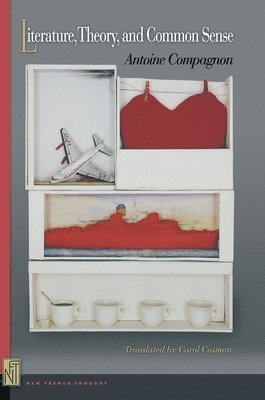
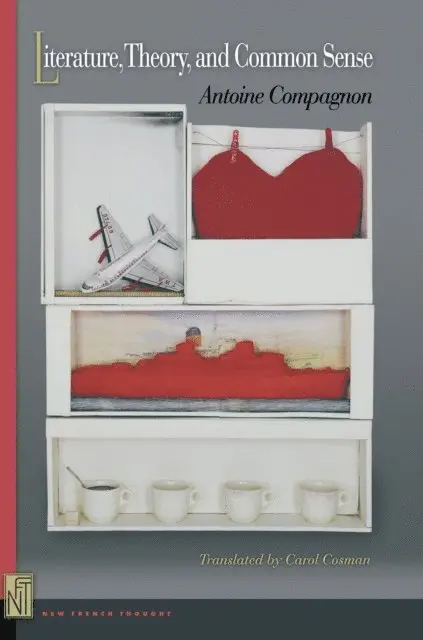
In the late twentieth century, the common sense approach to literature was deemed naive. Roland Barthes proclaimed the death of the author, and Hillis Miller declared that all interpretation is theoretical. In many a literature department, graduate students spent far more time on Derrida and Foucault than on Shakespeare and Milton. Despite this, common sense approaches to literature--including the belief that literature represents reality and authorial intentions matter--have resisted theory with tenacity. As a result, argues Antoine Compagnon, theorists have gone to extremes, boxed themselves into paradoxes, and distanced others from their ideas. Eloquently assessing the accomplishments and failings of literary theory, Compagnon ultimately defends the methods and goals of a theoretical commitment tempered by the wisdom of common sense. While it constitutes an engaging introduction to recent theoretical debates, the book is organized not by school of thought but around seven central questions: literariness, the author, the world, the reader, style, history, and value. What makes a work literature? Does fiction imitate reality? Is the reader present in the text?What constitutes style? Is the context in which a work is written important to its apprehension? Are literary values universal? As he examines how theory has wrestled these themes, Compagnon establishes not a simple middle-ground but a state of productive tension between high theory and common sense. The result is a book that will be met with both controversy and sighs of relief.
590 kr
Skickas inom 7-10 vardagar
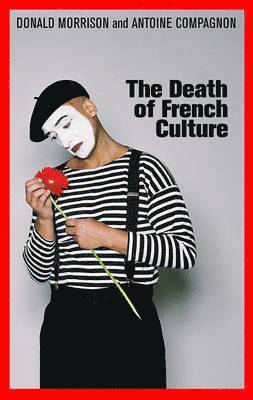
For a long time, France and its culture have been one and the same. The greatness of the former added to the influence of the latter, and vice versa. French writers, artists and philosophers were at the centre of the world’s attention and enjoyed unparalleled prestige. Of this past glory, all that is left today is navel-gazing, nostalgia, and timidity. This was the disabused verdict reached by Donald Morrison, an American in Paris, at the conclusion his inquiry into the place of French culture in the world. The creativity of its artists may be undeniable, but the influence (ghostlike) and the importance (derisory) of France in cultural exchanges both go to show that French culture no longer speaks to the world. This decline ultimately suits the French national mentality, inclined as it is to lamentation and sorrow. When Morrison originally published this piercing verdict on contemporary French culture in Time magazine in November 2007, it caused a sensation. Morrison was pilloried by the French press and attacked in countless newspapers, magazines and blogs. Morrison’s article gave rise to an extended interrogation of French culture by admirers and critics alike. Undeterred by the controversy, Morrison has returned to his original article to see how well his central arguments hold up in the light of the criticisms levelled at him. This new and updated version of his controversial text is accompanied by a thoughtful reply by Antoine Compagnon, who highlights a certain ambivalence within French culture, still capable of achieving the best but seemingly paralysed by its preoccupation with its own grandeur. This important exchange between Morrison and Compagnon will be of great interest to anyone concerned with French culture and its legacy in the world today.
247 kr
Skickas inom 5-8 vardagar
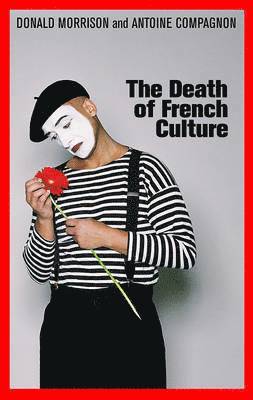
For a long time, France and its culture have been one and the same. The greatness of the former added to the influence of the latter, and vice versa. French writers, artists and philosophers were at the centre of the world’s attention and enjoyed unparalleled prestige. Of this past glory, all that is left today is navel-gazing, nostalgia, and timidity. This was the disabused verdict reached by Donald Morrison, an American in Paris, at the conclusion his inquiry into the place of French culture in the world. The creativity of its artists may be undeniable, but the influence (ghostlike) and the importance (derisory) of France in cultural exchanges both go to show that French culture no longer speaks to the world. This decline ultimately suits the French national mentality, inclined as it is to lamentation and sorrow. When Morrison originally published this piercing verdict on contemporary French culture in Time magazine in November 2007, it caused a sensation. Morrison was pilloried by the French press and attacked in countless newspapers, magazines and blogs. Morrison’s article gave rise to an extended interrogation of French culture by admirers and critics alike. Undeterred by the controversy, Morrison has returned to his original article to see how well his central arguments hold up in the light of the criticisms levelled at him. This new and updated version of his controversial text is accompanied by a thoughtful reply by Antoine Compagnon, who highlights a certain ambivalence within French culture, still capable of achieving the best but seemingly paralysed by its preoccupation with its own grandeur. This important exchange between Morrison and Compagnon will be of great interest to anyone concerned with French culture and its legacy in the world today.
128 kr
Skickas
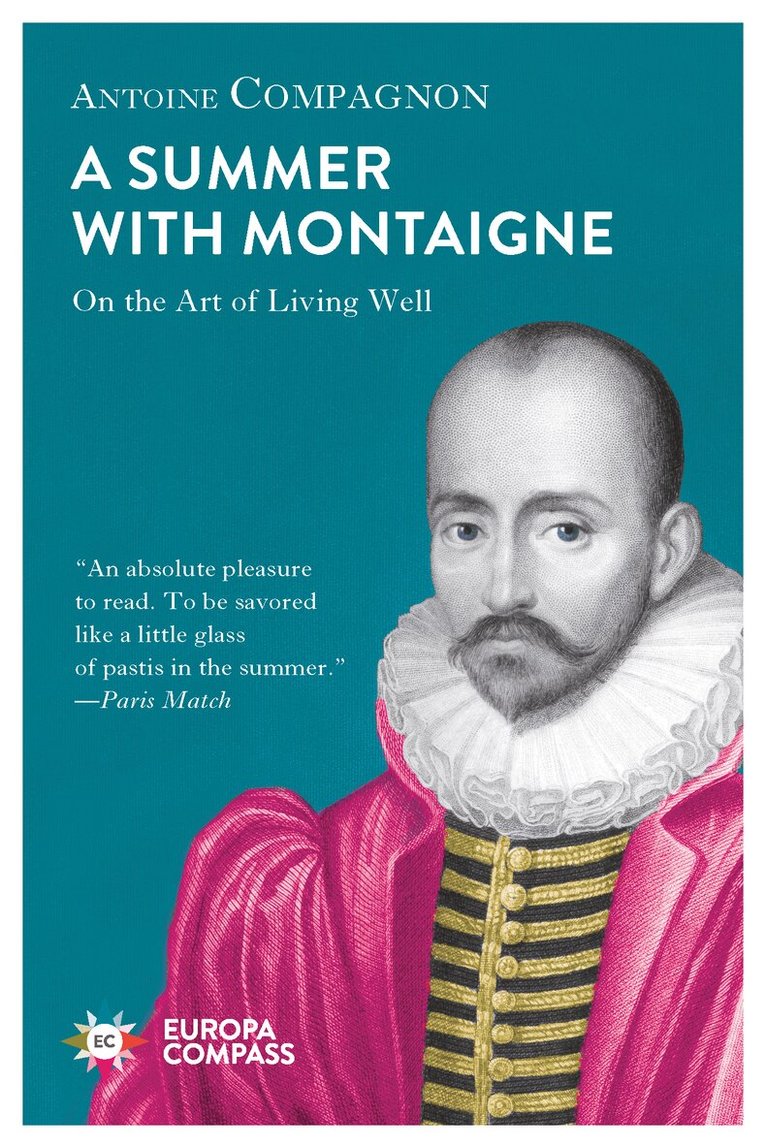
A few years ago, Antoine Compagnon was asked to host a radio broadcast, every day for an entire summer, on a formidable subject: Michel de Montaigne. From that experience came this engaging and entertaining book, A Summer with Montaigne. An intelligent and thought-provoking treatise in forty chapters that will introduce readers unfamiliar with Montaigne to his unique brilliance and remind those who already know Montaigne’s work of its vitality, force, and enduring timeliness.Compagnon breathes life into the musings of Montaigne, approaching his subject not as the recluse many imagine him to have been, but rather a multi-faceted individual of complex thought and astonishing analytical prowess. Once the mayor of Bordeaux, Montaigne was a committed spirit of his time, advising his powerful contemporaries and always in touch with the questions and concerns of the moment, of which many remain pressing today. Composed over a period of twenty years, Montaigne’s Essays deal with timeless themes. From the problems posed by religion, war, power and friendship to humankind’s ridiculous weaknesses, Montaigne’s Essays remain a moving commentary on what it means to be a human being in any age.