Aogán Mulcahy - Böcker
Visar alla böcker från författaren Aogán Mulcahy. Handla med fri frakt och snabb leverans.
4 produkter
4 produkter
1 232 kr
Skickas inom 5-8 vardagar
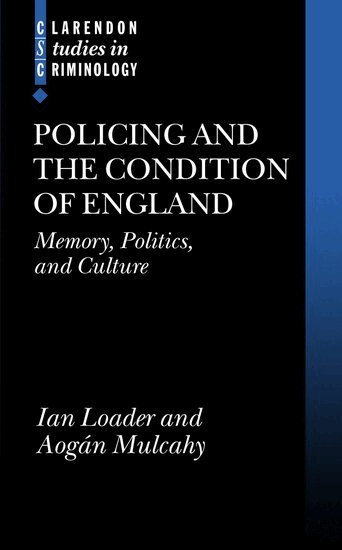
Citizens, it is said, have 'lost faith' in the English police. Opinion polls repeatedly show that trust in, and respect for, the police have declined precipitously from the historically high levels achieved during the 'golden age' of the 1950s. Successive decades of rising crime, political violence and urban disorder, miscarriages of justice, and declining effectiveness have left the police in what seems like a permanent crisis of legitimation. A once revered national institution has become thoroughly profane.In this major new work on the relationship between English policing and culture, Ian Loader and Aogán Mulcahy reassess and revise this received sociological and popular wisdom on the fate that has befallen the English police. Paying close attention to the symbolic and cultural significance of the police, Loader and Mulcahy document the mix of profane and sacred sensibilities that struggle with one another to determine the contours of what they call English policing culture. They draw on documentary analysis of official 'representations' of policing, and oral historical research with citizens, police officers, former government ministers and civil servants, to show that, far from being 'demystified', policing is a cultural institution that remains deeply entangled with questions of subjectivity, recognition, belonging and collective identity.This cultural sociology of English policing sheds new light on the social changes and conflicts that have called police authority into question in the decades since 1945 and offers an important appraisal of what is at stake in the contemporary cultural politics of policing.
Del 2 - Studies in Irish Crime History
Crime and Conflict in Northern Ireland, 1921-2021
Stability, Conflict, Transition
Häftad, Engelska, 2023
198 kr
Skickas
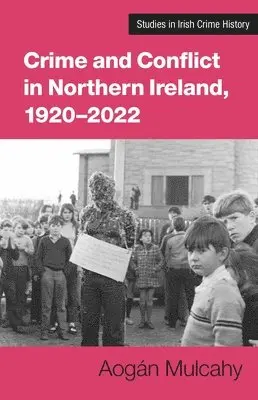
The book analyses the relationship between crime and conflict in Northern Ireland since the establishment of the Northern Irish state in 1921. Despite the vast research literature that focuses on Northern Ireland's political divisions and the violence of the 'Troubles', the relationship between these issues and crime has received much less attention.
576 kr
Skickas inom 10-15 vardagar
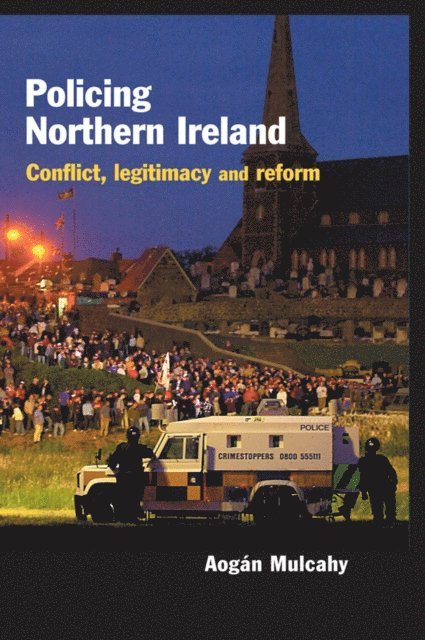
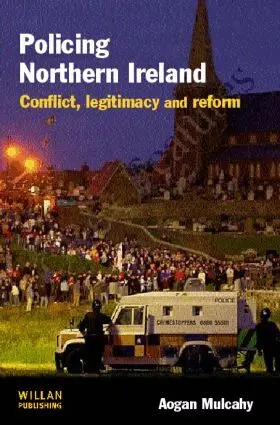
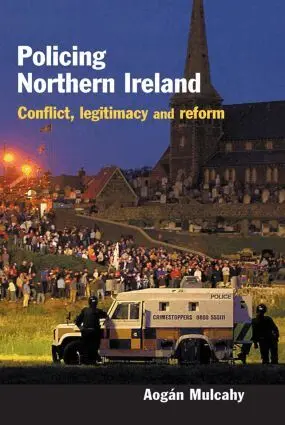
This book provides an account and analysis of policing in Northern Ireland, providing an account and analysis of the RUC (Royal Ulster Constabulary) from the start of 'the troubles' in the 1960s to the early 1990s, through the uneasy peace that followed the 1994 paramilitary ceasefires (1994-1998), and then its transformation into the Police Service of Northern Ireland following the 1999 Patten Report. A major concern is with the reform process, and the way that the RUC has faced and sought to remedy a situation where it faced a chronic legitimacy deficit. Policing Northern Ireland focuses on three key aspects of the police legitimation process: reform measures which are implemented to redress a legitimacy crisis; representational strategies which are invoked to offer positive images of policing; and public responses to these various strategies. Several key questions are asked about the ways in which the RUC has sought to improve its standing amongst nationalists: first, what strategies of reform has the RUC implemented? second, what forms of representation has the RUC employed to promote and portray itself in the positive terms that might secure public support? third, how have nationalists responded to these initiatives? The theoretical framework and analysis developed in the book also highlights general issues relating to the implications of police legitimacy and illegitimacy for social conflict and divisions, and their management and/or resolution, in relation to transitional societies in particular. In doing so it makes a powerful contribution to wider current debates about police legitimacy, police-community relations, community resistance, and conflict resolution.
2 088 kr
Skickas inom 10-15 vardagar
This book provides an account and analysis of policing in Northern Ireland, providing an account and analysis of the RUC (Royal Ulster Constabulary) from the start of 'the troubles' in the 1960s to the early 1990s, through the uneasy peace that followed the 1994 paramilitary ceasefires (1994-1998), and then its transformation into the Police Service of Northern Ireland following the 1999 Patten Report. A major concern is with the reform process, and the way that the RUC has faced and sought to remedy a situation where it faced a chronic legitimacy deficit. Policing Northern Ireland focuses on three key aspects of the police legitimation process: reform measures which are implemented to redress a legitimacy crisis; representational strategies which are invoked to offer positive images of policing; and public responses to these various strategies. Several key questions are asked about the ways in which the RUC has sought to improve its standing amongst nationalists: first, what strategies of reform has the RUC implemented? second, what forms of representation has the RUC employed to promote and portray itself in the positive terms that might secure public support? third, how have nationalists responded to these initiatives? The theoretical framework and analysis developed in the book also highlights general issues relating to the implications of police legitimacy and illegitimacy for social conflict and divisions, and their management and/or resolution, in relation to transitional societies in particular. In doing so it makes a powerful contribution to wider current debates about police legitimacy, police-community relations, community resistance, and conflict resolution.