Aquilina Mawadza - Böcker
Visar alla böcker från författaren Aquilina Mawadza. Handla med fri frakt och snabb leverans.
15 produkter
15 produkter
133 kr
Skickas
Shona is a Bantu language spoken in Zimbabwe and Mozambique. This dictionary and phrasebook features the ChiShona dialect, and includes vocabulary sections and pronunciation tips.
139 kr
Skickas
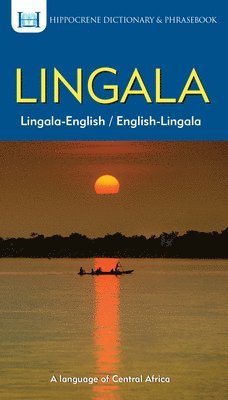
Lingala (a Bantu language of the Niger-Congo family) is spoken by approximately 10 million people living in the Democratic Republic of the Congo (DRC), the Republic of Congo, the Central African Republic and Angola. It originated in the Equatorial Region of the DRC, but as the official language of the Army, it became the major language of the Capital city, Kinshasa. Lingala is considered one of the national languages of the DRC. Lingala spread during the colonial era, when Lingala-speaking soldiers were posted in barracks across the country, and also when Rumba music singers used Lingala for their compositions. This dictionary uses the simplified Lingala dialect, also known as Lingala facile. It is mostly a spoken language. This unique, two-part resource provides travelers to central Africa with the tools they need for daily interaction. The bilingual dictionary has a concise vocabulary for everyday use, and the phrasebook allows instant communication on a variety of topics. Includes 4,000 dictionary entries, phonetics that are intuitive for English speakers, essential phrases for travel and business, and a concise grammar and pronunciation section.
139 kr
Skickas
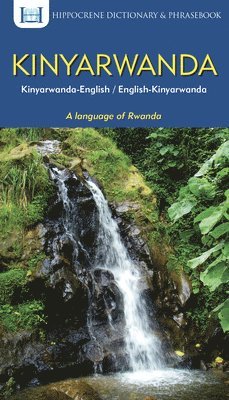
Kinyarwanda, also known as Rwandan, is a national language of Rwanda (along with French and English) and spoken by almost all of the 11 million inhabitants of the country. Kinyarwanda is the second most widely spoken Bantu language after Kiswahili. It is a sister dialect of Kirundi, the national language of Burundi, so Burundians can understand Kinyarwanda well. Kinyarwanda speakers are also found in Uganda, Tanzania and in parts of the Democratic Republic of Congo. There are an estimated 20 million native speakers of Kinyarwanda worldwide. Kinyarwanda has two major dialects: the northern dialect, Igikiga, and the southern dialect, Ikinyanduga, and both have sub-dialects. The differences among these dialects, however, are mainly lexical and phonetic. This unique, two-part resource provides travelers to Rwanda with the tools they need for daily interaction. The bilingual dictionary has a concise vocabulary for everyday use, and the phrasebook allows instant communication on a variety of topics.Includes 4,000 dictionary entries, phonetics that are intuitive for English speakers, essential phrasees for travel and business, and a concise grammar and pronunciation section.
140 kr
Skickas inom 5-8 vardagar
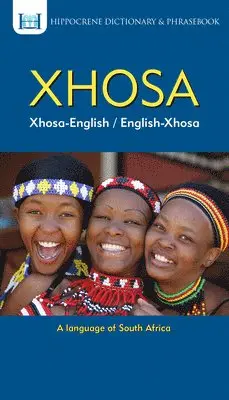
There are over 6 million Xhosa speakers in South Africa, where the Xhosa people are the second largest cultural subgroup (after the Zulu). Xhosa is a tonal language known for its clicking sounds. This unique, two-part resource provides travelers to South Africa with the tools they need for daily interaction. The bilingual dictionary has a concise vocabulary for everyday use, and the phrasebook allows instant communication on a variety of topics. Ideal for businesspeople, travelers, students, and aid workers, this guide includes 4,000 dictionary entries; phonetics that are intuitive for English speakers; essential phrases on topics such as transportation, dining out, and business; and concise grammar and pronunciation sections.
139 kr
Skickas
This combination Amharic phrasebook and two-way Amharic-English dictionary is an essential reference for visitors to Ethiopia. The Hippocrene Dictionary & Phrasebook series allows you be a traveler, not a tourist, by connecting with the local culture and people in their native language.Amharic is the official working language of Ethiopia, with approximately 30 million speakers. Amharic is the second most widely spoken Semitic language in the world after Arabic. Unlike Arabic, however, Amharic is written left-to-right and uses a distinct script called Ge’ez script.This unique, two-part resource provides travelers to Ethiopia with the tools they need for daily interaction. The bilingual dictionary has a concise vocabulary for everyday use, and the phrasebook allows instant communication on a variety of topics. Ideal for businesspeople, travelers, students, and aid workers, this guide includes:4,000 dictionary entries with Amharic script, transliteration and English translationPhonetics that are intuitive for English speakersEssential phrases on topics such as introductions, transportation, dining out, business, and emergenciesConcise grammar and pronunciation sectionsFor 45 years, Hippocrene Books has specialized in bringing the world to our readers. The Hippocrene Dictionary & Phrasebook series allows you be a traveler, not a tourist, by connecting with the local culture and people in their native language. Currently available in 86 languages, including Arabic, Bengali, Cantonese, Thai, Punjabi, Swahili, and Oromo.
139 kr
Skickas
Hausa is the Chadic (branch of the Afroasiatic language family) language of the Hausa people, one of the largest ethnic groups in Central Africa. Hausa is spoken as a first language by over 27 million people and as a second language by nearly 20 million more. Commonly spoken throughout southern Niger and northern Nigeria, Hausa has developed as a lingua franca throughout much of West Africa for purposes of trade.This unique, two-part resource provides travelers to West Africa with the tools they need for daily interaction. The bilingual dictionary has a concise vocabulary for everyday use, and the phrasebook allows instant communication on a variety of topics. Ideal for businesspeople, travelers, students, and aid workers, this guide includes 4,000 dictionary entries; phonetics that are intuitive for English speakers; essential phrases on topics such as transportation, dining out, and business; and concise grammar and pronunciation sections.
139 kr
Skickas
Fulani is a language widely spoken across about 20 countries in West and Central Africa (including Senegal, Guinea, Gambia, Cameroon, and Sudan) by people who call themselves Fulɓe, also known as Fulani or Fula in English. The language—which also known as Fula, Fulfulde, Fulah and Pulaar—has approximately 24 million native speakers and belongs to the Senegambian branch within the Niger-Congo languages, which does not have tones. It also belongs to the Atlantic geographic grouping within Niger–Congo family.This unique, two-part resource provides travelers to Western and Central Africa with the tools they need for daily interaction. The bilingual dictionary has a concise vocabulary for everyday use, and the phrasebook allows instant communication on a variety of topics. Ideal for businesspeople, travelers, students, and aid workers, this guide includes 4,000 dictionary entries; phonetics that are intuitive for English speakers; essential phrases on topics such as transportation, dining out, and business; and concise grammar and pronunciation sections.
139 kr
Skickas
Yoruba, one of the national languages of Nigeria, is spoken by more than 30 million people worldwide. It is the most widely spoken language in Nigeria after English, and is also spoken in Benin and Togo.This unique, two-part resource provides travelers to Nigeria and other parts of West Africa with the tools they need for daily interaction. The bilingual dictionary has a concise vocabulary for everyday use, and the phrasebook allows instant communication on a variety of topics. Ideal for businesspeople, travelers, students, and aid workers, this guide includes:4,000 dictionary entries; phonetics that are intuitive for English speakersEssential phrases on topics such as transportation, dining out, and businessConcise grammar and pronunciation sections
140 kr
Skickas inom 5-8 vardagar
Kirundi, also known as Rundi, is a Bantu language spoken by about 9 million people worldwide. It is the official language of Burundi, and is also spoken in Tanzania, Democratic Republic of the Congo, and Uganda. Kirundi is mutually intelligible with Kinyarwanda, which is spoken in Rwanda. This unique, two-part resource provides travelers to Burundi and neighboring regions with the tools they need for daily interaction. The bilingual dictionary has a concise vocabulary for everyday use, and the phrasebook allows instant communication on a variety of topics. Ideal for businesspeople, travelers, students, and aid workers, this guide includes 4,000 dictionary entries; phonetics that are intuitive for English speakers; essential phrases on topics such as transportation, dining out, and business; and concise grammar and pronunciation sections.
140 kr
Skickas inom 5-8 vardagar
The first bilingual Chewa (Chichewa) phrasebook and dictionary available!Chewa (also known as Chichewa, Chinyanja, or Nyanja) is a Bantu language spoken by about 12 million people worldwide, mostly in southeastern Africa. It is the official language of Malawi, and is also spoken in Zambia, Mozambique, and Zimbabwe.This unique, two-part resource provides travelers to Malawi and neighboring regions with the tools they need for daily interaction. The bilingual dictionary has a concise vocabulary for everyday use, and the phrasebook allows instant communication on a variety of topics.Ideal for businesspeople, travelers, students, and aid workers, this guide includes:4,000 dictionary entriesPhonetics that are intuitive for English speakersEssential phrases on topics such as transportation, dining out, and businessConcise grammar and pronunciation sections
140 kr
Skickas inom 5-8 vardagar
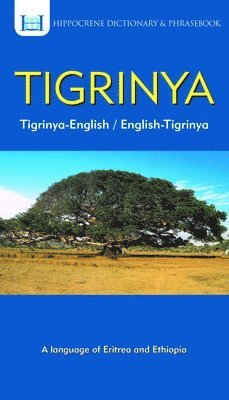
This combination Tigrinya phrasebook and two-way Tigrinya-English dictionary is an essential reference while traveling in Eritrea and Ethiopia. The Hippocrene Dictionary & Phrasebook series allows you be a traveler, not a tourist, by connecting with the local culture and people in their native language. Tigrinya (also written as Tigrigna) is an Afro-Asiatic language spoken by about 7 million people, primarily in Eritrea and Ethiopia. Tigrinya is written in the same Ge’ez script used for the Ethiopic language Amharic, but Tigrinya grammar and usage differs significantly from Amharic.This unique, two-part resource provides travelers to Eritrea and Ethiopia with the tools they need for daily interaction. The bilingual dictionary has a concise vocabulary for everyday use, and the phrasebook allows instant communication on a variety of topics.Ideal for businesspeople, travelers, students, and aid workers, this guide includes:4,000 dictionary entriesPhonetics that are intuitive for English speakersEssential phrases on topics such as transportation, dining out, and businessConcise grammar and pronunciation sections
220 kr
Skickas inom 5-8 vardagar
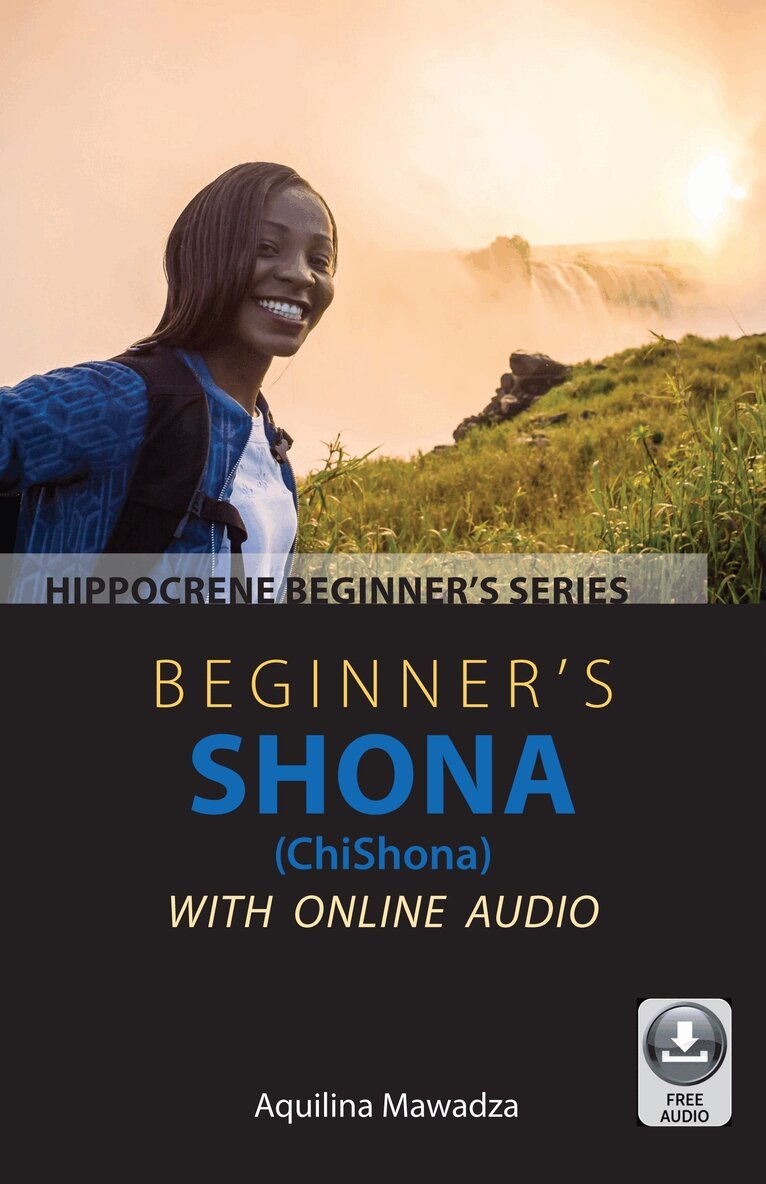
Learn Shona with this complete course, now with free audio download!Spoken by over 10 million people worldwide, Shona (also known as ChiShona) is an official language of Zimbabwe. It is also spoken in Mozambique, Malawi, and Zambia. It is one of the most widely spoken Bantu languages and its writing system was codified during the early 20th century.Ideal for those new to Shona, learning at home or in the classroom, Beginner’s Shona (ChiShona) with Online Audio includes: An introductory section on the geography, climate, economy, arts, culture and history of Zimbabwe, including an extensive section on “Everyday Life” that will be useful to visitorsTwelve carefully-paced units, each one opening with a dialogue about an everyday topic followed by vocabulary, expressions, grammar lessons, and exercisesAnswer key to the exercisesShona-English glossaryOnline MP3 audio files for free download featuring pronunciation by native speakers
257 kr
Kommande
The essential resource for communicating in Sesotho!Sesotho, also known as Sotho, is a southern Bantu language spoken primarily in the southern African nation Lesotho, where it is the national and official language. It is also spoken in and designated as an official language of South Africa and Zimbabwe. There are approximately 6 to 7 million native Sesotho speakers.This unique two-part resource uses the official Sesotho Latin alphabet and orthography. It provides travelers to southern Africa with tools for daily interactions. The bilingual dictionary has a concise vocabulary for everyday use, and the phrasebook allows instant communication on a variety of topics. Ideal for businesspeople, travelers, students, and aid workers, this guide includes: •4,000 dictionary entries•Essential phrases on subjects such as healthcare, time, dates, transportation, money, communication services and much more•An introduction to the basics of Sesotho grammar (including a short guide to alphabet and pronunciation)
257 kr
Kommande
The most up-to-date, comprehensive resource for communicating in Bambara!Bambara (also known as Malian, Bamana, and Bamanankan) is a Mandé language spoken primarily in the West African nation of Mali, where it is the national and official language. It is also spoken in Côte d'Ivoire, Senegal, Burkina Faso, Guinea, Gambia, Ghana, and Sierra Leone. There are an estimated 14 million Bambara speakers.This unique two-part resource uses the official Bambara Latin alphabet and orthography. It provides travelers to West Africa with tools for daily interactions. The bilingual dictionary has a concise vocabulary for everyday use, and the phrasebook allows instant communication on a variety of topics. Ideal for businesspeople, travelers, students, and aid workers, this guide includes: •4,000 dictionary entries•Essential phrases on subjects such as healthcare, time, dates, transportation, money, communication services and much more•An introduction to the basics of Bambara grammar (including a short guide to alphabet and pronunciation)
262 kr
Tillfälligt slut
Informative and up-to-date, this comprehensive study is written by Zimbabweans about Zimbabwe. It discusses the contemporary issues affecting Zimbabwe citizens and critically examines both the historical and contemporary dynamics shaping political and economic developments in the country, taking into account voices from a broad spectrum of Zimbabwean society—including civil society, faith-based communities, the diaspora, women, community leaders, the media, youth, and regional actors such as Southern African Development Community and the African Union. Providing insights into the role of ordinary people achieving a more stable future, this book will interest academics, policymakers, and civil-society practitioners alike.