Tim Murithi - Böcker
Visar alla böcker från författaren Tim Murithi. Handla med fri frakt och snabb leverans.
10 produkter
10 produkter
1 900 kr
Skickas inom 10-15 vardagar
Elections in Africa are competitive in nature and can be manipulated by incumbents to extend and entrench their rule through changes to constitutions, intimidation of opponents, excess use of police force and, in some cases, assassinations of dissident voices. Ethnic cleavages are also exploited by contestants to incite and mobilize unsuspecting masses to pursue their electoral ambitions which can lead to political instability. In many African countries, violence before, during and after elections has become a regrettable norm rather than the exception. The function of transitional justice is to address the legacy of human rights atrocities, political violence and societal harm resulting from prior misrule or violent conflicts, with a view to establishing fair, democratic and inclusive societies.This book interrogates the potential intersection between transitional justice and electoral processes. Specifically, it examines the hypothesis that transitional justice interventions that strive to address historical injustices perpetrated by violence, conflict and entrenched by socio-political impunity, can initiate preventive measures against electoral violence through redress, accountability and institutional reforms. The contributors to this volume have engaged with country case studies from across Africa, while examining the intersection between transitional justice and electoral processes. Hence, this is a timely volume that highlights the uninterrogated nexus between elections, violence and transitional justice in Africa.
635 kr
Skickas inom 3-6 vardagar
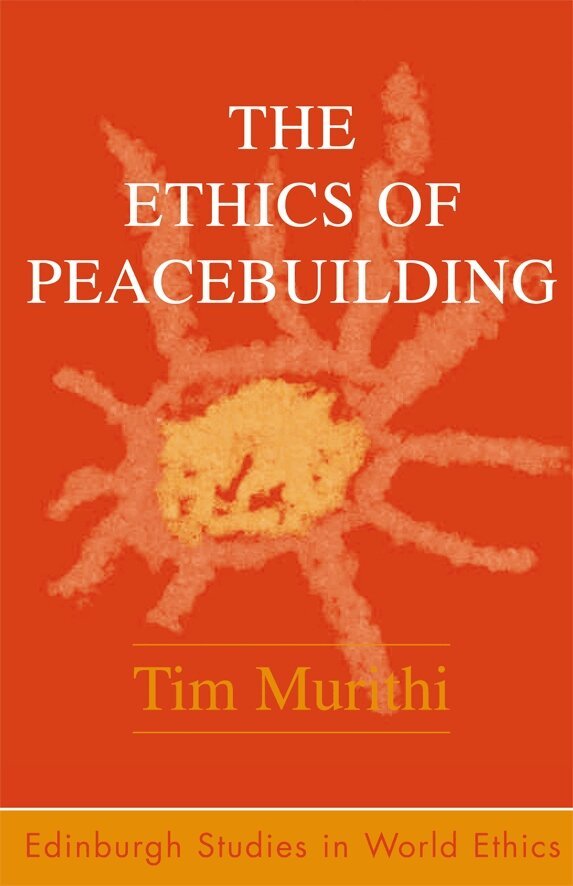
This book explores the ethical dimension of peacebuilding. In the aftermath of the Cold War the hope for a more stable and just international order was rapidly dissolved by the internecine conflicts that plagued all continents. The Rwanda and Srebrenica genocides demonstrated the challenge of promoting peace in a world increasingly defined by intra-state conflict and sub-national groups confronting nation-states. Murithi interrogates the role that ethics plays in promoting and consolidating peacebuilding and presents a synthesis of moral philosophy and international relations and an analysis of the ethics of negotiation, mediation, forgiveness and reconciliation. In its attempt to explore the extent to which ethical concerns influence and inform peacebuilding this book contributes to a growing body of literature on ethics and international relations which will enable students, scholars and practitioners to ground their understanding of a principled peacebuilding.Key Features:*Author has first-hand knowledge of peacebuilding through his work with the UN and NGOs*Analyses the ethics of peacebuilding inherent in the actions of the inter-governmental and non-governmental organisations*Examines the ethics of negotiation, mediation, forgiveness and reconciliation*Draws on a wide range of historical and contemporary case studies including the League of Nations, the United Nations, the Quakers in the Biafran War, the South African and Sierra Leonean Truth Commissions
1 935 kr
Skickas inom 10-15 vardagar
This volume interrogates global perspectives and issues that constitute and characterize survivor-centred justice, exploring both conceptual and theoretical issues surrounding the definition of a ‘survivor’, practical considerations of what constitutes a survivor-centred approach to justice and available avenues of justice for survivors of mass atrocities.In the first part of the book, survivor-centred justice is explored at the level of the International Criminal Court (ICC). The second part evaluates developments taking place at the local and domestic levels where traditional, customary or local justice mechanisms find affinity with survivors in their quest for justice. The third part focuses on advocacy-based approaches being utilized specifically by non-governmental organizations (NGOs), multilateral and regional institutions such as the United Nations and African Union, in support of survivors. In the final part of the book future prospects for survivors in the promotion of peacebuilding and atrocity prevention are discussed.The discussions in this volume will be of particular value and importance to international and transitional justice scholars, including legal and development practitioners interested in survivor-centred approaches to mass atrocity crimes Most importantly it aims to be of value to survivors, survivor communities and survivor-centred networks.
575 kr
Skickas inom 10-15 vardagar
Elections in Africa are competitive in nature and can be manipulated by incumbents to extend and entrench their rule through changes to constitutions, intimidation of opponents, excess use of police force and, in some cases, assassinations of dissident voices. Ethnic cleavages are also exploited by contestants to incite and mobilize unsuspecting masses to pursue their electoral ambitions which can lead to political instability. In many African countries, violence before, during and after elections has become a regrettable norm rather than the exception. The function of transitional justice is to address the legacy of human rights atrocities, political violence and societal harm resulting from prior misrule or violent conflicts, with a view to establishing fair, democratic and inclusive societies.This book interrogates the potential intersection between transitional justice and electoral processes. Specifically, it examines the hypothesis that transitional justice interventions that strive to address historical injustices perpetrated by violence, conflict and entrenched by socio-political impunity, can initiate preventive measures against electoral violence through redress, accountability and institutional reforms. The contributors to this volume have engaged with country case studies from across Africa, while examining the intersection between transitional justice and electoral processes. Hence, this is a timely volume that highlights the uninterrogated nexus between elections, violence and transitional justice in Africa.
1 520 kr
Skickas inom 10-15 vardagar
The African Union has been a major factor in establishing peace, security and development in Africa. Today, however, the intranational body is struggling in the midst of a perceived dissipating appetite for supporting continental institutions. Previously seen as the panacea to Africa's continuing problems with violence and corruption in society, under the slogan "African Solutions to African Problems", the African Union, this book argues, seems to have run its course.Recognizing that the measured successes in political emancipation which have been recorded across the African continent do not seem to have translated into economic and social gains for its 1.2 billion citizens, the AU adopted a new development framework dubbed "Agenda 2063". The framework calls on African leaders to rediscover the `Pan African' spirit and to create the `Africa Africans want'. In practice this means a new focus and engagement with the African Diaspora, tapping into their strong track-record in economic development. As this book shows however, there remain deep differences over the meaning, timing and sequencing of pan-African integration. Indeed, different member states have different understandings of the role of the African Union itself. This essential handbook, from one of the leading research institutions on the continent, seeks to uncover what some of those understandings are and why the unification project has remained so elusive.
365 kr
Skickas inom 10-15 vardagar
The African Union has been a major factor in establishing peace, security and development in Africa. Today, however, the intranational body is struggling in the midst of a perceived dissipating appetite for supporting continental institutions. Previously seen as the panacea to Africa's continuing problems with violence and corruption in society, under the slogan "African Solutions to African Problems", the African Union, this book argues, seems to have run its course.Recognizing that the measured successes in political emancipation which have been recorded across the African continent do not seem to have translated into economic and social gains for its 1.2 billion citizens, the AU adopted a new development framework dubbed "Agenda 2063". The framework calls on African leaders to rediscover the `Pan African' spirit and to create the `Africa Africans want'. In practice this means a new focus and engagement with the African Diaspora, tapping into their strong track-record in economic development. As this book shows however, there remain deep differences over the meaning, timing and sequencing of pan-African integration. Indeed, different member states have different understandings of the role of the African Union itself. This essential handbook, from one of the leading research institutions on the continent, seeks to uncover what some of those understandings are and why the unification project has remained so elusive.
3 050 kr
Skickas inom 10-15 vardagar
Africa’s international relations have often been defined and oriented by the dominant international and geopolitical agendas of the day. In the aftermath of colonialism the Cold War became a dominant paradigm that defined the nature of the continent’s relationship with the rest of the world. The contemporary forces of globalization are now exerting an undue influence and impact upon Africa’s international relations. Increasingly, the African continent is emerging as a vocal, and in some respects an influential, actor in international relations. There is a lack of analysis and research on this emerging trend. This timely book fills this analytical gap by engaging with a wide range of issues, with chapters written by experts on a variety of themes. The emerging political prominence of the African continent on the world stage is predicated on an evolving internal process of continental integration. In particular, there are normative and policy efforts to revive the spirit of Pan-Africanism: the 21st century is witnessing the evolution of Pan-Africanism, notably through the constitution and establishment of the African Union (AU). Given the dearth of analysis on this phenomemon, this volume also examines the notion of Pan-Africanism through various lenses – notably peace and security, development, the environment and trade. The volume will also engage with the emerging role of the AU as an international actor, e.g. with regard to its role in the reform of the United Nations Security Council, climate change, the International Criminal Court (ICC), the treaty establishing Africa as a nuclear-free zone, Internally Displaced Persons, the Millennium Development Goals (MDGs), international trade, the environment, public health issues, security, and development issues. This book will assess how the AU’s role as an international actor is complicated by the difficulty of promoting consensus among African states and then maintaining that consensus in the face of often divergent national interests. This book will in part assess the role of the AU in articulating collective and joint policies and in making interventions in international decision and policy-making circles.The Handbook will also assess the role of African social movements and their relationship with global actors. The role of African citizens in improving their own conditions is often underplayed in the international relations discourse, and this volume will seek to redress this oversight. Throughout the book the various chapters will also assess the role that these citizen linkages have contributed towards continental integration and in confronting the challenges of globalization.
764 kr
Skickas inom 10-15 vardagar
Africa’s international relations have often been defined and oriented by the dominant international and geopolitical agendas of the day. In the aftermath of colonialism the Cold War became a dominant paradigm that defined the nature of the continent’s relationship with the rest of the world. The contemporary forces of globalization are now exerting an undue influence and impact upon Africa’s international relations. Increasingly, the African continent is emerging as a vocal, and in some respects an influential, actor in international relations. There is a lack of analysis and research on this emerging trend. This timely book fills this analytical gap by engaging with a wide range of issues, with chapters written by experts on a variety of themes. The emerging political prominence of the African continent on the world stage is predicated on an evolving internal process of continental integration. In particular, there are normative and policy efforts to revive the spirit of Pan-Africanism: the 21st century is witnessing the evolution of Pan-Africanism, notably through the constitution and establishment of the African Union (AU). Given the dearth of analysis on this phenomemon, this volume also examines the notion of Pan-Africanism through various lenses – notably peace and security, development, the environment and trade. The volume will also engage with the emerging role of the AU as an international actor, e.g. with regard to its role in the reform of the United Nations Security Council, climate change, the International Criminal Court (ICC), the treaty establishing Africa as a nuclear-free zone, Internally Displaced Persons, the Millennium Development Goals (MDGs), international trade, the environment, public health issues, security, and development issues. This book will assess how the AU’s role as an international actor is complicated by the difficulty of promoting consensus among African states and then maintaining that consensus in the face of often divergent national interests. This book will in part assess the role of the AU in articulating collective and joint policies and in making interventions in international decision and policy-making circles.The Handbook will also assess the role of African social movements and their relationship with global actors. The role of African citizens in improving their own conditions is often underplayed in the international relations discourse, and this volume will seek to redress this oversight. Throughout the book the various chapters will also assess the role that these citizen linkages have contributed towards continental integration and in confronting the challenges of globalization.
262 kr
Tillfälligt slut
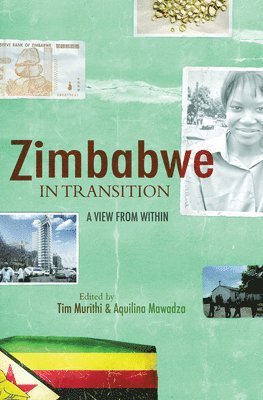
Informative and up-to-date, this comprehensive study is written by Zimbabweans about Zimbabwe. It discusses the contemporary issues affecting Zimbabwe citizens and critically examines both the historical and contemporary dynamics shaping political and economic developments in the country, taking into account voices from a broad spectrum of Zimbabwean society—including civil society, faith-based communities, the diaspora, women, community leaders, the media, youth, and regional actors such as Southern African Development Community and the African Union. Providing insights into the role of ordinary people achieving a more stable future, this book will interest academics, policymakers, and civil-society practitioners alike.
198 kr
Tillfälligt slut
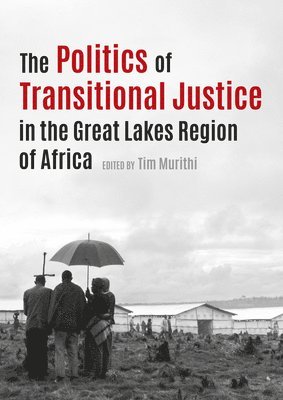
This book discusses the challenge of pursuing justice and reconciliation in the Great Lakes region, one of the most politically volatile regions in Africa, with a specific focus on Rwanda, Burundi and the Democratic Republic of Congo. The experiences of these countries is assessed through the prism of 'the politics of transitional justice', and how it has either assisted or hampered the effectiveness of efforts to deal with the atrocities of the past. The book suggests that the failure of past interventions is due to the inability to collectively engage the violations in the individual countries which in effect form part of an inter-state regional conflict system.