• Fri frakt över 249 kr
  • •
  • Snabba leveranser
  • •
  • Billiga böcker
Kundservice

Du är på sajten för privatpersoner.

Företag, bibliotek eller offentlig verksamhet?

Du handlar på classic.bokus.com, där alla dina funktioner finns intakta.
Till classic.bokus.com
Bokus logotyp. Gå till startsidan.
  • Erbjudanden
  • Nyheter
  • Student
  • Topplistor
  • Barn & ungdom
  • Bokus Play
  • E-böcker
  • Pocketböcker
  • Spel & pussel

10% rabatt på allt med kod: NYSTART10 →

Sidfot

Mina sidor

    Hjälp

    • Kundservice
    • Vanliga frågor och svar
    • Frakt och leverans
    • Retur vid ångerrätt
    • Reklamera vara
    • Betalning
    • Köpvillkor
    • Allmänna villkor
    • Information om webbplatsens tillgänglighet

    Om Bokus

    • Om oss
    • Pressrum
    • För studenter
    • För företag
    • För bibliotek och offentlig verksamhet
    • För leverantörer
    • Hållbarhet

    Populärt

    • Aktuella erbjudanden
    • Presentkort
    • Studentlitteratur
    • Nya böcker
    • Topplistor
    • Signerade böcker
    • Engelska böcker

    Inspiration

    • Boktips
    • BookTok
    • Populära bokserier
    • Barnbokskaraktärer
    • Populära författare
    Logotyp för Bokus
    Följ oss på Facebook (extern länk)Följ oss på Instagram (extern länk)Följ oss på YouTube (extern länk)Följ oss på TikTok (extern länk)
    bokus @ CookiesAnpassa cookiesIntegritetspolicyKöpvillkor
    Till Citymail hemsida (extern länk)Till Budbee hemsida (extern länk)Till Postnord hemsida (extern länk)Till Schenker hemsida (extern länk)Till Early Bird hemsida (extern länk)Till Walleys hemsida (extern länk)
    1. Samhälle och politik
    2. Politik och statsskick
    3. Internationella relationer

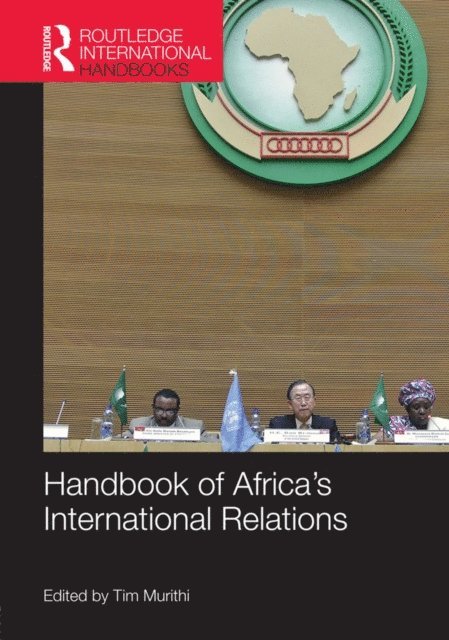
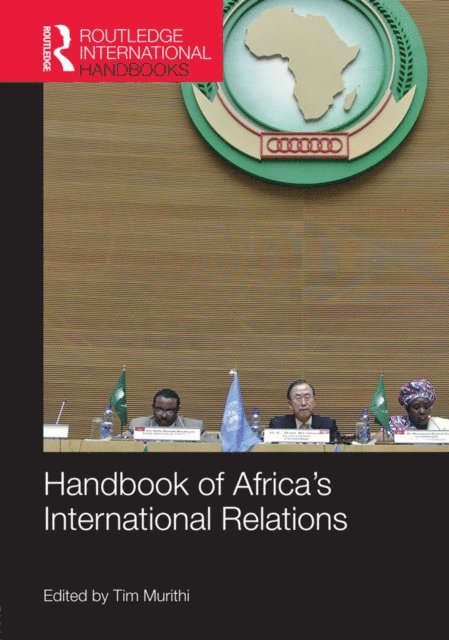
    Handbook of Africa's International Relations

    AvTim Murithi

    Häftad, Engelska, 2015

    Del i serien Routledge International Handbooks

    793 kr

    Beställningsvara. Skickas inom 10-15 vardagar. Fri frakt över 249 kr.

    Beskrivning

    Africa’s international relations have often been defined and oriented by the dominant international and geopolitical agendas of the day. In the aftermath of colonialism the Cold War became a dominant paradigm that defined the nature of the continent’s relationship with the rest of the world. The contemporary forces of globalization are now exerting an undue influence and impact upon Africa’s international relations. Increasingly, the African continent is emerging as a vocal, and in some respects an influential, actor in international relations. There is a lack of analysis and research on this emerging trend. This timely book fills this analytical gap by engaging with a wide range of issues, with chapters written by experts on a variety of themes. The emerging political prominence of the African continent on the world stage is predicated on an evolving internal process of continental integration. In particular, there are normative and policy efforts to revive the spirit of Pan-Africanism: the 21st century is witnessing the evolution of Pan-Africanism, notably through the constitution and establishment of the African Union (AU). Given the dearth of analysis on this phenomemon, this volume also examines the notion of Pan-Africanism through various lenses – notably peace and security, development, the environment and trade. The volume will also engage with the emerging role of the AU as an international actor, e.g. with regard to its role in the reform of the United Nations Security Council, climate change, the International Criminal Court (ICC), the treaty establishing Africa as a nuclear-free zone, Internally Displaced Persons, the Millennium Development Goals (MDGs), international trade, the environment, public health issues, security, and development issues. This book will assess how the AU’s role as an international actor is complicated by the difficulty of promoting consensus among African states and then maintaining that consensus in the face of often divergent national interests. This book will in part assess the role of the AU in articulating collective and joint policies and in making interventions in international decision and policy-making circles.The Handbook will also assess the role of African social movements and their relationship with global actors. The role of African citizens in improving their own conditions is often underplayed in the international relations discourse, and this volume will seek to redress this oversight. Throughout the book the various chapters will also assess the role that these citizen linkages have contributed towards continental integration and in confronting the challenges of globalization.


    Produktinformation

    • Utgivningsdatum:2015-09-29
    • Mått:174 x 246 x undefined mm
    • Vikt:750 g
    • Format:Häftad
    • Språk:Engelska
    • Serie:Routledge International Handbooks
    • Antal sidor:472
    • Förlag:Taylor & Francis Ltd
    • ISBN:9781857438277

    Utforska kategorier

    • Internationella relationer inom Samhälle och politik

    Mer om författaren

    Tim Murithi is a Research Fellow with the African Gender Institute at the University of Cape Town and the Head of the Justice and Reconciliation in Africa Programme at the Institute for Justice and Reconciliation in Cape Town, South Africa. He is author of The African Union: Pan-Africanism, Peacebuilding and Development published by Ashgate, and The Ethics of Peacebuilding published by Edinburgh University Press.

    Recensioner i media

    `Dr Tim Murithi’s seminal Handbook of Africa’s International Relations brings together an impressive collection of leading Africanists to critically engage with the changing nature, dynamics and complexity of Africa’s International Relations at the dawn of the 21st Century. Definitely, the most authoritative and wide ranging overview of interpretations of Africa’s International Relations by indigenous Africans and Africanists. This is an impressive and informative critical outline of conceptual, thematic issues and relevant case studies pertinent to the understanding of contemporary Africa. A highly recommended book and a must read by all students and practitioners of Africa’s International Relations. 'Professor David J. Francis. Research Chair of African Peace & Conflict Studies, University of Bradford.`This is a brilliant collection on a truly complex subject. Indeed, a concise voice on African International Relations is long overdue. This new book sets the pace and will shape the nature of discourse on African International Relations.' Dr 'Funmi Olonisakin, Director, African Leadership Centre, and Associate Professor at the King's College, University of London.`The Handbook on African International Relations is a rare collection of essays devoted to a subject that has yet to receive such comprehensive scholarly treatment. Tim Murithi has assembled a multidisciplinary group of young scholars from all over the world to lend fresh perspectives on African international relations. The chapters are rich, diverse, and comprehensive. The book should contribute toward returning Africa to mainstream international relations.’Professor Gilbert Khadiagala, Jan Smuts Professor of International Relations, University of the Witwatersrand, Johannesburg, South Africa.'In conclusion, this is a strong and up-to-date book on Africa’s international politics. Students and scholars will find it an accessible reference. Murithi should be commended for his inclusion of authors from inside and outside Africa.'Grant Dawson, University of Nottingham, Ningbo, China

    Innehållsförteckning

    • Proposed Contents:Introduction1. The Evolution of Africa’s International RelationsPart 1 Theories and Historical Evolution2. Pan-Africanism and the International System3. Africa’s Continental and Regional Integration4. The Impact of Globalisation on AfricaPart 2 Institutional Developments5. The African Union and its International Role6. The African Peace and Security Architecture7. The AU New Partnership for Africa’s Development8. Africa’s Regional Economic Communities: Building Blocks for Continental Integration?Part 3 Issues and Policy Areas9. The AU Charter on Democracy, Elections and Governance10. The AU Post-Conflict Reconstruction and Development Policy Framework11. The AU Solemn Declaration on Gender Equality12. The AU and the Treaty of Pelindaba: Is Africa a Nuclear-free Zone?13. Africa and International Trade Policy: Contesting the World Trade Organisation and Economic Partnership Agreements 14. The US African Growth and Opportunity Act: The Challenges of ImplementationPart 4 The Global Governance and Africa15. African Diplomacy at the United Nations: The Challenge of Security Council Reform16. Africa’s Contribution to International Peace Operations: Situating the Responsibility to Protect17. Africa and the International Criminal Court 18. Africa, Refugees and Internally Displaced Persons19. Africa and the International Climate Change Debate20. Africa and the Global Trade in Illicit Small Arms and Light Weapons21. Africa and the UN Peacebuilding Commission22. Africa and the UN Ten-Year Capacity Building Programme23. Africa and the Bretton Woods Institutions: The World Bank and the International Monetary Fund24. Africa and Official Development Assistance25. Africa and Foreign Direct Investment26. Africa and Terrorism27. Africa and Trans-national Organized Crime28. Africa and Private Military CompaniesPart 5 Africa and International Partnerships30. Africa and the European Union: An Assessment of the EU-Africa Joint Strategy31. Africa and China32. Africa and the US AFRICOM33. Africa and India 34. Africa and Japan: TICAD and Beyond35. Africa and Latin AmericaConclusion