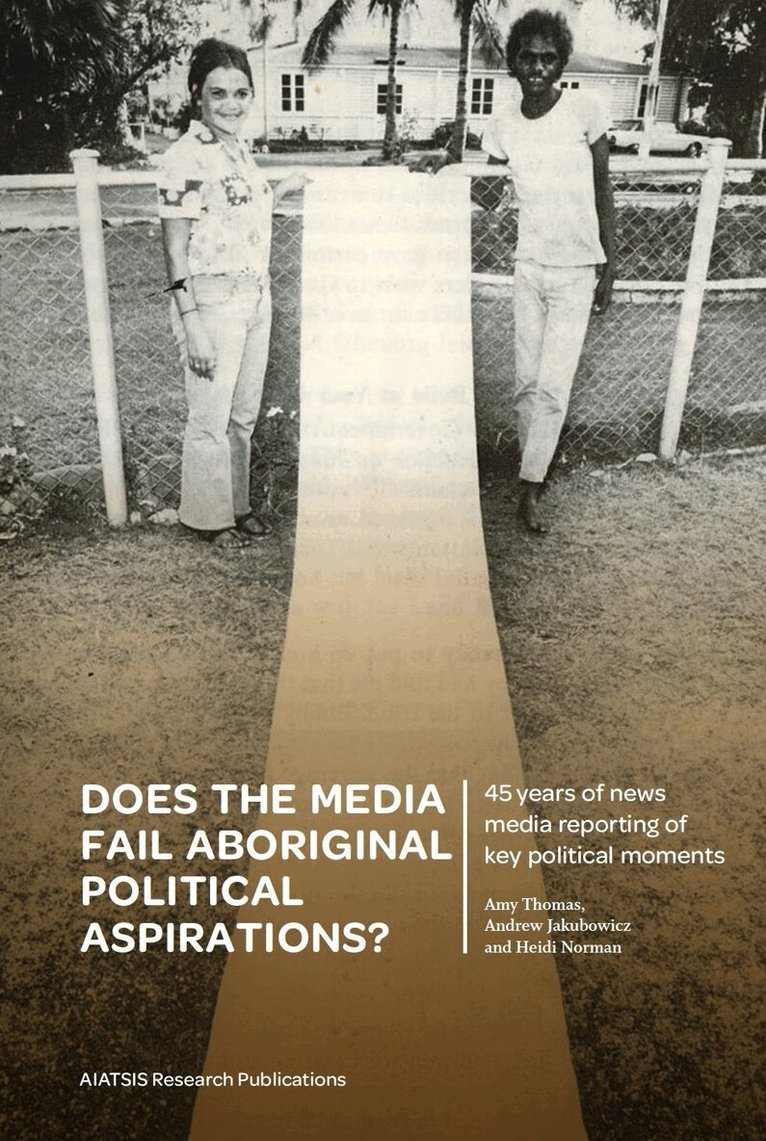
For too long Australias media has failed to communicate Aboriginal political aspirations. This unique study of key Aboriginal initiatives seeking self-determination and justice reveals a history of media procrastination and denial. A team of Aboriginal and non-Aboriginal researchers examine 45 years of media responses to these initiatives, from the 1972 Larrakia petition to the Queen seeking land rights and treaties, to the desire for recognition expressed in the 2017 Uluru Statement from the Heart. This analysis exposes how the media frames stories, develops discourses, and supports deeper historical narratives that corrode and undermine the intent and urgency of Aboriginal aspirations, through approaches ranging from sympathetic stalling to patronising parodies. This book can be used by media professionals to improve their practices, by Aboriginal communities to test media truth-telling and by anyone seeking to understand how Aboriginal desires and hopes have been expressed, and represented, in recent Australian political history.
Schools, universities and education more broadly are at the centre of multiple contestations over the past, present and future. In the urgency of climate change, artificial intelligence, threats to the rights of marginalised groups, the rise of war, and ongoing colonial and capitalist dominance, challenges for education abound. In addition, with increased state repression, there is a pressing need to rethink the strategies of activism and agitation for just societies.This collection brings together scholars across a range of contexts who are grappling with these challenges and engaging a radical imagination through theorisation, experimentation and speculation to transform education into a site of justice and possibility. The authors in this book speak back to dominant discourses and methods in education policy and practice, offering alternative ways of approaching and addressing policy dilemmas in areas such as LGBTQ, climate change and Indigenous issues. Based on on-the-ground research, it collates a range of conceptual resources and tools, working to theorise, experiment and speculate as to how schools, universities and education might address harm and inequality, envisioning and enacting different futures.The book is an essential read for scholars, undergraduate and postgraduate students, as well as those engaged in education in schools and universities - including teachers, school leaders and parents - who are interested in the role of education in addressing issues of social justice in contemporary societies.
Schools, universities and education more broadly are at the centre of multiple contestations over the past, present and future. In the urgency of climate change, artificial intelligence, threats to the rights of marginalised groups, the rise of war, and ongoing colonial and capitalist dominance, challenges for education abound. In addition, with increased state repression, there is a pressing need to rethink the strategies of activism and agitation for just societies.This collection brings together scholars across a range of contexts who are grappling with these challenges and engaging a radical imagination through theorisation, experimentation and speculation to transform education into a site of justice and possibility. The authors in this book speak back to dominant discourses and methods in education policy and practice, offering alternative ways of approaching and addressing policy dilemmas in areas such as LGBTQ, climate change and Indigenous issues. Based on on-the-ground research, it collates a range of conceptual resources and tools, working to theorise, experiment and speculate as to how schools, universities and education might address harm and inequality, envisioning and enacting different futures.The book is an essential read for scholars, undergraduate and postgraduate students, as well as those engaged in education in schools and universities – including teachers, school leaders and parents – who are interested in the role of education in addressing issues of social justice in contemporary societies.