Arkady Tsinober - Böcker
Visar alla böcker från författaren Arkady Tsinober. Handla med fri frakt och snabb leverans.
6 produkter
6 produkter
1 589 kr
Skickas inom 10-15 vardagar
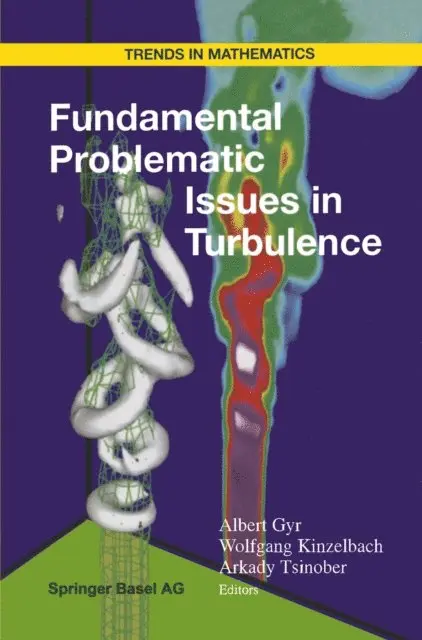
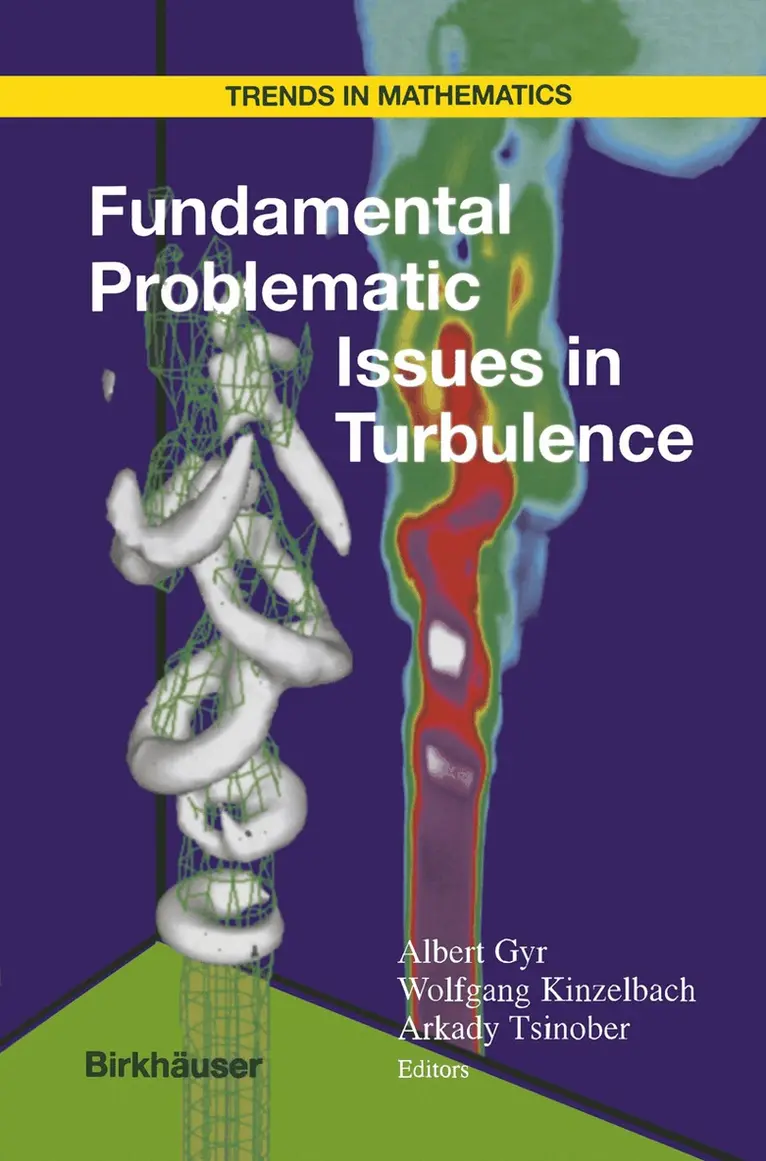
The Second Monte Verita Colloquium Fundamental Problematic Issues in Turbu lence was held in Monte Verita, Switzerland, on March 23-27, 1998. The main goal of the Colloquium was to bring together in the relaxed atmo sphere of Monte Verita a group of leading scientists (consisting of representatives of different generations) and to discuss informally and free of the influence of funding agencies and/or other "politics" of nonscientific nature the basic issues of turbulence. The intention was to put major emphasis on the exposition of the problematic aspects and discussion(s) - not mere reporting of results, i. e. not hav ing just one more meeting. For this purpose it was originally thought to leave all the afternoons free of formal presentations at all. However, this intention became unrealistic due to a number of reasons, and, in the first place, due to strong pres sure from various parts of the scientific community and non-scientific constraints to broaden the scope and to increase the number of participants as compared to the First Colloquium held in 1991. This resulted in a considerable reduction of time for discussions. Nevertheless, the remaining time for discussions was much larger than usually allocated at scientific conferences. On the scientific side the main idea was to bring together scientists work ing in turbulence from different fields, such as mathematics, physics, engineering and others. In this respect the Colloquium was definitely very successful and re sulted in a number of interesting interactions and contacts.
Essence of Turbulence as a Physical Phenomenon
With Emphasis on Issues of Paradigmatic Nature
Inbunden, Engelska, 2019
1 800 kr
Skickas inom 10-15 vardagar
Now in its second edition, this book clearly, concisely and comprehensively outlines the essence of turbulence. In view of the absence of a theory based on first principles and adequate tools to handle the problem, the “essence” of turbulence, i.e. what turbulence really is from a fundamental point of view, is understood empirically through observations from nature, laboratories and direct numerical simulations rather than explained by means of conventional formalistic aspects, models, etc., resulting in pertinent issues being described at a highly theoretical level in spite of the mentioned lack of theory.As such, the book highlights and critically reexamines fundamental issues, especially those of paradigmatic nature, related to conceptual and problematic aspects, key misconceptions and unresolved matters, and discusses why the problem is so difficult. As in the previous edition, the focus on fundamental issues is also a consequence of the view that without corresponding advances in fundamental aspects there is little chance of progress in any applications. More generally there is a desperate need for physical fundamentals of a great variety of processes in nature and technology in which turbulence plays a central role. Turbulence is omnipresent throughout the natural sciences and technology, but despite the vast sea of information available the book retains its brevity without oversimplifications, making it of interest to a broad audience.
1 589 kr
Skickas inom 10-15 vardagar
The Second Monte Verita Colloquium Fundamental Problematic Issues in Turbu lence was held in Monte Verita, Switzerland, on March 23-27, 1998. The main goal of the Colloquium was to bring together in the relaxed atmo sphere of Monte Verita a group of leading scientists (consisting of representatives of different generations) and to discuss informally and free of the influence of funding agencies and/or other "politics" of nonscientific nature the basic issues of turbulence. The intention was to put major emphasis on the exposition of the problematic aspects and discussion(s) - not mere reporting of results, i. e. not hav ing just one more meeting. For this purpose it was originally thought to leave all the afternoons free of formal presentations at all. However, this intention became unrealistic due to a number of reasons, and, in the first place, due to strong pres sure from various parts of the scientific community and non-scientific constraints to broaden the scope and to increase the number of participants as compared to the First Colloquium held in 1991. This resulted in a considerable reduction of time for discussions. Nevertheless, the remaining time for discussions was much larger than usually allocated at scientific conferences. On the scientific side the main idea was to bring together scientists work ing in turbulence from different fields, such as mathematics, physics, engineering and others. In this respect the Colloquium was definitely very successful and re sulted in a number of interesting interactions and contacts.
Del 92 - Fluid Mechanics and Its Applications
Informal Conceptual Introduction to Turbulence
Second Edition of An Informal Introduction to Turbulence
Inbunden, Engelska, 2009
1 589 kr
Skickas inom 10-15 vardagar
The subject of turbulence remains and probably will remain as the most exciting one for the mind of researchers in a variety of ?elds. Since publication of the ?rst edition of this book in November 2001 a number of otherbooksonturbulencehaveappeared,forexampleBernardandWallace (2002), Oberlack and Busse (2002), Foias et al. (2001), Biskamp (2003), Davidson(2004),Jovanovich(2004),SagautandCambon(2008)tomention afew. Soonehastoaskagain thequestionwhyasecondeditionofonebook from a ?eld of so many on the same subject? Does it make any di?erence? Thereareadditionalreasonsapartofthosegiveninthe?rstedition. One of thebasic premises of this bookis thatWeabsolutelymustleave roomfor doubtor thereis noprogress and nolearning. Thereis nolearning without posing a question. And a question requires doubt...Now the freedom of doubt,whichisabsolutelyessentialforthedevelopmentofscience,wasborn from astruggle with constituted authorities...R. Feynmann (1964). This is closely related to the term 'conceptual ': the book has now a di?erent title An informal conceptual introduction to turbulence. One of the main f- tures of the ?rst edition was indeed its conceptual orientation.The second edition is an attempt to make this feature dominant. Consequently items whicharesecondaryfromthispointofview werereducedandeven removed in favour of those added which are important conceptually. This required addressing in more detail most common misconceptions, which are con- quencesoftheprofounddi?cultiesofthesubjectandwhichtravel fromone publication to another. Consequently a one page Appendix D listing some of these misconceptions in the ?rst edition became chapter 9 titled Ana- gies,misconceptions and ill de?ned concepts.
Informal Conceptual Introduction to Turbulence
Second Edition of An Informal Introduction to Turbulence
Häftad, Engelska, 2012
1 589 kr
Skickas inom 10-15 vardagar
The subject of turbulence remains and probably will remain as the most exciting one for the mind of researchers in a variety of ?elds. Since publication of the ?rst edition of this book in November 2001 a number of otherbooksonturbulencehaveappeared,forexampleBernardandWallace (2002), Oberlack and Busse (2002), Foias et al. (2001), Biskamp (2003), Davidson(2004),Jovanovich(2004),SagautandCambon(2008)tomention afew. Soonehastoaskagain thequestionwhyasecondeditionofonebook from a ?eld of so many on the same subject? Does it make any di?erence? Thereareadditionalreasonsapartofthosegiveninthe?rstedition. One of thebasic premises of this bookis thatWeabsolutelymustleave roomfor doubtor thereis noprogress and nolearning. Thereis nolearning without posing a question. And a question requires doubt...Now the freedom of doubt,whichisabsolutelyessentialforthedevelopmentofscience,wasborn from astruggle with constituted authorities...R. Feynmann (1964). This is closely related to the term 'conceptual ': the book has now a di?erent title An informal conceptual introduction to turbulence. One of the main f- tures of the ?rst edition was indeed its conceptual orientation.The second edition is an attempt to make this feature dominant. Consequently items whicharesecondaryfromthispointofview werereducedandeven removed in favour of those added which are important conceptually. This required addressing in more detail most common misconceptions, which are con- quencesoftheprofounddi?cultiesofthesubjectandwhichtravel fromone publication to another. Consequently a one page Appendix D listing some of these misconceptions in the ?rst edition became chapter 9 titled Ana- gies,misconceptions and ill de?ned concepts.
Essence of Turbulence as a Physical Phenomenon
With Emphasis on Issues of Paradigmatic Nature
Inbunden, Engelska, 2013
1 409 kr
Skickas inom 5-8 vardagar
This book critically reexamines what turbulence really is, from a fundamental point of view and based on observations from nature, laboratories, and direct numerical simulations. It includes critical assessments and a comparative analysis of the key developments, their evolution and failures, along with key misconceptions and outdated paradigms. The main emphasis is on conceptual and problematic aspects, physical phenomena, observations, misconceptions and unresolved issues rather than on conventional formalistic aspects, models, etc. Apart from the obvious fundamental importance of turbulent flows, this emphasis stems from the basic premise that without corresponding progress in fundamental aspects there is little chance for progress in applications such as drag reduction, mixing, control and modeling of turbulence. More generally, there is also a desperate need to grasp the physical fundamentals of the technological processes in which turbulence plays a central role.