Arman Schwartz - Böcker
Visar alla böcker från författaren Arman Schwartz. Handla med fri frakt och snabb leverans.
3 produkter
3 produkter
341 kr
Skickas inom 7-10 vardagar
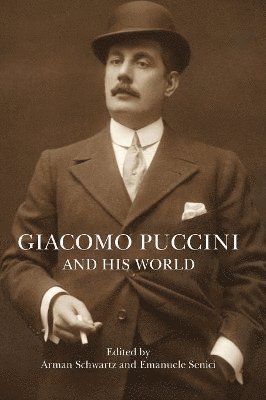
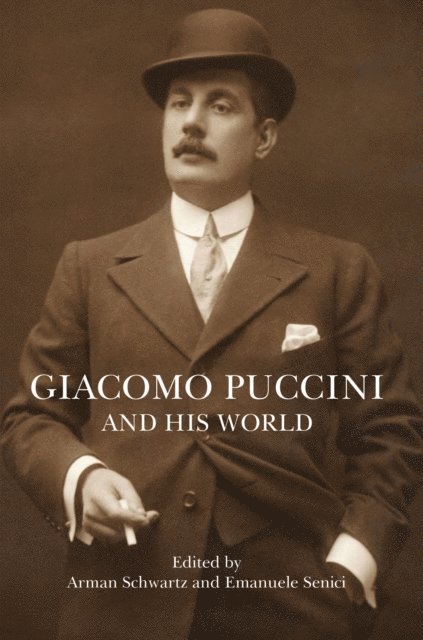
Giacomo Puccini (1858-1924) is the world's most frequently performed operatic composer, yet he is only beginning to receive serious scholarly attention. In Giacomo Puccini and His World, an international roster of music specialists, several writing on Puccini for the first time, offers a variety of new critical perspectives on the composer and his works. Containing discussions of all of Puccini's operas from Manon Lescaut (1893) to Turandot (1926), this volume aims to move beyond cliches of the composer as a Romantic epigone and to resituate him at the heart of early twentieth-century musical modernity. This collection's essays explore Puccini's engagement with spoken theater and operetta, and with new technologies like photography and cinema. Other essays consider the philosophical problems raised by "realist" opera, discuss the composer's place in a variety of cosmopolitan formations, and reevaluate Puccini's orientalism and his complex interactions with the Italian fascist state.A rich array of primary source material, including previously unpublished letters and documents, provides vital information on Puccini's interactions with singers, conductors, and stage directors, and on the early reception of the verismo movement. Excerpts from Fausto Torrefranca's notorious Giacomo Puccini and International Opera, perhaps the most vicious diatribe ever directed against the composer, appear here in English for the first time. The contributors are Micaela Baranello, Leon Botstein, Alessandra Campana, Delia Casadei, Ben Earle, Elaine Fitz Gibbon, Walter Frisch, Michele Girardi, Arthur Groos, Steven Huebner, Ellen Lockhart, Christopher Morris, Arman Schwartz, Emanuele Senici, and Alexandra Wilson.
725 kr
Skickas inom 10-15 vardagar
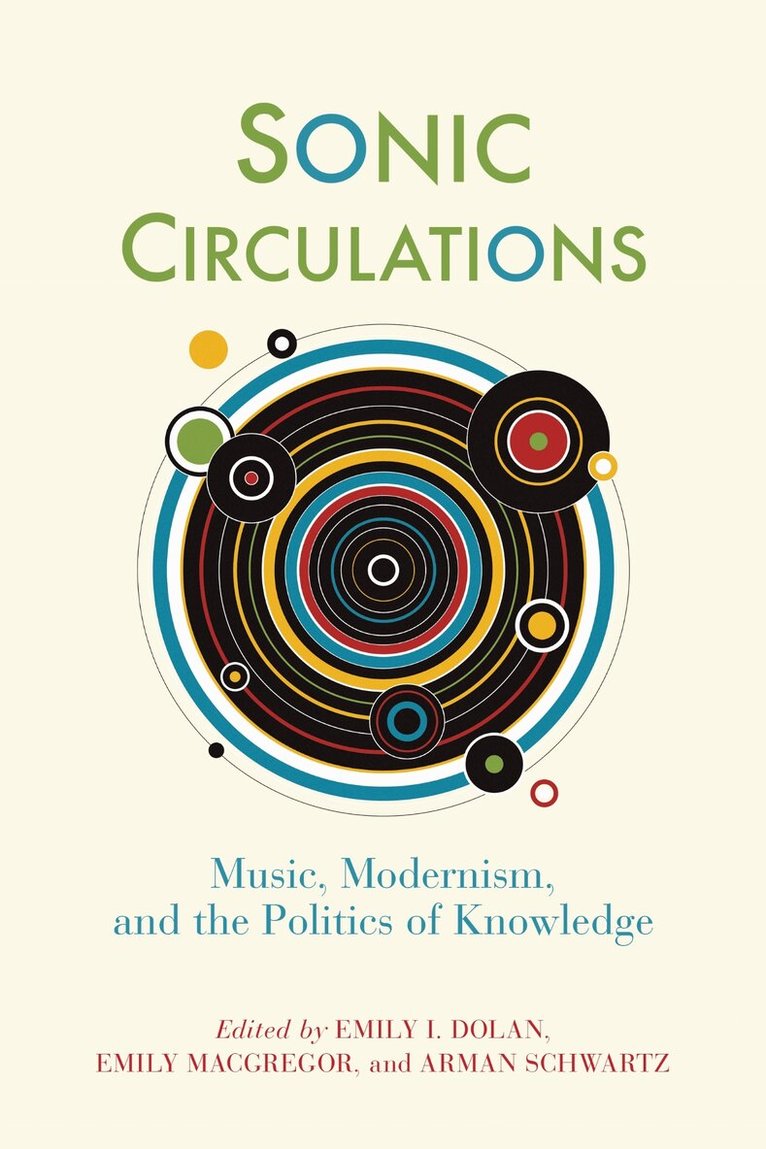
The role music, sound, and voice played in modern knowledge production in the early twentieth centuryDerived from the Latin words circum (round) and ire (to go), a circuit can refer to any bounded area. For contemporary readers, it might evoke the course of an electric current, as well as the flow of global capital. Yet sound—an inherently temporal phenomenon—can only circulate in mediated forms. Tracing the pathways through and by which sound traveled in the early twentieth century, Sonic Circulations not only proposes a new account of the role of music, sound, and voice in modern knowledge production but also poses urgent questions about technology and empire, while also foregrounding the tensions and paradoxes involved in situating the sonic within any fixed regime or system.Exploring key moments in the development of disciplines including linguistics, sociology, and eugenics, as well as musicology itself, Sonic Circulations explores the many ways that sound has functioned as evidence and information, as both an object and an agent of scientific mastery. Contributors explore the processes by which sound has moved through a variety of conceptual, as well as physical domains, highlighting the richness of historical contingency. This volume shows that circulation happened in many spaces and through many technologies: through sound recording, but also through the trade magazine and in the classroom; through wireless broadcasting and international festivals, but also in the cozy spaces of the suburban home.Featuring scholars working at the borders of musicology, ethnomusicology, sound studies, and music theory, this volume's ten chapters and two epilogues illuminate an alternative genealogy of modernism, emphasizing the embeddedness of even the most abstract practices in the structures of imperial modernity.Contributors: Peter Asimov, Andrea F. Bohlman, Harriet Boyd-Bennett, Alexander W. Cowan, Emily I. Dolan, John Gabriel, Jonathan Hicks, Alexandra Kieffer, Gundula Kreuzer, Deirdre Loughridge, Emily MacGregor, Giles Masters, Arman Schwartz, Danielle Simon, John Tresch.
282 kr
Skickas inom 7-10 vardagar