Arnold Fleischmann - Böcker
Visar alla böcker från författaren Arnold Fleischmann. Handla med fri frakt och snabb leverans.
6 produkter
6 produkter
178 kr
Skickas inom 5-8 vardagar
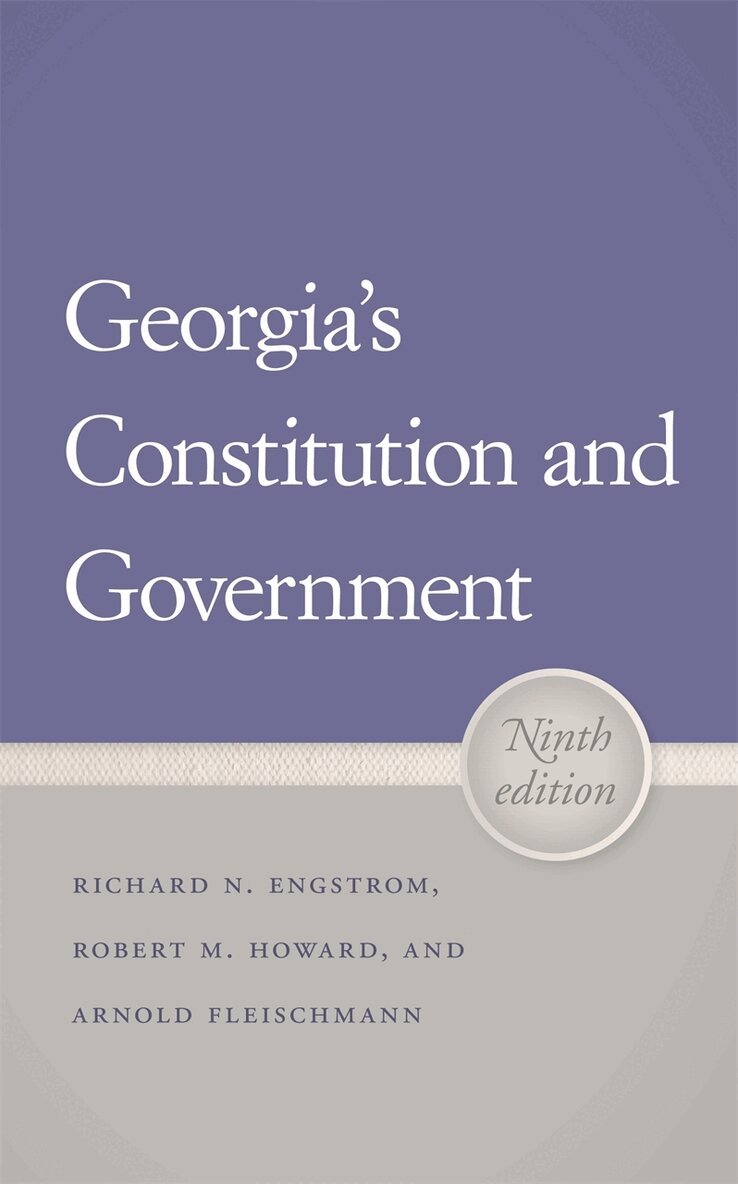
By state law, graduates of public colleges and universities in Georgia must demonstrate proficiency with both the U.S. and Georgia constitutions. This widely used textbook helps students to satisfy that requirement, either in courses or by examination. This brief and affordable study aid begins with a discussion of the ways that state and local governments, in providing services and allocating funds, affect our daily lives. Subsequent chapters are devoted tothe development of our federal system and the importance of constitutions in establishing authority, distributing power, and formalizing procedureshow the various state constitutions differ from each other, even as they all complement the U.S. Constitutionhow constitutions in Georgia have been amended or replacedGeorgia’s governmental institutions at the state, county, and city levelselections in Georgia, including the basic ground rules for holding primaries, general elections, and runoffsKey terms and concepts are covered throughout the book, as well as important court cases at the national and state level. In addition, helpful lists, diagrams, and tables summarize and compare such information asthe structure of Georgia’s court systemthe number of constitutions each of the fifty states has had, the number of times each state’s constitution has been amended, and the length of each state’s current constitutionvarious procedures used by the states to amend their constitutionsGeorgia’s ten constitutions, with highlights of their major changes or featuresthe number of amendments voted on in Georgia from 1984 to 2012the executive branch officials elected by the public across statesthe constitutional boards and commissions in Georgia, with details on the methods by which members are chosenthe number and types of local governments in Georgia since 1952 including counties, municipalities, school districts, and special districtsthe major federal cases in which Georgia has been a party, on issues of discrimination, representation, freedom of speech and the press, the accused or convicted of crimes, and the right to privacyrights and liberties, and how constitutions guarantee and protect them
1 579 kr
Skickas inom 5-8 vardagar
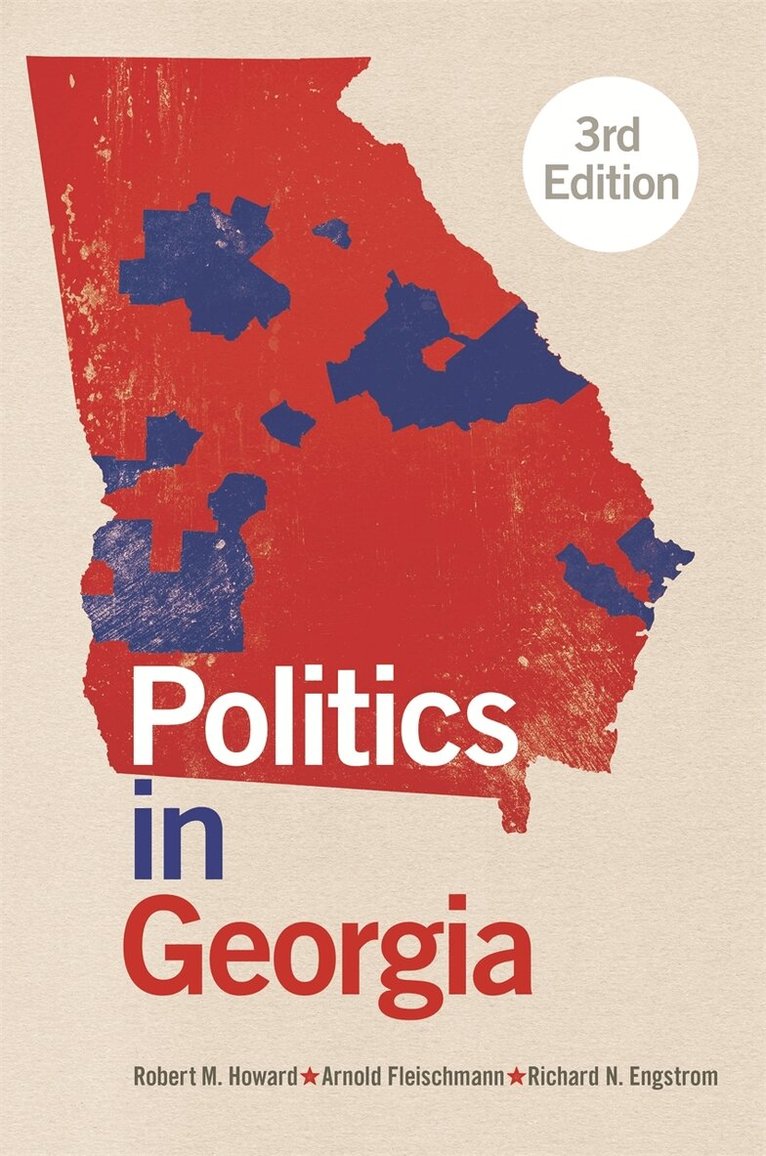
This new edition has been extensively updated to reflect developments in Georgia politics and government since 2007—a decade that has seen three presidential election cycles, two midterm elections, and a census. Updates reflect not only changes in how Georgia is governed but also the economic and social trends helping to drive those changes. These include the continued growth and dispersal of His panic and Asian populations; the decline, by a variety of measures, of rural areas; and the moderating effect of probusiness government factions on social conservative agendas.This edition maintains the book’s comparative approach, which examines the state from three revealing perspectives. This allows readers to determine the extent to which Georgia is similar to its peers on such topics as the length and features of the constitution, the organization of the state government, and the nature of policies. All this allows students and scholars to have a better understanding of the political and economic dynamics of Georgia and the relationship of those dynamics to national political and economic developments. The result is a thorough, up-to-date resource on Georgia’s dynamic political system.Features:-Coverage of trends and events since the prior edition appeared in 2007-Analysis of the most recent state elections-A rewritten chapter on the judiciary that reflects greater representation of women and minorities on the bench and a sharp rise in Republican appointees-A rewritten chapter on policy, with added detail on such topics as transportation, the environment, education, social welfare, and public safety and security-Extensive revisions to sections on the U.S. Constitution-The removal of a chapter on public opinion so that its contents can be more tightly woven throughout the book-Greater attention to the increased power of interest groups-Acknowledgment throughout of the impact of the web and social media in politics and government
572 kr
Skickas inom 5-8 vardagar
This new edition has been extensively updated to reflect developments in Georgia politics and government since 2007—a decade that has seen three presidential election cycles, two midterm elections, and a census. Updates reflect not only changes in how Georgia is governed but also the economic and social trends helping to drive those changes. These include the continued growth and dispersal of His panic and Asian populations; the decline, by a variety of measures, of rural areas; and the moderating effect of probusiness government factions on social conservative agendas.This edition maintains the book’s comparative approach, which examines the state from three revealing perspectives. This allows readers to determine the extent to which Georgia is similar to its peers on such topics as the length and features of the constitution, the organization of the state government, and the nature of policies. All this allows students and scholars to have a better understanding of the political and economic dynamics of Georgia and the relationship of those dynamics to national political and economic developments. The result is a thorough, up-to-date resource on Georgia’s dynamic political system.Features:-Coverage of trends and events since the prior edition appeared in 2007-Analysis of the most recent state elections-A rewritten chapter on the judiciary that reflects greater representation of women and minorities on the bench and a sharp rise in Republican appointees-A rewritten chapter on policy, with added detail on such topics as transportation, the environment, education, social welfare, and public safety and security-Extensive revisions to sections on the U.S. Constitution-The removal of a chapter on public opinion so that its contents can be more tightly woven throughout the book-Greater attention to the increased power of interest groups-Acknowledgment throughout of the impact of the web and social media in politics and government
993 kr
Skickas inom 7-10 vardagar
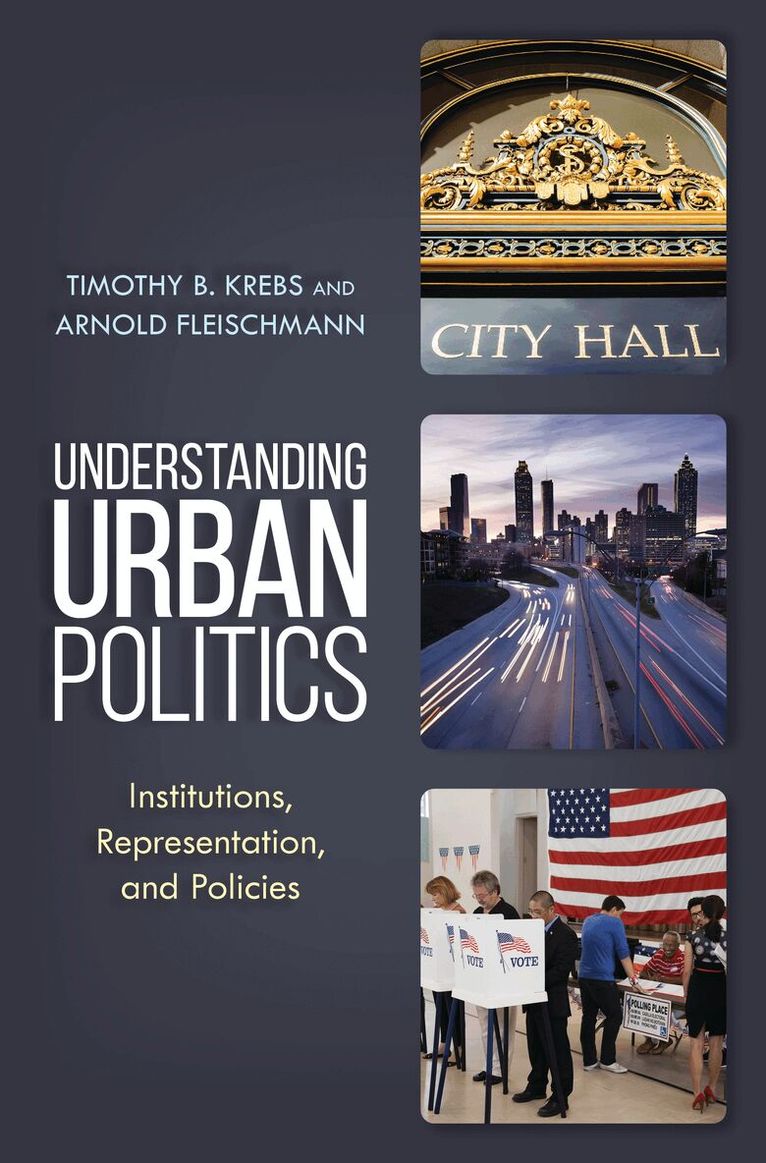
In Understanding Urban Politics: Institutions, Representation, and Policies, Timothy B. Krebs and Arnold Fleischmann introduce a framework that focuses on the role of institutions in establishing the political “rules of the game,” the representativeness of city government, the influence of participation in local democracy, and how each of these features influences the adoption and implementation of public policies. Part 1 lays the groundwork for the rest of the book by exploring the many meanings of “urban,” analyzing what local governments do, and providing a history of American urban development.Part 2 examines the organizations and procedures that are central to urban politics and policy making: intergovernmental relations, local legislatures, and the local executive branch. Part 3 looks at elections and voting, local campaigns, and non-voting forms of participation. The four chapters in Part 4 focus on the policy process and the delivery of local services, local government finances, “Building the City” (economic development, land use, and housing), and policies affecting the quality of life (public safety, the environment, “morality” issues, and urban amenities).Krebs and Fleischmann bolster students’ learning and skills with guiding questions at the start of each chapter, which ends with key terms, a summary, discussion questions, and research exercises. The appendix and website aid these efforts, as does a website for instructors.
1 266 kr
Kommande
In Understanding Urban Politics: Institutions, Representation, and Policies, Timothy B. Krebs and Arnold Fleischmann introduce a framework that focuses on the role of institutions in establishing the political “rules of the game,” the representativeness of city government, the influence of participation in local democracy, and how each of these features influences the adoption and implementation of public policies. Part 1 lays the groundwork by exploring the many meanings of “urban,” analyzing what local governments do, and providing a concise history of American urban development. Part 2 examines the organizations and procedures that are central to urban politics and policy making: intergovernmental relations, local legislatures, and the local executive branch. Part 3 looks at elections and voting, local campaigns, and non-electoral forms of participation. The four chapters in Part 4 focus on the policy process and the delivery of local services, local government finances, “Building the City,” and policies affecting the quality of life.Krebs and Fleischmann bolster students’ learning and skills with guiding questions at the start of each chapter, which ends with key terms, a summary, discussion questions, and research exercises. The appendix and website aid these efforts, as does a website for instructors.
422 kr
Kommande
In Understanding Urban Politics: Institutions, Representation, and Policies, Timothy B. Krebs and Arnold Fleischmann introduce a framework that focuses on the role of institutions in establishing the political “rules of the game,” the representativeness of city government, the influence of participation in local democracy, and how each of these features influences the adoption and implementation of public policies. Part 1 lays the groundwork by exploring the many meanings of “urban,” analyzing what local governments do, and providing a concise history of American urban development. Part 2 examines the organizations and procedures that are central to urban politics and policy making: intergovernmental relations, local legislatures, and the local executive branch. Part 3 looks at elections and voting, local campaigns, and non-electoral forms of participation. The four chapters in Part 4 focus on the policy process and the delivery of local services, local government finances, “Building the City,” and policies affecting the quality of life.Krebs and Fleischmann bolster students’ learning and skills with guiding questions at the start of each chapter, which ends with key terms, a summary, discussion questions, and research exercises. The appendix and website aid these efforts, as does a website for instructors.