Arnold J. Bauer - Böcker
Visar alla böcker från författaren Arnold J. Bauer. Handla med fri frakt och snabb leverans.
4 produkter
4 produkter
Del 21 - Cambridge Latin American Studies
Chilean Rural Society
From the Spanish Conquest to 1930
Häftad, Engelska, 2008
468 kr
Skickas inom 7-10 vardagar
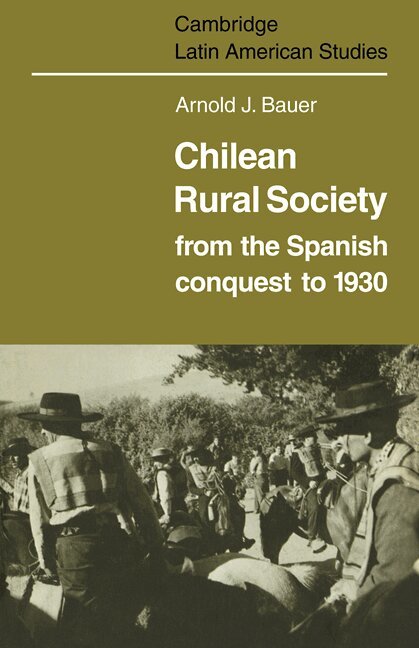
This book attempts to place in historical perspective the evolution of Chilean rural society from its foundation in the sixteenth century to 1975 and especially to explain the unusual result of accelerated economic growth after 1860. The study is placed in the broader context of general Chilean development and the rise of the Atlantic market. Professor Bauer also points out the connections and similarities between the Chilean case and other areas peripheral to the expanding world economy. Chapters are devoted to markets, prices and credit, but the main part of the book is concerned with the social and political impact of economic expansion on rural workers and the land-owning classes. A detailed explanation of agrarian structure and the position and importance of landlord and peon within national development is essential for an understanding of modern Latin America. This book is a contribution to that understanding and people interested in other times and places will find in the experience of Chile an instructive contrast in the larger pattern on modern history.
1 065 kr
Skickas inom 7-10 vardagar
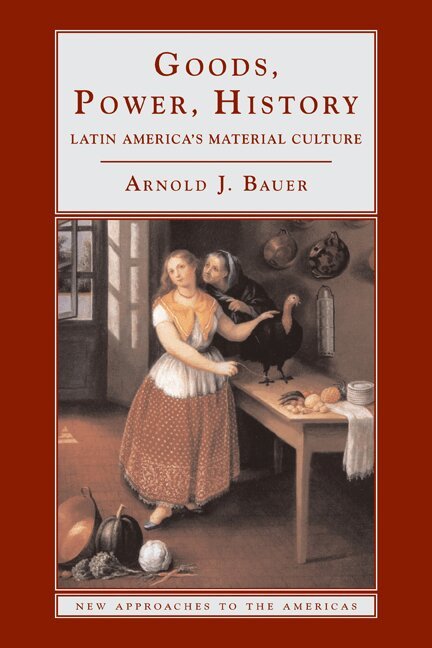
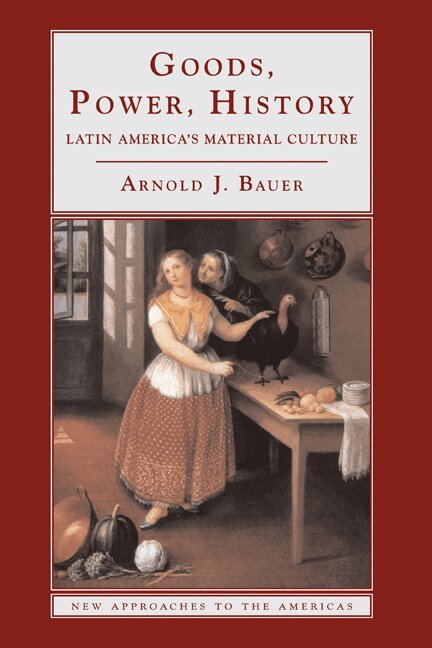
Why do we acquire the things we do? Behind this apparently ingenuous question are several answers, some straightforward and others more interesting. To feed ourselves, might be the first response, for we can easily see that we expend much energy in the quest for food. Clothing and shelter as well would seem to constitute our basic needs. Yet we quickly see that even in the Garden of Eden, people want more than they need. This simple impulse has created the ever-mounting abundance we call progress and nearly all of the subsequent trouble on our planet. Four main interwoven themes run through this exploration of material culture and consumption in Latin America over the past five centuries: supply and demand; the relationships between consumption and identity; the importance of ritual, both ancient and modern, in what we buy; and the relationship between colonial and post-colonial power in consumption.
309 kr
Skickas inom 7-10 vardagar
Why do we acquire the things we do? Behind this apparently ingenuous question are several answers, some straightforward and others more interesting. To feed ourselves, might be the first response, for we can easily see that we expend much energy in the quest for food. Clothing and shelter as well would seem to constitute our basic needs. Yet we quickly see that even in the Garden of Eden, people want more than they need. This simple impulse has created the ever-mounting abundance we call progress and nearly all of the subsequent trouble on our planet. Four main interwoven themes run through this exploration of material culture and consumption in Latin America over the past five centuries: supply and demand; the relationships between consumption and identity; the importance of ritual, both ancient and modern, in what we buy; and the relationship between colonial and post-colonial power in consumption.
277 kr
Skickas inom 10-15 vardagar
Arnold Bauer grew up on his family’s 160-acre farm in Goshen Township in Clay County, Kansas, amidst a land of prairie grass and rich creek-bottom soil. His meditative and moving account of those years depicts a century-long narrative of struggle, survival and demise. A coming-of-age memoir set in the 1930s to ‘50s, it blends local history with personal reflection to paint a realistic picture of farm life and families from a now-lost world.Bauer’s was typical of true family farms, where wives supplemented family income by selling butter and eggs and children provided unpaid labour. These hardworking farmers were not particularly heroic or virtuous. They had their debts and doubts; but at the same time their struggles for a kind of moral economy offer valuable lessons that merit our attention today.Among Bauer’s vivid recollections: driving a team of huge, clomping work horses; his father’s daybreak call to long days in the field at age 12; and surviving eight years of education in a one-room schoolhouse (with one teacher determined to have all her students learn the harmonica). He shares the trials of Depression and drought, experiences the coming of electricity - which prompted his father to take on a sideline as an electrician - and reveals the vital importance of the local blacksmith. Throughout the book, he finds wonder in the commonplace, like going to town on a Saturday night for a black walnut ice cream cone.Here is a childhood that few in the United States will ever know. More than that, it is a key to understanding the tragedy that befell the smaller family farms on the Great Plains as sweeping changes after the mid-1950s - falling grain and livestock prices, adverse terms of trade for agricultural products - turned out to be more devastating than tornados or dust storms.Gracefully written with a keen eye for the telling detail, Time’s Shadow eloquently captures the events of an era and the meaning it held for one boy and those around him. It is a refreshingly unsentimental “Little House on the Prairie” that will resonate not only with older compatriots but with anyone whose curiosity leads them to wonder about a world we have lost.