Arnold J. Heidenheimer - Böcker
Visar alla böcker från författaren Arnold J. Heidenheimer. Handla med fri frakt och snabb leverans.
7 produkter
7 produkter
672 kr
Skickas inom 10-15 vardagar
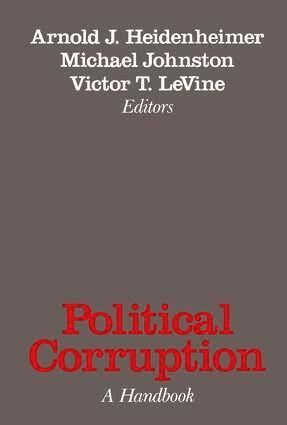
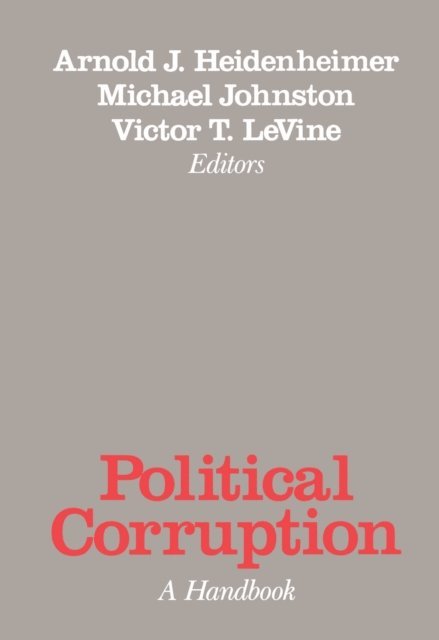
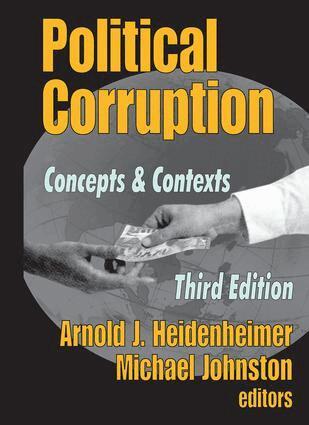
Are phenomena labeled as corrupt subject to systematic social science investigation, or does corruption lie so much in the eye of the beholder as to frustrate serious analysis? The editors of this volume, which follows up an important earlier work on the same subject, hold that the comparative perspective, involving both comparisons over time and comparisons between systems, is crucial if the study of corruption is to reach the point where it can be studied as s socio-political phenomenon.The studies of political corruption included here pertain to all areas of the world, but especially to the United States, Communist systems and Europe. Most were published during the last fifteen years, and some were written especially for the volume. Although the editors are political scientists, scholars from all social science disciplines, as well as law, history and communications, are represented among the authors of the approximately sixty selections included in this volume.The first of the book's four parts deals with changing conceptualization and definition in the study of corruption. The second part examines the incidence of corruption in the context of political development and modernization. The third part examines the special vulnerability of some local, national and international systems to corrupt practices. In the final part, perceptions of corruptions are related to scandal and other social control efforts, as well as to studies of the effect and consequences of corruption.
480 kr
Skickas inom 3-6 vardagar
335 kr
Skickas inom 3-6 vardagar
492 kr
Skickas inom 3-6 vardagar
359 kr
Skickas inom 3-6 vardagar
553 kr
Skickas inom 10-15 vardagar
This is a study in the reestablishment of de mocratic party politics in divided and occupied Germany after the downfall of the National Socialist tyranny. Its subject is the growth of the Christian Democratic Union and the rise to power of its leader, Konrad Adenauer. Closely associated with the success of the German Federal Republic in achieving prosperity, political and military power and the status of an ally of the Western powers, the CDU has yet been the subject of widely varying evaluations. Like the regime with which it is associated, it suffers from the fact that for many observers admiration for some German post-war achievements is mixed with residual distrust and skepticism. In addition, understanding of the CDU has been handicapped by confused images of the forces it represents, lack of knowledge about its internal organization, and the overwhelming position which its leader has achieved in recent years. To observers both in Germany and abroad the dominant Chancellor and party leader appears to overshadow both party and government with the result that the 1950'S, the vital period of German reconstruction, has already been labelled the Adenauer Decade.
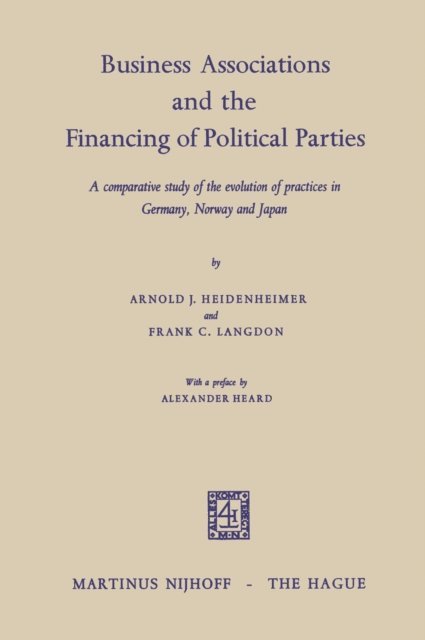
Business Associations and the Financing of Political Parties
A Comparative Study of the Evolution of Practices in Germany, Norway and Japan
Häftad, Engelska, 1968
537 kr
Skickas inom 10-15 vardagar
Students of government and social power recognize that wherever governmental systems embrace popular elections, the functions and mechanisms of political finance constitute inevitable links of influence between economic structures and political processes. The transmu tation of economic power into political power has been of historic concern from ancient philosophers to modern political scientists. Efforts to discern and interpret the political roles of those engaged in funding candidates and political parties have intensified in recent years. Attention given the subject has deepened substantially in the United States since World War II and, while there have been differ ences in range and quality, serious analytical interests have also developed in numerous other nations around the world. These trends have been accompanied by increasingly more energetic and sophisti cated attempts at comparative analysis. Problems in transnational studies of political processes have always been formidable. The comparative study of political finance has been retarded by difficulties in defining units of analysis that make it possible to identify in some measurable way the effects of political fmance in precise phases of the governing process, e. g. , in the per suasion of voters, in party nominating processes, in executive decision making. Cash transactions, even when known with confidence, consti tute only a partial aspect of political finance. Other shades of economic power may be equally relevant, involving services or goods directly provided, credits and other economic benefits extended or withheld, and the exercise of less tangible but equally potent influence.