Arnold van der Valk - Böcker
Visar alla böcker från författaren Arnold van der Valk. Handla med fri frakt och snabb leverans.
9 produkter
9 produkter
1 430 kr
Skickas inom 10-15 vardagar
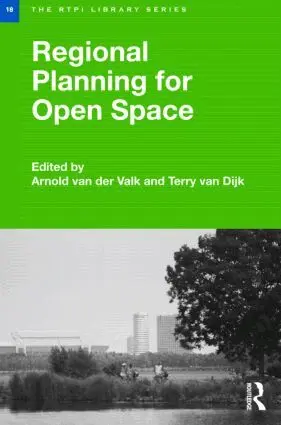
Reviewing the limitations of various planning options, this book addresses the debate on how to preserve open space in the context of a growing metropolis. The importance of open spaces for well-being in urban life is well-established. With case studies on internalization and valuation methods, this book critically examines the liberal discourse that urges the transfer of responsibility for open space from government to the market. European and American expert authors confront political rhetoric with grounded analysis and conclude that the market needs to be combined with governmental efforts. They scrutinize the connection between open space and the planning institutions designed to implement its policy. The book provides practical pieces of insight in how to structure an open space problem, information on what to expect from instruments, and new ideas on alternative approaches.
1 578 kr
Skickas inom 10-15 vardagar
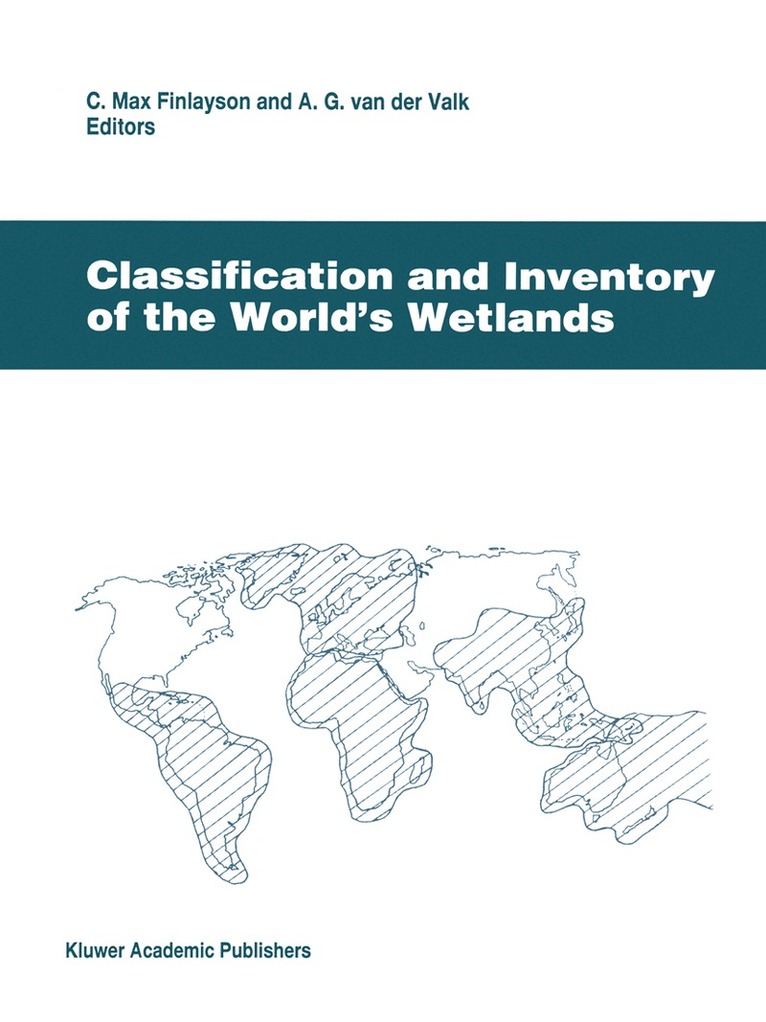
This work brings together information on various wetland classification systems and wetland inventories from around the world, outlining regional, national and local wetland classifications developed in Africa, Australia, Canada, China, Europe, India, South America and the USA. Oriented towards the conservation and management of wetlands, these existing national and regional classification systems have been useful in providing an essential base for the development of an international system. The volume also reviews various attempts at drawing up an inventory of wetlands in different parts of the world, ranging from field and literature surveys to highly sophisticated efforts using aerial photography and satellite imaging. The book should be useful to workers in wetland ecology, especially those working on classification, inventory, conservation, or management of wetlands at the local, national, regional or international levels.
441 kr
Skickas inom 10-15 vardagar
Reviewing the limitations of various planning options, this book addresses the debate on how to preserve open space in the context of a growing metropolis. The importance of open spaces for well-being in urban life is well-established. With case studies on internalization and valuation methods, this book critically examines the liberal discourse that urges the transfer of responsibility for open space from government to the market. European and American expert authors confront political rhetoric with grounded analysis and conclude that the market needs to be combined with governmental efforts. They scrutinize the connection between open space and the planning institutions designed to implement its policy. The book provides practical pieces of insight in how to structure an open space problem, information on what to expect from instruments, and new ideas on alternative approaches.
2 101 kr
Skickas inom 10-15 vardagar
This volume provides an overview of recent advances in forest ecology on a variety of topics, including species diversity and the factors that control species diversity, environmental factors controlling distribution of forests, impacts of disturbances on forests (fires, drought, hurricane), reproduction ecology of both trees and understory species, and spatial organization of forests. Previously published in Plant Ecology, Volume 201, No.1, 2009.
2 101 kr
Skickas inom 10-15 vardagar
recruitment of adult plants in entire communities, and all of them focus on changes in total densities of A central issue of plant ecology is the understanding individuals and do not refer to changes in community of the relative role of different life history stages in structure (Moles and Drake 1999; Rebollo et al. successful plant recruitment. The consecutive stages 2001; Goldberg et al. 2001). This ?eld of research of seed, seedling, and adult are related to each other has hardly been explored empirically, and we think it in a complex way that largely depends on species and may reveal interesting mechanisms for the regulation the in?uence of physical and biological factors of individual density and species diversity in plant (Goldberg et al. 2001), for example, irrigation and communities. At the functional group level (which grazing. As a result of relationships between these sorts species according to common features), we stages, the consequences of an ecological factor expect differences depending on growth form depend on the way that its effects propagate onto the (grasses versus forbs) and depending on seed mass following stage of the recruitment process. As far as (differences between small-seeded, medium-seeded, we know, there are no published studies that have and large-seeded species). Some authors (Goldberg addressed this subject. et al. 2001; Rebollo et al. 2001) studying annual In this article, we characterize the relationships plant communities have found greater seedling between the three plant developmental stages.
2 101 kr
Skickas inom 10-15 vardagar
This volume provides an overview of recent advances in forest ecology on a variety of topics, including species diversity and the factors that control species diversity, environmental factors controlling distribution of forests, impacts of disturbances on forests (fires, drought, hurricane), reproduction ecology of both trees and understory species, and spatial organization of forests. Previously published in Plant Ecology, Volume 201, No.1, 2009.
2 101 kr
Skickas inom 10-15 vardagar
recruitment of adult plants in entire communities, and all of them focus on changes in total densities of A central issue of plant ecology is the understanding individuals and do not refer to changes in community of the relative role of different life history stages in structure (Moles and Drake 1999; Rebollo et al. successful plant recruitment. The consecutive stages 2001; Goldberg et al. 2001). This ?eld of research of seed, seedling, and adult are related to each other has hardly been explored empirically, and we think it in a complex way that largely depends on species and may reveal interesting mechanisms for the regulation the in?uence of physical and biological factors of individual density and species diversity in plant (Goldberg et al. 2001), for example, irrigation and communities. At the functional group level (which grazing. As a result of relationships between these sorts species according to common features), we stages, the consequences of an ecological factor expect differences depending on growth form depend on the way that its effects propagate onto the (grasses versus forbs) and depending on seed mass following stage of the recruitment process. As far as (differences between small-seeded, medium-seeded, we know, there are no published studies that have and large-seeded species). Some authors (Goldberg addressed this subject. et al. 2001; Rebollo et al. 2001) studying annual In this article, we characterize the relationships plant communities have found greater seedling between the three plant developmental stages.
1 578 kr
Skickas inom 10-15 vardagar
This book brings together, for the first time, information on various wetland classification systems and wetland inventories from around the world, outlining regional, national and local wetland classifications developed in Africa, Australia, Canada, China, Europe, India, South America and the USA. Oriented towards the conservation and management of wetlands, these existing national and regional classification systems have been useful in providing an essential base for the development of an international system. The volume also reviews various attempts at drawing up an inventory of wetlands in different parts of the world, ranging from field and literature surveys to highly sophisticated efforts using aerial photography and satellite imaging. Audience: Workers in wetland ecology, especially those working on classification, inventory, conservation, or management of wetlands at the local, national, regional or international levels.
1 578 kr
Skickas inom 10-15 vardagar
PREFACE Within the Florida Everglades, tree islands, which cover only a small percentofthis ecosystem, historically have provided essential habitat for a wide variety ofterrestrial and amphibious plants, birds, and animals. These tree islands, however, have been one ofits least studied features. Because of their less flood tolerant vegetation, tree islands are one ofthe most sensitive components ofthe Everglades to changes in hydrology, and many tree islands have been lost during periods when water levels have been abnormally high or low. Their sensitivity to water level changes makes tree islands potentially one ofthe best and surest measures ofthe overall hydrologic health of the Everglades. Consequently, the maintenance of healthy, functioning tree islands and the restoration ofthose that have been lost will be an important performance measures that will be used tojudge the success ofthe Comprehensive Everglades Restoration Plan (CERP). A symposium, Tree Islands ofthe Everglades, was held on July 14 and 15, 1998 at Florida Atlantic University, Boca Raton, Florida. It was sponsored by Florida Center for Environmental Studies and the South Florida WaterManagement District. This was the first scientific meeting ever devoted to tree islands. The organizers of this symposium were Drs. Arnold van der Valk, Florida Center for Environmental Studies and Iowa State University, Fred Sklar, South Florida Water Management District, and Wiley Kitchens, United States Geological Survey.