Asad-ul Iqbal Latif - Böcker
Visar alla böcker från författaren Asad-ul Iqbal Latif. Handla med fri frakt och snabb leverans.
10 produkter
10 produkter
478 kr
Tillfälligt slut
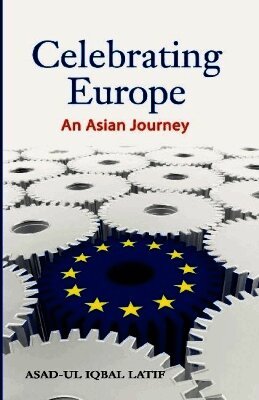
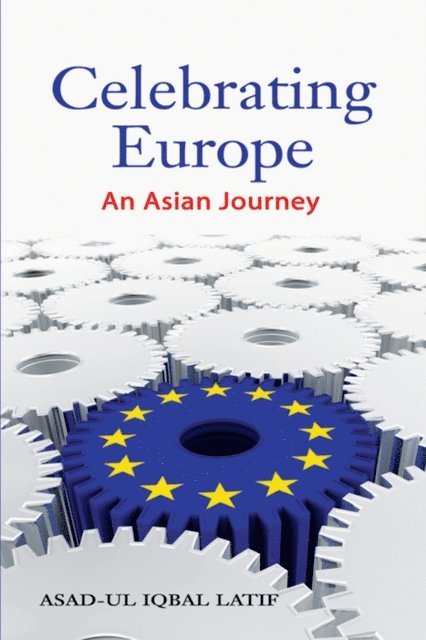
Asia's and Europe's discovery of each other dates back several hundred years and has undergone tremendous transformation. Their engagement was coloured by the history of colonialism, and interrupted by the heat of the Cold War. However, an important step to chart an equal partnership and deepen engagement was taken with the launch of the Asia-Europe Meeting in March 1996. The Asia-Europe Foundation (ASEF) appeared the following year as the most concrete manifestation of this newfound engagement and as an attempt to engage the civil societies of the two regions.Professor Tommy Koh, a distinguished and well-respected diplomat of our time, is Singapore's foremost “Americanist”, having spent about two decades in America, serving as Singapore's Permanent Representative to the United Nations and Ambassador to the United States. When he turned “Europeanist” on being appointed the Executive Director of ASEF, many of his admirers were surprised, but they had no doubts that his diplomatic skills and international stature make him the ideal person to bridge the gap between Asia and Europe.This collection of essays and speeches by Professor Tommy Koh were delivered and written in his capacity as the Executive Director of ASEF. It contains his thoughts on the three pillars of Asia-Europe relations: politics, economics, and civil society. Readers will find in this book his assessment of some of the key trends shaping the emerging world order and some crucial events affecting the transformation of Asia and Europe. He points to synergies between the two continents but does not hesitate to note differences in outlook which have to be recognised and respected. This book is an interesting contribution to the growing literature on a new partnership in the making.Tommy Koh is a Professor of Law at the National University of Singapore (NUS). He is currently Singapore's Ambassador-at-Large and the Executive Director of the Asia-Europe Foundation. He has previously served as Dean of the Law Faculty of NUS, Ambassador to the United Nations, the United States, Canada and Mexico. He has chaired the Law of the Sea Conference and the Earth Summit. He has headed a Singapore think-tank, The Institute of Policy Studies, and served as the first Chairman of the National Arts Council. He has also served the UN as the Secretary-General's Special Envoy to Russia, Latvia, Estonia and Lithuania, and the World Trade Organisation as the Chairman of two dispute panels.
473 kr
Skickas inom 10-15 vardagar
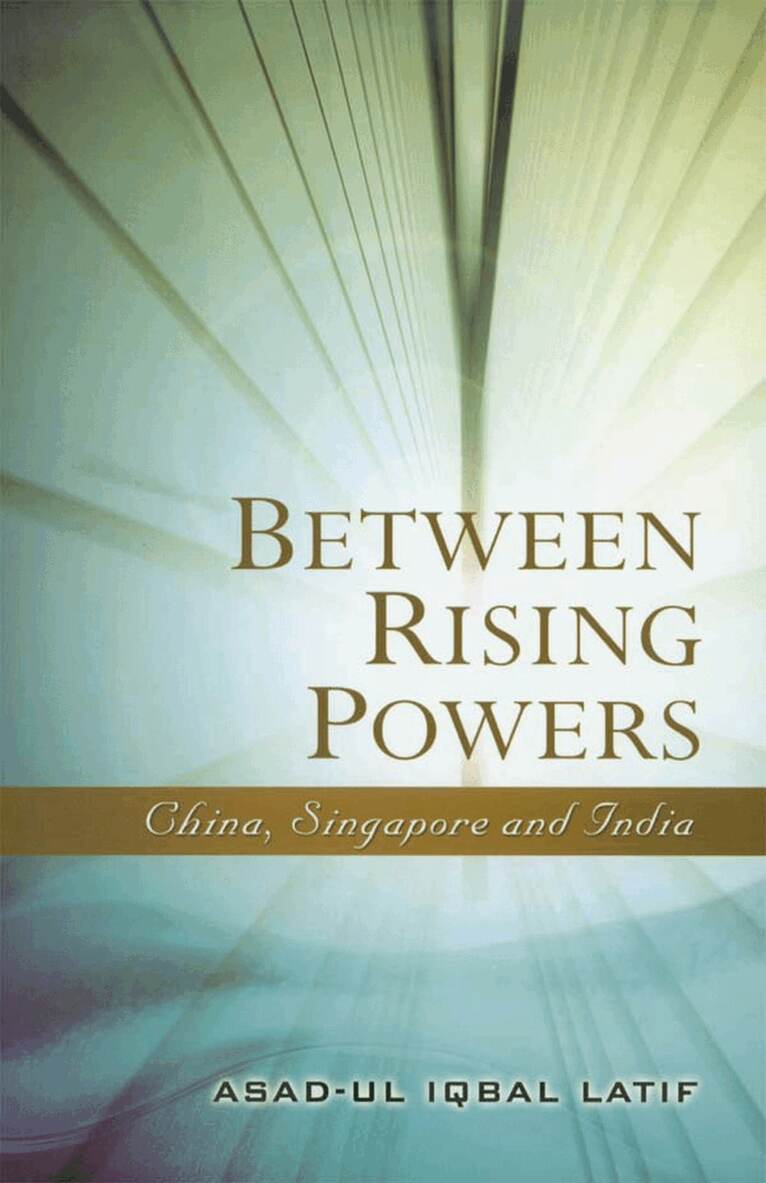
Geography has moulded Singapore's self-definition, much as it has shaped the contours of the rest of Southeast Asia, a region that lies south of China and east of India. Placed within overlapping Sinic and Indic zones, Singapore's entrepot role has served both. Today, as China and India emerge simultaneously as rising powers, a port city is going beyond its trading role to engage them in political and security terms. This book combines diplomatic history and international relations theory to show how Singapore is facilitating China's and India's engagement of Southeast Asia.
233 kr
Skickas inom 10-15 vardagar
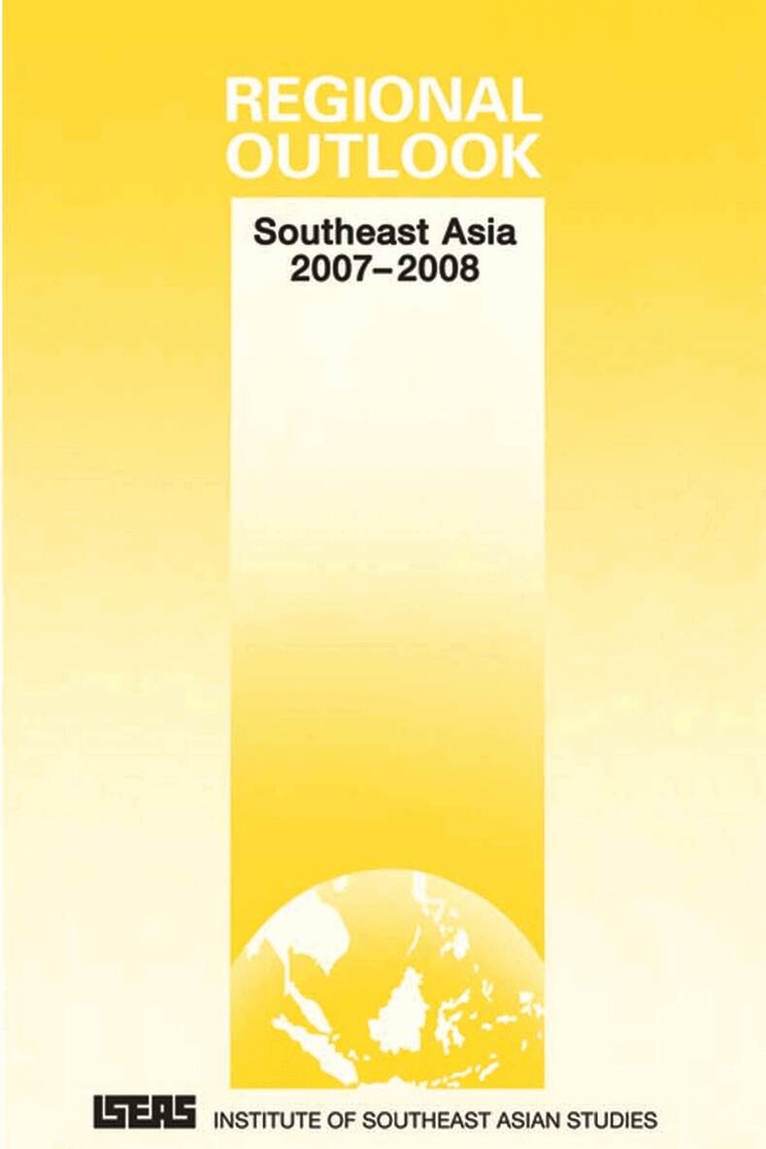
Launched in 1992, ""Regional Outlook"" is an annual publication of the Institute of Southeast Asian Studies, published every January. Designed for the busy executive, professional, diplomat, journalist, or interested observer, ""Regional Outlook"" aims to provide a succinct analysis of current political and economic trends shaping the region, and the outlook for the forthcoming two years. This forward-looking book contains focused political commentaries and economic forecasts on all ten countries in Southeast Asia, as well as a select number of topical pieces of significance to the region.
376 kr
Skickas inom 3-6 vardagar
Singapore is America's closest security partner in Southeast Asia. The United States has decided to help India become a major world power in the 21st century, an objective that is furthered by the nuclear agreement between them. Singapore's relationship with India is an increasingly pertinent feature of Southeast Asias political and strategic landscape. Whether these three realities, taken together, lay the basis of a triangular relationship among Singapore, America, and India is the question that this book seeks to answer. The book begins with a review of the notion of Pax Americana and goes on to describe the state of bilateral relations among the three countries as they have evolved since the end of the Cold War. Subsequently, it analyzes three core issues the Global War on Terror, the rise of China, and the agency of democracy in international relations that play a defining role in relations among Singapore, the United States, and India. The book concludes by suggesting some directions in which these relations might move.
460 kr
Skickas inom 10-15 vardagar
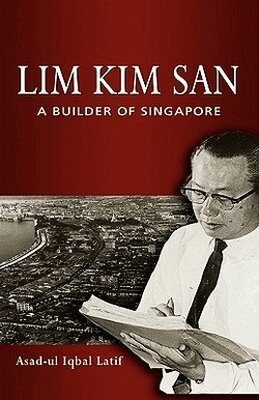
Lim Kim San's name is linked inextricably to Singapore's public housing. This is entirely appropriate because he played a crucial role in the success of the Housing Board, which transformed both the countrys physical landscape and gave Singaporeans a tangible stake in the future of their young nation. However, important though Lim's role was at the Board and as Minister for National Development, it was not his sole contribution to Singapore. He made a decisive difference in several other key areas, including Finance, and Interior and Defence. This biography draws on Lim's Oral History Interview, which was made accessible to the author, the Hansard, Lims speeches, and newspaper clippings, in addition to fresh interviews conducted with other Singapore leaders who had worked with Lim. The result is a composite picture of a great Singapore leader.
286 kr
Skickas inom 10-15 vardagar
1 084 kr
Skickas inom 5-8 vardagar
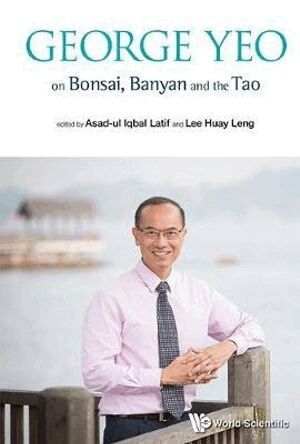
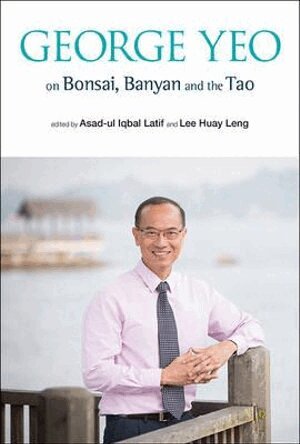
Since his undergraduate days in Cambridge, George Yeo has spoken and written much in and out of government. Many remember the things which he said or wrote years ago. This book is a compilation of some of his best speeches and writings which were selected by Asad Latif and Lee Huay Leng in consultation with him.The book has a rather unusual title because there are many aspects to George Yeo which makes him difficult to classify. As a student leader, he was radical but conciliatory. In the Singapore Armed Forces, he was atypical, moving from the Army to the Air Force before becoming Director of Joint Operations and Planning. In politics, he is fondly remembered by artists, journalists, doctors, businessmen and foreign diplomats, and by his colleagues and constituents. His own staff said he had a curious mind. They complained that he rarely used the drafts which they had prepared for him.George Yeo describes himself as a Taoist even though he is a Roman Catholic and is now on the Papal staff. Buddhists are surprised he championed the revival of Nalanda University as an international project. He remains close to Singaporeans of different races and religions even though he has a deep sense of his own ancestral roots and religion. In politics, he has been described both as a liberal and a conservative. In his Parliamentary maiden speech, he spoke of the importance of democracy but has repeated many times that democracy is only a means and not an end in itself. He has a deep interest in history which partly explains his seeing the re-emergence of China and India earlier than most others.The bonsai and the banyan are metaphors he uses for Singapore. Singapore is a city-state and must never have an inflated view of itself. The bonsai describes Singapore modestly, but he adds that the bonsai can be intensely interesting and valuable. The banyan provides shade and we are grateful for it, but too much makes us weak. As for the Tao, that perhaps is what gives unity to his many interests.
476 kr
Skickas inom 5-8 vardagar
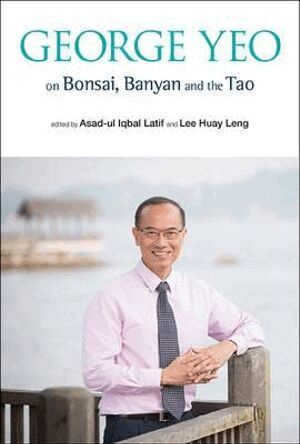
Since his undergraduate days in Cambridge, George Yeo has spoken and written much in and out of government. Many remember the things which he said or wrote years ago. This book is a compilation of some of his best speeches and writings which were selected by Asad Latif and Lee Huay Leng in consultation with him.The book has a rather unusual title because there are many aspects to George Yeo which makes him difficult to classify. As a student leader, he was radical but conciliatory. In the Singapore Armed Forces, he was atypical, moving from the Army to the Air Force before becoming Director of Joint Operations and Planning. In politics, he is fondly remembered by artists, journalists, doctors, businessmen and foreign diplomats, and by his colleagues and constituents. His own staff said he had a curious mind. They complained that he rarely used the drafts which they had prepared for him.George Yeo describes himself as a Taoist even though he is a Roman Catholic and is now on the Papal staff. Buddhists are surprised he championed the revival of Nalanda University as an international project. He remains close to Singaporeans of different races and religions even though he has a deep sense of his own ancestral roots and religion. In politics, he has been described both as a liberal and a conservative. In his Parliamentary maiden speech, he spoke of the importance of democracy but has repeated many times that democracy is only a means and not an end in itself. He has a deep interest in history which partly explains his seeing the re-emergence of China and India earlier than most others.The bonsai and the banyan are metaphors he uses for Singapore. Singapore is a city-state and must never have an inflated view of itself. The bonsai describes Singapore modestly, but he adds that the bonsai can be intensely interesting and valuable. The banyan provides shade and we are grateful for it, but too much makes us weak. As for the Tao, that perhaps is what gives unity to his many interests.
241 kr
Skickas inom 10-15 vardagar
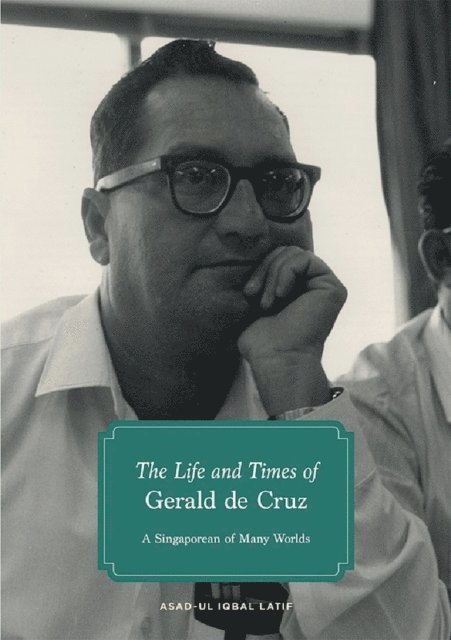
Gerald de Cruz's life overlapped many of the spheres of Singapore's history after World War II. As a Eurasian, a nationalist, a communist and then a democratic socialist, as a journalist and a writer, he represents the insurgent energies of a truculent time when a nascent nation was seeking the basis of statehood. His commitment to progressive ideas and movements reveals a man of integrity in search of himself in a better world. This book seeks to portray his place in time, particularly for younger Singaporeans who did not live in an era that has inaugurated the history of independent Singapore.
1 133 kr
Tillfälligt slut
Since his undergraduate days in Cambridge, George Yeo has spoken and written much in and out of government. Many remember the things which he said or wrote years ago. This book is a compilation of some of his best speeches and writings which were selected by Asad Latif and Lee Huay Leng in consultation with him.The book has a rather unusual title because there are many aspects to George Yeo which makes him difficult to classify. As a student leader, he was radical but conciliatory. In the Singapore Armed Forces, he was atypical, moving from the Army to the Air Force before becoming Director of Joint Operations and Planning. In politics, he is fondly remembered by artists, journalists, doctors, businessmen and foreign diplomats, and by his colleagues and constituents. His own staff said he had a curious mind. They complained that he rarely used the drafts which they had prepared for him.George Yeo describes himself as a Taoist even though he is a Roman Catholic and is now on the Papal staff. Buddhists are surprised he championed the revival of Nalanda University as an international project.He remains close to Singaporeans of different races and religions even though he has a deep sense of his own ancestral roots and religion. In politics, he has been described both as a liberal and a conservative. In his Parliamentary maiden speech, he spoke of the importance of democracy but has repeated many times that democracy is only a means and not an end in itself. He has a deep interest in history which partly explains his seeing the re-emergence of China and India earlier than most others.The bonsai and the banyan are metaphors he uses for Singapore. Singapore is a city-state and must never have an inflated view of itself. The bonsai describes Singapore modestly, but he adds that the bonsai can be intensely interesting and valuable. The banyan provides shade and we are grateful for it, but too much makes us weak. As for the Tao, that perhaps is what gives unity to his many interests.