Ascensión Mazuela-Anguita – författare
Visar alla böcker från författaren Ascensión Mazuela-Anguita. Handla med fri frakt och snabb leverans.
4 produkter
4 produkter
1 913 kr
Skickas inom 10-15 vardagar
This book presents the first study of music in convent life in a single Hispanic city, Barcelona, during the early modern era. Exploring how convents were involved in the musical networks operating in sixteenth-century Barcelona, it challenges the invisibility of women in music history and reveals the intrinsic role played by nuns and lay women in the city’s urban musical culture.Drawing on a wide range of archival sources, this innovative study offers a cross-disciplinary approach that not only reveals details of the rich musical life in Barcelona’s nunneries, but shows how they took part in wider national and transnational networks of musical distribution, including religious, commercial, and social dimensions of music. The connections of Barcelona convents to networks for the dissemination of music in and outside the city provide a rich example of the close relationship between musical networks, urban society, and popular culture.Addressing how music was understood as a marker of identity, prestige, and social status and, above all, as a conduit between earth and heaven, this book provides new insights into how women shaped musical traditions in the urban context. It is essential reading for scholars of early modern history, musicology, history of religion, and gender studies, as well as all those with an interest in urban history and the city of Barcelona.The book is supported by additional digital appendices, which include:Records of inquiries into the lineage of Santa Maria de Jonqueres nunsDevelopment of the collections of choir books belonging to the convents of Santa Maria de Jonqueres and Sant Antoni i Santa Clara
600 kr
Skickas inom 10-15 vardagar
This book presents the first study of music in convent life in a single Hispanic city, Barcelona, during the early modern era. Exploring how convents were involved in the musical networks operating in sixteenth-century Barcelona, it challenges the invisibility of women in music history and reveals the intrinsic role played by nuns and lay women in the city’s urban musical culture.Drawing on a wide range of archival sources, this innovative study offers a cross-disciplinary approach that not only reveals details of the rich musical life in Barcelona’s nunneries, but shows how they took part in wider national and transnational networks of musical distribution, including religious, commercial, and social dimensions of music. The connections of Barcelona convents to networks for the dissemination of music in and outside the city provide a rich example of the close relationship between musical networks, urban society, and popular culture.Addressing how music was understood as a marker of identity, prestige, and social status and, above all, as a conduit between earth and heaven, this book provides new insights into how women shaped musical traditions in the urban context. It is essential reading for scholars of early modern history, musicology, history of religion, and gender studies, as well as all those with an interest in urban history and the city of Barcelona.The book is supported by additional digital appendices, which include:Records of inquiries into the lineage of Santa Maria de Jonqueres nunsDevelopment of the collections of choir books belonging to the convents of Santa Maria de Jonqueres and Sant Antoni i Santa Clara
Del 26 - Studies in Medieval and Renaissance Music
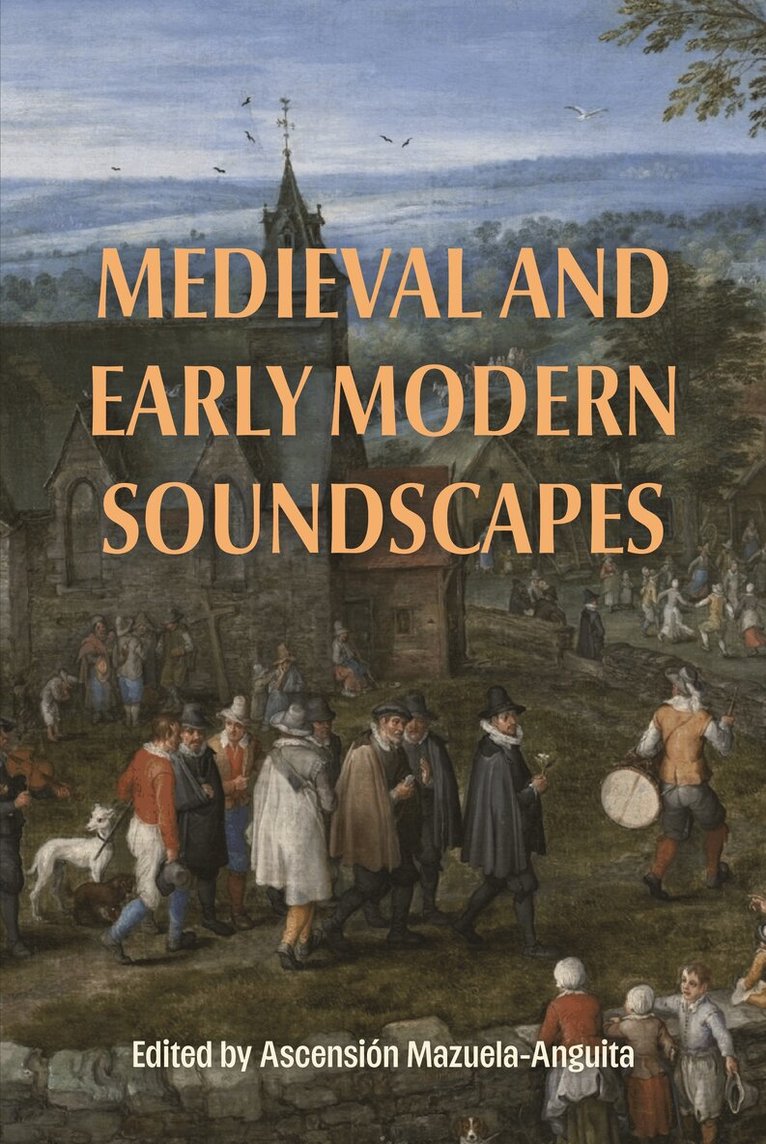
Medieval and Early Modern Soundscapes
Inbunden, Engelska, 2026
1 840 kr
Kommande
Sheds new light on the concept of "soundscapes", enriching our understanding of the functions of music and sound in medieval and early modern cultures.Scholarly interest in the idea of the "soundscape" has grown steadily in recent years, particularly in relation to the ways in which music and sound shaped communities, articulated social hierarchies, and marked significant events. However, while detailed studies have illuminated the sonic life of individual medieval and early modern cities, broader approaches to historical sensory experience have remained comparatively underexplored. This volume addresses that gap by asking how the sensory phenomena of the past might be recovered and understood. Moving beyond a primary focus on urban spaces and formal musical practice, it places sensory reality at its centre, across both urban and rural contexts, and examines the emotional and physical effects that sound and music exerted on participants and listeners alike.Organised into three thematic sections - sacred soundscapes; sound, identity, and belonging; and processional soundscapes - this book reconsiders the concept of the "soundscape" across the countries of medieval western Europe. It explores rural environments and liturgical atmospheres, sounds during processions and rituals, the sensory dimensions of pilgrimages and sea journeys, and the relationship between sound and collective identity. Drawing on previously unexamined archival sources, it brings medieval and early modern acoustic worlds vividly to life, highlighting diverse musical practices and forms of musicking across a variety of settings, from bell-ringing in medieval Avignon to the progresses of Henry VIII of England.This volume is open access with funding provided by the Universidad de Granada and the European Research Council ERC-2021-ADG no.101054069.
Del 26 - Studies in Medieval and Renaissance Music
Medieval and Early Modern Soundscapes
Häftad, Engelska, 2026
423 kr
Kommande
Sheds new light on the concept of "soundscapes", enriching our understanding of the functions of music and sound in medieval and early modern cultures.Scholarly interest in the idea of the "soundscape" has grown steadily in recent years, particularly in relation to the ways in which music and sound shaped communities, articulated social hierarchies, and marked significant events. However, while detailed studies have illuminated the sonic life of individual medieval and early modern cities, broader approaches to historical sensory experience have remained comparatively underexplored. This volume addresses that gap by asking how the sensory phenomena of the past might be recovered and understood. Moving beyond a primary focus on urban spaces and formal musical practice, it places sensory reality at its centre, across both urban and rural contexts, and examines the emotional and physical effects that sound and music exerted on participants and listeners alike.Organised into three thematic sections - sacred soundscapes; sound, identity, and belonging; and processional soundscapes - this book reconsiders the concept of the "soundscape" across the countries of medieval western Europe. It explores rural environments and liturgical atmospheres, sounds during processions and rituals, the sensory dimensions of pilgrimages and sea journeys, and the relationship between sound and collective identity. Drawing on previously unexamined archival sources, it brings medieval and early modern acoustic worlds vividly to life, highlighting diverse musical practices and forms of musicking across a variety of settings, from bell-ringing in medieval Avignon to the progresses of Henry VIII of England.This volume is open access with funding provided by the Universidad de Granada and the European Research Council ERC-2021-ADG no.101054069.