Ashley Hess – författare
Visar alla böcker från författaren Ashley Hess. Handla med fri frakt och snabb leverans.
8 produkter
8 produkter
E-bok
Engelska, 2013881 kr
Läs direkt efter köp
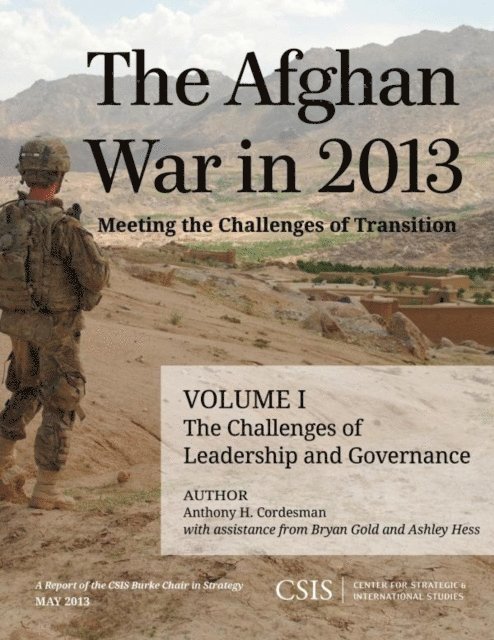
After more than a decade of fighting in Afghanistan, the United States and its allies are set to transfer security responsibilities to Afghan forces in 2014. This transition poses many challenges, and much will depend on the future of Afghan politics, governance, corruption, development, security, and economics. How the United States manages the transition is vital for any hopes of creating a secure Afghanistan, as well as preventing the reemergence of the Taliban and other terrorist groups. The Afghan War in 2013 honestly assesses the benefits, costs, and risks involved in transition. It is essential reading for an in-depth understanding of the complex forces and intricacies of the United States’ role in Afghanistan and the difficulties involved in creating a stable Afghanistan in 2014 and beyond. Afghanistan is still at war and will probably be at war long after 2014. At the same time, the coming cuts in the International Security Assistance Force (ISAF) and cuts in military and civil aid, along with the country’s fractious politics and insecurity, will interact with a wide range of additional factors that threaten to derail the transition. These factors, examined in this three-volume study, highlight the need to make the internal political, governmental, economic, and security dimensions of the transition as effective as possible. This will require a new degree of realism about what the Afghans can and cannot accomplish, about the best approaches to shaping the Afghan National Security Forces (ANSF), and the need for better planned and managed outside aid.
E-bok
Engelska, 2013944 kr
Läs direkt efter köp
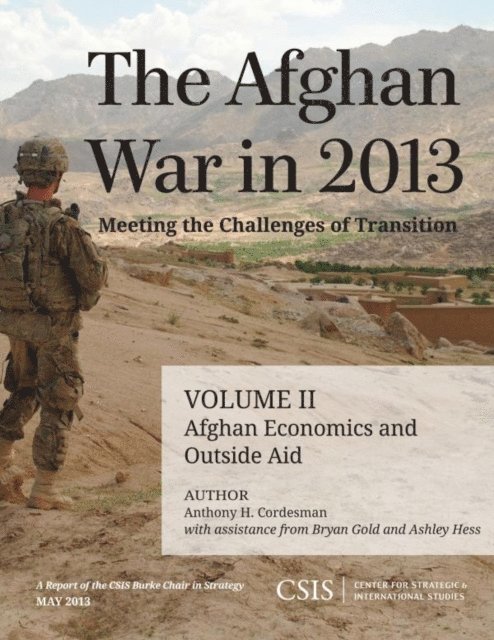
After more than a decade of fighting in Afghanistan, the United States and its allies are set to transfer security responsibilities to Afghan forces in 2014. This transition poses many challenges, and much will depend on the future of Afghan politics, governance, corruption, development, security, and economics. How the United States manages the transition is vital for any hopes of creating a secure Afghanistan, as well as preventing the reemergence of the Taliban and other terrorist groups. The Afghan War in 2013 honestly assesses the benefits, costs, and risks involved in transition. It is essential reading for an in-depth understanding of the complex forces and intricacies of the United States’ role in Afghanistan and the difficulties involved in creating a stable Afghanistan in 2014 and beyond. Afghanistan is still at war and will probably be at war long after 2014. At the same time, the coming cuts in the International Security Assistance Force (ISAF) and cuts in military and civil aid, along with the country’s fractious politics and insecurity, will interact with a wide range of additional factors that threaten to derail the transition. These factors, examined in this three-volume study, highlight the need to make the internal political, governmental, economic, and security dimensions of the transition as effective as possible. This will require a new degree of realism about what the Afghans can and cannot accomplish, about the best approaches to shaping the Afghan National Security Forces (ANSF), and the need for better planned and managed outside aid.
E-bok
Engelska, 2013944 kr
Läs direkt efter köp
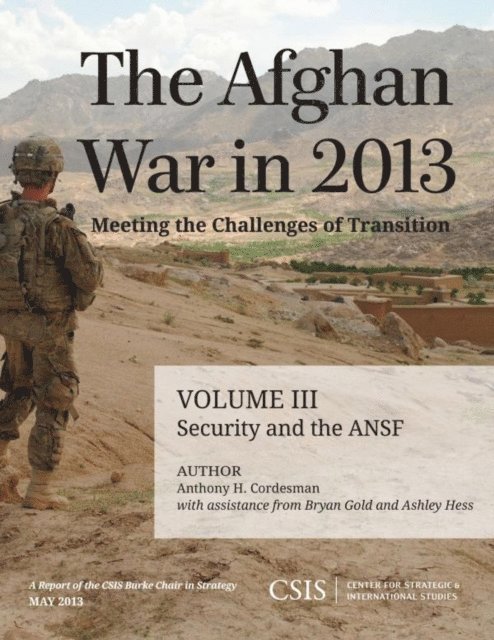
After more than a decade of fighting in Afghanistan, the United States and its allies are set to transfer security responsibilities to Afghan forces in 2014. This transition poses many challenges, and much will depend on the future of Afghan politics, governance, corruption, development, security, and economics. How the United States manages the transition is vital for any hopes of creating a secure Afghanistan, as well as preventing the reemergence of the Taliban and other terrorist groups. The Afghan War in 2013 honestly assesses the benefits, costs, and risks involved in transition. It is essential reading for an in-depth understanding of the complex forces and intricacies of the United States’ role in Afghanistan and the difficulties involved in creating a stable Afghanistan in 2014 and beyond. Afghanistan is still at war and will probably be at war long after 2014. At the same time, the coming cuts in the International Security Assistance Force (ISAF) and cuts in military and civil aid, along with the country’s fractious politics and insecurity, will interact with a wide range of additional factors that threaten to derail the transition. These factors, examined in this three-volume study, highlight the need to make the internal political, governmental, economic, and security dimensions of the transition as effective as possible. This will require a new degree of realism about what the Afghans can and cannot accomplish, about the best approaches to shaping the Afghan National Security Forces (ANSF), and the need for better planned and managed outside aid.
E-bok
Engelska, 20131 075 kr
Läs direkt efter köp
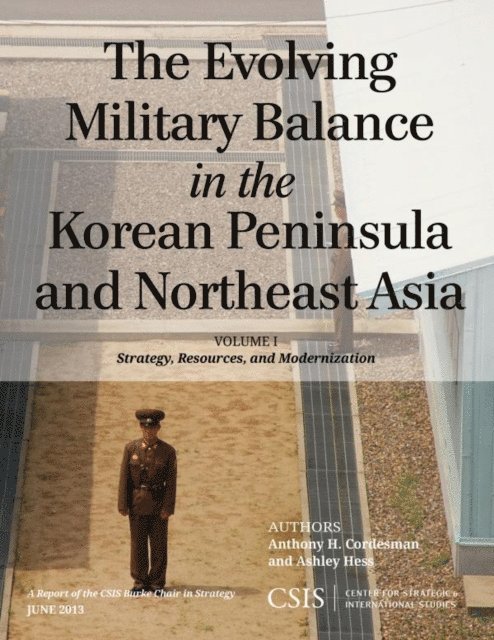
The Evolving Military Balance in the Korean Peninsula and Northeast Asia describes the strategy, force deployments, and the military balance in potential current and future scenarios involving the Democratic People’s Republic of Korea, Republic of Korea, People’s Republic of China, Japan, and the United States. The analysis in these volumes shows how tensions between the Koreas—and the potential involvement of the China, Japan, Russia, and the United States—create a nearly open-ended spectrum of possible conflicts. These range from posturing and threats (“wars of intimidation”) to a major conventional conflict on the Korean Peninsula to intervention by outside powers like the United States and China to the extreme of nuclear conflict. The analysis shows that the Korean balance is sharply affected by the uncertain mix of cooperation and competition between the United States and China. The U.S. rebalancing of its forces to Asia and the steady modernization of Chinese forces, in particular the growth of Chinese sea-air-missile capabilities, affect the balance in the Koreas and Northeast Asia. They also raise the possibility of far more intense conflicts that could extend far beyond the boundaries of the Koreas.
E-bok
Engelska, 20131 045 kr
Läs direkt efter köp
The Evolving Military Balance in the Korean Peninsula and Northeast Asia describes the strategy, force deployments, and the military balance in potential current and future scenarios involving the Democratic People’s Republic of Korea, Republic of Korea, People’s Republic of China, Japan, and the United States. The analysis in these volumes shows how tensions between the Koreas—and the potential involvement of the China, Japan, Russia, and the United States—create a nearly open-ended spectrum of possible conflicts. These range from posturing and threats (“wars of intimidation”) to a major conventional conflict on the Korean Peninsula to intervention by outside powers like the United States and China to the extreme of nuclear conflict. The analysis shows that the Korean balance is sharply affected by the uncertain mix of cooperation and competition between the United States and China. The U.S. rebalancing of its forces to Asia and the steady modernization of Chinese forces, in particular the growth of Chinese sea-air-missile capabilities, affect the balance in the Koreas and Northeast Asia. They also raise the possibility of far more intense conflicts that could extend far beyond the boundaries of the Koreas.
E-bok
Engelska, 2013911 kr
Läs direkt efter köp
The Evolving Military Balance in the Korean Peninsula and Northeast Asia describes the strategy, force deployments, and the military balance in potential current and future scenarios involving the Democratic People’s Republic of Korea, Republic of Korea, People’s Republic of China, Japan, and the United States. The analysis in these volumes shows how tensions between the Koreas—and the potential involvement of the China, Japan, Russia, and the United States—create a nearly open-ended spectrum of possible conflicts. These range from posturing and threats (“wars of intimidation”) to a major conventional conflict on the Korean Peninsula to intervention by outside powers like the United States and China to the extreme of nuclear conflict. The analysis shows that the Korean balance is sharply affected by the uncertain mix of cooperation and competition between the United States and China. The U.S. rebalancing of its forces to Asia and the steady modernization of Chinese forces, in particular the growth of Chinese sea-air-missile capabilities, affect the balance in the Koreas and Northeast Asia. They also raise the possibility of far more intense conflicts that could extend far beyond the boundaries of the Koreas.
Häftad, Engelska, 2013
1 118 kr
Skickas inom 10-15 vardagar
China’s military development has become a key focus of US security policy as well as that of virtually all Asia-Pacific states. This report from the CSIS Burke Chair in Strategy examines trends in Chinese strategy, military spending, and military forces based on Chinese defense white papers and other official Chinese sources; US reporting by the Department of Defense and other defense agencies; and other government sources, including Japanese and Korean defense white papers and the International Monetary Fund. The analysis also draws on the work of experts outside of government, various research centers, and nongovernmental organizations.
E-bok
Engelska, 20131 211 kr
Läs direkt efter köp
China’s military development has become a key focus of US security policy as well as that of virtually all Asia-Pacific states. This report from the CSIS Burke Chair in Strategy examines trends in Chinese strategy, military spending, and military forces based on Chinese defense white papers and other official Chinese sources; US reporting by the Department of Defense and other defense agencies; and other government sources, including Japanese and Korean defense white papers and the International Monetary Fund. The analysis also draws on the work of experts outside of government, various research centers, and nongovernmental organizations.