Bryan Gold – författare
Visar alla böcker från författaren Bryan Gold. Handla med fri frakt och snabb leverans.
9 produkter
9 produkter
E-bok
Engelska, 2013851 kr
Läs direkt efter köp
After more than a decade of fighting in Afghanistan, the United States and its allies are set to transfer security responsibilities to Afghan forces in 2014. This transition poses many challenges, and much will depend on the future of Afghan politics, governance, corruption, development, security, and economics. How the United States manages the transition is vital for any hopes of creating a secure Afghanistan, as well as preventing the reemergence of the Taliban and other terrorist groups. The Afghan War in 2013 honestly assesses the benefits, costs, and risks involved in transition. It is essential reading for an in-depth understanding of the complex forces and intricacies of the United States’ role in Afghanistan and the difficulties involved in creating a stable Afghanistan in 2014 and beyond. Afghanistan is still at war and will probably be at war long after 2014. At the same time, the coming cuts in the International Security Assistance Force (ISAF) and cuts in military and civil aid, along with the country’s fractious politics and insecurity, will interact with a wide range of additional factors that threaten to derail the transition. These factors, examined in this three-volume study, highlight the need to make the internal political, governmental, economic, and security dimensions of the transition as effective as possible. This will require a new degree of realism about what the Afghans can and cannot accomplish, about the best approaches to shaping the Afghan National Security Forces (ANSF), and the need for better planned and managed outside aid.
E-bok
Engelska, 2013911 kr
Läs direkt efter köp
After more than a decade of fighting in Afghanistan, the United States and its allies are set to transfer security responsibilities to Afghan forces in 2014. This transition poses many challenges, and much will depend on the future of Afghan politics, governance, corruption, development, security, and economics. How the United States manages the transition is vital for any hopes of creating a secure Afghanistan, as well as preventing the reemergence of the Taliban and other terrorist groups. The Afghan War in 2013 honestly assesses the benefits, costs, and risks involved in transition. It is essential reading for an in-depth understanding of the complex forces and intricacies of the United States’ role in Afghanistan and the difficulties involved in creating a stable Afghanistan in 2014 and beyond. Afghanistan is still at war and will probably be at war long after 2014. At the same time, the coming cuts in the International Security Assistance Force (ISAF) and cuts in military and civil aid, along with the country’s fractious politics and insecurity, will interact with a wide range of additional factors that threaten to derail the transition. These factors, examined in this three-volume study, highlight the need to make the internal political, governmental, economic, and security dimensions of the transition as effective as possible. This will require a new degree of realism about what the Afghans can and cannot accomplish, about the best approaches to shaping the Afghan National Security Forces (ANSF), and the need for better planned and managed outside aid.
E-bok
Engelska, 2013911 kr
Läs direkt efter köp
After more than a decade of fighting in Afghanistan, the United States and its allies are set to transfer security responsibilities to Afghan forces in 2014. This transition poses many challenges, and much will depend on the future of Afghan politics, governance, corruption, development, security, and economics. How the United States manages the transition is vital for any hopes of creating a secure Afghanistan, as well as preventing the reemergence of the Taliban and other terrorist groups. The Afghan War in 2013 honestly assesses the benefits, costs, and risks involved in transition. It is essential reading for an in-depth understanding of the complex forces and intricacies of the United States’ role in Afghanistan and the difficulties involved in creating a stable Afghanistan in 2014 and beyond. Afghanistan is still at war and will probably be at war long after 2014. At the same time, the coming cuts in the International Security Assistance Force (ISAF) and cuts in military and civil aid, along with the country’s fractious politics and insecurity, will interact with a wide range of additional factors that threaten to derail the transition. These factors, examined in this three-volume study, highlight the need to make the internal political, governmental, economic, and security dimensions of the transition as effective as possible. This will require a new degree of realism about what the Afghans can and cannot accomplish, about the best approaches to shaping the Afghan National Security Forces (ANSF), and the need for better planned and managed outside aid.
Häftad, Engelska, 2014
903 kr
Skickas inom 10-15 vardagar
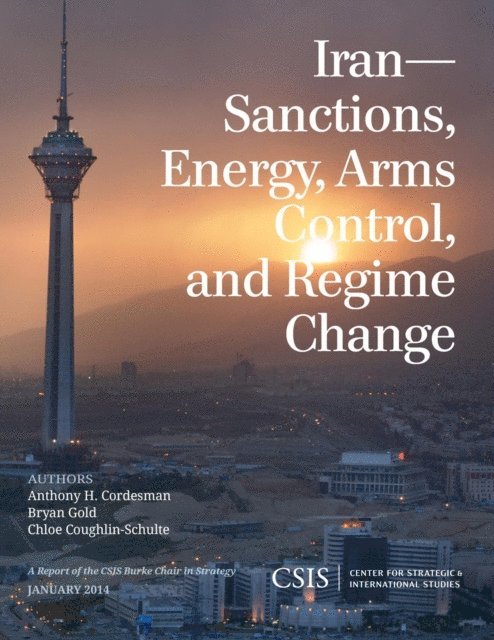
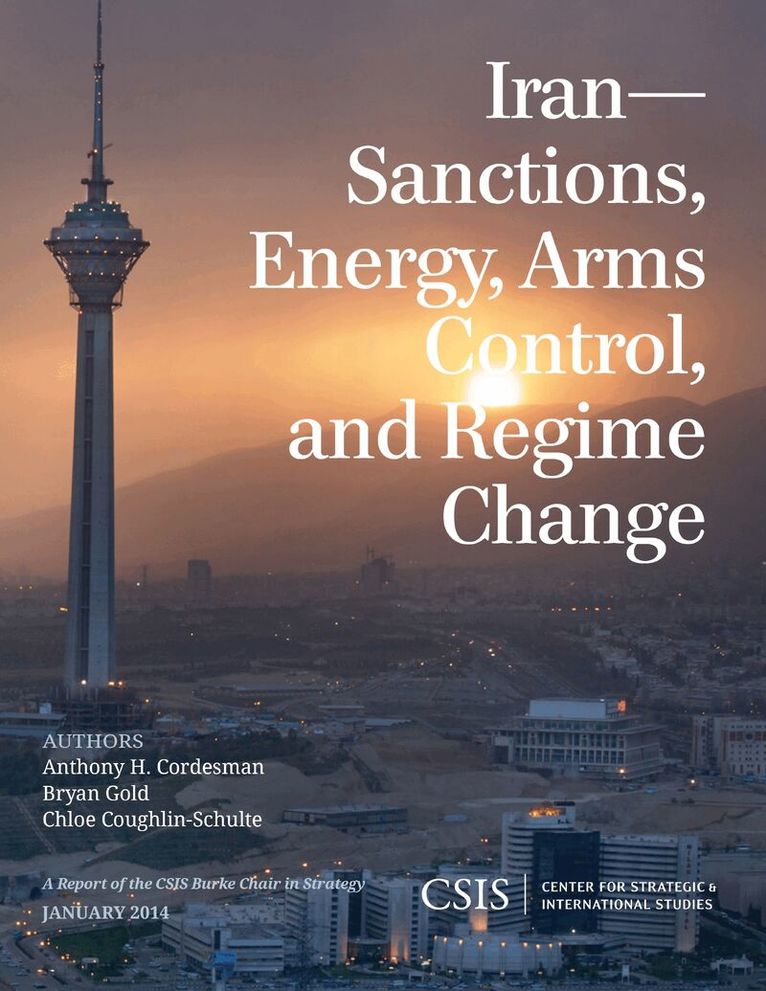
This report analyzes four key aspects of US and Iranian strategic competition--sanctions, energy, arms control, and regime change. Its primary focus is on the ways in which the sanctions applied to Iran have changed US and Iranian competition since the fall of 2011. This escalation has been spurred by the creation of a series of far stronger US unilateral sanctions and the European Union’s imposition of equally strong sanctions, both of which affect Iran’s ability to export, its financial system, and its overall economy.
E-bok
Engelska, 2014978 kr
Läs direkt efter köp
This report analyzes four key aspects of US and Iranian strategic competition--sanctions, energy, arms control, and regime change. Its primary focus is on the ways in which the sanctions applied to Iran have changed US and Iranian competition since the fall of 2011. This escalation has been spurred by the creation of a series of far stronger US unilateral sanctions and the European Union’s imposition of equally strong sanctions, both of which affect Iran’s ability to export, its financial system, and its overall economy.
Häftad, Engelska, 2014
903 kr
Skickas inom 10-15 vardagar
The United States faces major challenges in dealing with Iran, the threat of terrorism, and the tide of political instability in the Arabian Peninsula. The presence of some of the world’s largest reserves of oil and natural gas, vital shipping lanes, and Shia populations throughout the region have made the peninsula the focal point of US and Iranian strategic competition. Moreover, large youth populations, high unemployment rates, and political systems with highly centralized power bases have posed other economic, political, and security challenges that the Gulf states must address and that the United States must take into consideration when forming strategy and policy.
E-bok
Engelska, 2014949 kr
Läs direkt efter köp
The United States faces major challenges in dealing with Iran, the threat of terrorism, and the tide of political instability in the Arabian Peninsula. The presence of some of the world’s largest reserves of oil and natural gas, vital shipping lanes, and Shia populations throughout the region have made the peninsula the focal point of US and Iranian strategic competition. Moreover, large youth populations, high unemployment rates, and political systems with highly centralized power bases have posed other economic, political, and security challenges that the Gulf states must address and that the United States must take into consideration when forming strategy and policy.
Häftad, Engelska, 2014
834 kr
Skickas inom 10-15 vardagar
The United States faces major challenges in dealing with Iran, the threat of terrorism, and the tide of political instability in the Arabian Peninsula. The presence of some of the world’s largest reserves of oil and natural gas, vital shipping lanes, and Shia populations throughout the region have made the peninsula the focal point of US and Iranian strategic competition. Moreover, large youth populations, high unemployment rates, and political systems with highly centralized power bases have posed other economic, political, and security challenges that the Gulf states must address and that the United States must take into consideration when forming strategy and policy.
E-bok
Engelska, 2014876 kr
Läs direkt efter köp
The United States faces major challenges in dealing with Iran, the threat of terrorism, and the tide of political instability in the Arabian Peninsula. The presence of some of the world’s largest reserves of oil and natural gas, vital shipping lanes, and Shia populations throughout the region have made the peninsula the focal point of US and Iranian strategic competition. Moreover, large youth populations, high unemployment rates, and political systems with highly centralized power bases have posed other economic, political, and security challenges that the Gulf states must address and that the United States must take into consideration when forming strategy and policy.