Ashutosh Varshney - Böcker
Visar alla böcker från författaren Ashutosh Varshney. Handla med fri frakt och snabb leverans.
5 produkter
5 produkter
235 kr
Tillfälligt slut
351 kr
Skickas inom 7-10 vardagar
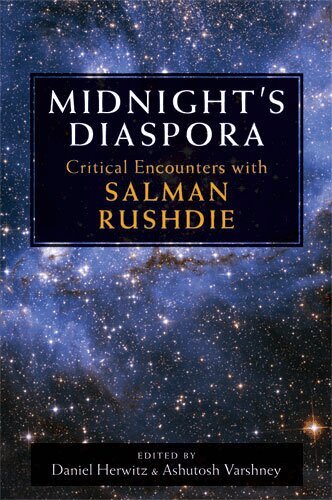
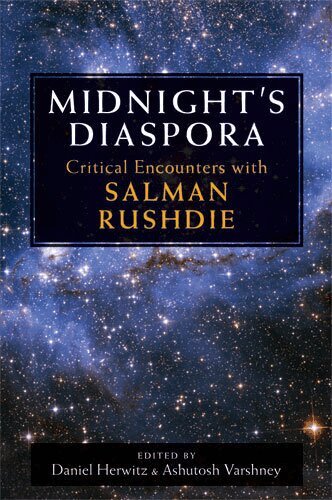
Almost twenty years after the Ayatollah Khomeini declared a fatwa against him, Salman Rushdie remains the most controversial and perhaps the most famous living novelist. Far more than an acclaimed author, Rushdie is a global figure whose work is read and studied by a wide variety of constituencies, many of whom are not primarily concerned with its literary significance. This important collection of essays and interviews brings together a distinguished group of critics and commentators, including Rushdie himself, to explore the political and cultural contexts of Rushdie's novels. While each of the essays offers a distinct and often highly original take on Rushdie and his work, the two substantial interviews with Rushdie illuminate his thoughts on a series of literary and political subjects that he has for the most part been reluctant to discuss in public. This combination of fresh perspectives and historical and political context will appeal to a wide array of readers interested not only in Rushdie's own work but also in the many collateral cultural and political issues it raises. Daniel Herwitz is Director, Institute for the Humanities; Professor of History of Art, Professor of Philosophy and Professor of Comparative Literature, College of Literature, Science, and the Arts; and Professor of Art and Design, School of Art and Design, at the University of Michigan. Ashutosh Varshney is Professor of Political Science at the Brown University. "The never-ending inventiveness of Salman Rushdie's mind and art makes this volume both a pleasure and a necessity. These distinguished scholars have done a fine job introducing Rushdie's work to a new generation of readers in a new century."---Homi K. Bhahba, Harvard University "This collection engages with the larger context of Rushdie's work to reflect on the urgent issues raised by Rushdie's novels and their afterlives. The essays are first rate, achieving accessibility without sacrificing rigor and depth and bringing a variety of disciplinary perspectives to offer a fresh understanding of Rushdie's writings. This is rare."---Gyan Prakash, Princeton University
1 223 kr
Skickas inom 7-10 vardagar
Almost twenty years after the Ayatollah Khomeini declared a fatwa against him, Salman Rushdie remains the most controversial and perhaps the most famous living novelist. Far more than an acclaimed author, Rushdie is a global figure whose work is read and studied by a wide variety of constituencies, many of whom are not primarily concerned with its literary significance. This important collection of essays and interviews brings together a distinguished group of critics and commentators, including Rushdie himself, to explore the political and cultural contexts of Rushdie's novels. While each of the essays offers a distinct and often highly original take on Rushdie and his work, the two substantial interviews with Rushdie illuminate his thoughts on a series of literary and political subjects that he has for the most part been reluctant to discuss in public. This combination of fresh perspectives and historical and political context will appeal to a wide array of readers interested not only in Rushdie's own work but also in the many collateral cultural and political issues it raises. Daniel Herwitz is Director, Institute for the Humanities; Professor of History of Art, Professor of Philosophy and Professor of Comparative Literature, College of Literature, Science, and the Arts; and Professor of Art and Design, School of Art and Design, at the University of Michigan. Ashutosh Varshney is Professor of Political Science at the Brown University. "The never-ending inventiveness of Salman Rushdie's mind and art makes this volume both a pleasure and a necessity. These distinguished scholars have done a fine job introducing Rushdie's work to a new generation of readers in a new century."---Homi K. Bhahba, Harvard University "This collection engages with the larger context of Rushdie's work to reflect on the urgent issues raised by Rushdie's novels and their afterlives. The essays are first rate, achieving accessibility without sacrificing rigor and depth and bringing a variety of disciplinary perspectives to offer a fresh understanding of Rushdie's writings. This is rare."---Gyan Prakash, Princeton University
309 kr
Skickas inom 7-10 vardagar
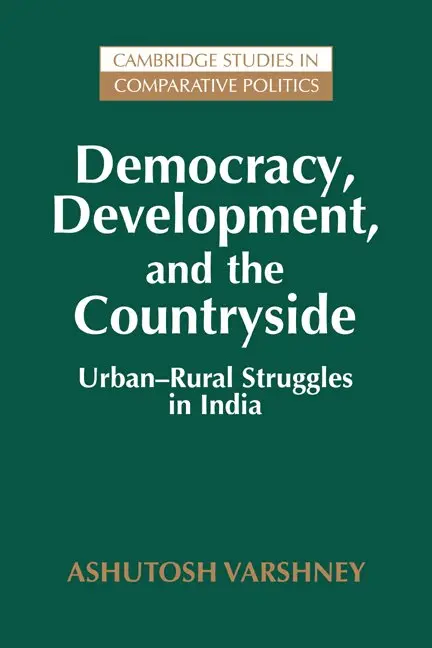
Several scholars have written about how authoritarian or democratic political systems affect industrialization in the developing countries. There is no literature, however, on whether democracy makes a difference to the power and well-being of the countryside. Using India as a case where the longest-surviving democracy of the developing world exists, this book investigates how the countryside uses the political system to advance its interests. It is first argued that India's countryside has become quite powerful in the political system, exerting remarkable pressure on economic policy. The countryside is typically weak in the early stages of development, becoming powerful when the size of the rural sector defies this historical trend. But an important constraint on rural power stems from the inability of economic interests to overpower the abiding, ascriptive identities, and until an economic construction of politics completely overpowers identities and non-economic interests, farmers' power, though greater than ever before, will remain self-limited.
2 705 kr
Skickas inom 10-15 vardagar
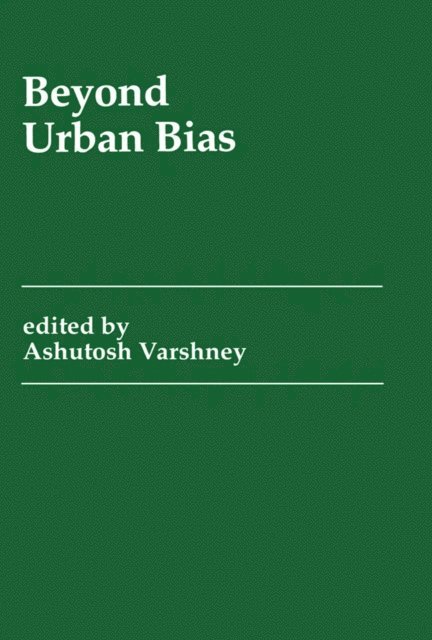
First Published in 1993. This title sets out to spark debate and learn from the urban bias theory. The author suggests that recent political economy research suggests that it is time to redefine the problem of urban bias. Viewed as a collective engagement with the urban bias theory, this volume presents the new research along with the responses of Bates and Lipton. These studies do not add up to an alternative theory of why the state behaves the way it does towards the countryside. They do, however, point to the factors that need careful attention in future research. These papers can be seen as building blocks for the construction of an alternative theory of 'the state and agriculture'.