Avital Ronell - Böcker
Visar alla böcker från författaren Avital Ronell. Handla med fri frakt och snabb leverans.
18 produkter
18 produkter
224 kr
Skickas inom 7-10 vardagar
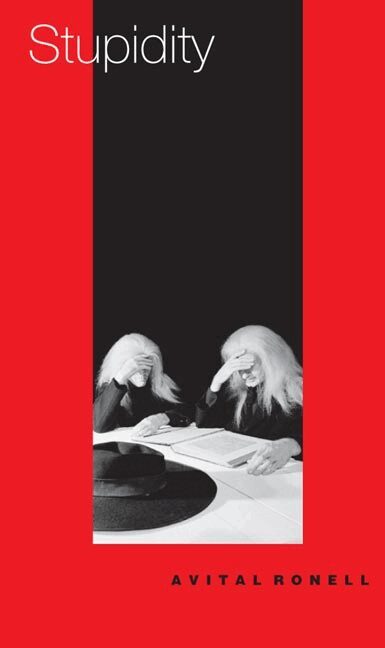
In Stupidity Avital Ronell explores the fading empire of cognition, modulating stupidity into idiocy, puerility, and the figure of the ridiculous philosopher instituted by Kant. Drawing on a range of writers including Dostoevsky, Schlegel, Musil, and Wordsworth, Stupidity investigates ignorance, dumbfounded-ness, and the limits of reason.
1 339 kr
Skickas inom 7-10 vardagar
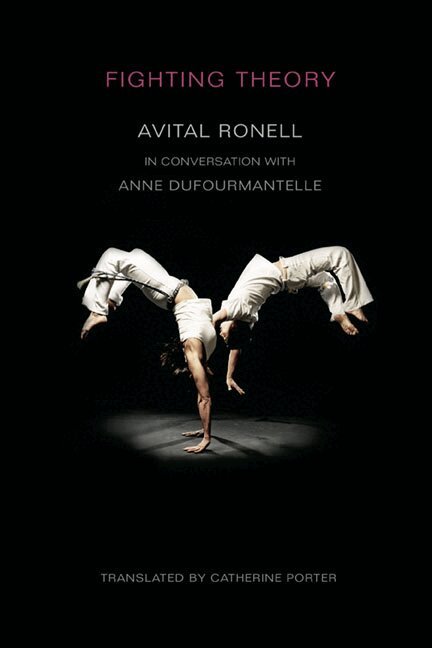
International interest in the work of Avital Ronell has expressed itself in reviews, articles, essays, and dissertations. For Fighting Theory, psychoanalyst and philosopher Anne Dufourmantelle conducted twelve interviews with Ronell, each focused on a key topic in one of Ronell's books or on a set of issues that run throughout her work.What do philosophy and literary studies have to learn from each other? How does Ronell place her work within gender studies? What does psychoanalysis have to contribute to contemporary thought? What propels one in our day to Nietzsche, Derrida, Nancy, Bataille, and other philosophical writers? How important are courage and revolt? Ronell's discussions of such issues are candid, thoughtful, and often personal, bringing together elements from several texts, illuminating hints about them, and providing her up-to-date reflections on what she had written earlier. Intense and often ironic, Fighting Theory is a poignant self-reflection of the worlds and walls against which Avital Ronell crashed.
1 339 kr
Skickas inom 7-10 vardagar
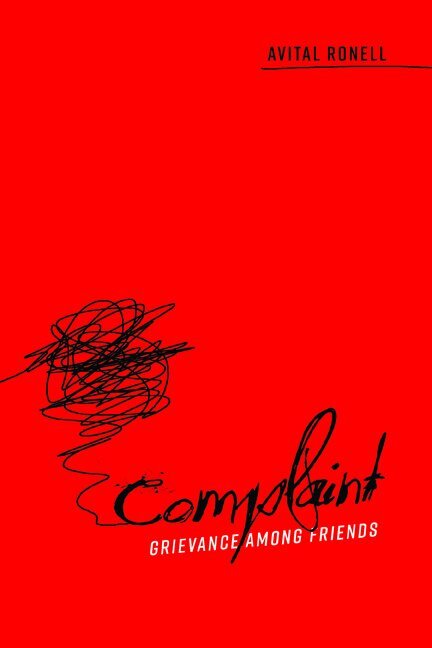
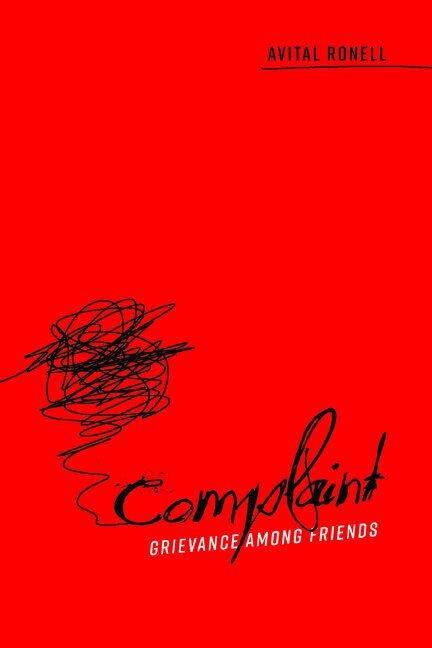
"It is not, nor it cannot come to good. But break, my heart, for I must hold my tongue." Thus spoke Hamlet, one of the great kvetchers of literature. Every day, gripers challenge our patience and compassion. Yet Pollyannas rile us up with their grotesque contentment and unfathomable rejection of protest. Avital Ronell considers how literature and philosophy treat bellyachers, wailers, and grumps—and the complaints they lavish on the rest of us. Combining her trademark jazzy panache with a fearless range of readings, Ronell opens a dialogue with readers that discusses thinkers with whom she has directly engaged. Beginning with Hamlet, and with a candid awareness of her own experiences, Ronell proceeds to show how complaining is aggravated, distracted, stifled, and transformed. She moves on to the exemplary complaints of Friedrich Nietzsche, Hannah Arendt, and Barbara Johnson and examines the complaint-riven history of deconstruction.Infused with the author's trademark wit, Complaint takes friends, colleagues, and all of us on a courageous philosophical journey.
240 kr
Skickas
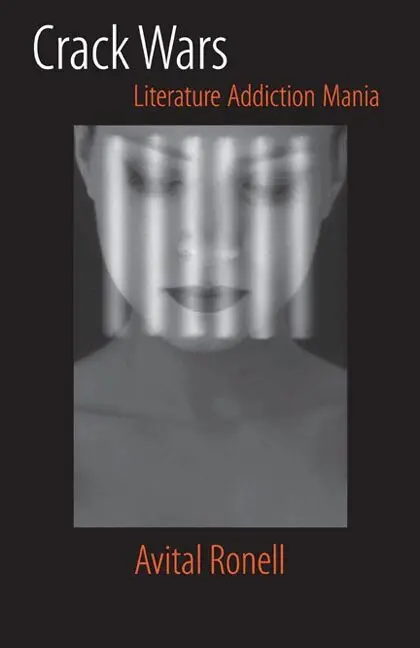
Avital Ronell asks why "there is no culture without drug culture." She deals with the usual drugs and alcohol (and their celebrities: Freud's cocaine, Baudelaire's hashish, the Victorians' laudanum), and moves beyond them to addictions that are culturally accepted--an insatiable appetite for romance novels, for instance, and romance itself. It is a commonplace of modern culture to presume that there is a subculture or counterculture deeply saturated with drugs, but such modern cultures need subcultures, and need drugs on every level. Culture defines itself, its classes, its power structures, and its economy in terms of how it allows and encourages drugs to circulate. If drugs are dangerous, that danger seems to increase their appeal for millions. If drugs are unnatural and addictive, gasoline is a drug. What is art but a kind of drug, and what is art criticism but a kind of criticism of drugs and drug-induced states? Gustave Flaubert's Madame Bovary takes up the problems of drugs and addiction in numerous ways, which Ronnell unpacks and presents as examples of the safe and unsafe. From Emma Bovary's romantic hallucinations to her suicide by arsenic, she moves through this realistic novel constantly reaching for the unreal. For Ronell, Emma Bovary represents the first addict, embodying a yearning that calls from the bottom of her humanity, and which it seems can only be satisfied by some sort of drug.
386 kr
Skickas inom 7-10 vardagar
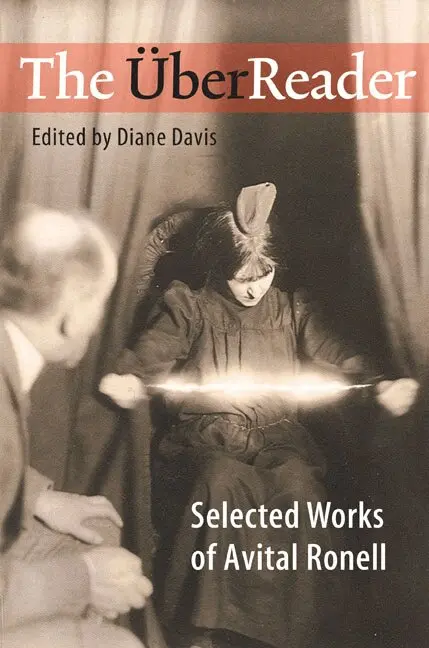
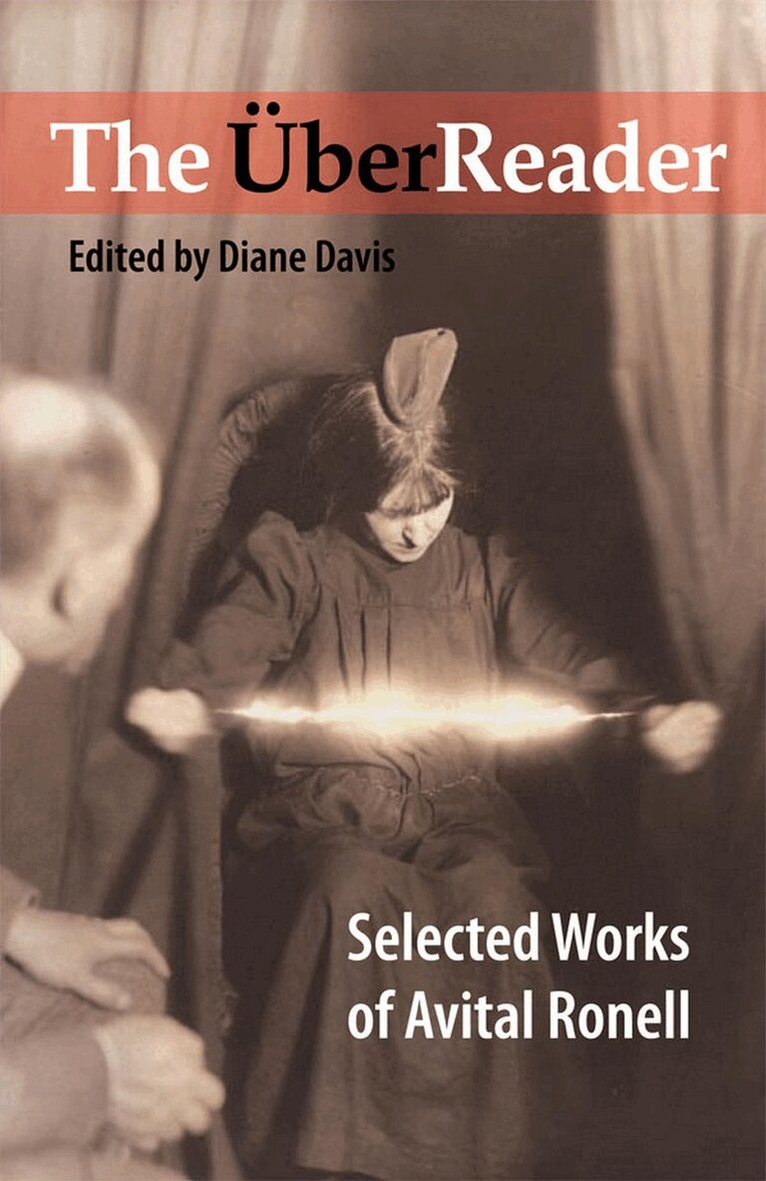
For twenty years Avital Ronell has stood at the forefront of the confrontation between literary study and European philosophy. She has tirelessly investigated the impact of technology on thinking and writing, with groundbreaking work on Heidegger, dependency and drug rhetoric, intelligence and artificial intelligence, and the obsession with testing. Admired for her insights and breadth of field, she has attracted a wide readership by writing with guts, candour, and wit. Coyly alluding to Nietzsche's "gay science," "The UberReader" presents a solid introduction to Avital Ronell's later oeuvre. It includes at least one selection from each of her books, two classic selections from a collection of her early essays (Finitude's Score), previously uncollected interviews and essays, and some of her most powerful published and unpublished talks. An introduction by Diane Davis surveys Ronell's career and the critical response to it thus far. With its combination of brevity and power, this Ronell "primer" will be immensely useful to scholars, students, and teachers throughout the humanities, but particularly to graduate and undergraduate courses in contemporary theory.
325 kr
Skickas inom 7-10 vardagar
Channeling Goethe with one of literary criticism
283 kr
Skickas inom 7-10 vardagar
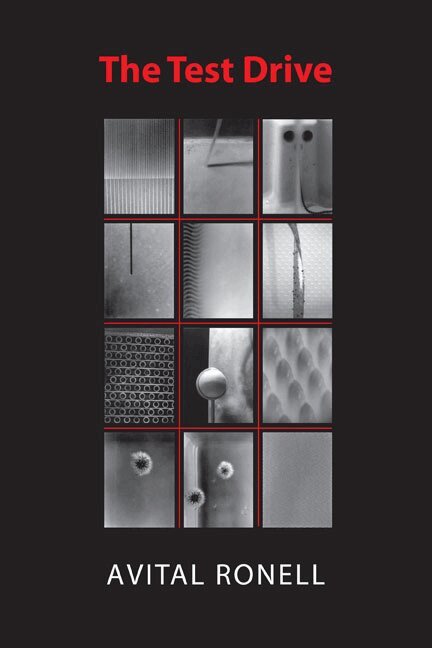
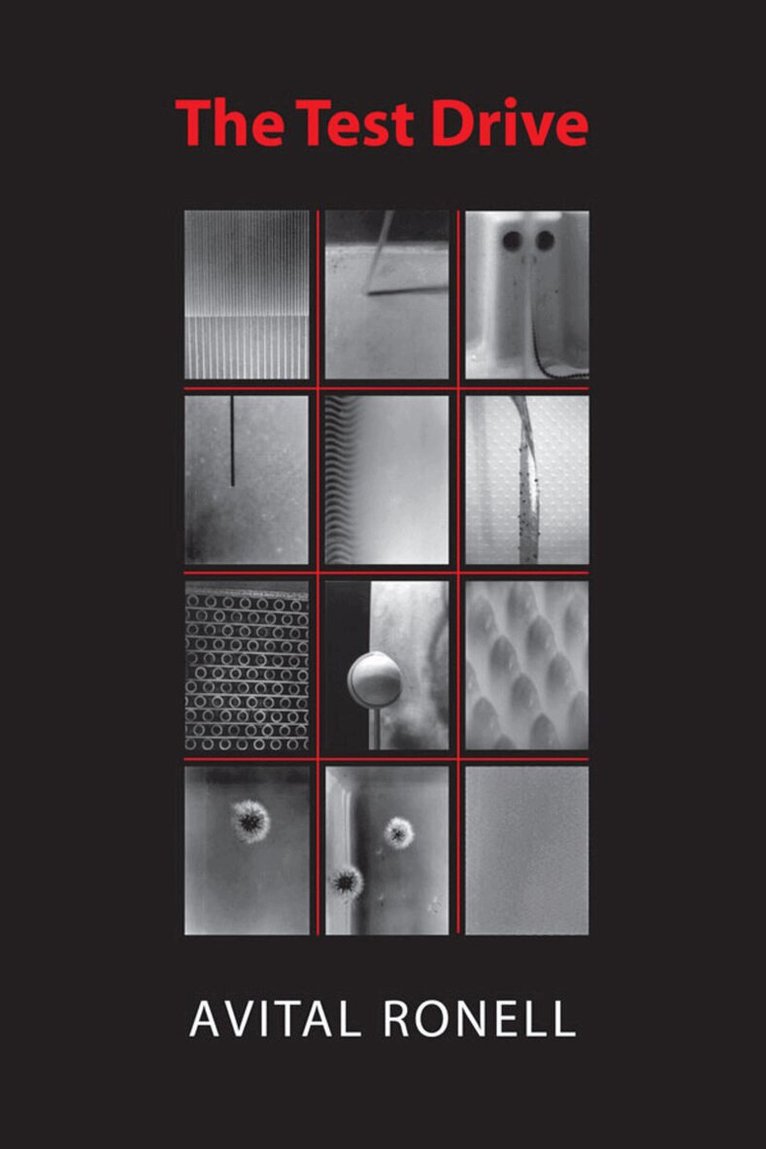
The Test Drive deals with the war perpetrated by highly determined reactionary forces on science and research. How does the government at once promote and prohibit scientific testing and undercut the importance of experimentation? To what extent is testing at the forefront of theoretical and practical concerns today? Addressed to those who are left stranded by speculative thinking and unhinged by cognitive discourse, The Test Drive points to a toxic residue of uninterrogated questions raised by Nietzsche, Husserl and Derrida. Ranging from the scientific probe to modalities of testing that include the limits of friendship or love, this work explores the crucial operations of an uncontestable legitimating machine. Avital Ronell offers a tour-de-force reading of legal, pharmaceutical, artistic, scientific, Zen, and historical grids that depend upon different types of testability, involving among other issues what it means to put oneself to the test.
325 kr
Skickas inom 7-10 vardagar
International interest in the work of Avital Ronell has expressed itself in reviews, articles, essays, and dissertations. For Fighting Theory, psychoanalyst and philosopher Anne Dufourmantelle conducted twelve interviews with Ronell, each focused on a key topic in one of Ronell's books or on a set of issues that run throughout her work.What do philosophy and literary studies have to learn from each other? How does Ronell place her work within gender studies? What does psychoanalysis have to contribute to contemporary thought? What propels one in our day to Nietzsche, Derrida, Nancy, Bataille, and other philosophical writers? How important are courage and revolt? Ronell's discussions of such issues are candid, thoughtful, and often personal, bringing together elements from several texts, illuminating hints about them, and providing her up-to-date reflections on what she had written earlier. Intense and often ironic, Fighting Theory is a poignant self-reflection of the worlds and walls against which Avital Ronell crashed.
325 kr
Skickas inom 7-10 vardagar
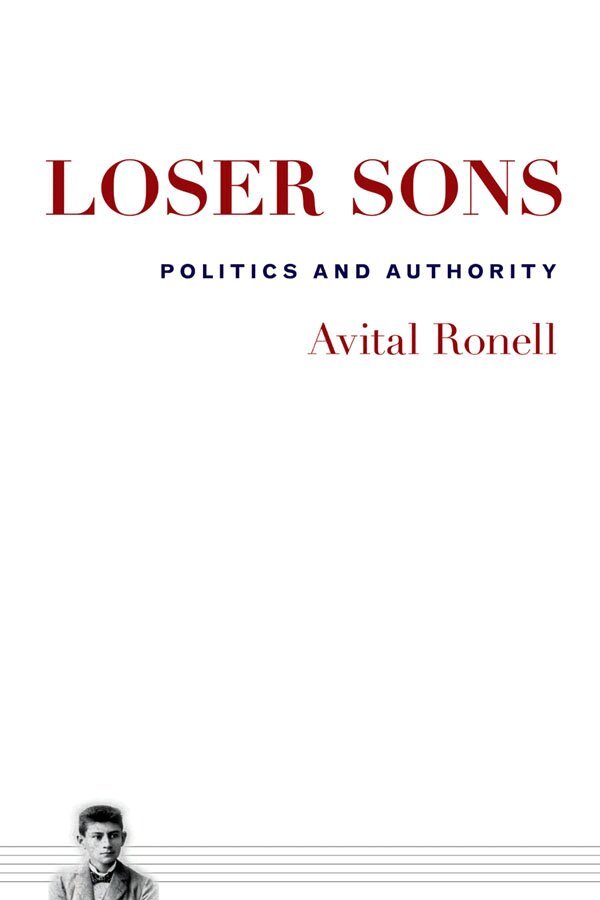
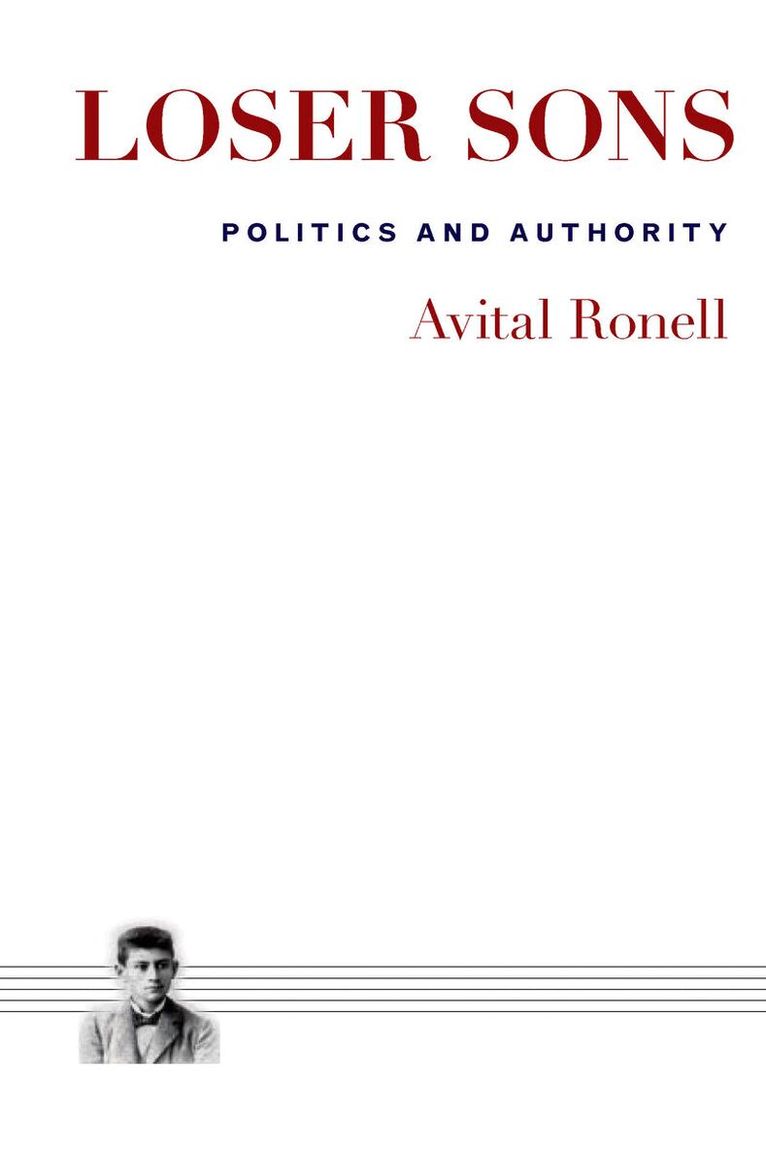
There are sons who grow up unhappily believing that no matter what they do, they cannot please their fathers. Often unable to shed their sense of lifelong failure, either they give up and suffer in a permanent sulk, or they try with all their might to prove they are worth something after all. These are the "loser sons," a group of historical men as varied as President George W. Bush, Osama bin Laden, and Mohammed Atta. Their names quickly illustrate that not only are their problems serious, but they also make serious problems for others, expanding to whole nations. When God is conceived and inculcated as an angry and impossible-to-please father, the problems can last for generations. In Loser Sons, Avital Ronell draws on current philosophy, literary history, and political events to confront the grim fact that divested boys become terrifying men. This would be old news if the problem didn't recur so often with such disastrous consequences. Looking beyond our current moment, she interrogates the problems of authority, paternal fantasy, and childhood as they have been explored and exemplified by Franz Kafka, Goethe's Faust, Benjamin Franklin, Jean-FranÇois Lyotard, Hannah Arendt, Alexandre KojÈve, and Immanuel Kant. Brilliantly weaving these threads into a polyvocal discourse, Ronell shows how, with their arrays of powerful symbols, ideologies of all sorts perpetuate the theme that while childhood represents innocence, adulthood entails responsible cruelty. The need for suffering--preferably somebody else's--has become a widespread assumption, not only justifying abuses of authority, but justifying authority itself. Shockingly honest, Loser Sons recognizes that focusing on the spectacular catastrophes of modernity might make writer and reader feel they're engaged in something important, while in fact what they are engaged in is still only spectacle. To understand the implications of her insights, Ronell addresses them directly to her readers, challenging them to think through their own notions of authority and their responses to it.
295 kr
Skickas inom 7-10 vardagar
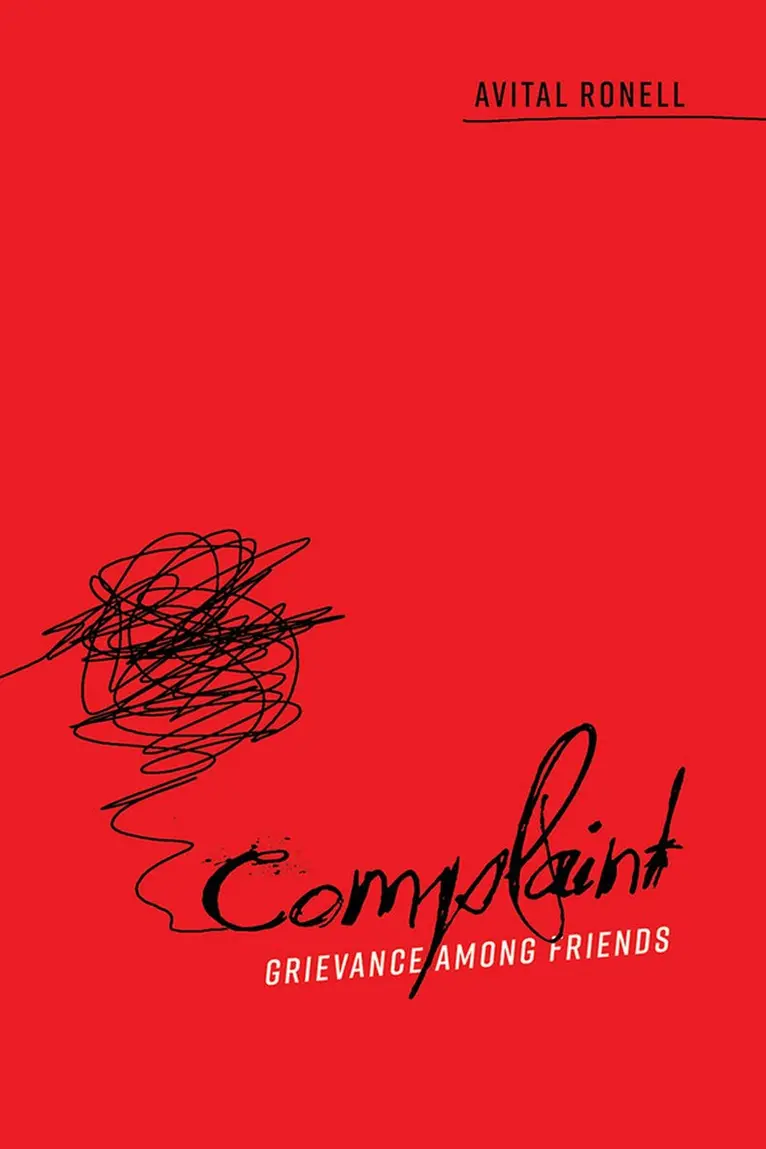
"It is not, nor it cannot come to good. But break, my heart, for I must hold my tongue." Thus spoke Hamlet, one of the great kvetchers of literature. Every day, gripers challenge our patience and compassion. Yet Pollyannas rile us up with their grotesque contentment and unfathomable rejection of protest. Avital Ronell considers how literature and philosophy treat bellyachers, wailers, and grumps—and the complaints they lavish on the rest of us. Combining her trademark jazzy panache with a fearless range of readings, Ronell opens a dialogue with readers that discusses thinkers with whom she has directly engaged. Beginning with Hamlet, and with a candid awareness of her own experiences, Ronell proceeds to show how complaining is aggravated, distracted, stifled, and transformed. She moves on to the exemplary complaints of Friedrich Nietzsche, Hannah Arendt, and Barbara Johnson and examines the complaint-riven history of deconstruction.Infused with the author's trademark wit, Complaint takes friends, colleagues, and all of us on a courageous philosophical journey.
522 kr
Skickas inom 7-10 vardagar
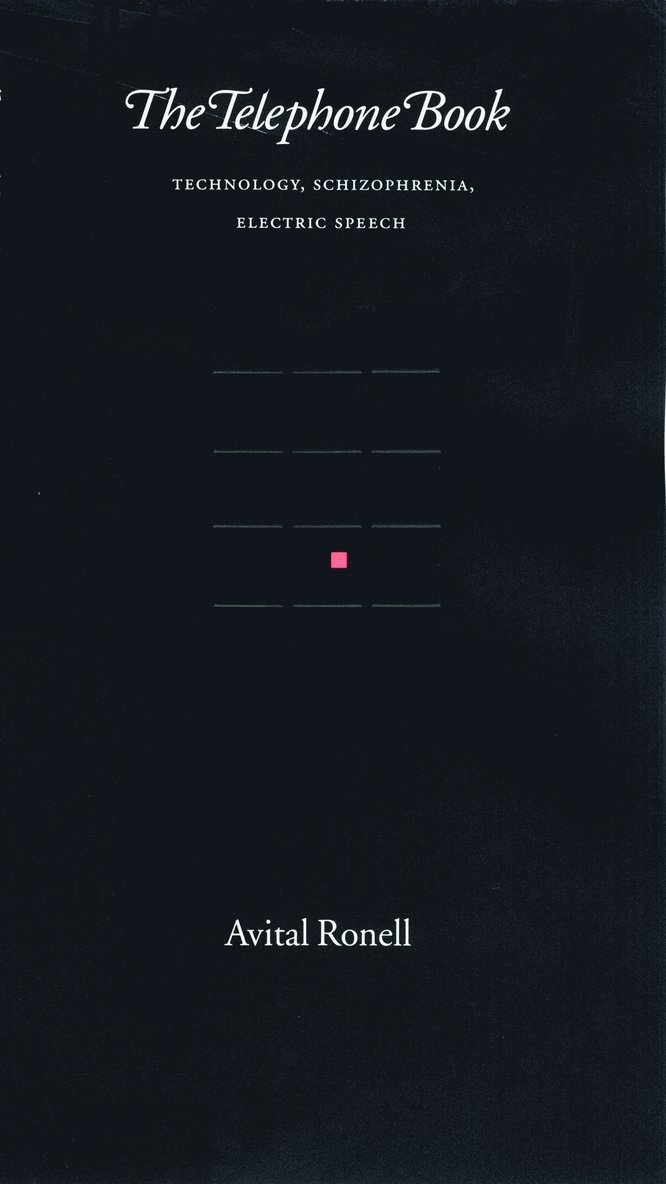
The telephone marks the place of an absence. Affiliated with discontinuity, alarm, and silence, it raises fundamental questions about the constitution of self and other, the stability of location, systems of transfer, and the destination of speech. Profoundly changing our concept of long-distance, it is constantly transmitting effects of real and evocative power. To the extent that it always relates us to the absent other, the telephone, and the massive switchboard attending it, plugs into a hermeneutics of mourning. The Telephone Book, itself organized by a "telephonic logic," fields calls from philosophy, history, literature, and psychoanalysis. It installs a switchboard that hooks up diverse types of knowledge while rerouting and jamming the codes of the disciplines in daring ways. Avital Ronell has done nothing less than consider the impact of the telephone on modern thought. Her highly original, multifaceted inquiry into the nature of communication in a technological age will excite everyone who listens in. The book begins by calling close attention to the importance of the telephone in Nazi organization and propaganda, with special regard to the philosophy of Martin Heidegger. In the Third Reich the telephone became a weapon, a means of state surveillance, "an open accomplice to lies." Heidegger, in Being and Time and elsewhere, elaborates on the significance of "the call." In a tour de force response, Ronell mobilizes the history and terminology of the telephone to explicate his difficult philosophy.Ronell also speaks of the appearance of the telephone in the literary works of Duras, Joyce, Kafka, Rilke, and Strindberg. She examines its role in psychoanalysis—Freud said that the unconscious is structured like a telephone, and Jung and R. D. Laing saw it as a powerful new body part. She traces its historical development from Bell's famous first call: "Watson, come here!" Thomas A. Watson, his assistant, who used to communicate with spirits, was eager to get the telephone to talk, and thus to link technology with phantoms and phantasms. In many ways a meditation on the technologically constituted state, The Telephone Book opens a new field, becoming the first political deconstruction of technology, state terrorism, and schizophrenia. And it offers a fresh reading of the American and European addiction to technology in which the telephone emerges as the crucial figure of this age.
299 kr
Skickas inom 10-15 vardagar
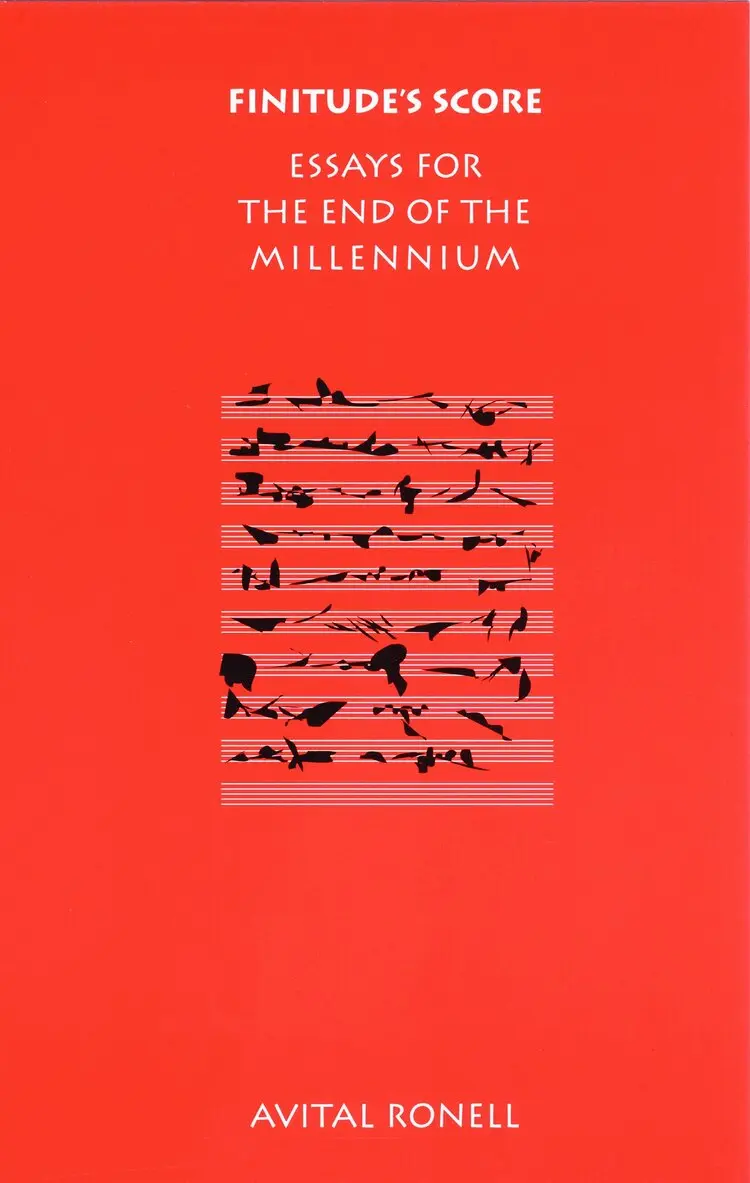
Suspending the distinction between headline news and high theory, Avital Ronell examines the diverse figures of finitude in our modernity: war, guerrilla video, trauma TV, AIDS, music, divorce, sadism, electronic tagging, rumor. Her essays address such questions as, How do rumors kill? How has video become the conscience of TV? How have the police come to be everywhere, even where they are not? Is peace possible? "[W]riting to the community of those who have no community—to those who have known the infiniteness of abandonment," her work explores the possibility, one possibility among many, that "this time we have gone too far": "One last word. It is possible that we have gone too far. This possibility has to be considered if we, as a species, as a history, are going to get anywhere at all."
617 kr
Kommande
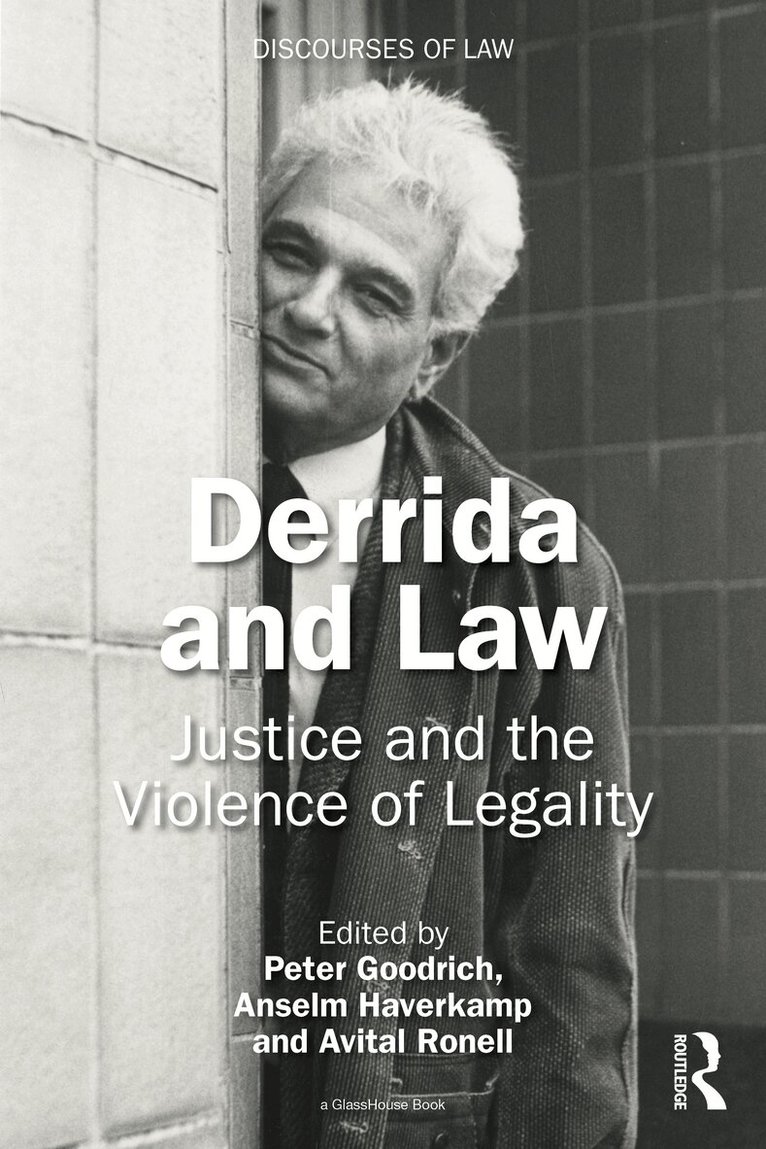
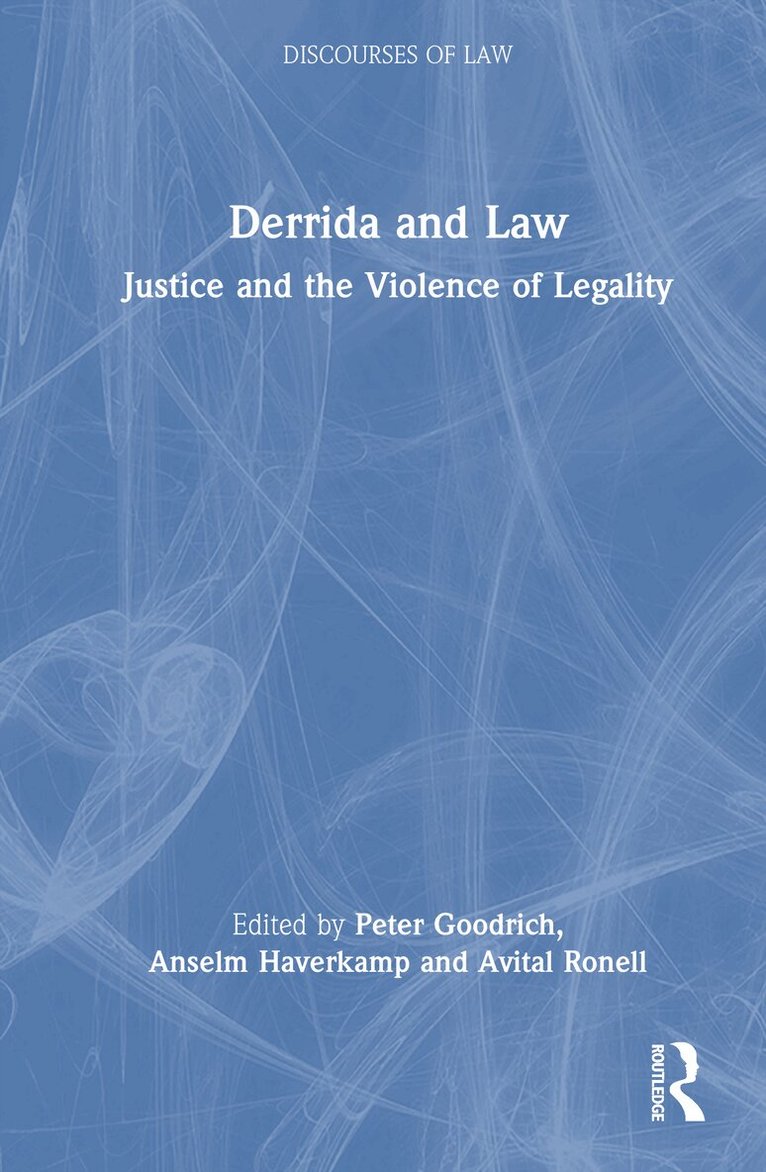
This book brings together an interdisciplinary range of scholars from across the spectrum of disciplines, generations, and geopolitical divides to revisit Jacques Derrida’s account of law, violence and justice.Deconstruction is variously a philosophy of aporia, a method of patience, a practice of paradoxes, an ontography of uncertainty, a hermeneutics of escalation that sought not only to challenge metaphysical complacencies but also to transgress boundaries, test limits, and above all to provoke, invoke and convoke thought. As a reworking of the philosophical tradition, its impact on law and legal theory became unavoidable in 1989 when Derrida, persuaded by the late Drucilla Cornell, came to address a law school audience on the mystical foundations of law. In a lecture – ‘Force of Law’ – that had global intellectual resonance, he startled the jurists by declaring that deconstruction ‘is’ justice. For some lawyers, it was a landmark thesis, a liberation. For others, it was deemed to be nihilist, a denial of all possibility of meaning, and so denounced as the equivalent of tearing up the constitution, or burning of the flag. Some twenty years after his death, in this book, renowned Derridean scholars revisit this legacy, as it offers a series of re-readings of ‘Force of Law’, and a series of new reflections on Derrida’s account of the violence of legality and the possibility of justice.This book will appeal to philosophers, legal theorists, and others with an interest in deconstruction and Continental theory.
2 258 kr
Kommande
This book brings together an interdisciplinary range of scholars from across the spectrum of disciplines, generations, and geopolitical divides to revisit Jacques Derrida’s account of law, violence and justice.Deconstruction is variously a philosophy of aporia, a method of patience, a practice of paradoxes, an ontography of uncertainty, a hermeneutics of escalation that sought not only to challenge metaphysical complacencies but also to transgress boundaries, test limits, and above all to provoke, invoke and convoke thought. As a reworking of the philosophical tradition, its impact on law and legal theory became unavoidable in 1989 when Derrida, persuaded by the late Drucilla Cornell, came to address a law school audience on the mystical foundations of law. In a lecture – ‘Force of Law’ – that had global intellectual resonance, he startled the jurists by declaring that deconstruction ‘is’ justice. For some lawyers, it was a landmark thesis, a liberation. For others, it was deemed to be nihilist, a denial of all possibility of meaning, and so denounced as the equivalent of tearing up the constitution, or burning of the flag. Some twenty years after his death, in this book, renowned Derridean scholars revisit this legacy, as it offers a series of re-readings of ‘Force of Law’, and a series of new reflections on Derrida’s account of the violence of legality and the possibility of justice.This book will appeal to philosophers, legal theorists, and others with an interest in deconstruction and Continental theory.
371 kr
Skickas inom 7-10 vardagar
What position does America occupy in the recent history of Western philosophy? At once the destination for a series of fantasies and the place from which a new relationship to thought originated, America incarnates a dark continent whose strangeness and singularity has driven thinkers outside of their own philosophical comfort zone – often forcing them to show anger, anxiety or desire towards what they considered a challenge or a threat. This book provides a mapping of this complex relationship between America and philosophy through a series of examples drawn from a wide range of authors, from Freud and Heidegger to Adorno, Derrida and many others. It also examines the way American thinkers themselves have imported, used and abused philosophical views coming from Europe, often transforming them into something other than what they were. Is then philosophy an anti-American discourse, or America an anti-philosophical country? Or is it, rather, that America provokes philosophy from a place where its own history affirms the impossibilities, paradoxes and contradictions of philosophy itself? At a time when the syntagm “America” has come to crystallize a certain understanding of the world order, interrogating the place that it occupies in our intellectual tradition is also a way to engage critically with the violence attached to it. “America” is a syntagm for violence, but this violence might very well be different than we thought.
98 kr
Skickas inom 7-10 vardagar
What position does America occupy in the recent history of Western philosophy? At once the destination for a series of fantasies and the place from which a new relationship to thought originated, America incarnates a dark continent whose strangeness and singularity has driven thinkers outside of their own philosophical comfort zone – often forcing them to show anger, anxiety or desire towards what they considered a challenge or a threat. This book provides a mapping of this complex relationship between America and philosophy through a series of examples drawn from a wide range of authors, from Freud and Heidegger to Adorno, Derrida and many others. It also examines the way American thinkers themselves have imported, used and abused philosophical views coming from Europe, often transforming them into something other than what they were. Is then philosophy an anti-American discourse, or America an anti-philosophical country? Or is it, rather, that America provokes philosophy from a place where its own history affirms the impossibilities, paradoxes and contradictions of philosophy itself? At a time when the syntagm “America” has come to crystallize a certain understanding of the world order, interrogating the place that it occupies in our intellectual tradition is also a way to engage critically with the violence attached to it. “America” is a syntagm for violence, but this violence might very well be different than we thought.
307 kr
Skickas inom 3-6 vardagar
Kathy Acker was one of the most original, subversive and influential writers of the late 20th century. Known variously, and notoriously, as a consummate postmodernist, feminist, post-punk and plagiarist, her oeuvreover a dozen novels and novellashas inspired a generation of writers and artists.Lust for Life is the definitive collection of essays on Acker's inimitable work, including Peter Wollen's elegiac primer, widely considered the best introduction to Acker, and Avital Ronell's erudite meditation on friendship and mourning. Together these essays by scholars and writers reveal Acker's profound and innovative project, and the ways in which fiction can penetrate the heart of political and cultural life.
527 kr
Skickas inom 3-6 vardagar