Avril Woodhead - Böcker
Visar alla böcker från författaren Avril Woodhead. Handla med fri frakt och snabb leverans.
2 produkter
2 produkter
551 kr
Skickas inom 10-15 vardagar
The analysis of intra-group correlations between LS and BW at representative intervals yields no consistent support for the hypothesis that lower BW is associated with longer LS. Indeed, among male Wistar rats and C57BL/6J and A/J mice followed since weaning on AL diets, the data suggested that relatively higher BW across the adult LS was generally associated with longer life. Even when the diet was restricted by EOD or RES regimens, this pattern of positive correlations between LS and BW persisted for the C57BL/6J and A/J strains when relative ages were analyzed. However, when BW at absolute ages were correlated with LS, support for the positive relationship between BW and LS was not as forthcoming. When AL groups were assessed beginning at later ages (> 10 months), the pattern of positive correlations was very evident for the Wistar rats--heavier rats tended to liver longer. This pattern was also evident among AL-fed C57BL/6J mice followed since 6 months, but was lost in the 10-month group in this strain. Among A/J mice on AL diets, the pattern became somewhat negative when followed at 6 and 10 months of age. However, among both C57BL/6J and A/J mice placed on EOD diets at 6 and 10 months of age, the pattern clearly tended toward the positive.
1 095 kr
Skickas inom 10-15 vardagar
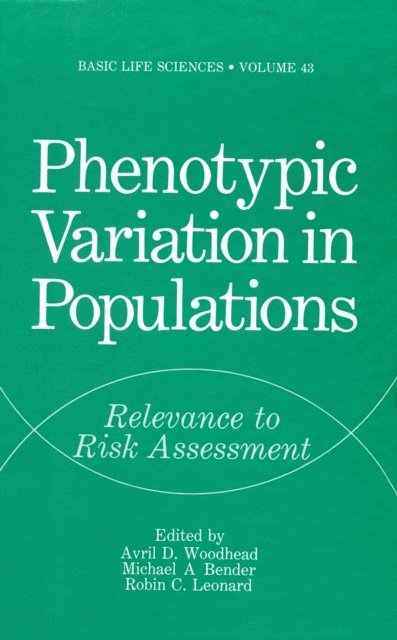
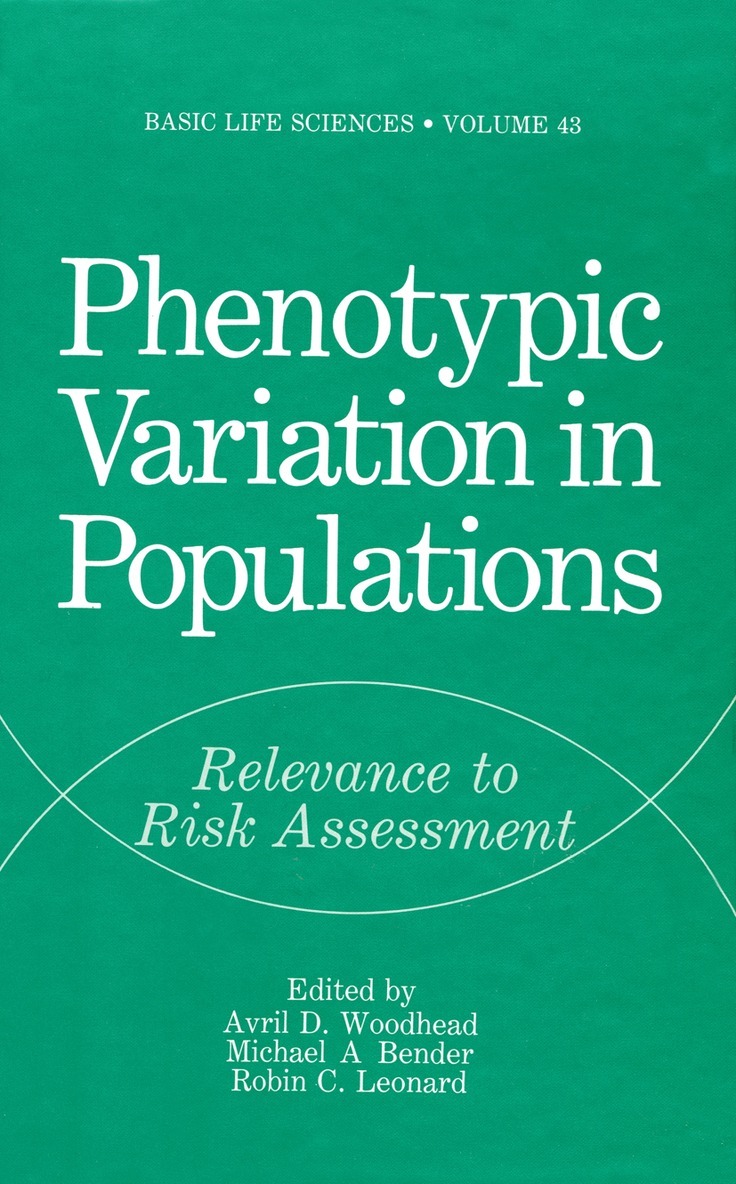
The human race has enormous he terogenei ty, founded on genetic and environmental sources. Variability, therefore, is a vital dimension in any consideration of human risk assessment. In the estimation of risks, current methods of extrapolation based upon converting the response of a median man are inadequate, as they ignore phenotypic variation and there fore, susceptible subgroups. There is a growing literature defining the extent of human variation in normal populations; thus, the normal young adult population may have 10-20% known hyperreactors. How far can we ignore human variability in risk assessment? Should we be concerned with susceptible groups, and how can we modify the risk assessment analysis accordingly? The aim of our meeting was to bring together experts from the fields of human epidemiology, toxicology, aging, genetics, carcino genesis and teratology, and to provide a forum in which we might assimi late knowledge of human heterogeneity as a coherent whole. Since the resolution and obligations of risk assessment, in the last analysis, are a political process, we also involved representatives from the legal field, the unions, and the regulatory agencies. We are most grateful for financial support from the National Institute on Aging; the u. S. Environmental Protection Agency; the U. S. Department of Energy; FDA - National Center for Toxicological Research; The Council for Tobacco Research-USA, Inc; Johnson and Johnson; Merck Sharp and Dohme Research Laboratories; and Associated Universities, Inc. We thank our Symposium Coordinator, Ms.