Avrum Stroll – författare
Visar alla böcker från författaren Avrum Stroll. Handla med fri frakt och snabb leverans.
13 produkter
Moore and Wittgenstein on Certainty
Av Avrum Stroll
Inbunden, 1994
2994 kr
Lägg i varukorg
Ludwig Wittgenstein's On Certainty was finished just before his death in 1951 and is a running commentary on three of G.E. Moore's greatest epistemological papers. In the early 1930s, Moore had written a lengthy commentary on Wittgenstein, anticipating some of the issues Wittgenstein would discuss …
Moore and Wittgenstein on Certainty
Av Avrum Stroll
E-bok, 1994
1907 kr
Lägg i varukorg
Ludwig Wittgenstein''s On Certainty was finished just before his death in 1951 and is a running commentary on three of G.E. Moore''s greatest epistemological papers. In the early 1930s, Moore had written a lengthy commentary on Wittgenstein, anticipating some of the issues Wittgenstein would …
Twentieth-Century Analytic Philosophy
Av Avrum Stroll
Inbunden, 2000
1204 kr
Lägg i varukorg
Analytic philosophy is difficult to define since it is not so much a specific doctrine as a loose concatenation of approaches to problems. As well as having strong ties to scientism -the notion that only the methods of the natural sciences give rise to knowledge -it also has humanistic ties to the …
Twentieth-Century Analytic Philosophy
Av Avrum Stroll
Häftad, 2001
306 kr
Lägg i varukorg
Analytic philosophy is difficult to define since it is not so much a specific doctrine as a loose concatenation of approaches to problems. As well as having strong ties to scientism -the notion that only the methods of the natural sciences give rise to knowledge -it also has humanistic ties to the …
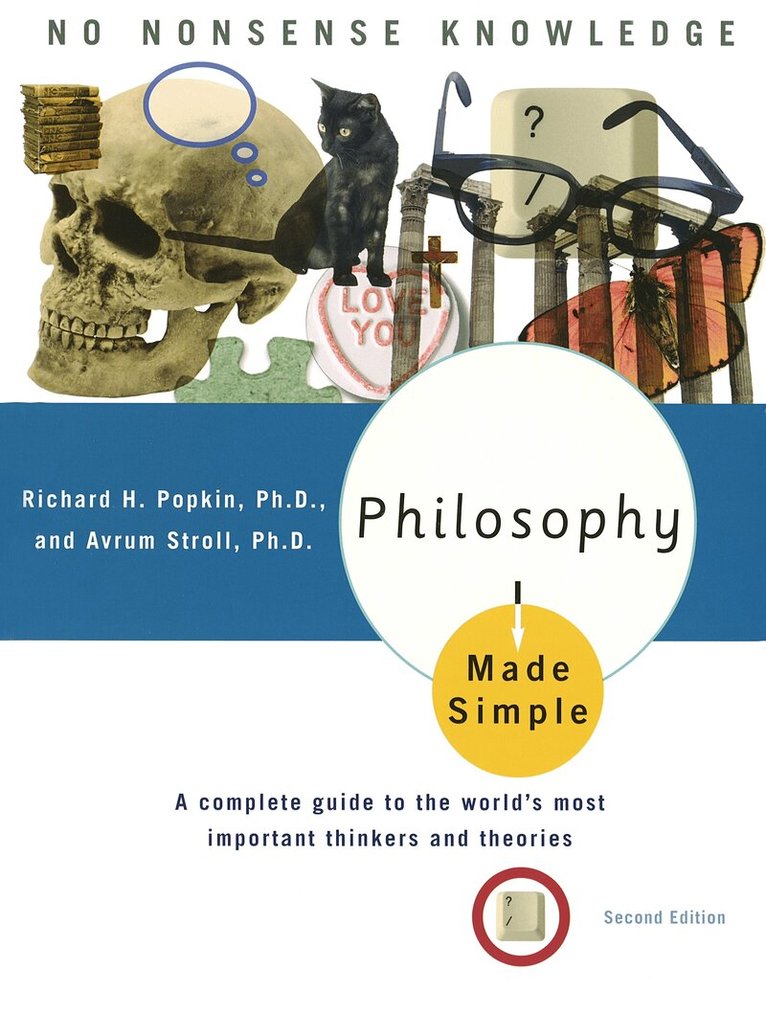
Philosophy Made Simple
A Complete Guide to the World's Most Important Thinkers and Theories
Av Richard H. Popkin, Avrum Stroll
Häftad, 1993
288 kr
Lägg i varukorg
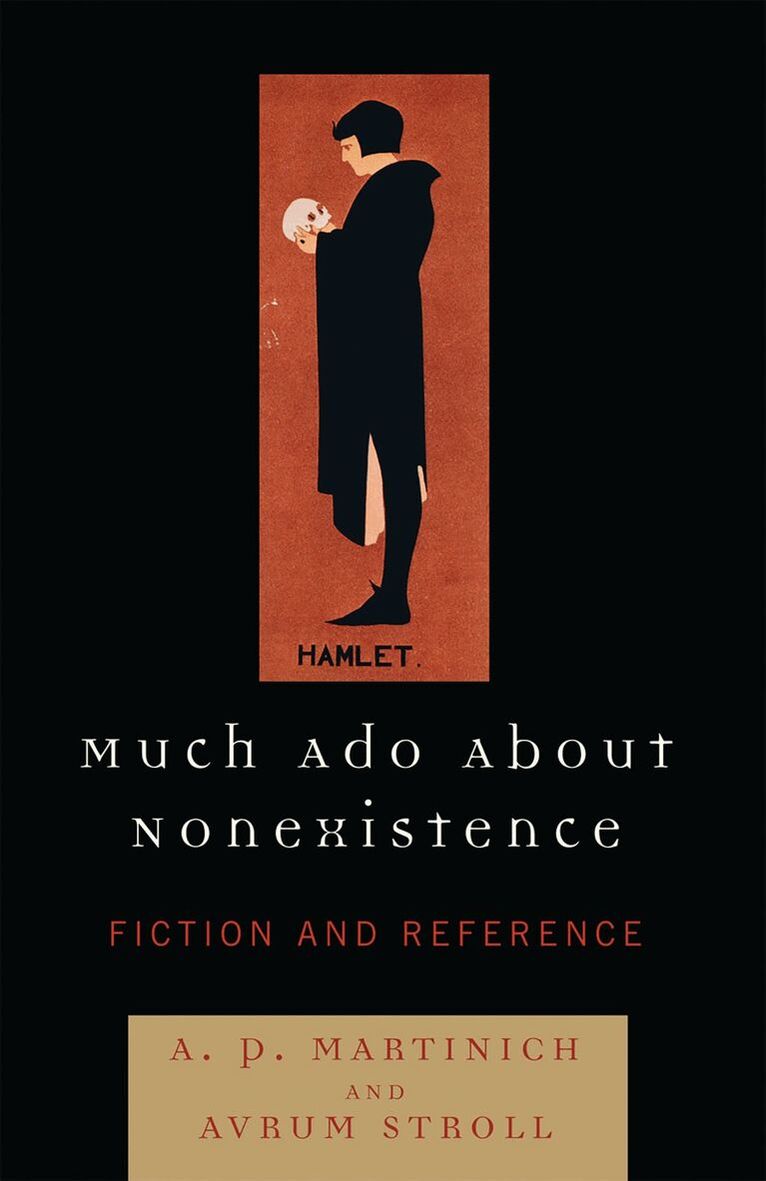
Much Ado About Nonexistence
Fiction and Reference
Inbunden, 2007
1547 kr
Lägg i varukorg
The problem of the nature of fiction and the problem of nonexistence are closely tied because fiction often talks about nonexistent entities. In Fiction, Reference, and Nonexistence, A. P. Martinich and Avrum Stroll, two of America's leading philosophers, explore fiction and undertake an analytic …
Much Ado About Nonexistence
Fiction and Reference
Häftad, 2007
818 kr
Lägg i varukorg
The problem of the nature of fiction and the problem of nonexistence are closely tied because fiction often talks about nonexistent entities. In Fiction, Reference, and Nonexistence, A. P. Martinich and Avrum Stroll, two of America's leading philosophers, explore fiction and undertake an analytic …
Informal Philosophy
Av Avrum Stroll
Inbunden, 2009
852 kr
Lägg i varukorg
Informal Philosophy provides an original look at how we should understand and teach philosophy. Avrum Stroll persuasively argues that philosophy should be evaluated using its own methodology and should not merely mimic formal scientific analysis, because while modern science does inform our …
Informal Philosophy
Av Avrum Stroll
E-bok, 2009
885 kr
Lägg i varukorg
Informal Philosophy provides an original look at how we should understand and teach philosophy. Avrum Stroll persuasively argues that philosophy should be evaluated using its own methodology and should not merely mimic formal scientific analysis, because while modern science does inform our …
Much Ado About Nonexistence
Fiction and Reference
E-bok, 2007
763 kr
Lägg i varukorg
The problem of the nature of fiction and the problem of nonexistence are closely tied because fiction often talks about nonexistent entities. In Fiction, Reference, and Nonexistence , A. P. Martinich and Avrum Stroll, two of America''s leading philosophers, explore fiction and undertake an analytic …
Philosophy
Made Simple
Av Avrum Stroll, Richard H. Popkin
E-bok, 2014
807 kr
Lägg i varukorg
Philosophy: Made Simple, Second Edition provides information pertinent to the fundamental philosophical problems. This book discusses the developments in philosophy. Organized into seven chapters, this edition begins with an overview of the usage of philosophy in the interpretation or evaluation of …
Skeptical Philosophy for Everyone
Av Richard H. Popkin, Avrum Stroll
Inbunden, 2001
463 kr
Lägg i varukorg
Popkin and Stroll review each major theory of philosophy chronologically, and then further organise these theories into their respective subject areas: metaphysics, epistemology, ethics, political philosophy, and philosophy of religion. Within each subject area, the authors discuss how the …
Wittgenstein
Av Avrum Stroll
E-bok, 2013
106 kr
Lägg i varukorg
Spanning Ludwig Wittgenstein’s entire career, from his student days at Cambridge to the entries inserted into a notebook two days before his death, this is an indispensable guide to a philosopher described by Bertrand Russell as "the most perfect example of genius I have ever known." Combining …