BalA!zs TrencsA(c)nyi – författare
Visar alla böcker från författaren BalA!zs TrencsA(c)nyi. Handla med fri frakt och snabb leverans.
5 produkter
5 produkter
E-bok
PDF, Engelska, 20181 443 kr
Läs direkt efter köp
A History of Modern Political Thought in East Central Europe is a synthetic work, authored by an international team of researchers, covering twenty national cultures and 250 years. It goes beyond the conventional nation-centered narratives and presents a novel vision especially sensitive to the cross-cultural entanglement of political ideas and discourses. Its principal aim is to make these cultures available for the global ''market of ideas'' and revisit some of the basic assumptions about the history of modern political thought, and modernity as such.The present volume is a sequel to Volume I: Negotiating Modernity in the ''Long Nineteenth Century''. It begins with the end of the Great War, depicting the colorful intellectual landscape of the interwar period and the increasing political and ideological radicalization culminating in the Second World War. Taking the war experience both as a breaking point but in many ways also a transmitter of previous intellectual traditions, it maps the intellectual paradigms and debates of the immediate postwar years, marked by a negotiation between the democratic and communist agendas, as well as the subsequent processes of political and cultural Stalinization. Subsequently, the post-Stalinist period is analyzed with a special focus on the various attempts of de-Stalinization and the rise of revisionist Marxism and other critical projects culminating in the carnivalesque but also extremely dramatic year of 1968. This volume is followed by Volume II: Negotiating Modernity in the ''Short Twentieth Century'' and Beyond, Part II: 1968-2018.
E-bok
Engelska, 20181 443 kr
Läs direkt efter köp
A History of Modern Political Thought in East Central Europe is a synthetic work, authored by an international team of researchers, covering twenty national cultures and 250 years. It goes beyond the conventional nation-centered narratives and presents a novel vision especially sensitive to the cross-cultural entanglement of political ideas and discourses. Its principal aim is to make these cultures available for the global ''market of ideas'' and revisit some of the basic assumptions about the history of modern political thought, and modernity as such.The present volume is a sequel to Volume I: Negotiating Modernity in the ''Long Nineteenth Century''. It begins with the end of the Great War, depicting the colorful intellectual landscape of the interwar period and the increasing political and ideological radicalization culminating in the Second World War. Taking the war experience both as a breaking point but in many ways also a transmitter of previous intellectual traditions, it maps the intellectual paradigms and debates of the immediate postwar years, marked by a negotiation between the democratic and communist agendas, as well as the subsequent processes of political and cultural Stalinization. Subsequently, the post-Stalinist period is analyzed with a special focus on the various attempts of de-Stalinization and the rise of revisionist Marxism and other critical projects culminating in the carnivalesque but also extremely dramatic year of 1968. This volume is followed by Volume II: Negotiating Modernity in the ''Short Twentieth Century'' and Beyond, Part II: 1968-2018.
Inbunden, Engelska, 2016
1 710 kr
Skickas inom 7-10 vardagar
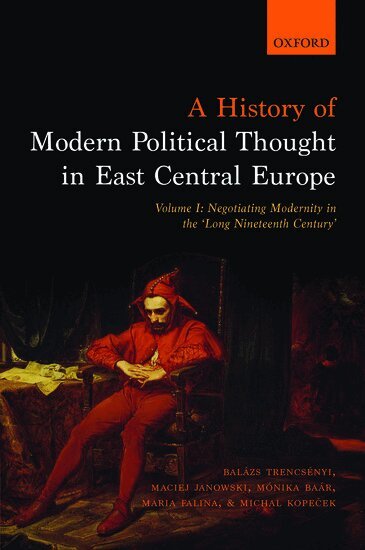
A History of Modern Political Thought in East Central Europe is a two-volume project, authored by an international team of researchers, and offering the first-ever synthetic overview of the history of modern political thought in East Central Europe. Covering twenty national cultures and languages, the ensuing work goes beyond the conventional nation-centered narrative and offers a novel vision especially sensitive to the cross-cultural entanglement of discourses. Devising a regional perspective, the authors avoid projecting the Western European analytical and conceptual schemes on the whole continent, and develop instead new concepts, patterns of periodization and interpretative models. At the same time, they also reject the self-enclosing Eastern or Central European regionalist narratives and instead emphasize the multifarious dialogue of the region with the rest of the world. Along these lines, the two volumes are intended to make these cultures available for the global 'market of ideas' and also help rethinking some of the basic assumptions about the history of modern political thought, and modernity as such. The first volume deals with the period ranging from the Late Enlightenment to the First World War. It is structured along four broader chronological and thematic units: Enlightenment reformism, Romanticism and the national revivals, late nineteenth-century institutionalization of the national and state-building projects, and the new ideologies of the fin-de-siècle facing the rise of mass politics. Along these lines, the authors trace the continuities and ruptures of political discourses. They focus especially on the ways East Central European political thinkers sought to bridge the gap between the idealized Western type of modernity and their own societies challenged by overlapping national projects, social and cultural fragmentation, and the lack of institutional continuity.
Inbunden, Engelska, 2018
1 440 kr
Skickas inom 5-8 vardagar
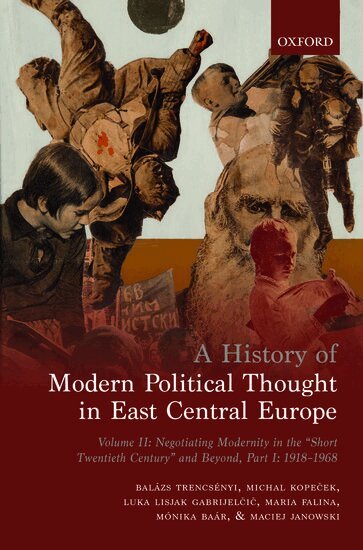
A History of Modern Political Thought in East Central Europe is a synthetic work, authored by an international team of researchers, covering twenty national cultures and 250 years. It goes beyond the conventional nation-centered narratives and presents a novel vision especially sensitive to the cross-cultural entanglement of political ideas and discourses. Its principal aim is to make these cultures available for the global 'market of ideas' and revisit some of the basic assumptions about the history of modern political thought, and modernity as such.The present volume is a sequel to Volume I: Negotiating Modernity in the 'Long Nineteenth Century'. It begins with the end of the Great War, depicting the colorful intellectual landscape of the interwar period and the increasing political and ideological radicalization culminating in the Second World War. Taking the war experience both as a breaking point but in many ways also a transmitter of previous intellectual traditions, it maps the intellectual paradigms and debates of the immediate postwar years, marked by a negotiation between the democratic and communist agendas, as well as the subsequent processes of political and cultural Stalinization. Subsequently, the post-Stalinist period is analyzed with a special focus on the various attempts of de-Stalinization and the rise of revisionist Marxism and other critical projects culminating in the carnivalesque but also extremely dramatic year of 1968. This volume is followed by Volume II: Negotiating Modernity in the 'Short Twentieth Century' and Beyond, Part II: 1968-2018.
Inbunden, Engelska, 2025
1 452 kr
Skickas inom 5-8 vardagar
This volume offers a broad-ranging and comprehensive analysis of the history and theory of the political idea of 'crisis', from the interwar period through to the present day. It considers how the multiple crises of civilization, capitalism, social cohesion, liberalism, democracy, socialism, and the nation-state were conceptualized; how these spheres of crisis became entangled; and who the intellectuals, politicians and experts were who employed these discourses.Intellectuals and the Crisis of Politics in the Interwar Period and Beyond maps the range of meanings the term 'crisis' has borne and the roles it has performed across disciplines and countries, de-centering the dominant narrative that takes Western European positions and developments as normative. It especially focuses on the historical roots of two key contemporary contesters of liberal democracy: neoliberalism and populism, and presents an innovative analysis of the roots of contemporary illiberalism in Europe. Bringing these ideas into the present day, Balázs Trencsényi offers ideas on how a reflective and self-critical liberal democratic political position could be defined and defended in our current predicament, which is increasingly compared to the interwar period and is often described as a “polycrisis”.