Michal Kopecek – författare
Visar alla böcker från författaren Michal Kopecek. Handla med fri frakt och snabb leverans.
13 produkter
13 produkter
Inbunden, Engelska, 2016
1 710 kr
Skickas inom 7-10 vardagar
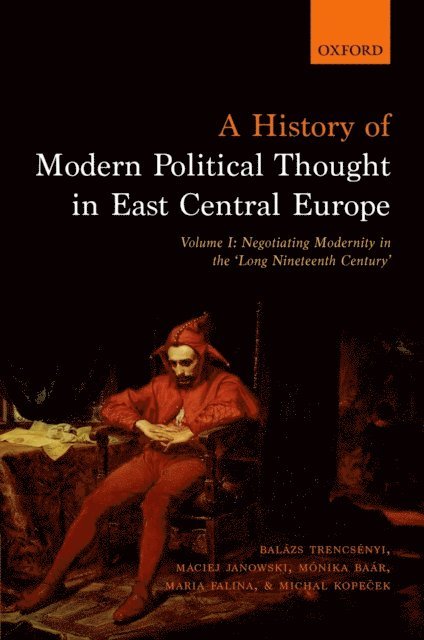
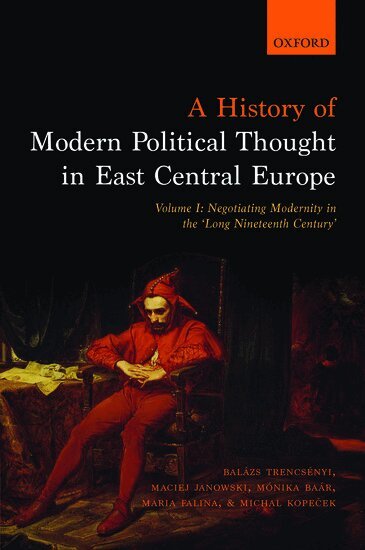
A History of Modern Political Thought in East Central Europe is a two-volume project, authored by an international team of researchers, and offering the first-ever synthetic overview of the history of modern political thought in East Central Europe. Covering twenty national cultures and languages, the ensuing work goes beyond the conventional nation-centered narrative and offers a novel vision especially sensitive to the cross-cultural entanglement of discourses. Devising a regional perspective, the authors avoid projecting the Western European analytical and conceptual schemes on the whole continent, and develop instead new concepts, patterns of periodization and interpretative models. At the same time, they also reject the self-enclosing Eastern or Central European regionalist narratives and instead emphasize the multifarious dialogue of the region with the rest of the world. Along these lines, the two volumes are intended to make these cultures available for the global 'market of ideas' and also help rethinking some of the basic assumptions about the history of modern political thought, and modernity as such. The first volume deals with the period ranging from the Late Enlightenment to the First World War. It is structured along four broader chronological and thematic units: Enlightenment reformism, Romanticism and the national revivals, late nineteenth-century institutionalization of the national and state-building projects, and the new ideologies of the fin-de-siècle facing the rise of mass politics. Along these lines, the authors trace the continuities and ruptures of political discourses. They focus especially on the ways East Central European political thinkers sought to bridge the gap between the idealized Western type of modernity and their own societies challenged by overlapping national projects, social and cultural fragmentation, and the lack of institutional continuity.
Inbunden, Engelska, 2018
1 440 kr
Skickas inom 5-8 vardagar
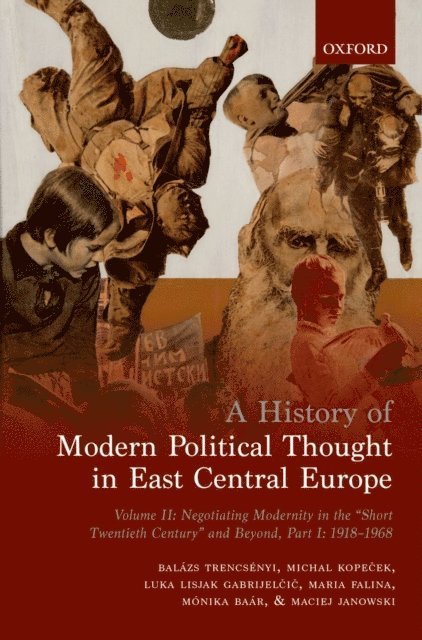
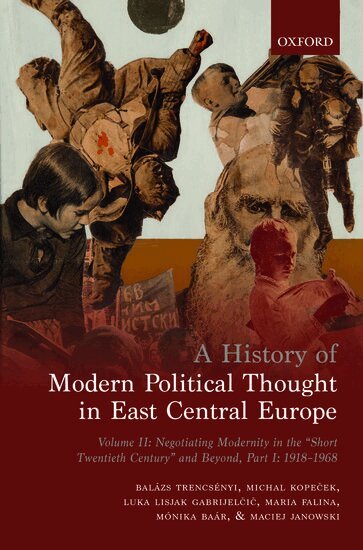
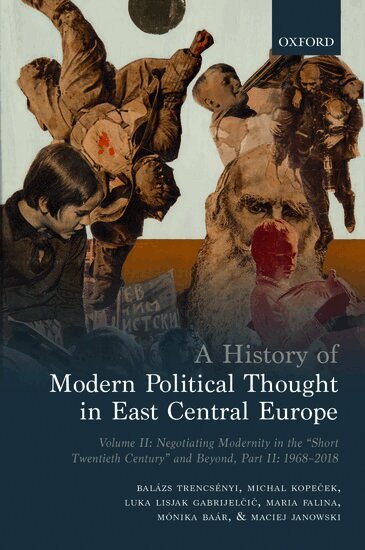
A History of Modern Political Thought in East Central Europe is a synthetic work, authored by an international team of researchers, covering twenty national cultures and 250 years. It goes beyond the conventional nation-centered narratives and presents a novel vision especially sensitive to the cross-cultural entanglement of political ideas and discourses. Its principal aim is to make these cultures available for the global 'market of ideas' and revisit some of the basic assumptions about the history of modern political thought, and modernity as such.The present volume is a sequel to Volume I: Negotiating Modernity in the 'Long Nineteenth Century'. It begins with the end of the Great War, depicting the colorful intellectual landscape of the interwar period and the increasing political and ideological radicalization culminating in the Second World War. Taking the war experience both as a breaking point but in many ways also a transmitter of previous intellectual traditions, it maps the intellectual paradigms and debates of the immediate postwar years, marked by a negotiation between the democratic and communist agendas, as well as the subsequent processes of political and cultural Stalinization. Subsequently, the post-Stalinist period is analyzed with a special focus on the various attempts of de-Stalinization and the rise of revisionist Marxism and other critical projects culminating in the carnivalesque but also extremely dramatic year of 1968. This volume is followed by Volume II: Negotiating Modernity in the 'Short Twentieth Century' and Beyond, Part II: 1968-2018.
Häftad, Engelska, 2018
662 kr
Skickas inom 7-10 vardagar
A History of Modern Political Thought in East Central Europe is a two-volume project, authored by an international team of researchers, and offering the first-ever synthetic overview of the history of modern political thought in East Central Europe. Covering twenty national cultures and languages, the ensuing work goes beyond the conventional nation-centered narrative and offers a novel vision especially sensitive to the cross-cultural entanglement of discourses. Devising a regional perspective, the authors avoid projecting the Western European analytical and conceptual schemes on the whole continent, and develop instead new concepts, patterns of periodization and interpretative models. At the same time, they also reject the self-enclosing Eastern or Central European regionalist narratives and instead emphasize the multifarious dialogue of the region with the rest of the world. Along these lines, the two volumes are intended to make these cultures available for the global 'market of ideas' and also help rethinking some of the basic assumptions about the history of modern political thought, and modernity as such. The first volume deals with the period ranging from the Late Enlightenment to the First World War. It is structured along four broader chronological and thematic units: Enlightenment reformism, Romanticism and the national revivals, late nineteenth-century institutionalization of the national and state-building projects, and the new ideologies of the fin-de-siècle facing the rise of mass politics. Along these lines, the authors trace the continuities and ruptures of political discourses. They focus especially on the ways East Central European political thinkers sought to bridge the gap between the idealized Western type of modernity and their own societies challenged by overlapping national projects, social and cultural fragmentation, and the lack of institutional continuity.
Inbunden, Engelska, 2018
1 710 kr
Skickas inom 7-10 vardagar
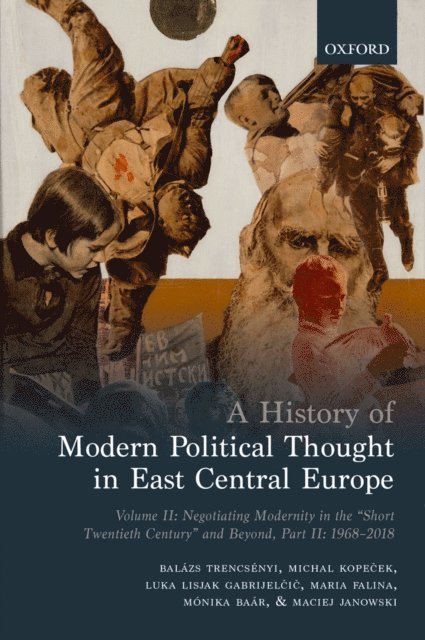
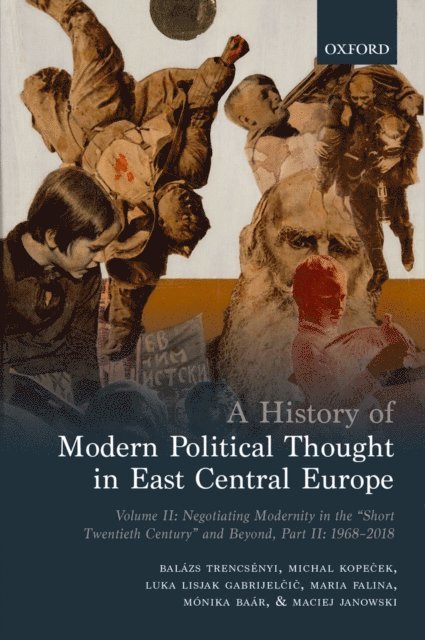
A History of Modern Political Thought in East Central Europe is a synthetic work, authored by an international team of researchers, covering twenty national cultures and 250 years. It goes beyond the conventional nation-centered narratives and presents a novel vision especially sensitive to the cross-cultural entanglement of political ideas and discourses. Its principal aim is to make these cultures available for the global 'market of ideas' and revisit some of the basic assumptions about the history of modern political thought, and modernity as such.The present volume is the final part of the project, following Volume I: Negotiating Modernity in the 'Long Nineteenth Century', and Volume II, Part I: Negotiating Modernity in the 'Short Twentieth Century' (1918-1968) (OUP, 2018). Its starting point is the defeat of the vision of 'socialism with a human face' in 1968 and the political discourses produced by the various 'consolidation' or 'normalization' regimes. It continues with mapping the exile communities' and domestic dissidents' critical engagement with the local democratic and anti-democratic traditions as well as with global trends. Rather than achieving the coveted 'end of history', however, the liberal democratic order created in East Central Europe after 1989 became increasingly contested from left and right alike. Thus, instead of a comfortable conclusion pointing to the European integration of most of these countries, the book closes with a reflection on the fragility of democracy in this part of the world and beyond.
Inbunden, Engelska, 2021
1 835 kr
Skickas
This collection systematically approaches the concept of Czechoslovakism and its historical progression, covering the time span from the mid-nineteenth century to Czechoslovakia’s dissolution in 1992/1993, while also providing the most recent research on the subject. "Czechoslovakism" was a foundational concept of the interwar Czechoslovak Republic and it remained an important ideological, political and cultural phenomenon throughout the twentieth century. As such, it is one of the most controversial terms in Czech, Slovak and Central European history. While Czechoslovakism was perceived by some as an effort to assert Czech domination in Slovakia, for others it represented a symbol of the struggle for the Republic’s survival during the interwar and Second World War periods. The authors take care to analyze Czechoslovakism’s various emotional connotations, however their primary objective is to consider Czechoslovakism as an important historical concept and follow its changes through the various cultural-political contexts spanning from the mid-nineteenth century to the breakup of Czechoslovakia in 1993.Including the work of many of the most eminent Czech and Slovak historians, this volume is an insightful study for academic and postgraduate student audiences interested in the modern history of Central and Eastern Europe, nationality studies, as well as intellectual history, political science and sociology.
Häftad, Engelska, 2023
602 kr
Skickas inom 10-15 vardagar
This collection systematically approaches the concept of Czechoslovakism and its historical progression, covering the time span from the mid-nineteenth century to Czechoslovakia’s dissolution in 1992/1993, while also providing the most recent research on the subject. "Czechoslovakism" was a foundational concept of the interwar Czechoslovak Republic and it remained an important ideological, political and cultural phenomenon throughout the twentieth century. As such, it is one of the most controversial terms in Czech, Slovak and Central European history. While Czechoslovakism was perceived by some as an effort to assert Czech domination in Slovakia, for others it represented a symbol of the struggle for the Republic’s survival during the interwar and Second World War periods. The authors take care to analyze Czechoslovakism’s various emotional connotations, however their primary objective is to consider Czechoslovakism as an important historical concept and follow its changes through the various cultural-political contexts spanning from the mid-nineteenth century to the breakup of Czechoslovakia in 1993.Including the work of many of the most eminent Czech and Slovak historians, this volume is an insightful study for academic and postgraduate student audiences interested in the modern history of Central and Eastern Europe, nationality studies, as well as intellectual history, political science and sociology.
Häftad, Engelska, 2026
408 kr
Kommande
A thorough retort to the idea that the West led the transition from communism to liberal democracy.Architects of Long Change examines expert forms of governance and their legitimization before 1989, as well as the transfer of expert knowledge and practices of political and social management during the democratic transition. The contributors argue that so-called neoliberal governance was not solely the result of imported Western political and cultural models, but was also shaped by intellectual, mental, and sociocultural continuities from the period of late socialism. These continuities—and the broader hypothesis of a “long systemic change” spanning from 1980 to 1995—are explored through case studies in legal science, sociology, urban planning, environmental studies, psychotherapy, and business management. Architects of Long Change offers a novel perspective on the late communist dictatorship, the democratic revolution of 1989, and the early development of liberal democracy and capitalism in Czechoslovakia and later the Czech Republic.
Inbunden, Engelska, 2015
2 512 kr
Skickas inom 10-15 vardagar
Thinking through Transition is the first concentrated effort to explore the most recent chapter of East Central European past from the perspective of intellectual history. Post-communism can be understood as a period of scarcity and preponderance of ideas, the dramatic eclipsing of the dissident legacy (as well as the older political traditions), and the rise of technocratic and post-political governance. This book, grounded in empirical research sensitive to local contexts, proposes instead a history of adaptations, entanglements, and unintended consequences. In order to enable and invite comparison, the volume is structured around major domains of political thought, some of them generic (liberalism, conservatism, the Left), others (populism and politics of history) deemed typical for post-socialism. However, as shown by the authors, the generic often turns out to be heavily dependent on its immediate setting, and the typical resonates with processes that are anything but vernacular.
Inbunden, Engelska, 2007
2 215 kr
Skickas inom 10-15 vardagar
67 texts, including hymns, manifestos, articles or extracts from lengthy studies exemplify the relation between Romanticism and the national movements in the cultural space ranging from Poland to the Ottoman Empire. Each text is accompanied by a presentation of the author, and by an analysis of the context in which the respective work was born.The end of the 18th century and first decades of the 19th were in many respects a watershed period in European history. The ideas of the Enlightenment and the dramatic convulsions of the French Revolution had shattered the old bonds and cast doubt upon the established moral and social norms of the old corporate society. In culture a new trend, Romanticism, was successfully asserting itself against Classicism and provided a new key for a growing number of activists to 're-imagine' their national community, reaching beyond the traditional frameworks of identification (such as the 'political nation', regional patriotism, or Christian universalism). The collection focuses on the interplay of Romantic cultural discourses and the shaping of national ideology throughout the 19th century, tracing the patterns of cultural transfer with Western Europe as well as the mimetic competition of national ideologies within the region.
Inbunden, Engelska, 2014
2 144 kr
Skickas inom 10-15 vardagar
The last volume of the Discourses of Collective Identity in Central and Southeast Europe 1770–1945 series presents 46 texts under the heading of "antimodernism". In a dynamic relationship with modernism, from the 1880s to the 1940s, and especially during the interwar period, the antimodernist political discourse in the region offered complex ideological constructions of national identification. These texts rejected the linear vision of progress and instead offered alternative models of temporality, such as the cyclical one as well as various narratives of decline. This shift was closely connected to the rejection of liberal democratic institutionalism, and the preference for organicist models of social existence, emphasizing the role of the elites (and charismatic leaders) shaping the whole body politic. Along these lines, antimodernist authors also formulated alternative visions of symbolic geography: rejecting the symbolic hierarchies that focused on the normativity of Western European models, they stressed the cultural and political autarchy of their own national community, which in some cases was also coupled with the reevaluation of the Orient. At the same time, this antimodernist turn should not be confused with rightwing radicalism—in fact, the dialogue with the modernist tradition was often very subtle and the anthology also contains texts which offered a criticism of 'modern' totalitarianism in an antimodernist key.
Inbunden, Engelska, 2010
2 017 kr
Skickas inom 10-15 vardagar
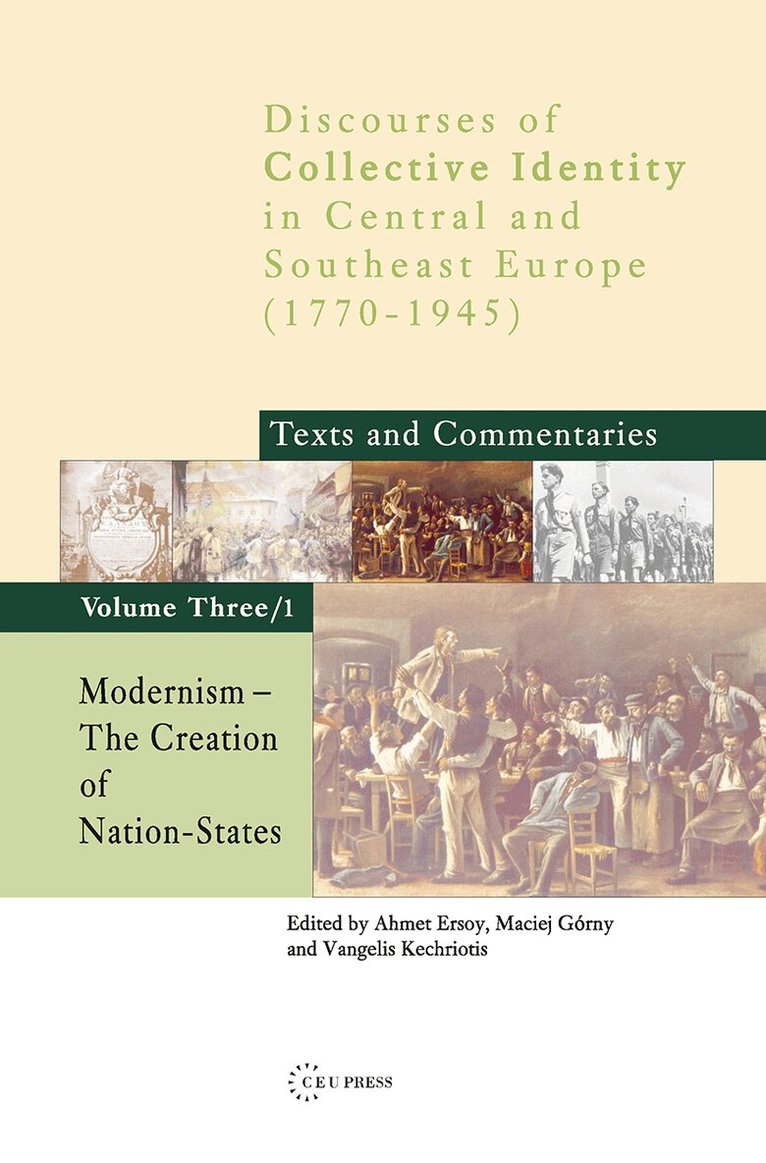
Fifty-one texts illustrate the evolution of modernism in Eastern Europe. Essays, articles, poems, or excerpts from longer works offer new opportunities of possible comparisons of the respective national cultures. The volume focuses on the literary and scientific attempts at squaring the circle of individual and collective identities. Often outspokenly critical of the romantic episteme, these texts reflect a more sophisticated and critical stance than in the preceding periods. At the same time, rather than representing a complete rupture, they often continue and confirm the romantic identity narratives, albeit with other means. The volume also presents the ways national minorities sought to legitimize their existence with reference to their cultural and institutional peculiarity.
Inbunden, Engelska, 2008
1 677 kr
Skickas inom 10-15 vardagar
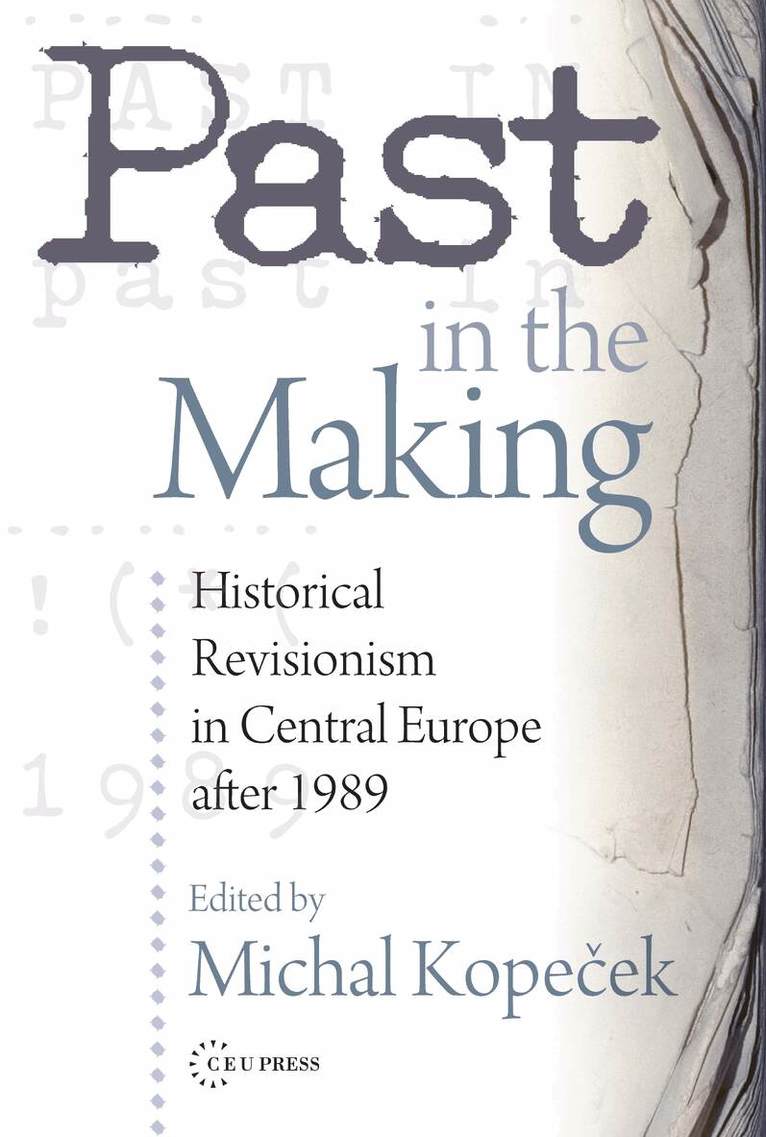
Historical revisionism, far from being restricted to small groups of ‘negationists,’ has galvanized debates in the realm of recent history. The studies in this book range from general accounts of the background of recent historical revisionism to focused analyses of particular debates or social-cultural phenomena in individual Central European countries, from Germany to Ukraine and Estonia. Where is the borderline between legitimate re-examination of historical interpretations and attempts to rewrite history in a politically motivated way that downgrades or denies essential historical facts? How do the traditional ‘national historical narratives’ react to the ‘spill-over’ of international and political controversies into their ‘sphere of influence’? Technological progress, along with the overall social and cultural decentralization shatters the old hierarchies of academic historical knowledge under the banner of culture of memory, and breeds an unequalled democratization in historical representation. This book offers a unique approach based on the provocative and instigating intersection of scholarly research, its political appropriations, and social reflection from a representative sample of Central and East European countries.
Häftad, Engelska, 2008
672 kr
Skickas inom 10-15 vardagar
Historical revisionism, far from being restricted to small groups of ‘negationists,’ has galvanized debates in the realm of recent history. The studies in this book range from general accounts of the background of recent historical revisionism to focused analyses of particular debates or social-cultural phenomena in individual Central European countries, from Germany to Ukraine and Estonia. Where is the borderline between legitimate re-examination of historical interpretations and attempts to rewrite history in a politically motivated way that downgrades or denies essential historical facts? How do the traditional ‘national historical narratives’ react to the ‘spill-over’ of international and political controversies into their ‘sphere of influence’? Technological progress, along with the overall social and cultural decentralization shatters the old hierarchies of academic historical knowledge under the banner of culture of memory, and breeds an unequalled democratization in historical representation. This book offers a unique approach based on the provocative and instigating intersection of scholarly research, its political appropriations, and social reflection from a representative sample of Central and East European countries.