• Fri frakt över 249 kr
  • •
  • Snabba leveranser
  • •
  • Billiga böcker
Kundservice

Du är på sajten för privatpersoner.

Företag, bibliotek eller offentlig verksamhet?

Du handlar på classic.bokus.com, där alla dina funktioner finns intakta.
Till classic.bokus.com
Bokus logotyp. Gå till startsidan.
  • Erbjudanden
  • Nyheter
  • Student
  • Topplistor
  • Barn & ungdom
  • Bokus Play
  • E-böcker
  • Pocketböcker
  • Spel & pussel

Må bättre, för mindre! Upp till 50% rabatt på hälsoböcker

Sidfot

Mina sidor

    Hjälp

    • Kundservice
    • Vanliga frågor och svar
    • Frakt och leverans
    • Retur vid ångerrätt
    • Reklamera vara
    • Betalning
    • Köpvillkor
    • Allmänna villkor
    • Information om webbplatsens tillgänglighet

    Om Bokus

    • Om oss
    • Pressrum
    • För studenter
    • För företag
    • För bibliotek och offentlig verksamhet
    • För leverantörer
    • Hållbarhet

    Populärt

    • Aktuella erbjudanden
    • Presentkort
    • Studentlitteratur
    • Nya böcker
    • Topplistor
    • Signerade böcker
    • Engelska böcker

    Inspiration

    • Boktips
    • BookTok
    • Populära bokserier
    • Barnbokskaraktärer
    • Populära författare
    Logotyp för Bokus
    Följ oss på Facebook (extern länk)Följ oss på Instagram (extern länk)Följ oss på YouTube (extern länk)Följ oss på TikTok (extern länk)
    bokus @ CookiesAnpassa cookiesIntegritetspolicyKöpvillkor
    Till Citymail hemsida (extern länk)Till Budbee hemsida (extern länk)Till Postnord hemsida (extern länk)Till Schenker hemsida (extern länk)Till Early Bird hemsida (extern länk)Till Walleys hemsida (extern länk)
    1. Historia och arkeologi
    2. Historia
    3. Europas historia

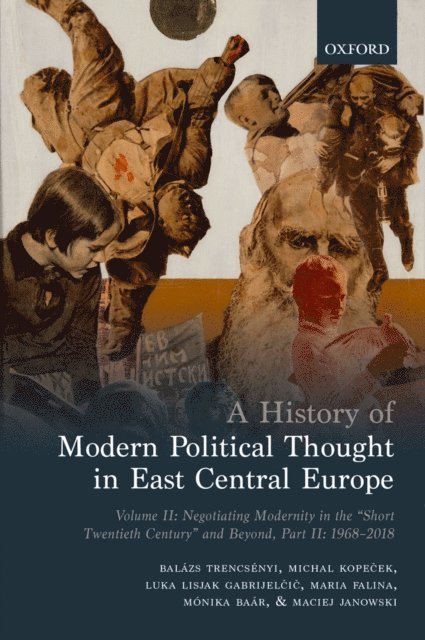
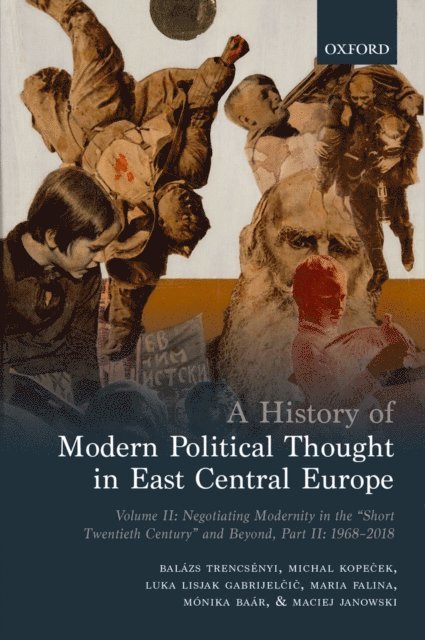
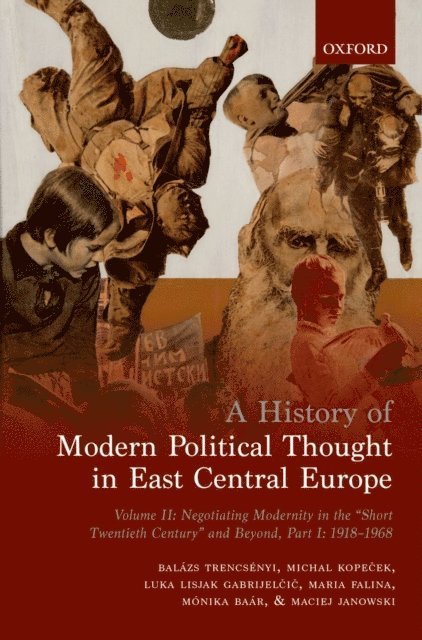
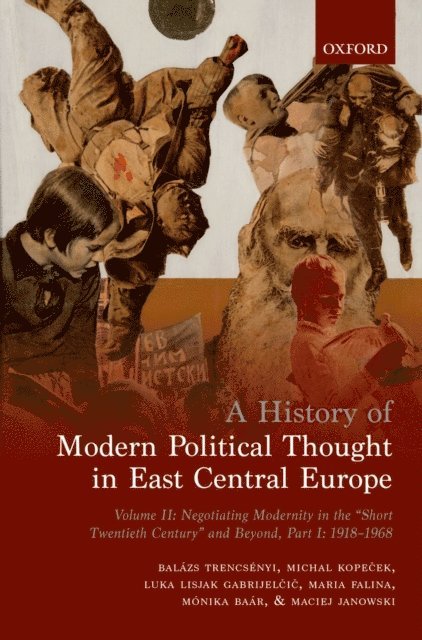
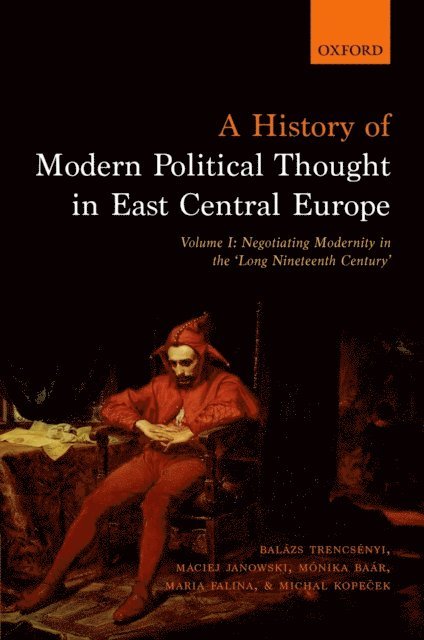
    A History of Modern Political Thought in East Central Europe

    Volume II: Negotiating Modernity in the 'Short Twentieth Century' and Beyond, Part II: 1968-2018

    AvBalázs Trencsenyi,Michal Kopeček

    Inbunden, Engelska, 2018

    1 767 kr

    Beställningsvara. Skickas inom 7-10 vardagar. Fri frakt över 249 kr.

    Fler format och utgåvor

    Häftad

    684 kr

    Beskrivning

    A History of Modern Political Thought in East Central Europe is a synthetic work, authored by an international team of researchers, covering twenty national cultures and 250 years. It goes beyond the conventional nation-centered narratives and presents a novel vision especially sensitive to the cross-cultural entanglement of political ideas and discourses. Its principal aim is to make these cultures available for the global 'market of ideas' and revisit some of the basic assumptions about the history of modern political thought, and modernity as such.The present volume is the final part of the project, following Volume I: Negotiating Modernity in the 'Long Nineteenth Century', and Volume II, Part I: Negotiating Modernity in the 'Short Twentieth Century' (1918-1968) (OUP, 2018). Its starting point is the defeat of the vision of 'socialism with a human face' in 1968 and the political discourses produced by the various 'consolidation' or 'normalization' regimes. It continues with mapping the exile communities' and domestic dissidents' critical engagement with the local democratic and anti-democratic traditions as well as with global trends. Rather than achieving the coveted 'end of history', however, the liberal democratic order created in East Central Europe after 1989 became increasingly contested from left and right alike. Thus, instead of a comfortable conclusion pointing to the European integration of most of these countries, the book closes with a reflection on the fragility of democracy in this part of the world and beyond.

    Produktinformation

    • Utgivningsdatum:2018-11-01
    • Mått:164 x 241 x 29 mm
    • Vikt:752 g
    • Format:Inbunden
    • Språk:Engelska
    • Antal sidor:402
    • Förlag:OUP OXFORD
    • ISBN:9780198829607

    Utforska kategorier

    • Europas historia inom Historia och arkeologi
    • Statsvetenskap och politisk teori inom Samhälle och politik
    • Filosofiska discipliner inom Filosofi och religion

    Mer om författaren

    Balázs Trencsényi is Professor in the Department of History, Central European University Budapest. His research focuses on the comparative history of political thought in East Central Europe and the history of historiography. He is Co-Director of Pasts, Inc., Center for Historical Studies at CEU and Editor of the periodical East Central Europe (Brill). His publications include A History of Modern Political Thought in East Central Europe: Volume I: Negotiating Modernity in the 'Long Nineteenth Century' (with Maciej Janowski, Monika Baar, Maria Falina, and Michal Kopeček, OUP, 2016), The Politics of 'National Character': A Study in Interwar East European Thought (Routledge, 2012), Whose Love of Which Country?: Composite States, National Histories and Patriotic Discourses in Early Modern East Central Europe (Brill, 2010), and Hungary and Romania beyond National Narratives: Comparisons and Entanglements (Peter Lang, 2013). Michal Kopeček is Head of the Ideas and Concepts Department at the Institute of Contemporary History in Prague, and Co-Director of Imre Kertész Kolleg, Friedrich Schiller University in Jena. His publications include A History of Modern Political Thought in East Central Europe: Volume I: Negotiating Modernity in the 'Long Nineteenth Century' (with Balázs Trencsényi, Maciej Janowski, Monika Baar, Maria Falina, OUP, 2016), and Quest for the Revolution's Lost Meaning: Origins of the Marxist Revisionism in Central Europe, 1953-1960 (forthcoming Brill, 2018).Luka Lisjak Gabrijelčič is a PhD candidate at the program in Comparative History of Central, Southeastern and Eastern Europe at the Central European University, Budapest. His main fields of interest include intellectual history, nationalism, and history of political thought, with a focus on European peripheries and semi-peripheries. He co-authored a volume on modern radical ideologies ( Utopije demokracije, ZNK Masovna, 2005), and edited a volume on humanism in contemporary social and political thought ( Blodnjaki smisla: misliti humanizem danes, DHG, 2007). He is the editor of the Slovenian quarterly journal Razpotja. Maria Falina is Lecturer in Modern European History at Dublin City University. Her main fields of interest are intellectual history, nationalism, and history of religion and politics. Her publications include A History of Modern Political Thought in East Central Europe: Volume I: Negotiating Modernity in the 'Long Nineteenth Century' (with Balázs Trencsényi, Michal Kopeček, Maciej Janowski, and Monika Baar, OUP, 2016), and articles such as 'Between "Clerical Fascism" and Political Orthodoxy: Orthodox Christianity and Nationalism in Interwar Serbia' in Totalitarian Movements & Political Religions (2007) and 'Religion Visible and Invisible: The Case of Post-Yugoslav Anti-War Films', in C. Schmitt and L. Berezhnaya, eds. Iconic Turn(s): Religion and Nation in East European Films after 1989 (Brill, 2013).Mónika Baár is Professor of Central European Studies at the University of Leiden. Her research focuses on modern historiography, cultural history and political thought, with special attention to the problem of marginality. Her publications include A History of Modern Political Thought in East Central Europe: Volume I: Negotiating Modernity in the 'Long Nineteenth Century' (with Balázs Trencsényi, Michal Kopeček, Maciej Janowski, and Maria Falina, OUP, 2016), and Historians and the Nationalism: East-Central Europe in the Nineteenth Century (OUP, 2010). She is Associate Editor of Nationalities Papers.Maciej Janowski is Head of Section at the Institute of History, Polish Academy of Sciences, Warsaw and Visiting Professor at the Central European University, Budapest. His main fields of interest are social and intellectual history of Central Europe and the history of liberalism. He is editor of the periodical East Central Europe (Brill) and Deputy Editor of Kwartalnik Historyczny. His publications include A History of Modern Political Thought in East Central Europe: Volume I: Negotiating Modernity in the 'Long Nineteenth Century' (with Balázs Trencsényi, Michal Kopeček, Mónika Baár, and Maria Falina, OUP, 2016), and Polish Liberal Thought before 1918 (CEU Press, 2004).

    Recensioner i media

    [the reader] will receive something like a universal formula encompassing the history of the region's political thought from the eighteenth century until the present ... The merit of this book is that it has introduced -- hopefully for good -- a whole series of previously-missing links into international academic discourse ... it is really worthwhile to read this weighty work.

    Innehållsförteckning

    • Authors' Note 11: Late State Socialism: Consolidation, Legitimization, and Reform from Above 11.1: The raison d'état of 'really existing socialism' 11.2: National communism: Liberalization or neo-Stalinism? 11.3: The dilemmas of perestroika reformism 12: Political Thought in Exile 12.1: Ideological, generational, and institutional cleavages 12.2: The intellectual battle with communism 13: Dissidents and Opposition Movements 13.1: The emergence of dissident discourses and subcultures 13.2: Dialogue and empowerment 13.3: The identity politics of the dissidents 13.4: Toward a self-limiting revolution PART III: Farewell to Modernity? Thinking Politics After the' End of History' 14: Velvet Revolutions and the Thorny Paths of Transition 14.1: Visions of democratic transformation 14.2: The ambiguities of the 'liberal consensus' 14.3: Coming to terms with the past 14.4: Church, religion, and democracy 15: 'Rebuilding the Boat on the Open Sea' 15.1: The dilemmas of state-building and constitutional reforms 15.2: The specter of ethnopopulism 15.3: Modes of coexistence 16: In Search of a New Ideology 16.1: The 'culture wars' of the 2000s 16.2: Radicalizing democracy 16.3: Centers and peripheries