• Fri frakt över 249 kr
  • •
  • Snabba leveranser
  • •
  • Billiga böcker
Kundservice

Du är på sajten för privatpersoner.

Företag, bibliotek eller offentlig verksamhet?

Du handlar på classic.bokus.com, där alla dina funktioner finns intakta.
Till classic.bokus.com
Bokus logotyp. Gå till startsidan.
  • Erbjudanden
  • Student
  • Topplistor
  • Barn & ungdom
  • Bokus Play
  • E-böcker
  • Ljudböcker
  • Pocketböcker
  • Spel & pussel

10% rabatt på allt med kod NYSTART10 →

Sidfot

Mina sidor

    Hjälp

    • Kundservice
    • Vanliga frågor och svar
    • Frakt och leverans
    • Retur vid ångerrätt
    • Reklamera vara
    • Betalning
    • Köpvillkor
    • Allmänna villkor
    • Information om webbplatsens tillgänglighet

    Om Bokus

    • Om oss
    • Pressrum
    • För studenter
    • För företag
    • För bibliotek och offentlig verksamhet
    • För leverantörer
    • Hållbarhet

    Populärt

    • Aktuella erbjudanden
    • Presentkort
    • Studentlitteratur
    • Nya böcker
    • Topplistor
    • Signerade böcker
    • Engelska böcker

    Inspiration

    • Boktips
    • BookTok
    • Populära bokserier
    • Barnbokskaraktärer
    • Populära författare
    Logotyp för Bokus
    Följ oss på Facebook (extern länk)Följ oss på Instagram (extern länk)Följ oss på YouTube (extern länk)Följ oss på TikTok (extern länk)
    bokus @ CookiesAnpassa cookiesIntegritetspolicyKöpvillkor
    Till Citymail hemsida (extern länk)Till Budbee hemsida (extern länk)Till Postnord hemsida (extern länk)Till Schenker hemsida (extern länk)Till Early Bird hemsida (extern länk)Till Walleys hemsida (extern länk)
    1. Historia och arkeologi
    2. Historia
    3. Europas historia

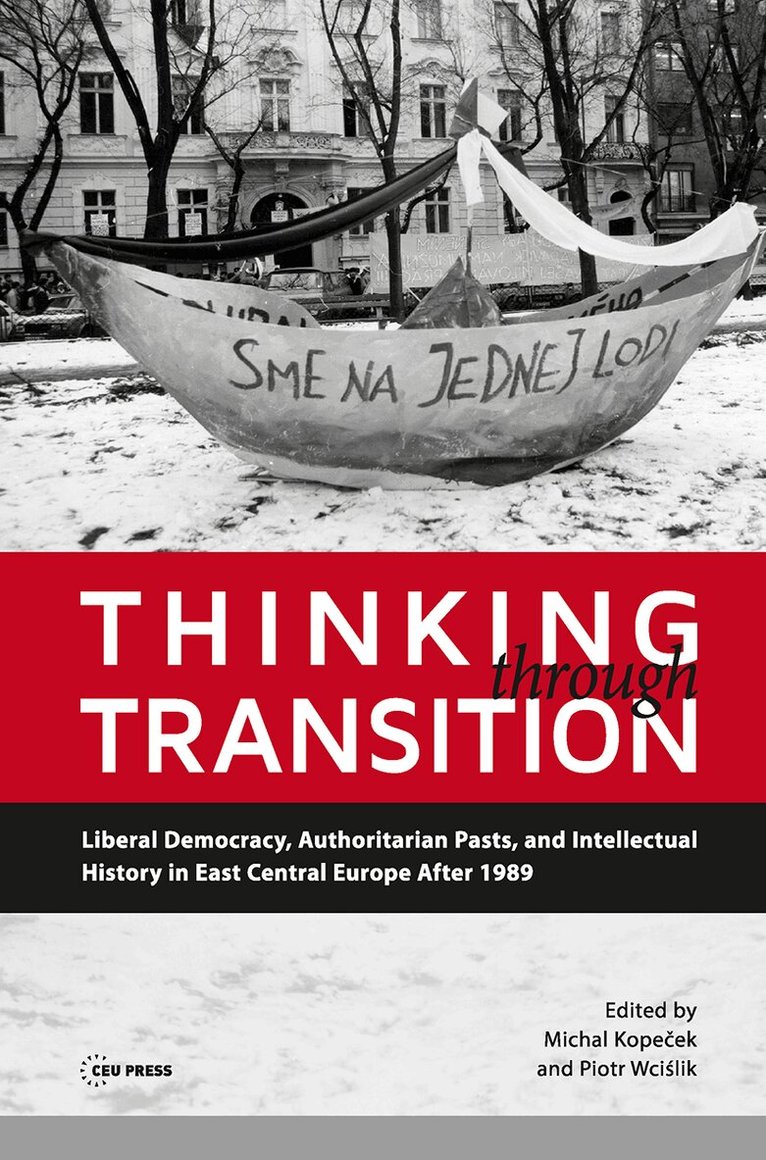
    Thinking through Transition

    Liberal Democracy, Authoritarian Pasts, and Intellectual History in East Central Europe After 1989

    AvMichal Kopecek,Piotr Wcislik

    Inbunden, Engelska, 2015

    2 563 kr

    Beställningsvara. Skickas inom 10-15 vardagar. Fri frakt över 249 kr.

    Beskrivning

    Thinking through Transition is the first concentrated effort to explore the most recent chapter of East Central European past from the perspective of intellectual history. Post-communism can be understood as a period of scarcity and preponderance of ideas, the dramatic eclipsing of the dissident legacy (as well as the older political traditions), and the rise of technocratic and post-political governance. This book, grounded in empirical research sensitive to local contexts, proposes instead a history of adaptations, entanglements, and unintended consequences. In order to enable and invite comparison, the volume is structured around major domains of political thought, some of them generic (liberalism, conservatism, the Left), others (populism and politics of history) deemed typical for post-socialism. However, as shown by the authors, the generic often turns out to be heavily dependent on its immediate setting, and the typical resonates with processes that are anything but vernacular.

    Produktinformation

    • Utgivningsdatum:2015-10-01
    • Mått:152 x 229 x 37 mm
    • Vikt:1 280 g
    • Format:Inbunden
    • Språk:Engelska
    • Antal sidor:608
    • Förlag:Central European University Press
    • ISBN:9789633860854

    Utforska kategorier

    • Europas historia inom Historia och arkeologi
    • Marxism och kommunism inom Samhälle och politik

    Mer om författaren

    Michal Kopecek is Research Fellow at the Institute of Contemporary History, Prague.Piotr Wcislik is PhD candidate at the Central European University, Budapest, and currently affiliated with the Digital Humanities Center at IBL PAN, Warsaw.

    Recensioner i media

    "Based on the richness and merits of the volume, the readers are invited to discover that Thinking through Transition is not 'just another' book on an old topic, but essential reading for those who wish to understand the period in question. Furthermore, the novelty of the approach and the scholarly - and also public - usefulness of such a collective effort give ground to the hope that this volume is the first attempt in a series of historical reflections on our recent past and troubled present."

    Innehållsförteckning

    • Introduction Michal Kopecek (ICH, Prague), Piotr Wcislik (CEU, Budapest): Towards Intellectual History of Post-Socialism Liberalism: Dissident Illusions and Disillusions Ferenc Laczó (Imre Kertész Kolleg, Jena): Five Faces of Post-Dissident Hungarian Liberalism: A Study in Agendas, Concepts and Ambiguities Piotr Wcislik (CEU, Budapest): Totalitarianism and The Limits of the Political Thought of Polish Dissidents: Late Socialism and After. Milan Znoj (Charles University, Prague): Václav Havel, His Idea of Civil Society and the Czech Liberal Tradition Paul Blokker (University of Trento): The (Re-)Emergence of Constitutionalism in East-Central Europe Conservatism: A Counter-Revolution? Petr Roubal (ICH, Prague): The Conservative Counter-Revolution: Post-Dissident Neoconservatives in Post-communist Transformation. Rafal Matyja (WSB-NLU, Nowy Sacz): Polish Conservatism after Communism: Tradition of Sovereignty and Sovereignty of Tradition Zoltán Gábor Szucs (Hungarian Academy of Science, Budapest): The Abortion of a 'Conservative’ Constitution-Making: A Discourse Analysis of the 1994-1998 Failed Hungarian Constitution-Making Enterprise Populism: Endemic Pasts and Global Effects Camil Alexandru Parvu (University of Bucharest): Populism and Democratic Malaise in Post-Communist Romania András Bozóki (CEU, Budapest): Configurations of Populism in Hungary Juraj Buzalka (Comenius University, Bratislava): The Political Lives of Dead Populists in Post-Socialist Slovakia The Left: Between Communist Legacy and Neoliberal Challenge Agnes Gagyi (Moholy-Nagy University of Arts, Budapest): Non-Post-Communist Left in Hungary after 1989: Diverging Paths of Leftist Criticism, Civil Activism and Radicalizing Constituency Maciej Gdula (University of Warsaw): The Architecture of Revival: Left-Wing Ideas and Politics in Poland after 2002 Stanislav Holubec (Imre Kertész Kolleg Jena): Czech Post-Communist Intellectual Left. Twenty Years of Seeking Own Identity Zsófia Lóránd (CEU, Budapest): Feminist Criticism of the “New Democracies” in Serbia and Croatia in the early 1990s Politics of History: Nations, Wars, Revolutions James Mark (University of Exeter), Muriel Blaive (Ludwig Boltzmann Institute, Vienna), Adam Hudek (Historical Institute SAV, Bratislava), Anna Saunder, Stanislaw Tyszka: Remembering the End of Communism in East-Central Europe Gábor Egry (Institute of Political History, Budapest): A Fate for a Nation. Concepts of History and the Nation in the Hungarian Politics, 1989-2010 Stevo Ðuraškovic (University of Zagreb): From “Husakism” to “Meciarism”: The National Identity-Building Discourse of the Slovak left-wing Intellectuals in the 1990s Slovakia Zoltán Dujisin (CEU, Budapest): Post-Communist Europe: On the Path to Regional Regime of Remembrance?