Barbara Hausmair – författare
Visar alla böcker från författaren Barbara Hausmair. Handla med fri frakt och snabb leverans.
4 produkter
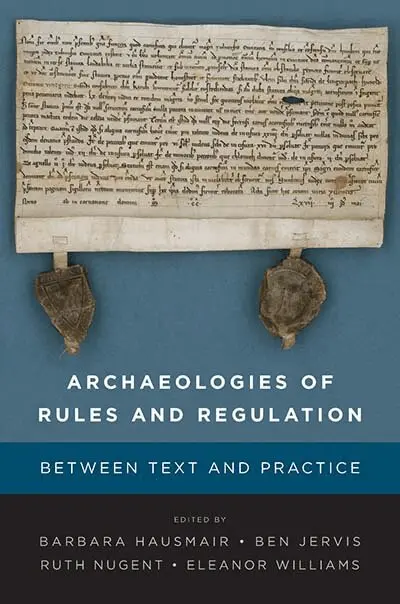
Archaeologies of Rules and Regulation
Between Text and Practice
Av Barbara Hausmair, Ben Jervis m. fl.
Inbunden, 2018
1916 kr
Lägg i varukorg
How can we study the impact of rules on the lives of past people using archaeological evidence? To answer this question, Archaeologies of Rules and Regulation presents case studies drawn from across Europe and the United States. Covering areas as diverse as the use of space in a nineteenth-century …
Archaeologies of Rules and Regulation
Between Text and Practice
Av Eleanor Williams, Ruth Nugent m. fl.
E-bok, 2018
328 kr
Lägg i varukorg
How can we study the impact of rules on the lives of past people using archaeological evidence? To answer this question, Archaeologies of Rules and Regulation presents case studies drawn from across Europe and the United States. Covering areas as diverse as the use of space in a nineteenth-century …
Archaeologies of Rules and Regulation
Between Text and Practice
Av Barbara Hausmair, Ben Jervis m. fl.
Häftad, 2025
406 kr
Lägg i varukorg
How can we study the impact of rules on the lives of past people using archaeological evidence? To answer this question, Archaeologies of Rules and Regulation presents case studies drawn from across Europe and the United States. Covering areas as diverse as the use of space in a nineteenth-century …
Am Rande des Grabs
Häftad, 2015
713 kr
Lägg i varukorg
The original circumstances in which archaeological remains came into being are crucial for the interpretation of the material record. Burials are first and foremost a result of a very traumatic event in a society – the death of one of its members. It is due to this context that burials represent a …