Barbara Klich-Kluczewska – författare
Visar alla böcker från författaren Barbara Klich-Kluczewska. Handla med fri frakt och snabb leverans.
12 produkter
Biopolitics in Central and Eastern Europe in the 20th Century
Fearing for the Nation
Av Barbara Klich-Kluczewska, Joachim von Puttkamer m. fl.
Inbunden, 2022
2197 kr
Lägg i varukorg
The field of biopolitics encompasses issues from health and hygiene, birth rates, fertility and sexuality, life expectancy and demography to eugenics and racial regimes. This book is the first to provide a comprehensive view on these issues for Central and Eastern Europe in the twentieth …
Biopolitics in Central and Eastern Europe in the 20th Century
Fearing for the Nation
Av Barbara Klich-Kluczewska, Joachim von Puttkamer m. fl.
Häftad, 2024
667 kr
Lägg i varukorg
The field of biopolitics encompasses issues from health and hygiene, birth rates, fertility and sexuality, life expectancy and demography to eugenics and racial regimes. This book is the first to provide a comprehensive view on these issues for Central and Eastern Europe in the twentieth …
Biopolitics in Central and Eastern Europe in the 20th Century
Fearing for the Nation
Av Immo Rebitschek, Joachim von Puttkamer m. fl.
E-bok, 2022
760 kr
Lägg i varukorg
The field of biopolitics encompasses issues from health and hygiene, birth rates, fertility and sexuality, life expectancy and demography to eugenics and racial regimes. This book is the first to provide a comprehensive view on these issues for Central and Eastern Europe in the twentieth century. …
Biopolitics in Central and Eastern Europe in the 20th Century
Fearing for the Nation
Av Immo Rebitschek, Joachim von Puttkamer m. fl.
E-bok, 2022
760 kr
Lägg i varukorg
The field of biopolitics encompasses issues from health and hygiene, birth rates, fertility and sexuality, life expectancy and demography to eugenics and racial regimes. This book is the first to provide a comprehensive view on these issues for Central and Eastern Europe in the twentieth century. …
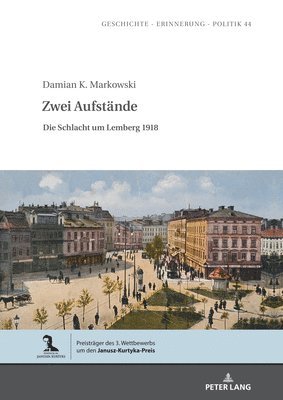
Zwei Aufstaende
Die Schlacht um Lemberg 1918
Av Damian Markowski, Barbara Klich-Kluczewska
Inbunden, 2021
743 kr
Lägg i varukorg
Das Buch ist dem polnisch-ukrainischen Konflikt um Lemberg 1918 gewidmet. Beide Nationen unternahmen angesichts der Herausbildung neuer Formen Europas, die aus den Schuttresten des Ersten Weltkriegs hervorgingen, einen Kampf um eigene staatliche Organismen.
Family, Taboo and Communism in Poland, 1956-1989
Av Barbara Klich-Kluczewska, Jaroslaw Fazan m. fl.
Inbunden, 2021
652 kr
Lägg i varukorg
The book answers fundamental questions about the processes of social negotiation of mentality shifts in communist Poland. Taking divorce, single motherhood, domestic violence and abortion as examples, it analyzes the level of acceptance toward tabus grounded in tradition, and the course of …
Musealisation of Communism in Poland and East Central Europe
Av Anna Ziębińska Witek, Barbara Klich-Kluczewska
Inbunden, 2024
676 kr
Lägg i varukorg
The monograph is the result of research conducted between 2014 and 2018 in historical museums in Central and Eastern Europe. The main goal of the book is to verify the thesis about the existence of supranational collective memory in societies affected by the shared experience of totalitarianism.The …
Mysterious Death of Jan “Anoda” Rodowicz
Av Przemysław Benken, Barbara Klich-Kluczewska
Inbunden, 2024
691 kr
Lägg i varukorg
Dr. Benken’s book is a case study of the life and death of Jan Rodowicz, nom-de-guerre Anoda, who served as a combatant in the Polish pro-independence underground resistance movement during the Second World War. The operations in which Anoda was involved, his conduct during and after the War, …
Predicting Insider Espionage — A Five-Factor Model
Av Frank Danesy, Barbara Klich-Kluczewska
Inbunden, 2024
557 kr
Lägg i varukorg
Insider espionage has destabilized governments, jeopardized national security and critical infrastructures, diminished the economic strength of nations, and cost lives. Deterrence and detection — the two methods most used to combat this threat — often prove ineffective. The author, therefore, …
History – Culture – Metaphor. On Historical Thinking
Av Wojciech Wrzosek, Barbara Klich-Kluczewska
Inbunden, 2024
676 kr
Lägg i varukorg
Historiography is one of the most systematic accounts of the fate of culture. It is also a record of human—reflexive and reflective metaphors of the world, simultaneously anthropomorphizing and humanizing it. Historical imagination captures the world in its classical form directly, and in its …
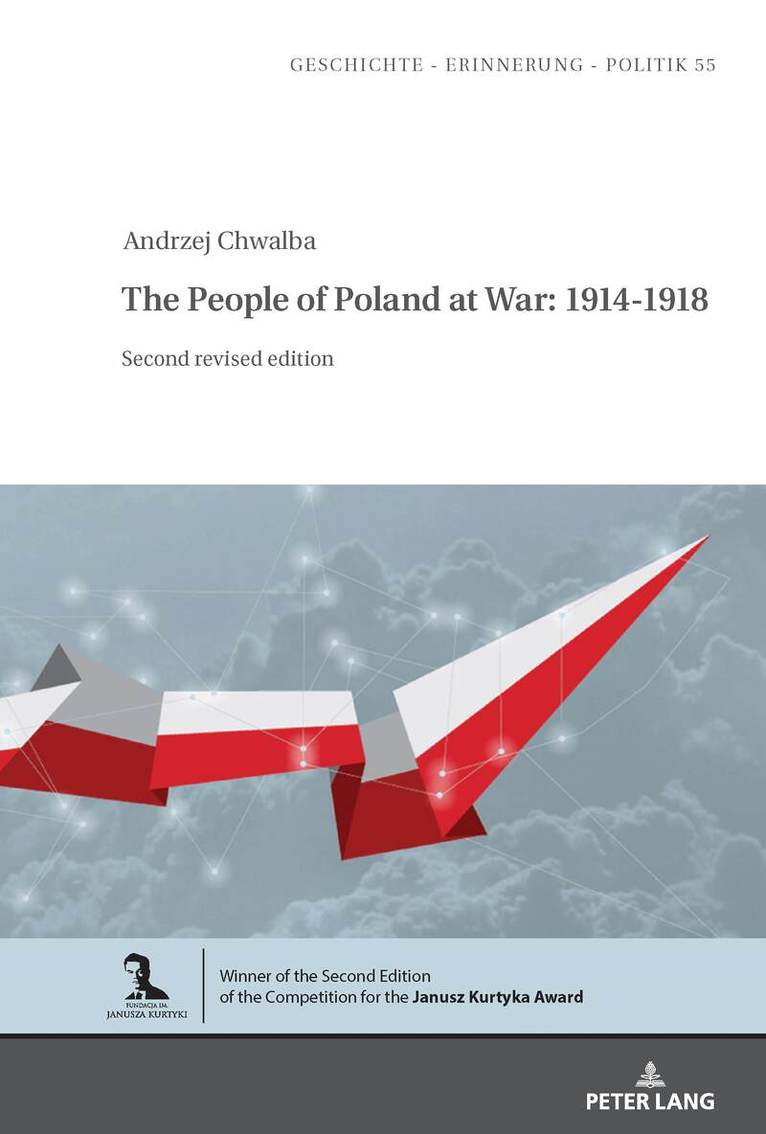
People of Poland at War: 1914-1918
Second revised edition
Av Andrzej Chwalba, Barbara Klich-Kluczewska
Inbunden, 2025
892 kr
Lägg i varukorg
A pioneering synthesis of the history of Poland, 1914-1918, summing up 100 years of the work of historians on the period and outlining new research aims. An integrated approach to the story of the Russian, German, and Austro-Hungarian zones of partitioned Poland, culminating in the restoration of …
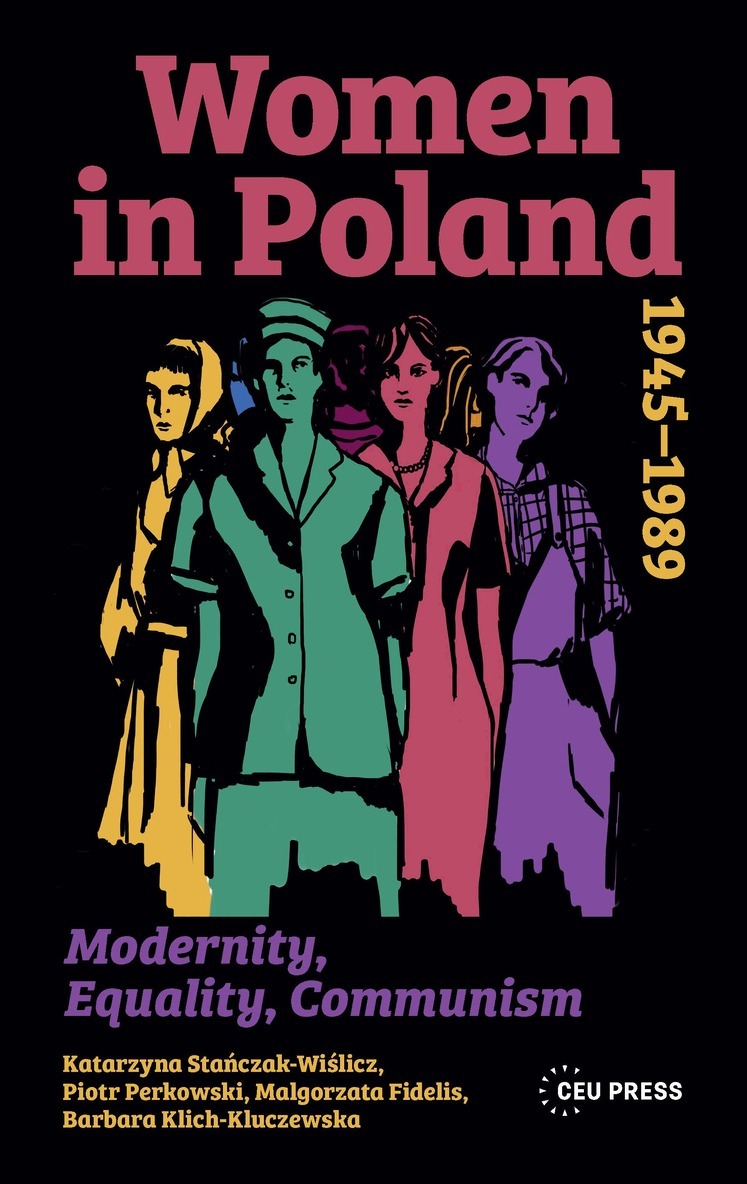
Women in Poland, 1945–1989
Modernity, Equality, Communism
Av Katarzyna Stańczak-Wiślicz, Piotr Perkowski m. fl.
Inbunden, 2026
1927 kr
Lägg i varukorg
Women in Poland 1945–1989: Modernity, Equality, Communism offers a compelling and deeply researched exploration of women’s lives under state socialism in Poland. The book reveals how communist promises of emancipation intersected with everyday reality – shaping work, family life, political …