Barbara Young Welke – författare
Visar alla böcker från författaren Barbara Young Welke. Handla med fri frakt och snabb leverans.
5 produkter
Law and the Borders of Belonging in the Long Nineteenth Century United States
Häftad, 2010
385 kr
Lägg i varukorg
For more than a generation, historians and legal scholars have documented inequalities at the heart of American law and daily life and exposed inconsistencies in the generic category of 'American citizenship'. Welke draws on that wealth of historical, legal, and theoretical scholarship to offer a …
Recasting American Liberty
Gender, Race, Law, and the Railroad Revolution, 1865-1920
Av Barbara Young Welke, Christopher Tomlins
Inbunden, 2001
1928 kr
Lägg i varukorg
Through courtroom dramas from 1865 to 1920 - of men forced to jump from moving cars when trainmen refused to stop, of women emotionally wrecked from the trauma of nearly missing a platform or street, and women barred from first class ladies' cars because of the color of their skin - Barbara Welke …
Recasting American Liberty
Gender, Race, Law, and the Railroad Revolution, 1865-1920
Av Barbara Young Welke, Christopher Tomlins
Häftad, 2001
653 kr
Lägg i varukorg
Through courtroom dramas from 1865 to 1920 - of men forced to jump from moving cars when trainmen refused to stop, of women emotionally wrecked from the trauma of nearly missing a platform or street, and women barred from first class ladies' cars because of the color of their skin - Barbara Welke …
Law and the Borders of Belonging in the Long Nineteenth Century United States
Inbunden, 2010
1546 kr
Lägg i varukorg
For more than a generation, historians and legal scholars have documented inequalities at the heart of American law and daily life and exposed inconsistencies in the generic category of 'American citizenship'. Welke draws on that wealth of historical, legal, and theoretical scholarship to offer a …
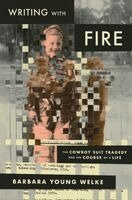
Writing with Fire
The Cowboy Suit Tragedy and the Course of a Life
Inbunden, 2026
315 kr
Tillfälligt slut
A cultural and legal history intertwined with a deeply emotional meditation on the course of life, memory, and the documents that define us.During the 1940s and 1950s, an untold number of American children suffered devastating injuries when the fur-like fabric on the chaps of their Gene …