Barry R. Schneider - Böcker
Visar alla böcker från författaren Barry R. Schneider. Handla med fri frakt och snabb leverans.
5 produkter
5 produkter
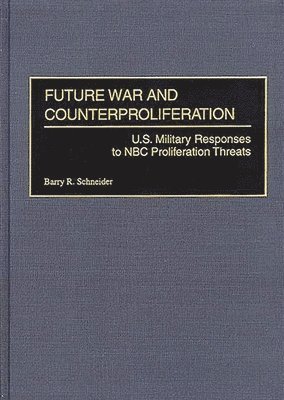
Future War and Counterproliferation
U.S. Military Responses to NBC Proliferation Threats
Inbunden, Engelska, 1999
875 kr
Skickas inom 10-15 vardagar
The United States faces a small number of rogue states that either have or are working to acquire weapons of mass destruction. These NASTIs, or NBC-Arming Sponsors of Terrorism and Intervention, include such states as North Korea, Iraq, Iran, Libya, and Syria. U.S. nonproliferation programs and policies have helped to keep this number small, but U.S. and allied counterproliferation programs are essential to reduce the danger. It is up to deterrence, active defenses, passive defenses, decontamination, and counterforce to turn enemy weapons of mass destruction into instruments of limited destructive effect.Warfighters will also have to adopt a different strategy and concept of operations in fighting an adversary that is so heavily armed. This strategy will feature a combination of deception, dispersion, mobility and maneuver, diffused logistics, remote engagement, missile defense bubbles, non-combatant evacuation operations, and large area decontamination. It will also involve upgrades to NBC passive defense measures and equipment, as well as a counterforce capability that can find and destroy a variety of adversary targets, including mobile launchers and deeply buried and hardened underground structures.
911 kr
Skickas inom 3-6 vardagar
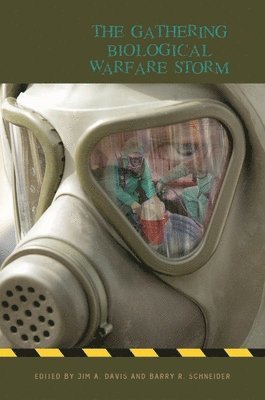
A new threat is stalking nations, as terrorist organizations and rogue states alike appear intent on acquiring and using the poor man's nuclear weapon: biological agents such as anthrax, smallpox, and plague. Attacks against Americans during the past dozen years may be an indication of more worrisome events to come. U.S. military forces in Japan were attacked in April of 1990 with botulinum toxin by the Aum Shinrikyo cult. Hundreds in Oregon were sickened with Salmonella after an attack in 1984. And small amounts of anthrax resulted in widespread panic and frequent evacuations across the United States in the fall of 2001. Ten experts discuss in detail the threats posed by bio-weapons and assess the current state of U.S. biological defenses.Chapters highlight the future prospects for biological warfare, bio-weapons in the Middle East, potential agroterrorism, the emerging bio-cruise missile threat, prevalent myths and likely scenarios, as well as the public health response. The promise of future world peace after World War II was quickly shattered by the Cold War. Indeed, the nuclear age was born at a time when the world seemed to be emerging from a dark past into a hopeful future. Are we to repeat history? With the end of the Cold War, does the future hold even greater threats? Or is an old threat merely resurfacing with a new level of lethality? This book should be required reading for anyone interested in national security, as well as concerned citizens who wish to know what form this new enemy may take and what can be done to stop it.
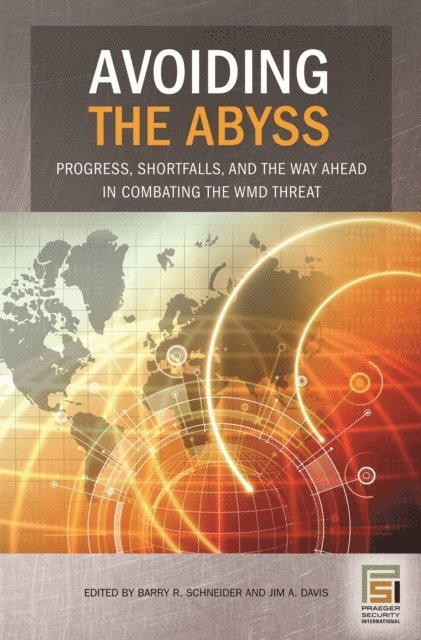
Avoiding the Abyss
Progress, Shortfalls, and the Way Ahead in Combating the WMD Threat
Inbunden, Engelska, 2006
675 kr
Skickas inom 10-15 vardagar
In December 1993, Secretary of Defense Les Aspin announced the Counterproliferation Initiative, a response to President Clinton's assertion that if we do not stem the proliferation of the world's deadliest weapons, no democracy can feel secure. This timely book brings together contributions from a wide range of experts to help readers understand how far the nation has come since then—and what still needs to happen.Insightful essays examine: arms control treaty programs; export control regimes; interdiction; diplomatic/economic/political persuasion and sanctions; deterrence; counterforce; active and passive defense; and consequence management. Many positive changes have occurred since 1993. Regime changes in Iraq and South Africa have removed some WMD proliferation threats. Saddam Hussein has been overthrown, and a new Iraq is beginning to emerge. South Africa's clandestine WMD program has apparently ended. Libya announced it has given up its efforts to have active WMD programs. The Taliban and al Qaeda have been routed in Afghanistan, probably delaying efforts to develop or buy WMD.Yet, states continue to develop and export WMD and/or their delivery systems. As many as 30 states are still believed to have either a nuclear, biological, or chemical weapons program. Some have all three. India and Pakistan have acknowledged programs. Abdul Qadeer Khan, the scientist who directed the Pakistani A-bomb program, has admitted selling nuclear weapons designs, and nuclear enrichment equipment to Libya, Iran, and North Korea. His colleagues have held discussions with al Qaeda representatives. Ayman Al-Zawahiri, number two in the al Qaeda chain of command, claims that the terrorist organization has several suitcase A-bombs from the Former Soviet Union. It appears clear to many that Iran has a desire to develop nuclear weapons. Syria still has a chemical weapons program. North Korea's WMD profile has escalated.As Avoiding the Abyss so convincingly demonstrates, much has been accomplished since the Counterproliferation Initiative was launched-but much work still lies ahead. It is an important story for every American.
462 kr
Skickas inom 5-8 vardagar
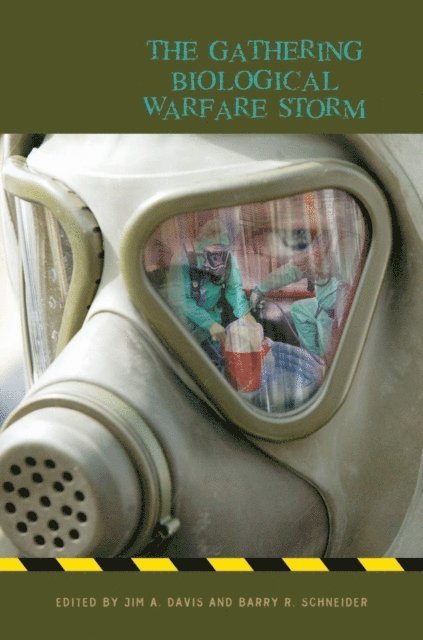
A new threat is stalking nations, as terrorist organizations and rogue states alike appear intent on acquiring and using the poor man's nuclear weapon: biological agents such as anthrax, smallpox, and plague. Attacks against Americans during the past dozen years may be an indication of more worrisome events to come. U.S. military forces in Japan were attacked in April of 1990 with botulinum toxin by the Aum Shinrikyo cult. Hundreds in Oregon were sickened with Salmonella after an attack in 1984. And small amounts of anthrax resulted in widespread panic and frequent evacuations across the United States in the fall of 2001. Ten experts discuss in detail the threats posed by bio-weapons and assess the current state of U.S. biological defenses.Chapters highlight the future prospects for biological warfare, bio-weapons in the Middle East, potential agroterrorism, the emerging bio-cruise missile threat, prevalent myths and likely scenarios, as well as the public health response. The promise of future world peace after World War II was quickly shattered by the Cold War. Indeed, the nuclear age was born at a time when the world seemed to be emerging from a dark past into a hopeful future. Are we to repeat history? With the end of the Cold War, does the future hold even greater threats? Or is an old threat merely resurfacing with a new level of lethality? This book should be required reading for anyone interested in national security, as well as concerned citizens who wish to know what form this new enemy may take and what can be done to stop it.
Middle East Security Issues
In the Shadow of Weapons of Mass Destruction Proliferation
Häftad, Engelska, 2004
157 kr
Skickas inom 5-8 vardagar