Bart van der Sloot – författare
Visar alla böcker från författaren Bart van der Sloot. Handla med fri frakt och snabb leverans.
15 produkter
15 produkter
Häftad, Engelska, 2025
642 kr
Skickas inom 10-15 vardagar
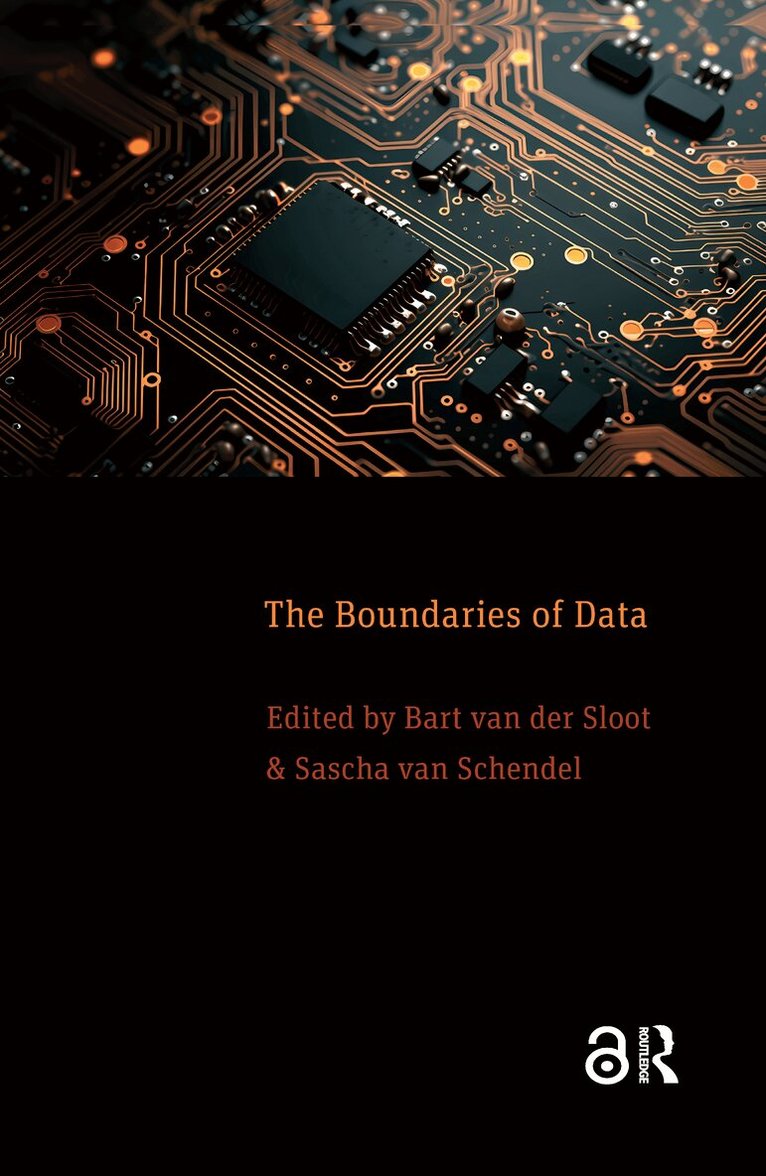
The legal domain distinguishes between different types of data and attaches a different level of protection to each of them. Thus, non-personal data are left largely unregulated, while privacy and data protection rules apply to personal data or personal information. There are stricter rules for processing sensitive personal data than for ‘ordinary’ personal data, and metadata or communications data are regulated differently than content communications data. Technological developments challenge these legal categorisations on at least three fronts: First, the lines between the categories are becoming harder to draw and more fluid. Second, working with various categories of data works well when the category a datum or dataset falls into is relatively stable. However, this is less and less so. Third, scholars increasingly question the rationale behind the various legal categorisations. This book assesses to what extent either of these strategies is feasible and to what extent alternative approaches could be developed by combining insights from three fields: technology, practice and law.
Inbunden, Engelska, 2024
1 138 kr
Skickas inom 10-15 vardagar
By bringing together fundamental rights, economic law, and recent legislation in the areas of digital platforms, data, and AI, this open access book gives a comprehensive picture of the state of play in technology regulation in the EU.Risks of regulatory fragmentation are on the rise with ever more legislative instruments becoming applicable to the technology sector. This book explores the prospects and challenges of ensuring legal consistency in a period of transition in which new legislation is being implemented and the interpretation of existing laws is being challenged by the use of data, AI, and platform technologies.The book analyses the legal consistency of technology regulation from three perspectives: (1) the relationship between the EU and the Council of Europe; (2) the relationship among EU regulatory frameworks; and (3) the relationship between EU and Member State law. By covering issues of fundamental rights protection, the free flow of data, consumer protection, competition, and innovation, the book gives a unique and extensive outlook into the state of the art in academic and policy discussions. Unravelling the relationship between legal fields, the book is an essential resource for academics, practitioners and students wishing to understand the increasingly complex landscape of technology regulation in Europe.The ebook editions of this book are available open access under a CC BY-NC-ND 4.0 licence on bloomsburycollections.com.
Häftad, Engelska, 2025
547 kr
Skickas inom 10-15 vardagar
By bringing together fundamental rights, economic law, and recent legislation in the areas of digital platforms, data, and AI, this open access book gives a comprehensive picture of the state of play in technology regulation in the EU.Risks of regulatory fragmentation are on the rise with ever more legislative instruments becoming applicable to the technology sector. This book explores the prospects and challenges of ensuring legal consistency in a period of transition in which new legislation is being implemented and the interpretation of existing laws is being challenged by the use of data, AI, and platform technologies.The book analyses the legal consistency of technology regulation from three perspectives: (1) the relationship between the EU and the Council of Europe; (2) the relationship among EU regulatory frameworks; and (3) the relationship between EU and Member State law. By covering issues of fundamental rights protection, the free flow of data, consumer protection, competition, and innovation, the book gives a unique and extensive outlook into the state of the art in academic and policy discussions. Unravelling the relationship between legal fields, the book is an essential resource for academics, practitioners and students wishing to understand the increasingly complex landscape of technology regulation in Europe.The ebook editions of this book are available open access under a CC BY-NC-ND 4.0 licence on bloomsburycollections.com.
Häftad, Engelska, 2024
283 kr
Skickas inom 10-15 vardagar
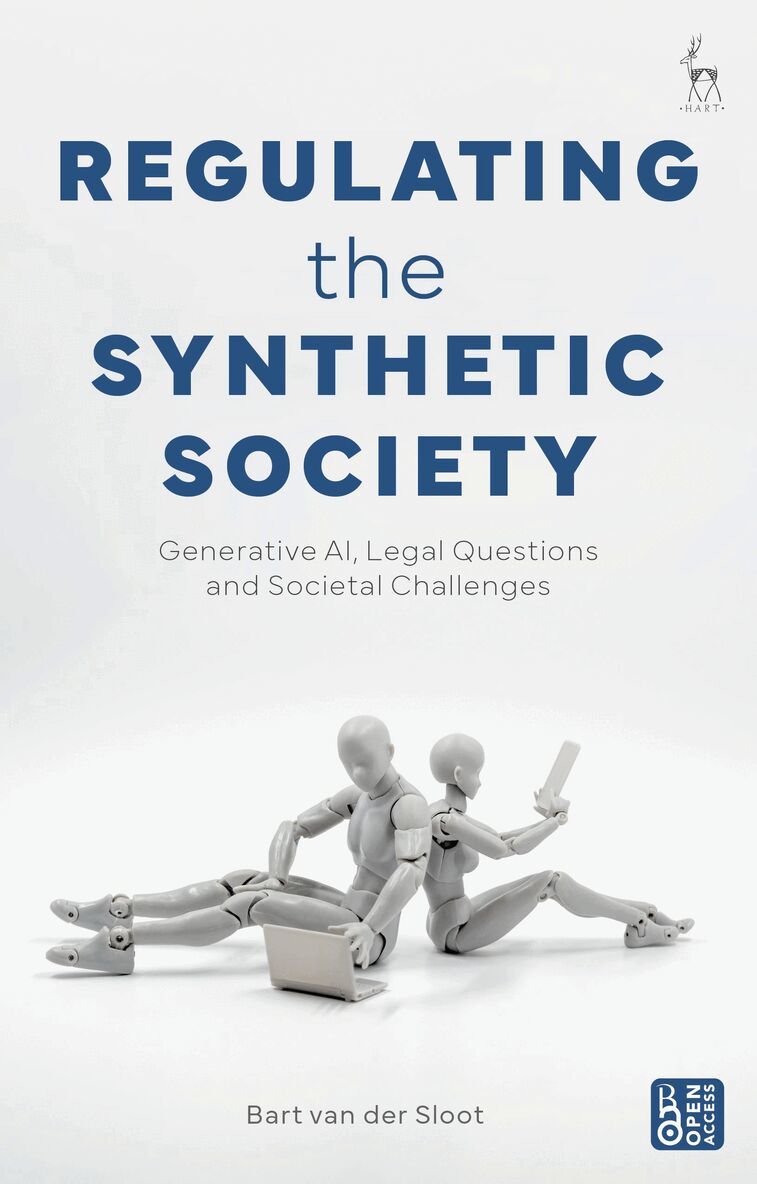
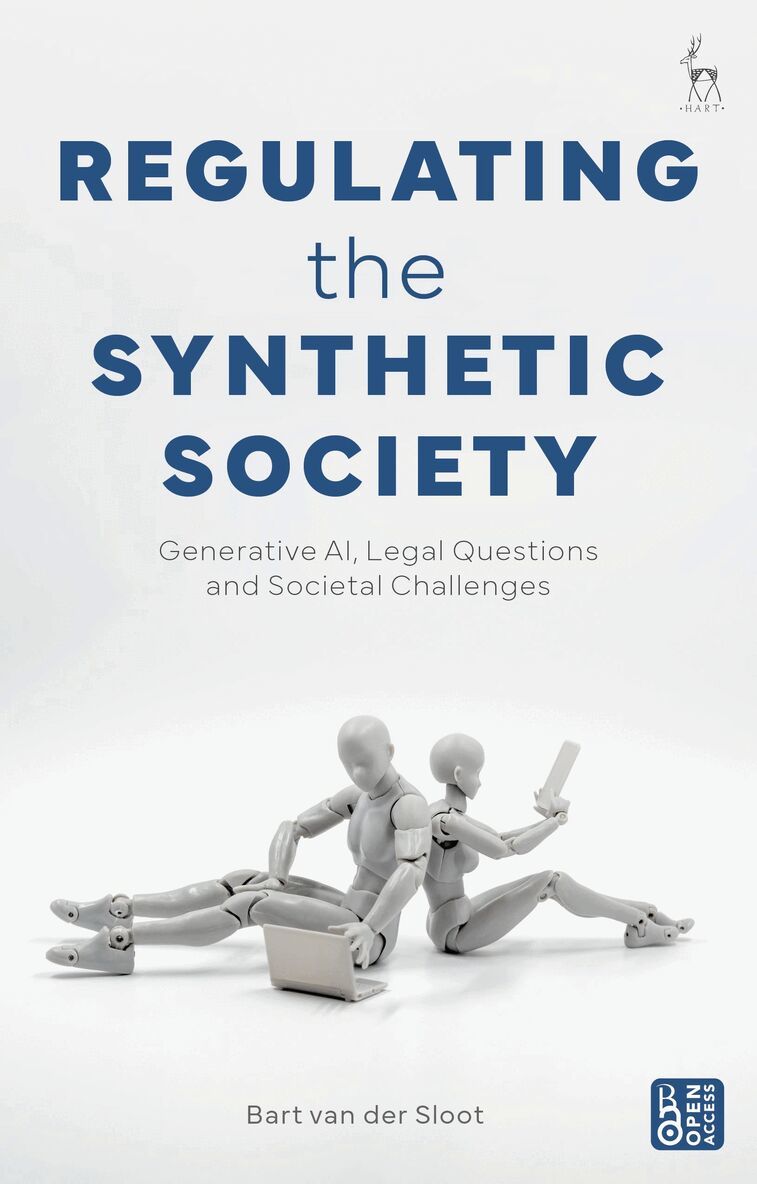
Experts predict that in 5 years’ time, more than 90% of all digital content will be wholly or partially AI generated. In a synthetic society, it may no longer be possible to establish what is real and what is not. Central to this open access book are 4 technologies on the frontline of this trend: humanoid robots, deepfakes, augmented reality, and virtual reality. Although they are only in their relative infancy, these technologies can already produce content that is indistinguishable from authentic material. The impact of this new reality on democracy, the judicial system, the functioning of the press, as well as on personal relationships will be unprecedented. Van der Sloot describes the technological fundaments of each of those technologies and maps their positive uses for educational purposes as well as for the treatment of patients, for the entertainment and creative industries, and the retail and financial sectors. The book also conceptualises their negative uses for fraud, deception, exploitation, identity-theft and exploitation, and shows their deeper effects on the post-truth society, the privatisation of the public sphere, and the loss of individual autonomy and societal trust. The book evaluates how the current European legal paradigm applies to these technologies, focussing on the right to privacy and data protection, freedom of expression, procedural law, tort law, and the regulation of AI. It discusses regulatory alternatives to solve existing regulatory gaps and shows that there are no easy answers. The ebook editions of this book are available open access under a CC BY-NC-ND 4.0 licence on bloomsburycollections.com.
Inbunden, Engelska, 2024
887 kr
Skickas inom 10-15 vardagar
This open access book provides an introduction to Generative Artificial Intelligence and four cutting-edge technologies that it enables - humanoid robots, deepfakes, augmented reality, and virtual reality.Experts predict that in five years’ time, more than 90 per cent of all digital content will be wholly or partially AI generated. In a synthetic society, it may no longer be possible to establish what is real and what is not. Although they are only in their relative infancy, these technologies can already produce content that is indistinguishable from authentic material. The impact of this new reality on democracy, the judicial system, the functioning of the press, as well as on personal relationships, might be unprecedented.The author describes the inner workings of each of these technologies and maps their positive uses in the fields of education, health and entertainment; conceptualises their negative uses for fraud, deception, exploitation and identity-theft; and explores their deeper effects on the post-truth society, the privatisation of the public sphere, and the loss of individual autonomy and societal trust.The book evaluates how the current European legal paradigm applies to these technologies, focussing on the right to privacy and data protection, intellectual property, freedom of expression, procedural law, tort law, consumer and competition law, and the regulation of AI. It discusses regulatory alternatives to solve existing regulatory gaps and shows that there are no easy answers.The ebook editions of this book are available open access under a CC BY-NC-ND 4.0 licence on bloomsburycollections.com
Inbunden, Engelska, 2026
1 797 kr
Kommande
This open access book assesses whether European data regulation can be amended in light of contemporary technological developments. In an era when data powers our daily lives, economies and societies, data regulation is essential. However, European data regulation is still premised on concepts and foundations that were developed more than 50 years ago.The book offers an in-depth exploration of the European data regulatory landscape, from its historical roots to the challenges posed by new technological advancements. Through a detailed legal and technical analysis, it explores key data categories - such as anonymised, pseudonymised, aggregated, sensitive data, and metadata - highlighting their fluid and changing nature and the growing possibilities for transitioning between them. By identifying regulatory tensions and challenges arising from various technologies, such as AI, Big Data, and quantum computing, the book offers policymakers, legal scholars, computer scientists and data protection experts different perspectives on how to reshape future privacy and data protection legislation in a rapidly advancing technological world.The ebook editions of this book are available open access under a CC BY-NC-ND 4.0 licence on bloomsburycollections.com.
Del 81 - Human Rights Research Series
Privacy as Virtue
Moving Beyond the Individual in the Age of Big Data
Häftad, Engelska, 2017
884 kr
Skickas inom 5-8 vardagar
Privacy as Virtue discusses whether a rights-based approach to privacy regulation still suffices to address the challenges triggered by new data processing techniques such as Big Data and mass surveillance. A rights-based approach generally grants subjective rights to individuals to protect their personal interests. However, large-scale data processing techniques often transcend the individual and their interests. Virtue ethics is used to reflect on this problem and open up new ways of thinking. A virtuous agent not only respects the rights and interests of others, but also has a broader duty to act in the most careful, just and temperate way. This applies to citizens, to companies such as Apple, Google and Facebook and to governmental organizations that are involved with large scale data processing alike. The author develops a three-layered model for privacy regulation in the Big Data era. The first layer consists of minimum obligations that are independent of individual interests and rights. Virtuous agents have to respect the procedural pre-conditions for the exercise of power. The second layer echoes the current paradigm, the respect for individual rights and interests.While the third layer is the obligation of aspiration: a virtuous agent designs the data process in such a way that human flourishing, equality and individual freedom are promoted.
Inbunden, Engelska, 2026
1 524 kr
Skickas inom 5-8 vardagar
In this timely book, Bart van der Sloot explores how modern technologies such as artificial intelligence and data profiling are reshaping what it means to be human. Drawing on interdisciplinary insights, he examines how digital life intensifies long-standing tensions within the human condition.Van der Sloot argues that existing legal frameworks, especially within privacy and data protection, are grounded in outdated assumptions about human rationality and control. Proposing innovative ways of thinking about identity, vulnerability, and regulation, he considers the complex and ambiguous reality of being human in a digital age. Chapters investigate how shame, memory, narrative, and performance shape identity formation, and explore concepts such as ‘data minimumization’, the right to fiction, and dual-track governance models. The author considers how both our fascination with technology and our desire to escape our limitations are deeply human traits, engaging with ancient and modern thought to question our increasingly intimate relationship with technology.This book is an essential resource for students and scholars of digital humanities, human rights, information and media law, internet and technology law, and philosophy. It is also an enlightening read for legal professionals and policymakers involved in data protection, digital security, and privacy.
Del 126 - Philosophical Studies Series
Group Privacy
New Challenges of Data Technologies
Inbunden, Engelska, 2017
1 611 kr
Skickas inom 10-15 vardagar
The goal of the book is to present the latest research on the new challenges of data technologies. It will offer an overview of the social, ethical and legal problems posed by group profiling, big data and predictive analysis and of the different approaches and methods that can be used to address them.
Del 126 - Philosophical Studies Series
Group Privacy
New Challenges of Data Technologies
Häftad, Engelska, 2018
1 611 kr
Skickas inom 10-15 vardagar
The goal of the book is to present the latest research on the new challenges of data technologies. It will offer an overview of the social, ethical and legal problems posed by group profiling, big data and predictive analysis and of the different approaches and methods that can be used to address them.
Inbunden, Engelska, 2020
1 380 kr
Skickas inom 10-15 vardagar
This book addresses the tension between, on the one hand, anti-doping practices and measures and, on the other hand, the fundamental rights of athletes. New techniques for testing and re-testing samples taken several years ago, have caused a push by the World Anti-Doping Agency and affiliated organizations for stricter rules, more doping tests and higher sanctions. Meanwhile, many States are adopting new laws and regulations to facilitate this push.At the same time, privacy and data protection have gained new momentum, especially in the European Union, where the General Data Protection Regulation came into effect in May 2018. It contains new obligations for data controllers and processors, rights for data subjects and sanctions for those violating the data protection rules.It is clear that gathering whereabouts information on athletes, collecting urine and blood samples, analyzing the samples and using the data distilled there from falls within the scope of thedata protection framework. In addition, European athletes can invoke their rights to privacy, fair trial and freedom from discrimination as guaranteed by the European Convention on Human Rights.The book is aimed at professionals and organizations involved in sports and anti-doping and provides them with an opportunity to delve into and understand the rights guaranteed to athletes within the European context. Furthermore, it is equally relevant for privacy and data protection lawyers and human rights scholars wishing to familiarize themselves with the difficult questions relating to human rights protection in the world of sport and anti-doping. Written in accessible language, it should also prove useful to athletes and laymen wanting to learn about the rules applicable to almost everyone who practices sport, even at a local amateur level.Bart van der Sloot is senior researcher at Tilburg University, Tilburg, The Netherlands, Mara Paun is PhD researcher at Tilburg University, Tilburg, The Netherlands, Ronald Leenes is professor at Tilburg University, Tilburg, The Netherlands.
Häftad, Engelska, 2021
1 380 kr
Skickas inom 10-15 vardagar
This book addresses the tension between, on the one hand, anti-doping practices and measures and, on the other hand, the fundamental rights of athletes. New techniques for testing and re-testing samples taken several years ago, have caused a push by the World Anti-Doping Agency and affiliated organizations for stricter rules, more doping tests and higher sanctions. Meanwhile, many States are adopting new laws and regulations to facilitate this push.At the same time, privacy and data protection have gained new momentum, especially in the European Union, where the General Data Protection Regulation came into effect in May 2018. It contains new obligations for data controllers and processors, rights for data subjects and sanctions for those violating the data protection rules.It is clear that gathering whereabouts information on athletes, collecting urine and blood samples, analyzing the samples and using the data distilled there from falls within the scope of thedata protection framework. In addition, European athletes can invoke their rights to privacy, fair trial and freedom from discrimination as guaranteed by the European Convention on Human Rights.The book is aimed at professionals and organizations involved in sports and anti-doping and provides them with an opportunity to delve into and understand the rights guaranteed to athletes within the European context. Furthermore, it is equally relevant for privacy and data protection lawyers and human rights scholars wishing to familiarize themselves with the difficult questions relating to human rights protection in the world of sport and anti-doping. Written in accessible language, it should also prove useful to athletes and laymen wanting to learn about the rules applicable to almost everyone who practices sport, even at a local amateur level.Bart van der Sloot is senior researcher at Tilburg University, Tilburg, The Netherlands, Mara Paun is PhD researcher at Tilburg University, Tilburg, The Netherlands, Ronald Leenes is professor at Tilburg University, Tilburg, The Netherlands.
Häftad, Engelska, 2016
576 kr
Skickas inom 10-15 vardagar
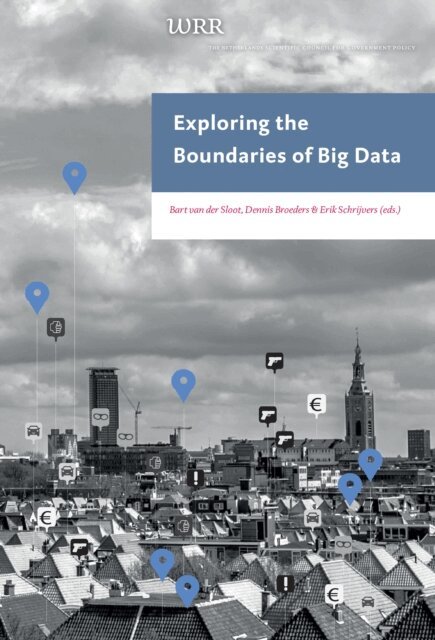
In the investigation Exploring the Boundaries of Big Data The Netherlands Scientific Council for Government Policy (WRR) offers building blocks for developing a regulatory approach to Big Data.
Häftad, Engelska, 2018
448 kr
Skickas inom 10-15 vardagar
The first book in the world that brings together several disciplinary perspectives on privacy, such as the legal, ethical, medical, informatics and anthropological perspective.
Inbunden, Engelska, 2024
1 714 kr
Skickas inom 10-15 vardagar
The legal domain distinguishes between different types of data and attaches a different level of protection to each of them. Thus, non-personal data are left largely unregulated, while privacy and data protection rules apply to personal data or personal information. There are stricter rules for processing sensitive personal data than for ‘ordinary’ personal data, and metadata or communications data are regulated differently than content communications data. Technological developments challenge these legal categorisations on at least three fronts: First, the lines between the categories are becoming harder to draw and more fluid. Second, working with various categories of data works well when the category a datum or dataset falls into is relatively stable. However, this is less and less so. Third, scholars increasingly question the rationale behind the various legal categorisations. This book assesses to what extent either of these strategies is feasible and to what extent alternative approaches could be developed by combining insights from three fields: technology, practice and law.