Bartosz Kowalski – författare
Visar alla böcker från författaren Bartosz Kowalski. Handla med fri frakt och snabb leverans.
7 produkter
7 produkter
E-bok
PDF, Engelska, 2025746 kr
Läs direkt efter köp
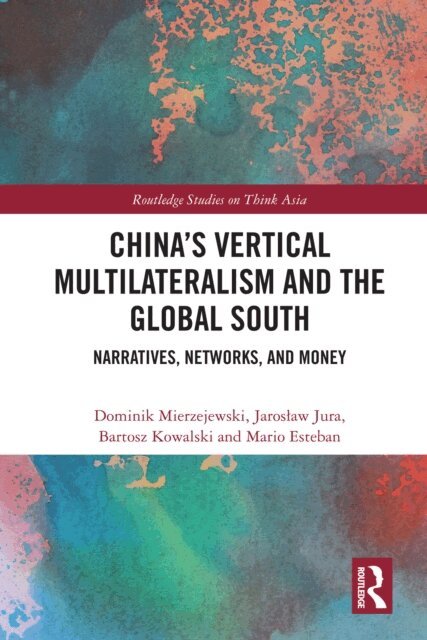
This book provides an in-depth analysis of China-led multilateralism and decodes China's narratives, and political and business practices, both from theoretical and practical dimensions.Introducing the mechanisms that govern China-led multilateral formats in what China sees as the Global South, the study offers a comparative analysis and checks whether China uses a one-size-fits-all strategy towards the selected case study formats and adopts a more differentiated regional approach. The case studies cover the following China-led multilateral formats: China-ASEAN, Forum on China-Africa Cooperation (FOCAC), China-Central and Eastern Europe, and China-CELAC. The authors introduce four primary practices of China's management of relations within these platforms: executing discursive power, cultivating elite diplomacy, influencing public opinion, and navigating economic interactions to illustrate the bilateral and informal nature of China-led multilateralism practices. They argue that the bilateral approach is driven by China's will to keep its paramount position within the formats and its pursuit to exploit the divisions among countries in these formats. Moreover, China's relations with the Global South community are governed by informal networks that give the impression of non-interference and position China as the principal power due to these relationships' inherent asymmetry. Cognizant of bilateral and informal drivers of China's multilateral practices, the book compares China's relations with selected case studies of countries under the multilateral umbrella: Brazil, Cambodia, Chile, Kenya, Poland, Serbia, South Africa and Thailand. It considers the growing tensions between China and the West surrounding the crisis of the COVID-19 pandemic, the centralisation of power in China and the Russian war in Ukraine.Shedding light on China's policies and practices on bilateral and multilateral levels, this book will be of interest to researchers studying International Relations, Asian Politics, the politics of the Global South and Chinese Studies.
E-bok
Engelska, 2025746 kr
Läs direkt efter köp
This book provides an in-depth analysis of China-led multilateralism and decodes China's narratives, and political and business practices, both from theoretical and practical dimensions.Introducing the mechanisms that govern China-led multilateral formats in what China sees as the Global South, the study offers a comparative analysis and checks whether China uses a one-size-fits-all strategy towards the selected case study formats and adopts a more differentiated regional approach. The case studies cover the following China-led multilateral formats: China-ASEAN, Forum on China-Africa Cooperation (FOCAC), China-Central and Eastern Europe, and China-CELAC. The authors introduce four primary practices of China's management of relations within these platforms: executing discursive power, cultivating elite diplomacy, influencing public opinion, and navigating economic interactions to illustrate the bilateral and informal nature of China-led multilateralism practices. They argue that the bilateral approach is driven by China's will to keep its paramount position within the formats and its pursuit to exploit the divisions among countries in these formats. Moreover, China's relations with the Global South community are governed by informal networks that give the impression of non-interference and position China as the principal power due to these relationships' inherent asymmetry. Cognizant of bilateral and informal drivers of China's multilateral practices, the book compares China's relations with selected case studies of countries under the multilateral umbrella: Brazil, Cambodia, Chile, Kenya, Poland, Serbia, South Africa and Thailand. It considers the growing tensions between China and the West surrounding the crisis of the COVID-19 pandemic, the centralisation of power in China and the Russian war in Ukraine.Shedding light on China's policies and practices on bilateral and multilateral levels, this book will be of interest to researchers studying International Relations, Asian Politics, the politics of the Global South and Chinese Studies.
Inbunden, Engelska, 2025
2 179 kr
Skickas inom 10-15 vardagar
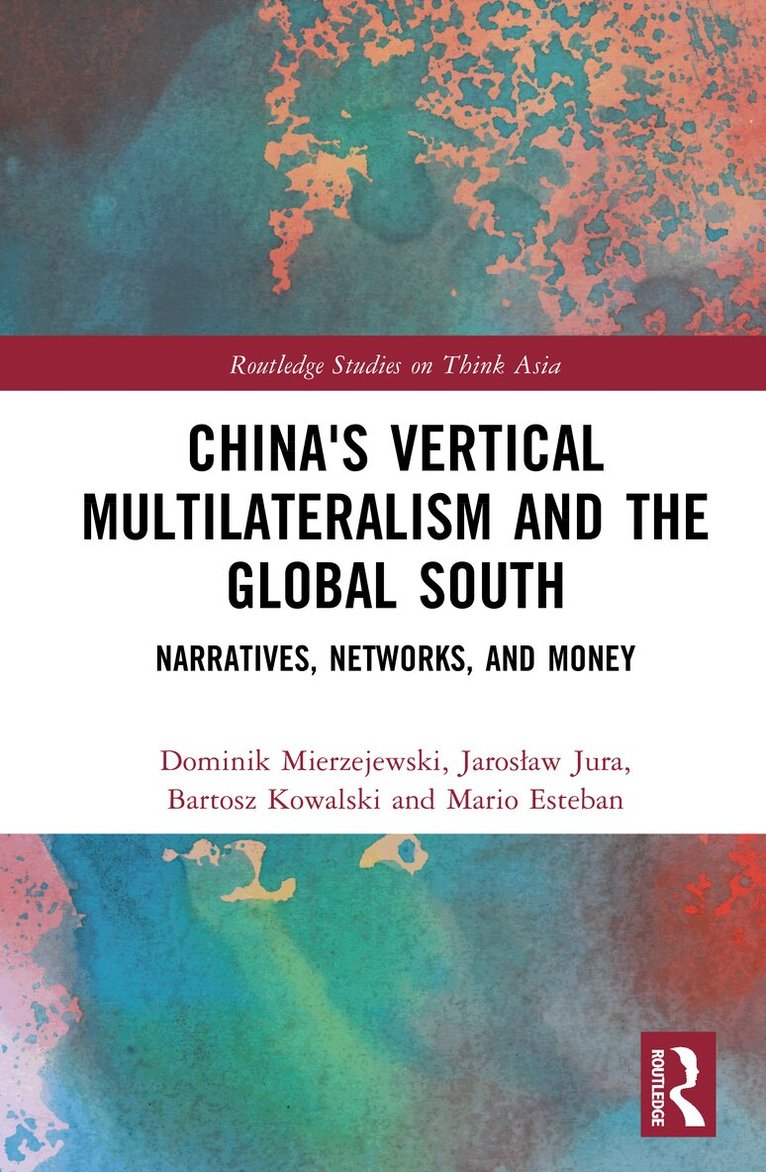
This book provides an in-depth analysis of China-led multilateralism and decodes China’s narratives, and political and business practices, both from theoretical and practical dimensions.Introducing the mechanisms that govern China-led multilateral formats in what China sees as the Global South, the study offers a comparative analysis and checks whether China uses a one-size-fits-all strategy towards the selected case study formats and adopts a more differentiated regional approach. The case studies cover the following China-led multilateral formats: China-ASEAN, Forum on China-Africa Cooperation (FOCAC), China-Central and Eastern Europe, and China-CELAC. The authors introduce four primary practices of China’s management of relations within these platforms: executing discursive power, cultivating elite diplomacy, influencing public opinion, and navigating economic interactions to illustrate the bilateral and informal nature of China-led multilateralism practices. They argue that the bilateral approach is driven by China’s will to keep its paramount position within the formats and its pursuit to exploit the divisions among countries in these formats. Moreover, China’s relations with the Global South community are governed by informal networks that give the impression of non-interference and position China as the principal power due to these relationships’ inherent asymmetry. Cognizant of bilateral and informal drivers of China’s multilateral practices, the book compares China’s relations with selected case studies of countries under the multilateral umbrella: Brazil, Cambodia, Chile, Kenya, Poland, Serbia, South Africa and Thailand. It considers the growing tensions between China and the West surrounding the crisis of the COVID-19 pandemic, the centralisation of power in China and the Russian war in Ukraine.Shedding light on China's policies and practices on bilateral and multilateral levels, this book will be of interest to researchers studying International Relations, Asian Politics, the politics of the Global South and Chinese Studies.
Inbunden, Engelska, 2026
2 225 kr
Kommande
This book examines the rise and fall of Sino-Czech relations after 2012, which coincided with China’s outward political and economic expansion through the Belt and Road Initiative and the construction of a global network of partnerships, including in Central and Eastern Europe. Drawing on relational theory rooted in the Chinese concept of guanxi, the authors analyze to what extent China was able to secure the compliance of the Czech Republic with its core interests.The volume extends the application of relationality beyond its conventional focus on China’s engagement with Africa, Southeast Asia, and Latin America. The key to understanding China’s approach to Central and Eastern Europe lies in the region's perceived peripherality in China’s intellectual and political tradition. By situating China’s approach within the broader context of relations with the Global South, the book sheds light on the instruments through which China consolidates its global position.It provides empirically grounded analysis for academics, policy analysts, and decision-makers seeking to better understand Sino-Czech relations, China’s policy towards Central and Eastern Europe, and patterns of China’s global engagement. It will also be of interest to students and scholars of International Relations, especially those engaged with non-Western IR theory.
Inbunden, Engelska, 2018
928 kr
Skickas inom 10-15 vardagar
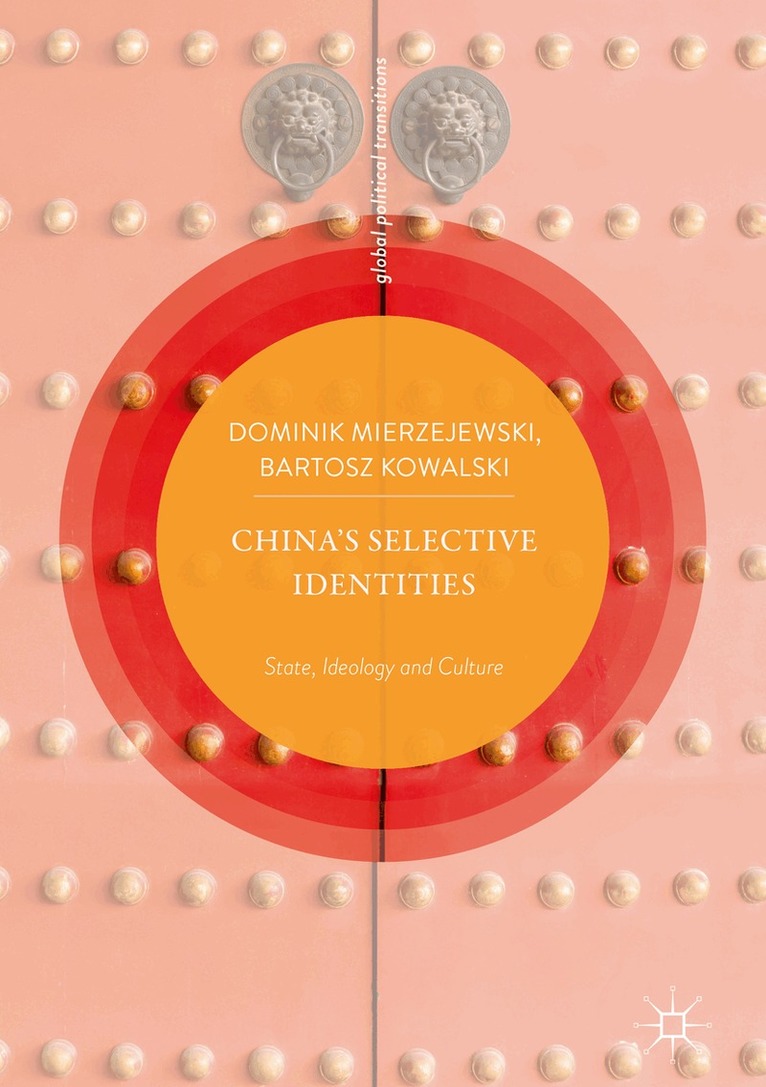
This book discusses the role of selective identities in shaping China’s position in regional and global affairs. It does so by using the concept of the political transition of power, and argues that by taking on different types of identities—of state, ideology and culture—the Chinese government has adjusted China’s identity to different kinds of audiences. By adopting different kinds of “self”, China has secured its relatively peaceful transition within the existing system and, in the meantime, strengthened its capacity to place its principles within that system. To its immediate neighbors, China presents itself as a state that needs clearcut borders. In relation to the developing world (Global South), the PRC narrates “self” as an ideology with the banner of materialism, equality and justice. To its third “audience”, the developed world (mainly Europe), China presents itself as a peaceful, innocent cultural construct based primarily onConfucius’ passive approach. By bringing these three identities into “one Chinese body” (三位一体, sanwei yiti), China’s policymakers skillfully maneuver and build the country’s position in the arena of global affairs.
E-bok
Engelska, 2018840 kr
Läs direkt efter köp
This book discusses the role of selective identities in shaping China’s position in regional and global affairs. It does so by using the concept of the political transition of power, and argues that by taking on different types of identities—of state, ideology and culture—the Chinese government has adjusted China’s identity to different kinds of audiences. By adopting different kinds of “self”, China has secured its relatively peaceful transition within the existing system and, in the meantime, strengthened its capacity to place its principles within that system. To its immediate neighbors, China presents itself as a state that needs clearcut borders. In relation to the developing world (Global South), the PRC narrates “self” as an ideology with the banner of materialism, equality and justice. To its third “audience”, the developed world (mainly Europe), China presents itself as a peaceful, innocent cultural construct based primarily onConfucius’ passive approach. By bringing these three identities into “one Chinese body” (三位一体, sanwei yiti), China’s policymakers skillfully maneuver and build the country’s position in the arena of global affairs.
Häftad, Engelska, 2019
657 kr
Skickas inom 10-15 vardagar
This book discusses the role of selective identities in shaping China’s position in regional and global affairs. It does so by using the concept of the political transition of power, and argues that by taking on different types of identities—of state, ideology and culture—the Chinese government has adjusted China’s identity to different kinds of audiences. By adopting different kinds of “self”, China has secured its relatively peaceful transition within the existing system and, in the meantime, strengthened its capacity to place its principles within that system. To its immediate neighbors, China presents itself as a state that needs clearcut borders. In relation to the developing world (Global South), the PRC narrates “self” as an ideology with the banner of materialism, equality and justice. To its third “audience”, the developed world (mainly Europe), China presents itself as a peaceful, innocent cultural construct based primarily onConfucius’ passive approach. By bringing these three identities into “one Chinese body” (三位一体, sanwei yiti), China’s policymakers skillfully maneuver and build the country’s position in the arena of global affairs.